Plot Explained Spoilers guaranteed!
Plot Explained

Browse by genre

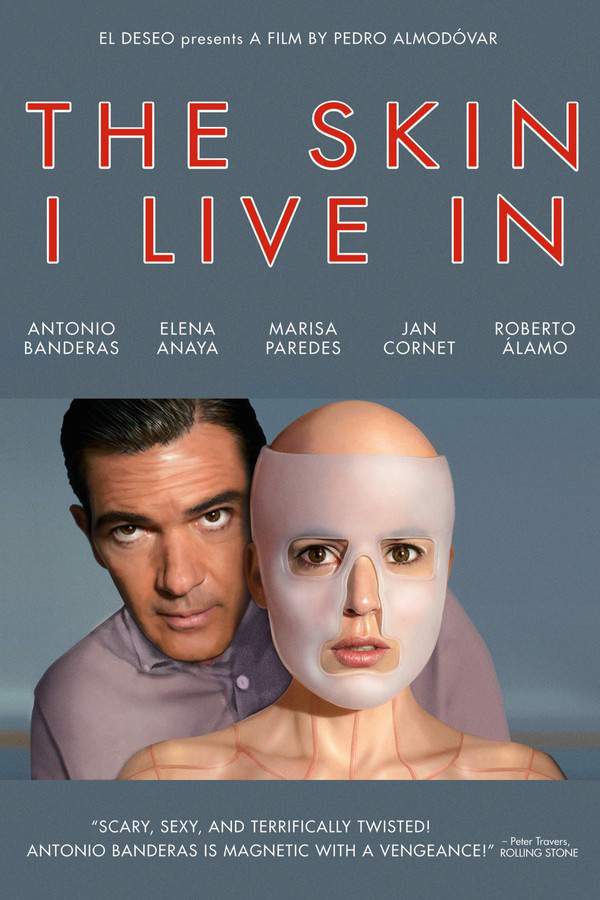
The Skin I Live In (2011) movie poster

Plot Summary

The Skin I Live In (2011) Plot Summary Explained

Release, runtime and language
2011 · 117 min · Spanish
Loading streaming availability…
Directed by
Pedro Almodóvar

A brilliant but troubled plastic surgeon, Robert Ledgard, is haunted by his wife's death and dedicates himself to developing a synthetic skin impervious to harm. Years of research lead him to create a revolutionary solution, but his ambition leads him down a dark path. He orchestrates a complex plan involving a caretaker and a young woman who becomes the unwilling subject of his experiments, raising troubling questions about ethics and obsession as he pursues his goal of achieving perfection.

On this page (7)
  1. 1 Where to watch
  2. 2 What happens: full plot
  3. 3 Plot questions answered
  4. 4 The book behind the movie
  5. 5 Movie threads
  6. 6 Movies like The Skin I Live In
  7. 7 Every angle
Loading streaming availability…

Full plot summary · contains spoilers

What Happens in The Skin I Live In: Full Plot Summary

The whole story of The Skin I Live In (2011) explained, from the opening scene to the final frame: every key event, every twist and what it all adds up to. Read it as a quick recap before the sequel, to check a scene you missed, or to finally understand what really happened.

The camera glides through the picturesque town of Toledo in Spain, ultimately arriving at the gated entrance to a striking clinic/estate known as El Cigarral. Inside, we meet Vera Cruz, a young woman portrayed by Elena Anaya, who is found engaged in a serene yoga session while dramatically draped across a sofa. She wears a nude bodystocking that leaves only her head exposed, enveloping her hands and feet. Transitioning into meditation, we see her in the lotus position, then meticulously crafting ceramic sculptures adorned with the same material that encases her.

Meanwhile, the estate's head maid, Marilia, played by Marisa Paredes, enlists the help of a junior maid to manage a dumbwaiter. As she expertly navigates with a tray full of food, literature, and cloth, Marilia sends the items up to Vera's room. Upon receiving her requested items, Vera uses an intercom to seek additional materials—sackcloth, double-sided tape, thread, a needle, and scissors—though Marilia knows some requests can't be fulfilled until the next day.

Switching scenes, we find Robert Ledgard, a surgeon played by Antonio Banderas, delivering a compel lecture on reconstructing facial features in burn victims. This passion leads him to undertake a drive to a maternity hospital, where he receives a mysterious bag that he proceeds to take back to El Cigarral. The bag contains blood, a vital component for his experimental work in his lab—a place dedicated to advancing synthetic skin technology.

Soon after, Ledgard witnesses an alarming situation in Vera's room via a hidden camera—she has attempted suicide. Reacting swiftly, he rushes to stabilize her, noting her skin texture in a moment of unsettling fascination while she recounts her intentions to end her life. In the subsequent days, Ledgard becomes embroiled in a deeper investigation into his synthetic skin project, highlighted at a biomedicinal symposium where he showcases his groundbreaking creation, GAL, a tribute to his late wife, who perished tragically.

As Ledgard's experiment with Vera unfolds, the tension escalates with the arrival of Zeca, portrayed by Roberto Alamo, a man searching for shelter after a heist gone wrong. Zeca's motivations become clear when he stumbles upon Vera, mistaking her for Gal. This leads to a horrifying encounter, with Vera negotiating for her freedom while under threat.

In a harried series of events, Ledgard rescues Vera from Zeca's grasp, culminating in Zeca’s demise at the hands of Ledgard. Following this, Vera learns of the twisted family connections between Ledgard and Zeca, a revelation that complicates their relationships further. In the aftermath, a tragic history surrounding Ledgard’s family begins to unfold, revealing a pattern of psychological trauma and consequence stemming from their past interactions.

As Ledgard continues his obsessive care for Vera, their relationship morphs into something complex, with hints of romance developing. However, the ensuing narrative also paints a chilling exploration of identity, revenge, and transformation when Vicente, the man once held captive, becomes embroiled in a harrowing revenge plot.

With Vicente transformed into Vera, Ledgard's twisted narrative culminates in confrontation and violence when Vera takes matters into her own hands. After recognizing the extent of her torment, she retaliates against Ledgard and Marilia, culminating in a series of shocking turns.

Finally liberated from the darkness of captivity and vengeance, Vicente walks away from the nightmarish world of El Cigarral. Returning to his reality, he finds himself back at his mother’s dress shop, heralding the dawn of a new chapter in an extraordinary and harrowing tale of identity, choice, and survival—ending on the poignant note, "Soy Vicente" (I am Vicente).
Last updated: November 04, 2024 at 00:41

Was this helpful?

Plot questions answered

The Skin I Live In Plot Explained: Your Questions Answered

The questions people ask most about The Skin I Live In (2011): what happens in the confusing scenes, why the characters do what they do, the twists, hidden details and what the ending means. Each answer contains spoilers.

Q1

Why is Robert Ledgard obsessed with creating synthetic skin?

Robert Ledgard became obsessed with synthetic skin after his wife Gal died in a fire. He dedicated years of research to creating a skin impervious to harm, named GAL in her honor, as a way to prevent such tragedies from happening again. His obsession stems from guilt over being unable to save her and a pathological need to control what he couldn't protect.

Foreshadowing: His lecture on reconstructive facial surgery for burn victims hints at this personal motivation from the beginning.

  • synthetic skin
  • gal
  • ledgard wife
  • fire
  • obsession
Q2

Who is Vera really?

Vera is actually Vicente, a man who was kidnapped and held captive by Ledgard. Ledgard surgically transformed Vicente into a woman over years, using him as a test subject for his synthetic skin experiments. The revelation comes late in the film when Vicente, still appearing as Vera, seeks revenge against his captor.

Foreshadowing: Vera's masculine jawline and hands are subtly visible, and her yoga poses emphasize body rigidity rather than feminine flexibility.

  • vera
  • vicente
  • identity
  • transformation
  • captive
Q3

How did Vicente become Vera?

Vicente was kidnapped by Ledgard and Marilia after an incident involving Vicente's mother. Over years of captivity, Ledgard performed numerous surgeries and treatments to transform Vicente's body into a female form, testing his synthetic skin in the process. Vicente was kept isolated and subjected to psychological manipulation, eventually accepting the identity of Vera.

Foreshadowing: The timeline shows years of captivity with continuous experiments, though the full extent is revealed only later.

  • vicente transformation
  • kidnapping
  • surgeries
  • captivity
Q4

Why did Robert Ledgard kill Zeca?

Ledgard killed Zeca to protect Vera and prevent his identity as Vicente from being exposed. When Zeca broke into El Cigarral and threatened Vera, mistaking her for Gal, Ledgard intervened and killed him during the confrontation. Zeca represented a threat to the entire operation and could have revealed the truth about Vera's captivity.

Foreshadowing: Zeca's arrival at the estate and his threat to Vera creates the immediate tension leading to this violent climax.

  • zeca
  • ledgard kill
  • protection
  • threat
Q5

What is the connection between Zeca and Robert Ledgard?

Zeca is the son of the woman who started the fire that killed Ledgard's wife Gal. This connection explains why Zeca came to El Cigarral and why Ledgard had a personal vendetta against him. The revelation adds layers of family trauma and revenge to the narrative, as both men are haunted by past tragedies involving the same woman.

Foreshadowing: The revelation of family connections emerges after Zeca's death, connecting past events to present consequences.

  • zeca
  • family connection
  • gal death
  • revenge
Q6

Why did Vera try to commit suicide?

Vera attempted suicide because she was trapped in years of captivity, subject to relentless experiments and psychological torture. As Vicente's identity began to resurface, she felt trapped between her forced identity and her true self. The combination of physical suffering, isolation, and loss of identity drove her to want to end her suffering.

Foreshadowing: Her serene meditation practice earlier in the film reflects her attempt to find peace in an impossible situation.

  • suicide attempt
  • captivity
  • mental health
  • escape
Q7

Why does Marilia help Robert Ledgard?

Marilia has been with Ledgard's family for decades, serving as his mother's caretaker before becoming the housekeeper at El Cigarral. She shares Ledgard's obsession with perfection and helps him maintain the captive situation out of loyalty and a twisted sense of purpose. Her complicity is rooted in her long-standing role in the household and her alignment with his goals.

Foreshadowing: Her efficient management of the estate and her role in delivering items to Vera shows her complete control over the operation.

  • marilia
  • loyalty
  • caretaker
  • complicity
Q8

What does 'Soy Vicente' mean at the end of the movie?

'Soy Vicente' means 'I am Vicente' in Spanish. This final declaration represents Vicente's reclamation of his true male identity after years of being forced to live as Vera. After killing Ledgard and escaping El Cigarral, he returns to his mother's dress shop and announces his true name, symbolizing his liberation from the forced transformation and captivity.

Foreshadowing: This moment is the culmination of the revenge plot, where Vicente finally reclaims his identity through violence.

  • soy vicente
  • identity
  • freedom
  • ending
Q9

What is GAL in The Skin I Live In?

GAL is the name of Ledgard's revolutionary synthetic skin creation, named after his late wife Gal. It was designed to be impervious to harm and was tested on Vera/Vicente over many years. The biomedicinal symposium showcases this breakthrough, representing Ledgard's obsessive attempt to create something perfect and impervious to tragedy.

Foreshadowing: The symposium scene reveals the scientific achievement that stems from his personal trauma.

  • gal
  • synthetic skin
  • experiment
  • breakthrough
Q10

Why does Vera develop romantic feelings for Ledgard?

Vera's feelings for Ledgard develop from years of psychological manipulation and dependency. As her identity blurred between Vera and Vicente, she experienced Stockholm syndrome-like dynamics, where the captor became her sole source of attention and survival. This complex psychological state is further complicated by the physical intimacy of the experiments and her isolation from the outside world.

Foreshadowing: The evolution of their relationship is gradual, showing how captivity distorts normal human connections.

  • romance
  • stockholm syndrome
  • manipulation
  • dependency
Q11

Why did Ledgard kidnap Vicente?

Ledgard kidnapped Vicente as revenge for the fire that killed his wife. When Vicente's mother (the woman who started the fire) died, Ledgard took her son as compensation. He then subjected Vicente to years of transformation into a female form, using him as a living test subject for his synthetic skin while seeking twisted vengeance against the family responsible for Gal's death.

Foreshadowing: The reveal of the family connections explains the motivation behind the kidnapping, tying past trauma to present cruelty.

  • kidnapping
  • revenge
  • vicente family
  • fire

Movie threads

More Movies Like The Skin I Live In, by Mood & Story

Curated lists built around what makes The Skin I Live In tick: the same mood, the same kind of story or the same emotional payoff. Each list explains why these movies belong together.

Claustrophobic Obsession Thrillers Like The Skin I Live In

Films where a single, consuming obsession traps both the obsessed and their subject. If you were captivated by the intense, disturbing dynamic in The Skin I Live In, this collection features similar movies about obsession and captivity. These films share a clinical, psychologically heavy tone and explore the dark consequences of one character's utter control over another.

  • claustrophobic
  • oppressive
  • chilling
  • unsettling
  • obsessive
  • clinical
  • Tone: dark, clinical, disturbing
  • Pacing: steady, methodical
Why these movies?

The story pattern: Narratives in this thread often revolve around a powerful figure—a scientist, artist, or predator—who uses their knowledge or position to entrap and transform another individual. The plot methodically details the process of control, blurring the lines between creator and creation, captor and captive, leading to a confrontation that questions the very nature of identity and freedom.

Why they belong together: These movies are grouped by their shared, oppressive mood and the central theme of forced transformation under duress. They possess a similar high intensity, dark tone, and heavy emotional weight, creating a coherent viewing experience for those interested in psychological stories about the extremes of human obsession.

Movies With Bittersweet Endings After Trauma Like The Skin I Live In

Stories where freedom is achieved, but the scars of the journey remain deeply etched. For viewers who appreciated the complex, unsettling conclusion of The Skin I Live In, this list highlights films with similar bittersweet endings. These stories follow characters who survive profound trauma and achieve a form of liberation, yet their triumphs are deeply tempered by lasting psychological scars.

  • melancholic
  • traumatic
  • heavy
  • bittersweet
  • unsettling
  • psychologically complex
  • Tone: bittersweet, melancholic, heavy
  • Pacing: steady, character-driven
Why these movies?

The story pattern: The narrative pattern involves a protagonist suffering a grave injustice or prolonged captivity, leading to a fundamental loss of self. The climax involves a reversal or escape, but the resolution is not purely triumphant. Instead, it acknowledges the lasting impact of the trauma, focusing on the difficult path of reclaiming an identity that has been profoundly altered.

Why they belong together: These films are connected by their shared emotional arc: a journey from profound violation to a hard-worn, imperfect freedom. They consistently deliver a heavy emotional weight and a bittersweet or bleak ending feel, resonating with viewers who find meaning in stories about the high cost of survival and the ambiguity of justice.

If you liked this

Movies Like The Skin I Live In

Similar movies to The Skin I Live In: the same genre, themes or kind of story. Each one comes with its own plot summary, timeline and ending explained.

Browse all movie summaries

Every angle

The Skin I Live In (2011) Explained: Plot, Timeline & Characters

Everything about The Skin I Live In in one place: what happens in the plot summary, the timeline in chronological order, the characters and meaning and a spoiler-free summary. What's After the Movie adds the cast, box office and post-credit scenes.

Coming soon on iOS and Android

The Plot Explained Movie Summary App

Plot summaries, endings explained and timelines on your phone. Catch up on any movie in minutes, save your favorites and never miss a twist again.

Be the first to know when we launch. Your email stays private, always.

Learn more about the app