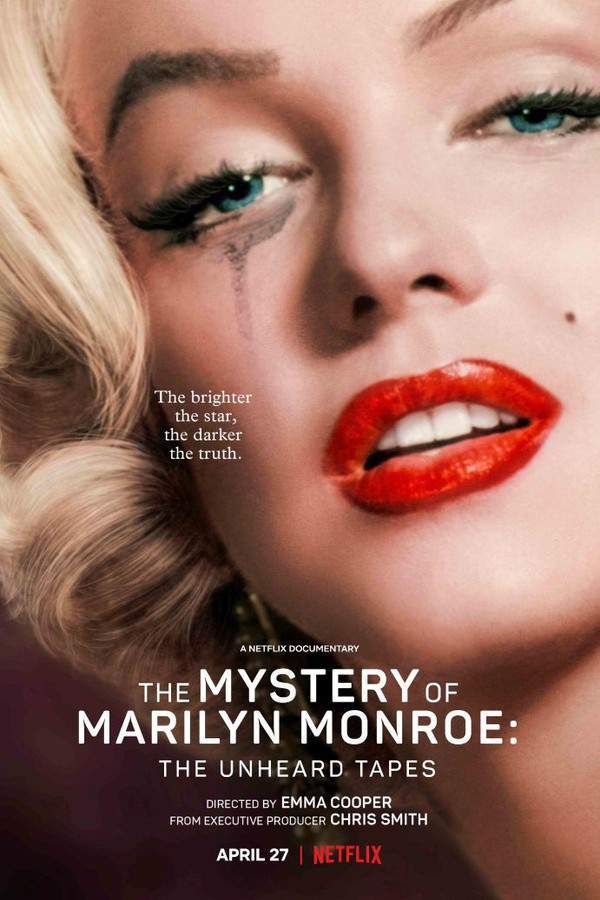
This documentary explores the circumstances surrounding Marilyn Monroe's death, utilizing previously unreleased audio recordings. The film delves into the complexities of her life, revealing a glamorous yet troubled existence. Through these unheard tapes, the documentary aims to offer a new perspective on the events of that final night and sheds light on the enduring mysteries surrounding her death, prompting reflection on her legacy and the speculation that has followed her for decades.
Find where to stream, rent, or buy The Mystery of Marilyn Monroe: The Unheard Tapes (2022) in the US with current JustWatch availability, up-to-date pricing, and platform listings for subscription, rental, and digital purchase options.
Warning: spoilers below!
Haven’t seen The Mystery of Marilyn Monroe: The Unheard Tapes yet? This summary contains major spoilers. Bookmark the page, watch the movie, and come back for the full breakdown. If you're ready, scroll on and relive the story!
Read the complete plot breakdown of The Mystery of Marilyn Monroe: The Unheard Tapes (2022), including all key story events, major twists, and the ending explained in detail. Discover what really happened, and what it all means.
In Goddess, based on the extensive research conducted by Anthony Summers, the narrative unfolds the complex life and tragic death of the iconic actress, Marilyn Monroe. Summers, driven by a resurgence of interest in Monroe following the reopening of her death case by the Los Angeles County District Attorney, embarked on a profound journey. He dedicated three years to gathering 650 recorded interviews with individuals who had interacted with Monroe, leading to a rich tapestry of insights about her life and the influential men she encountered along her journey.
The narrative shifts back to 1946, where we find a young Monroe exuberantly in love with the allure of Hollywood. Hearing from Al Rosen about Monroe's early Hollywood days, we learn that she skillfully navigated a challenging landscape, where relationships with powerful figures could mean the difference between anonymity and stardom. As he reflects, “In those days, it was not uncommon to engage in sexual favors to secure movie roles.” This was an era dominated by Joseph Schenck, a major studio head, who played a considerable role in Monroe's ascent by offering his support in exchange for his own desires.
Throughout her life, Gloria Romanoff, a close friend and restaurant owner, illustrates how Monroe often visited Romanoff's to mingle with agents and influential film personalities. Likewise, her relationship with Johnny Hyde, an older man at 53, quickly developed into a devoted affair, one that would set the stage for Monroe's burgeoning career. Esteemed director John Huston shares how Hyde facilitated Monroe's introduction into serious cinema that led to her major breakthroughs.
In contrast, fellow actress Jane Russell sheds light on Monroe's formidable work ethic amidst her struggles with mental health, an issue deeply rooted in her tumultuous childhood experiences. As the documentary unfolds, it becomes evident that Monroe's romantic life, including her marriage to baseball legend Joe DiMaggio, was shadowed by possessiveness and public scrutiny. The iconic skirt scene from The Seven Year Itch in 1955 serves as a vivid example, recalled by Billy Wilder with astonishment at the throngs of spectators.
As we delve further, Peggy Feury highlights Monroe's descent into depression, compassionately recounting her traumatic childhood experiences. This psychological turmoil coincides with her turbulent marriage to playwright Arthur Miller, which unraveled as Monroe battled substance abuse and frustration over her perceived image. The impact of their relationship was profound, yet ultimately destructive, marked by personal crises and tragic misunderstandings.
Monroe's connection with the Kennedy family, notably through John F. Kennedy and Robert F. Kennedy, grew contentious and complex. As Summers reveals, Monroe engaged in passionate affairs with the brothers, often meeting in clandestine gatherings hosted by actor Peter Lawford. Their interactions were murky, with dark entanglements as Robert Kennedy became embroiled in a mafia investigation, complicating Monroe's relation to a world that was already morally ambiguous.
As autumn fell in 1962, tensions escalated, leading to Monroe's untimely death on August 4. The aftermath revealed conflicting timelines and rumors of political machinations surrounding her demise. Summers proposed a harrowing version of events wherein her death was not merely a tragic end but potentially involved intricate cover-ups that captivated the nation. Despite multiple confirmations of this narrative, he resists labeling her death as murder, suggesting instead that it might have been an unfortunate overdose steeped in a life of profound despair and turbulent connections.
Ultimately, Goddess offers a gripping exploration of Marilyn Monroe's life through a lens of glamorous yet haunting tragedy, highlighting how her attempts to navigate fame, relationships, and personal demons culminated in a mystery that continues to fascinate audiences decades later. The film artfully pieces together a narrative of forgotten truths, shedding light on one of Hollywood's most enduring legends.
Last updated: December 03, 2024 at 14:27
Explore frequently asked questions about The Mystery of Marilyn Monroe: The Unheard Tapes (2022) with spoiler-rich answers covering the full plot summary, major story beats, character motivations, hidden details, and ending meaning. This movie summary FAQ helps explain confusing scenes, plot twists, and narrative decisions in clear, searchable detail.
Monroe navigated a Hollywood system where relationships with influential figures could mean the difference between anonymity and stardom. As her early agent Al Rosen noted, it was common in that era to engage in sexual favors to secure movie roles. This systemic pressure, combined with her need for career advancement, led her to relationships with studio heads like Joseph Schenck and agent Johnny Hyde.
Her early acceptance of these transactional relationships set the pattern for many of her later high-profile entanglements.
Monroe's mental health issues were deeply rooted in her tumultuous childhood spent in foster care and orphanages. These early experiences contributed to her lifelong battles with depression and paranoia, which intensified as she faced the pressures of fame, exploitation by the studio system, and failed relationships.
The documentary traces her psychological struggles back to her childhood experiences in the foster care system.
On August 4, 1962, Monroe was found unresponsive at her home by her housekeeper Eunice Murray. The official ruling was probable suicide from an overdose. However, conflicting timelines and witness reports suggest she may have died earlier, and rumors of political cover-ups linked to her connections with the Kennedy family have persisted for decades.
The documentary builds toward this night by establishing the web of political and personal connections that made her death politically sensitive.
Monroe and DiMaggio married in 1954 but divorced after only nine months. Their marriage was shadowed by DiMaggio's jealousy and controlling nature. The tension escalated when the famous skirt scene from 'The Seven Year Itch' in 1955 generated massive public attention, which DiMaggio found humiliating, leading to their eventual separation.
DiMaggio's possessive behavior was evident throughout their honeymoon in Japan and Korea.
Monroe's marriage to playwright Arthur Miller began in 1956 when she moved to the East Coast to pursue serious acting roles. However, the marriage deteriorated as Monroe struggled with substance abuse and discovered Miller had written derogatory notes about her. The combination of personal crises, her failing mental health, and Miller's coldness ultimately destroyed their relationship.
Miller's dismissive attitude toward Monroe was hinted at in his willingness to write critical notes about her despite their marriage.
Monroe engaged in affairs with both John F. Kennedy and Robert F. Kennedy in the early 1960s. These relationships, which began in the early 1950s, placed her in a web of political intrigue. The connections became particularly contentious as Robert Kennedy became embroiled in a mafia investigation, complicating Monroe's relationship with an already morally ambiguous world.
The documentary hints at these relationships through mentions of clandestine gatherings hosted by Peter Lawford.
Johnny Hyde, a 53-year-old talent agent, became Monroe's devoted lover and mentor in the late 1940s. He left his wife to support Monroe's ambitions and used his connections to introduce her to serious cinema. Director John Huston credits Hyde with facilitating Monroe's breakthrough into major film roles, setting the stage for her eventual stardom.
Hyde's support came at a crucial time when Monroe was struggling to move beyond modeling and minor roles.
Both Monroe and Arthur Miller were placed under FBI surveillance due to their alleged connections with communists during the height of Cold War paranoia. This surveillance intensified the pressures on Monroe during an already tumultuous period in her life, as her marriage to Miller deteriorated and her drug abuse escalated.
The documentary establishes Miller's left-wing associations as a key reason for the surveillance.
In 1982, the Los Angeles District Attorney concluded its investigation into Monroe's death, endorsing the original cause of death as an overdose. This final investigation reinforced the longstanding theories that her death was either a suicide or an accidental overdose, rather than foul play.
The documentary notes that Anthony Summers' own investigation aligned with this conclusion, suggesting no murder occurred.
Anthony Summers' research proposed that while Monroe's death may have involved cover-ups, it was not murder. He suggested it might have been an unfortunate overdose steeped in a life of profound despair and turbulent connections. The controversy centers on conflicting timelines and whispers of political machinations rather than definitive evidence of foul play.
The documentary builds this theory by presenting conflicting witness accounts about the timeline of her death.
Still wondering what the ending of The Mystery of Marilyn Monroe: The Unheard Tapes (2022) really means? Here’s a spoiler-heavy breakdown of the final scene, major twists, and the deeper themes that shape the film’s conclusion.
The documentary reveals that Marilyn Monroe's life was filled with deep struggles beneath her glamorous exterior. Her death, officially ruled as a probable overdose, remains shrouded in mystery due to conflicting accounts and suspicious circumstances. Evidence suggests that she was possibly killed or silenced because of her risky interactions with powerful figures, including the Kennedys. Her last days were marked by emotional turmoil, especially after her breakup with Bobby Kennedy, who had been one of her most significant connections. On her final day, Marilyn was reportedly upset and confrontational with the Kennedy brothers, feeling exploited and discarded by them. The night of her death, eyewitnesses and investigation reveal contradictions about the timing of her passing, with some evidence indicating she may have been alive or unconscious when she was taken to the hospital. This raises the unsettling possibility that her death may not have been accidental but staged or even orchestrated.
The film suggests that Marilyn was entangled in dangerous political and social secrets, particularly her implied knowledge of sensitive information about the Kennedys and other high-ranking officials. Her conversations with FBI agents and her visits to Mexico with known communists point to her being seen as a threat to the powerful. The last few days of her life reflect her feelings of betrayal and despair, as her hopes for love and connection were dashed. The final moments imply she was overwhelmed by her emotional pain and the dangerous secrets she held, ultimately leading her to a tragic end. The documentary leaves viewers with the haunting thought that her death was not merely a tragic overdose but possibly a result of the deadly intersection of fame, politics, and secretive power struggles, with her final days revealing how fragile and vulnerable even the brightest stars can be.
Last updated: June 25, 2025 at 08:58
Discover curated groups of movies connected by mood, themes, and story style. Browse collections built around emotion, atmosphere, and narrative focus to easily find films that match what you feel like watching right now.
Documentaries that unpack the life and mysterious death of a beloved star.If you were fascinated by the investigation into Marilyn Monroe's life and death, explore more movies like it. This thread features similar documentaries that explore the tragic ends of beloved icons, combining reflective biography with elements of mystery and psychological depth.
Narratives in this thread typically follow a journalistic or historical path, starting with the public persona of a star before peeling back the layers to reveal a troubled private life. The structure is often built around a central, unresolved question—usually surrounding their death—and uses archival footage, interviews, and new evidence to build a compelling, often heartbreaking, case.
These films are grouped together because they share a specific focus: using an investigative lens to explore the tragic demise of a famous figure. They blend historical documentation with a melancholic, reflective tone, creating a powerful mix of empathy for the subject and intellectual engagement with the mystery.
Stories exploring the psychological turmoil beneath public glamour.For viewers moved by the portrayal of Marilyn Monroe's loneliness and turmoil, this thread collects films with similar themes. Discover more stories, both documentary and fictional, that explore the heavy psychological toll of celebrity, fame, and living in the public eye.
The narrative pattern here is a character study, often following an individual's rise to fame and the subsequent psychological decay that occurs in private. The conflict is internal—a battle with loneliness, substance abuse, or depression—exacerbated by external pressures from the industry, media, and public expectation. The journey is typically a downward spiral or a poignant examination of a fractured life.
These movies are connected by their central thematic exploration of the immense psychological cost of fame. They share a melancholic, somber mood and a heavy emotional weight, prioritizing the character's internal turmoil over external action, creating a consistent vibe of tragic glamour.
Don't stop at just watching - explore The Mystery of Marilyn Monroe: The Unheard Tapes in full detail. From the complete plot summary and scene-by-scene timeline to character breakdowns, thematic analysis, and a deep dive into the ending - every page helps you truly understand what The Mystery of Marilyn Monroe: The Unheard Tapes is all about. Plus, discover what's next after the movie.
Track the full timeline of The Mystery of Marilyn Monroe: The Unheard Tapes with every major event arranged chronologically. Perfect for decoding non-linear storytelling, flashbacks, or parallel narratives with a clear scene-by-scene breakdown.
Discover the characters, locations, and core themes that shape The Mystery of Marilyn Monroe: The Unheard Tapes. Get insights into symbolic elements, setting significance, and deeper narrative meaning - ideal for thematic analysis and movie breakdowns.
What really happened at the end of The Mystery of Marilyn Monroe: The Unheard Tapes? This detailed ending explained page breaks down final scenes, hidden clues, and alternate interpretations with expert analysis and viewer theories.
Get a quick, spoiler-free overview of The Mystery of Marilyn Monroe: The Unheard Tapes that covers the main plot points and key details without revealing any major twists or spoilers. Perfect for those who want to know what to expect before diving in.
Visit What's After the Movie to explore more about The Mystery of Marilyn Monroe: The Unheard Tapes: box office results, cast and crew info, production details, post-credit scenes, and external links - all in one place for movie fans and researchers.
Discover movies like The Mystery of Marilyn Monroe: The Unheard Tapes that share similar genres, themes, and storytelling elements. Whether you’re drawn to the atmosphere, character arcs, or plot structure, these curated recommendations will help you explore more films you’ll love.
The Mystery of Marilyn Monroe: The Unheard Tapes (2022) Scene-by-Scene Movie Timeline
The Mystery of Marilyn Monroe: The Unheard Tapes (2022) Movie Characters, Themes & Settings
The Mystery of Marilyn Monroe: The Unheard Tapes (2022) Ending Explained & Theories
The Mystery of Marilyn Monroe: The Unheard Tapes (2022) Spoiler-Free Summary & Key Flow
Movies Like The Mystery of Marilyn Monroe: The Unheard Tapes – Similar Titles You’ll Enjoy
Love, Marilyn (2012) Detailed Story Recap
The Unheard (2023) Movie Recap & Themes
Elizabeth Taylor: The Lost Tapes (2024) Film Overview & Timeline
Marilyn Monroe: Auction of a Lifetime (2017) Film Overview & Timeline
Marilyn and I (2019) Full Movie Breakdown
Marilyn Monroe: The Final Days (2001) Ending Explained & Film Insights
Death In Hollywood (1990) Full Summary & Key Details
Marilyn: Something’s Got to Give (1990) Film Overview & Timeline
Reframed: Marilyn Monroe (1000) Full Summary & Key Details
Marilyn Monroe: Beyond the Legend (1986) Story Summary & Characters
The Legend of Marilyn Monroe (1966) Story Summary & Characters
Marilyn Monroe: The Mortal Goddess (1994) Full Summary & Key Details
We Remember Marilyn (1996) Detailed Story Recap
Marilyn Manson: Unmasked (1000) Full Summary & Key Details
Marilyn (1963) Spoiler-Packed Plot Recap