Plot Explained Spoilers guaranteed!
Plot Explained

Browse by genre

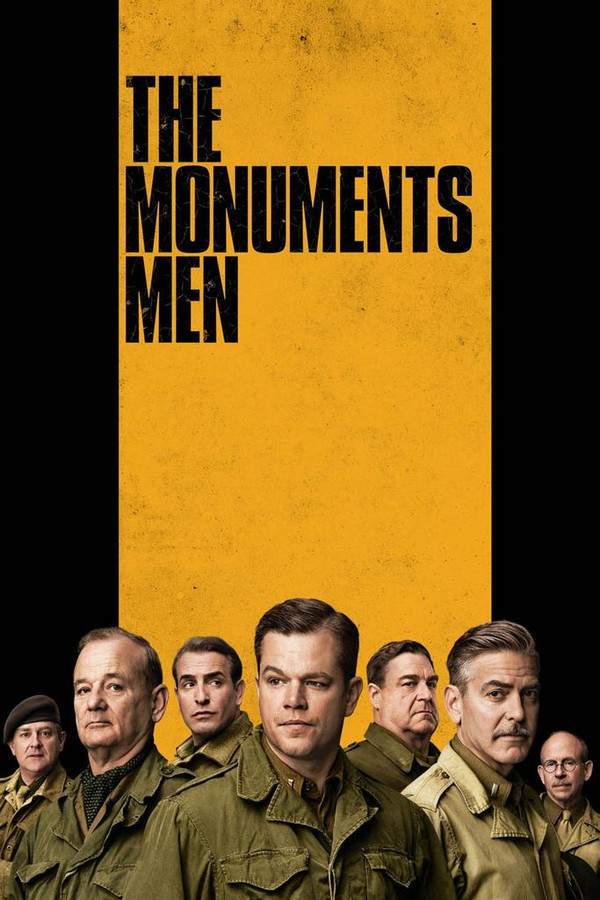
The Monuments Men (2014) movie poster

Timeline

The Monuments Men (2014) Timeline Explained – Every Event in Order

Release, runtime and language
2014 · 118 min · English
Loading streaming availability…
Starring
Cate Blanchett, Matt Damon, Bill Murray, John Goodman, Hugh Bonneville, George Clooney
Budget
$70M

During World War II, a group of museum curators, art historians, and other experts are recruited by the U.S. government to go behind enemy lines. Tasked with recovering stolen masterpieces from the Nazis, this unlikely team faces incredible danger as they race against time to safeguard invaluable cultural treasures and return them to their rightful owners. Their perilous mission is personally authorized by President Franklin D. Roosevelt.

On this page (6)
  1. 1 Where to watch
  2. 2 Events in order (15)
  3. 3 Timeline questions answered
  4. 4 Movie threads
  5. 5 Movies like The Monuments Men
  6. 6 Every angle
Loading streaming availability…

15 events in order · contains spoilers

The Monuments Men Timeline: Events in Chronological Order

Every key event of The Monuments Men (2014) in order, scene by scene, with when and where it takes place. Use it to untangle flashbacks, time jumps and parallel storylines, to refresh your memory before the sequel or to find the exact scene you are thinking of.

  1. Setting the Stage for Art Preservation

    In the midst of World War II in 1943, the Allies push back against Axis forces in Italy. Frank Stokes convinces the President of the United States that saving the art treasures of civilization is as important as winning the war.

    When
    1943
  2. Formation of the Monuments Men

    Tasked with preserving cultural heritage, Frank Stokes forms a specialized unit called the 'Monuments Men.' This group consists of seven dedicated museum directors, curators, and art historians who are committed to locating stolen artworks and returning them to their rightful owners.

  3. Claire Simone's Dilemma

    In occupied France, Claire Simone, a curator in Paris, faces immense pressure as German officers oversee the looting of art. With threats of arrest looming over her, she attempts to assist her brother while managing the expectations of her captors.

    Where
    Paris, France
  4. Confrontation at the Rail Yard

    In a moment of desperation, Claire confronts German officer Viktor Stahl at a rail yard where art is being loaded onto trains. Even as he fires a pistol at her and escapes, she remains helplessly aware of the fate of the stolen artworks.

    Where
    Rail Yard, France
  5. Challenges from Military Command

    Stokes's unit encounters significant challenges as Allied ground commanders resist changing their offensive strategies to protect cultural heritage. The military's reluctance complicates the efforts to secure and recover valuable artworks during the war.

  6. Tragic Loss of Donald Jeffries

    Donald Jeffries attempts to safeguard a church filled with priceless art in Belgium but tragically loses his life while confronting Colonel Wegner, a Nazi officer seeking to steal a Michelangelo statue. His death highlights the dangers faced by the Monuments Men.

    Where
    Belgium
  7. Stahl's Downfall

    Richard Campbell and Preston Savitz track down Viktor Stahl, discovering stolen paintings in his home. Savitz cleverly exposes Stahl's allegiance to the Nazis by prompting his children to salute Hitler, leading to Stahl's apprehension.

  8. Fatal Encounter with Wehrmacht

    Walter Garfield and Jean Claude Clermont face a Wehrmacht patrol during a mission, resulting in Clermont suffering fatal injuries. This encounter intensifies the risks involved in the Monuments Men’s pursuit of stolen art.

  9. Simone's Change of Heart

    Claire Simone reevaluates her stance after James Granger informs her of the dire consequences outlined in the Nero Decree. Motivated by the return of a painting to a Jewish family, she decides to assist by providing an important ledger of stolen artworks.

  10. Race Against the Soviets

    As Stokes's unit gathers intelligence, they realize they are racing against the Soviet Union, which also seeks to seize looted art as war reparations. The urgency grows as Colonel Wegner actively destroys art collections under orders.

  11. Discovery of the Art Mine

    The team discovers a mine containing an astonishing 16,000 art pieces along with grotesque evidence of the concentration camps. This pivotal find significantly undermines the Nazi regime's economy and heritage during the war.

    Where
    Austria
  12. Accessing the Hidden Mine

    The Monuments Men find a damaged mine set to be in a Soviet occupation zone. Locals had intentionally destroyed the entrances to mislead the Germans, allowing the team to navigate inside just as Soviet forces approach.

    Where
    Austria
  13. Evacuating Treasures

    As the Soviets close in, the Monuments Men work frantically to evacuate as many artworks as they can. They manage to salvage the prized Michelangelo sculpture that Jeffries died defending, exemplifying their resolve to protect artistic heritage.

  14. Reporting Back to President Truman

    Upon returning, Frank Stokes meets with President Truman to report on the vast treasures recovered by the Monuments Men. He reflects on the sacrifices made and proposes to continue searching for and restoring artworks across Europe.

  15. Legacy of the Monuments Men

    Fast forward to 1977, the elderly Frank Stokes takes his grandson to view the iconic Michelangelo sculpture of the Madonna. Surrounded by young admirers, he reflects on the sacrifices made by his comrades during the war to protect masterpieces of human creativity.

    When
    1977

Last updated: November 03, 2024 at 12:59

Was this helpful?

Timeline questions answered

The Monuments Men Timeline Explained: Your Questions Answered

When does it happen, and why in that order? The questions people ask about the chronology of The Monuments Men (2014): time jumps, flashbacks, cause and effect between scenes and the correct order of events, each answered with spoilers.

Q1

Why did the US government send art experts to rescue paintings during World War II?

Frank Stokes convinced President Roosevelt that winning the war would be hollow if the priceless art treasures of Western civilization were lost. The Nazis were systematically looting artworks from occupied territories for Hitler's Führermuseum in Linz and for personal trophies for Nazi commanders. Stokes argued that these cultural treasures belonged to all of humanity and needed to be protected alongside the military campaign.

Foreshadowing: Early in the film, Stokes shows the President examples of destroyed artwork from previous wars to illustrate his point.

  • art rescue mission
  • Frank Stokes
  • Monuments Men purpose
  • WW2 art theft
  • Nazi looting
Q2

What was the Nero Decree and why did it scare Claire Simone into helping?

The Nero Decree was Hitler's secret order requiring the destruction of all German possessions, including stolen artworks, should he die or Germany be defeated. James Granger explained to Claire Simone that this meant the Nazis would burn all the looted art rather than let it fall into Allied hands. This dire threat, combined with seeing a recovered painting returned to a Jewish family murdered in concentration camps, convinced Simone to hand over her ledger of stolen artworks.

  • Nero Decree
  • Hitler art destruction order
  • Claire Simone ledger
  • WW2 art destruction
Q3

Why did Claire Simone initially refuse to help the Monuments Men?

Claire Simone was a French curator living under German occupation in Paris. She distrusted James Granger and the Monuments Men because she feared they might simply be another group of art thieves looking to steal the paintings for themselves. After years of watching Germans loot her museum and having her brother involved with the Maquis resistance, she had become suspicious of anyone claiming to want to help recover the art.

Foreshadowing: The summary notes that Simone 'distrusts those she fears might themselves be art thieves.'

  • Claire Simone
  • French curator
  • Paris occupation
  • Monuments Men distrust
Q4

Why were the Monuments Men racing against the Soviet Union?

As the war ended, the Soviet Union was mobilizing its own units to seize artwork from Germany as war reparations. Both sides wanted the valuable art collections, but for different purposes. The Monuments Men needed to reach the hidden art caches before the Soviets arrived, as whatever the Soviets captured would likely never be returned to its rightful owners.

Foreshadowing: The team realizes they are racing against Soviets while gathering intelligence on stolen artwork locations.

  • Soviet art seizure
  • war reparations
  • Monuments Men race
  • WW2 art recovery
Q5

Why did Donald Jeffries die in Belgium?

Donald Jeffries was attempting to safeguard a Belgian church filled with priceless art when he confronted Colonel Wegner, a Nazi officer who was trying to steal a valuable Michelangelo statue of the Madonna and Child. During the confrontation, Jeffries was killed, making him the first Monuments Man to die in the line of duty. His death occurred while trying to prevent the Nazis from adding the sculpture to their loot.

  • Donald Jeffries death
  • Michelangelo statue
  • Colonel Wegner
  • Belgium church
  • Monuments Men casualties
Q6

How was Viktor Stahl caught after stealing the art from Paris?

Richard Campbell and Preston Savitz tracked Viktor Stahl to a rural location where he had gone into hiding. They recognized stolen paintings inside his home. Savitz cleverly exposed Stahl's true loyalties by asking his children to salute Hitler, which they did without hesitation, revealing their Nazi upbringing. Stahl was then apprehended, though he had already managed to transport much of the stolen art before his capture.

  • Viktor Stahl capture
  • Paris art theft
  • Stahl arrested
  • Monuments Men mission
Q7

What happened to Jean Claude Clermont during the mission?

Walter Garfield and Jean Claude Clermont were ambushed by a Wehrmacht patrol while on their mission to recover stolen art. During the encounter, Clermont sustained fatal injuries and died. His death highlighted the very real dangers faced by the Monuments Men as they operated behind enemy lines without proper military backing.

  • Jean Clermont death
  • Wehrmacht patrol
  • Monuments Men casualties
  • WW2 art mission danger
Q8

What did the Monuments Men find in the Austrian mine?

The team discovered a mine in Austria containing approximately 16,000 pieces of stolen art, including the Michelangelo sculpture of the Madonna and Child that Jeffries had died defending. They also found grotesque evidence of Nazi atrocities, including barrels filled with gold teeth taken from concentration camp victims. Additionally, they uncovered the financial assets of the German national treasury, dealing a significant blow to the Nazi regime's economy.

  • Austrian mine
  • 16
  • 000 artworks
  • Michelangelo sculpture
  • concentration camp gold
  • German treasury
Q9

How did the Monuments Men access the mine before the Soviets arrived?

The mine was located in an area set to become part of the Soviet occupation zone, and its entrances had been intentionally destroyed by local Austrians to mislead the Germans. When the Monuments Men arrived, they found the damaged mine and were able to access it through the destroyed entrances just as Soviet forces approached. They worked frantically to evacuate as many artworks as possible before the Soviets arrived.

Foreshadowing: Timeline entry notes locals destroyed entrances to mislead Germans.

  • Soviet occupation zone
  • mine access
  • art evacuation
  • Monuments Men Austria
Q10

Why did President Truman ask if saving the art was worth the lives lost?

After the mission, Stokes reported to President Truman about the vast treasures recovered. Truman posed the poignant question of whether the effort was worth the lives lost, including Donald Jeffries and Jean Claude Clermont. This reflected the heavy cost of the mission - two Monuments Men died protecting art. Stokes resolutely answered that yes, it was worth it, affirming the importance of preserving cultural heritage even amid war.

  • President Truman
  • worth the sacrifice
  • Monuments Men legacy
  • truman-stokes conversation
Q11

What was the Führermuseum and why did Hitler want the art?

The Führermuseum was Hitler's ambitious museum project planned for Linz, Austria. He intended to fill it with Europe's greatest artworks stolen from museums and private collections throughout occupied territories. High-ranking Nazi officials like Hermann Göring also collected stolen art as personal trophies. This systematic looting operation was a major reason the Monuments Men were formed - to prevent these cultural treasures from being lost forever.

  • Führermuseum Linz
  • Hitler art collection
  • Nazi plunder
  • Hermann Göring art theft
Q12

What happens in the 1977 epilogue of The Monuments Men?

The film jumps forward to 1977, showing an elderly Frank Stokes (played by Nick Clooney, George Clooney's father) taking his grandson to see the Michelangelo Madonna and Child sculpture in a museum. Surrounded by young admirers, Stokes reflects on the sacrifices his comrades made during the war to protect these masterpieces of human creativity. This ending emphasizes the lasting legacy and purpose of the Monuments Men's mission.

  • 1977 epilogue
  • Frank Stokes grandson
  • Michelangelo sculpture ending

Movie threads

More Movies Like The Monuments Men, by Mood & Story

Curated lists built around what makes The Monuments Men tick: the same mood, the same kind of story or the same emotional payoff. Each list explains why these movies belong together.

Historical Mission Movies Like The Monuments Men

Urgent historical endeavors where dedicated teams face immense odds. Explore movies like The Monuments Men where teams undertake crucial historical missions. These similar stories feature high-stakes objectives, perilous journeys, and the camaraderie of experts racing against time, often based on true events or inspired by real-world conflicts.

  • urgent
  • heroic
  • solemn
  • perilous
  • historical
  • team effort
  • Tone: urgent, hopeful, solemn
  • Pacing: steady, mission-driven
Why these movies?

The story pattern: The narrative pattern follows a clear, mission-based structure. A team is assembled for a specific, time-critical objective, often based on true events. The plot unfolds linearly, presenting a series of obstacles and setbacks that test the group's resolve and ingenuity, building towards a conclusion that weighs the mission's success against its human cost.

Why they belong together: These films are grouped by their shared focus on a defined historical mission, creating a consistent sense of urgency and purpose. They balance tense action with reflective moments, often resulting in a bittersweet tone where success is measured not just by the objective achieved, but by the sacrifices made.

Bittersweet War Movies Like The Monuments Men

Stories where victory in conflict is shadowed by profound sacrifice. Find more war movies like The Monuments Men that feature a bittersweet ending. These similar stories show missions accomplished or battles won, but the victory is deeply shadowed by the sacrifices made, creating a poignant and reflective emotional tone.

  • bittersweet
  • solemn
  • reflective
  • heroic
  • sacrifice
  • wartime
  • Tone: bittersweet, reflective, hopeful
  • Pacing: steady
Why these movies?

The story pattern: The emotional journey in these films builds towards a hard-won success—a battle won, an objective completed. However, the conclusion deliberately undercuts pure triumph by focusing on the human cost. The narrative emphasizes that victory is never free, leaving the audience with a mix of relief for the achievement and sadness for the price paid.

Why they belong together: This grouping is defined by a specific emotional arc: the convergence of success and loss. The movies share a tone that is ultimately hopeful yet grounded, avoiding simplistic happy endings. They resonate because they honor both the accomplishment and the sacrifice, making the victory feel earned and emotionally honest.

If you liked this

Movies Like The Monuments Men

Similar movies to The Monuments Men: the same genre, themes or kind of story. Each one comes with its own plot summary, timeline and ending explained.

Browse all movie summaries

Every angle

The Monuments Men (2014) Explained: Plot, Timeline & Characters

Everything about The Monuments Men in one place: what happens in the plot summary, the timeline in chronological order, the characters and meaning and a spoiler-free summary. What's After the Movie adds the cast, box office and post-credit scenes.

Coming soon on iOS and Android

The Plot Explained Movie Summary App

Plot summaries, endings explained and timelines on your phone. Catch up on any movie in minutes, save your favorites and never miss a twist again.

Be the first to know when we launch. Your email stays private, always.

Learn more about the app