Plot Explained Spoilers guaranteed!
Plot Explained

Browse by genre

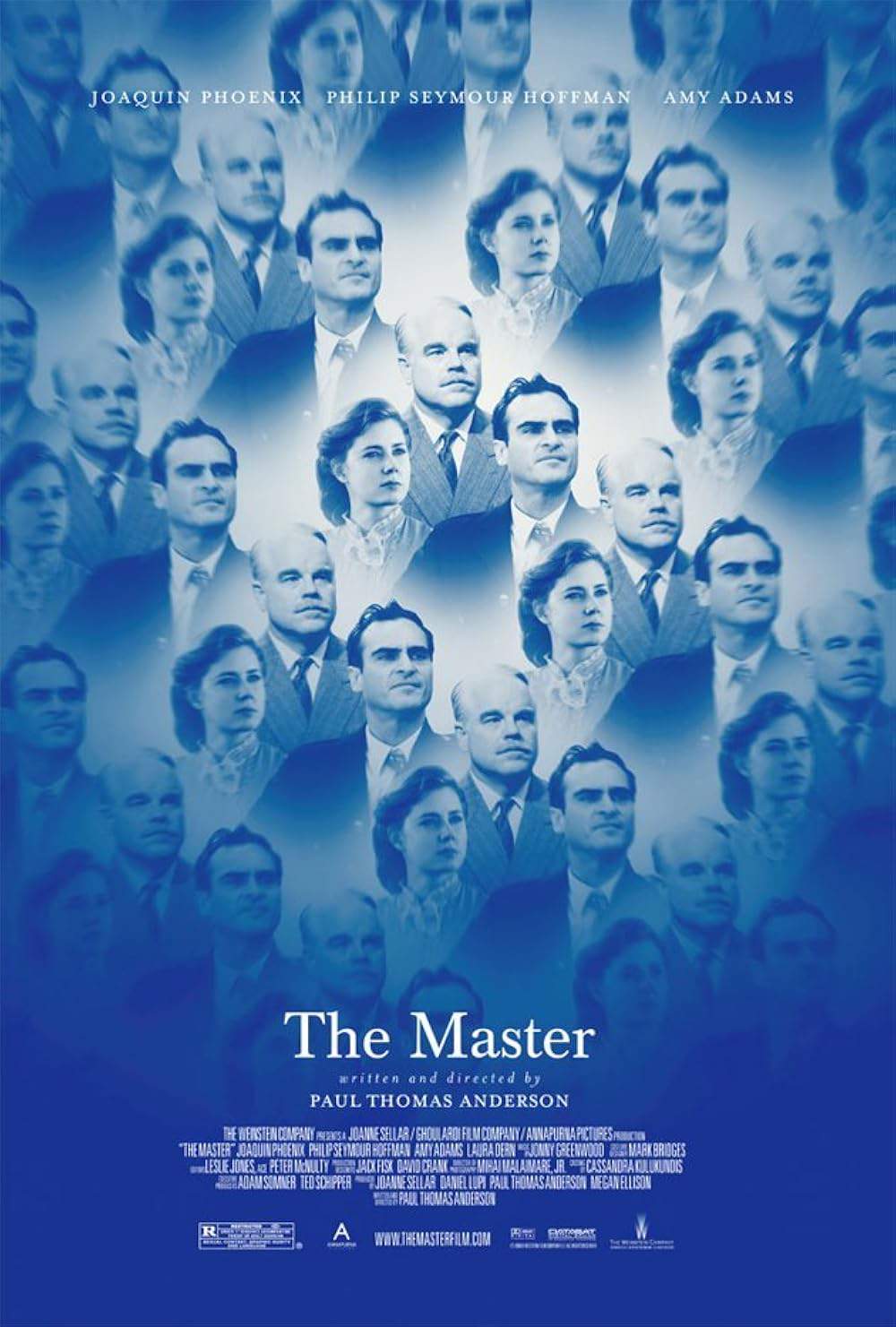
The Master (2012) movie poster

Plot Summary

The Master (2012) Plot Summary Explained

Release, runtime and language
2012 · 144 min · Korean
Loading streaming availability…
Directed by
Paul Thomas Anderson
Starring
Philip Seymour Hoffman, Amy Adams, Joaquin Phoenix, Jesse Plemons

In the years after WWII, an American intellectual creates a religion. When he meets a troubled drifter, he invites the man to help him spread the new faith. As their congregation increases, the drifter begins to question the religion he once accepted and the mentor who gave his life direction.

On this page (6)
  1. 1 Where to watch
  2. 2 What happens: full plot
  3. 3 Plot questions answered
  4. 4 Movie threads
  5. 5 Movies like The Master
  6. 6 Every angle
Loading streaming availability…

Full plot summary · contains spoilers

What Happens in The Master: Full Plot Summary

The whole story of The Master (2012) explained, from the opening scene to the final frame: every key event, every twist and what it all adds up to. Read it as a quick recap before the sequel, to check a scene you missed, or to finally understand what really happened.

Alcoholic Freddie Quell, portrayed by Joaquin Phoenix, is a World War II veteran grappling with the demons of post-traumatic stress disorder as he struggles to find his place in society after the war. Initially, he secures a job as a photographer at a local department store, where he captures cherished family moments. Unfortunately, his temper flares, leading to his dismissal after he drunkenly assaults a customer.

Freddie’s next stint is on a cabbage farm, but disaster strikes when one of his homemade alcoholic concoctions, which is dubious at best, ends up poisoning an elderly coworker. Chased away from the farm, Freddie becomes a drifter, wandering aimlessly until one fateful night when he drunkenly boards a yacht owned by Lancaster Dodd, played by Philip Seymour Hoffman, the charismatic leader of a philosophical movement known as The Cause. Dodd, intrigued by Freddie’s presence, extends him a welcome and even invites him to his daughter’s wedding, using the occasion to draw Freddie closer into his world.

As Freddie immerses himself in The Cause, he undergoes a grueling psychological exercise known as Processing, where his deeply buried traumas resurface. This probing reveals a tumultuous past: his father’s death, his mother’s institutionalization, a potentially troubling relationship with his aunt, and the painful memories of abandoning his first love, Doris, played by Madisen Beaty. Captivated by the teachings of Dodd, Freddie finds himself on a path with Dodd, spreading the message of The Cause along the East Coast. However, Freddie's erratic behavior and heavy drinking continue to pose challenges, culminating in an outburst at a dinner party in New York where he violently reacts to criticisms aimed at Dodd.

As concerns about Freddie's erratic ways grow among members of The Cause, Dodd’s steadfast belief in Freddie’s potential becomes a point of contention. During a visit to Philadelphia, Dodd's wife, Peggy (portrayed by Amy Adams), implores Freddie to quit drinking if he wishes to remain with them, to which he superficially agrees, harboring no true intent of change. Tensions rise when Freddie confronts Dodd's son Val, played by Jesse Plemons, about his apparent lack of respect for Dodd’s teachings. Val challenges Freddie, revealing the unsettling truth that Dodd's principles are largely improvised and unverified.

As Dodd faces legal troubles for practicing medicine without proper qualifications, both he and Freddie find themselves in jail, where Freddie's rage leads him to engage in destructive behavior. Even as Dodd attempts to provide guidance from a neighboring cell, Freddie erupts with questions, challenging everything Dodd stands for, resulting in a heated exchange. However, their bond is somewhat rekindled upon their release, even as other followers of The Cause grow wary of Freddie, suspecting his sanity.

Despite his commitment to Dodd’s teachings, Freddie’s frustration mounts as he experiences a lack of meaningful progress during their exercises. His volatile behavior and inability to accept repetitive practices lead to confrontations, particularly when he fiercely defends Dodd and his teachings against external criticisms. An incident at a publisher's office leaves Freddie in a fit of rage, demonstrating the fragile state of their relationship.

The issues culminate when an exercise involving Freddie racing a motorcycle towards a distant target ends with him abandoning Dodd in the desert and choosing to leave The Cause. In a bittersweet turn, Freddie attempts to reconnect with Doris, only to learn that her life has moved on without him, leaving him with a mix of disappointment and acceptance.

A surreal encounter occurs while Freddie sleeps in a theater, imagined as a “vision” of Dodd, beckoning him to England. Taking this call literally, Freddie travels across the Atlantic, only to find Dodd’s wife asserting that he has no desire to change and shouldn't be part of their movement. Finally acknowledging the truth in his wife's words, Dodd realizes that Freddie must chart his own course. He presents Freddie with a stark ultimatum: commit himself to The Cause or leave, never to return. Ultimately, Freddie chooses the latter.

After parting ways, Freddie meets a woman in a pub and finds momentary solace in physical companionship, all while echoing the probing questions Dodd had once posed to him during their initial encounter. The narrative concludes with a poignant image of Freddie on the beach, lying beside a sand sculpture of a woman he once defiled, encapsulating his tumultuous journey in search of purpose and reconciliation with his past.

Last updated: November 15, 2024 at 19:28

Was this helpful?

Plot questions answered

The Master Plot Explained: Your Questions Answered

The questions people ask most about The Master (2012): what happens in the confusing scenes, why the characters do what they do, the twists, hidden details and what the ending means. Each answer contains spoilers.

Q1

Why does Freddie join Lancaster Dodd's movement?

Freddie is drawn to Dodd and The Cause because he is a lost, traumatized man searching for direction after the war. His life has been defined by failure, he lost jobs, poisoned someone with his homebrew, and has no stable identity. Dodd offers him structure, purpose, and the promise of understanding his own mind through Processing. Freddie craves the mentorship and belonging that Dodd provides, even though he never fully commits to the lifestyle change required.

  • freddie quell
  • lancaster dodd
  • the cause
  • joining cult
  • processing
Q2

What is Processing in The Cause?

Processing is a psychological exercise used by Dodd to dig into a person's traumatic past. During Freddie's session, it reveals his father's death, his mother's institutionalization, a troubling relationship with his aunt, and his abandonment of his first love Doris. The goal is to confront buried memories and use them to build the philosophy of The Cause. Dodd believes this painful excavation helps followers understand their past lives and achieve spiritual progress.

  • processing
  • therapy
  • trauma
  • psychological exercise
  • past lives
Q3

Why does Freddie attack the man criticizing Dodd at the dinner party?

Freddie violently attacks a man who criticizes Dodd during a New York dinner party because he has become emotionally dependent on The Cause and sees any attack on Dodd as an attack on himself. His unstable mental state, fueled by heavy drinking, makes him unable to control his reactions. This outburst demonstrates his volatile nature and the dangerous loyalty he has developed toward Dodd, even as he doesn't fully understand the teachings himself.

  • dinner party attack
  • violence
  • loyalty
  • new york
Q4

Why does Freddie abandon Dodd in the desert?

Freddie abandons Dodd during a motorcycle exercise in the desert because he has grown frustrated with the lack of meaningful progress in The Cause's practices. The repetitive exercises feel hollow to him, and he cannot fully accept Dodd's teachings. When given the choice to continue chasing the target or turn back, Freddie chooses independence, symbolically rejecting the structure that has both comforted and trapped him.

  • desert
  • motorcycle
  • leaving cause
  • independence
  • rejection
Q5

What happens when Freddie tries to reconnect with Doris?

Freddie seeks out his first love Doris after leaving The Cause, hoping to find redemption and a fresh start. However, he discovers she has moved on with her life and cannot welcome him back. This rejection leaves Freddie with a bittersweet realization that he cannot undo his past choices or return to what he lost. The failed reunion underscores his fundamental isolation and inability to form lasting connections.

  • doris
  • first love
  • rejection
  • redemption
  • past
Q6

Why does Freddie go to England after leaving The Cause?

Freddie travels to England because he experiences a vision or dream of Dodd calling him there. He takes this surreal encounter literally, believing it is a sign that he should rejoin Dodd. This journey shows Freddie's desperate need for external guidance and his inability to make decisions independently. He still seeks the mentorship and purpose that Dodd provided, even after physically leaving the movement.

  • england
  • vision
  • dream
  • returning
  • reunion
Q7

Why does Dodd give Freddie an ultimatum?

Dodd gives Freddie an ultimatum, commit fully to The Cause or leave forever, after Freddie arrives in England. This moment represents Dodd's acceptance that Freddie cannot be controlled or changed. Dodd's wife Peggy has convinced him that Freddie is beyond help and will only bring harm to the movement. Dodd realizes Freddie must find his own path, but refuses to let him remain in between, forcing a definitive choice.

Foreshadowing: Earlier, Peggy had warned Freddie to quit drinking in Philadelphia, foreshadowing this final rejection.

  • ultimatum
  • peggy
  • commitment
  • leaving
  • rejection
Q8

What does The Cause believe in?

The Cause is a philosophical movement founded by Lancaster Dodd that combines elements of psychology, spirituality, and self-improvement. Dodd teaches about past lives, uses Processing to uncover trauma, and promises followers a path to understanding themselves. However, Dodd's son Val reveals that much of the philosophy is improvised and unverified, suggesting The Cause operates more like an exploitative cult than a legitimate religion.

  • the cause
  • philosophy
  • religion
  • cult
  • past lives
Q9

What does the final beach scene mean?

The final beach scene shows Freddie lying beside a sand sculpture of a woman he once defiled, representing his unfinished business with the past. Despite leaving The Cause, he has not found peace or belonging. He now echoes Dodd's probing questions on his own, suggesting he has internalized some of the teachings but remains fundamentally alone. The image encapsulates his perpetual search for purpose and reconciliation with his traumatic history.

  • beach
  • sand sculpture
  • ending
  • isolation
  • self-reflection
Q10

Why does Freddie confront Val Dodd about the teachings?

Freddie confronts Val, Dodd's son, because he has begun to doubt the authenticity of The Cause's principles. Val tells Freddie that Dodd's teachings are largely improvised and unverified, which shakes Freddie's faith. This confrontation reveals Freddie's growing skepticism and the internal conflict between his loyalty to Dodd and his need for truth, eventually contributing to his decision to leave the movement.

  • val
  • son
  • confrontation
  • authenticity
  • teachings
Q11

Why does Freddie have a breakdown in jail?

Freddie has a breakdown in jail after Dodd is arrested for practicing medicine without a license. Trapped in a cell, Freddie's pent-up rage and frustration surface. He destroys property and engages in destructive behavior while Dodd tries to counsel him from a neighboring cell. The jail incident demonstrates Freddie's inability to process his emotions without external structure and foreshadows his eventual complete rejection of Dodd's guidance.

  • jail
  • breakdown
  • rage
  • arrest
  • destruction

Movie threads

More Movies Like The Master, by Mood & Story

Curated lists built around what makes The Master tick: the same mood, the same kind of story or the same emotional payoff. Each list explains why these movies belong together.

Movies about charismatic leaders and vulnerable followers like The Master

Stories where a vulnerable soul falls under the spell of a powerful, manipulative figure. If you were captivated by the complex power struggle in The Master, explore these movies about cults, toxic mentors, and psychological manipulation. These films feature intense character dynamics between a charismatic authority figure and a lost individual searching for meaning.

  • psychological
  • unsettling
  • claustrophobic
  • intense
  • character study
  • manipulative
  • Tone: dark, psychologically tense, melancholic
  • Pacing: slow, character-driven
Why these movies?

The story pattern: These narratives typically follow a broken or searching individual who encounters a charismatic figure promising order or salvation. The story charts the process of indoctrination, the internal conflict of the follower, and the eventual power struggle or disillusionment that reveals the manipulative nature of the relationship.

Why they belong together: Movies in this thread are united by their deep focus on the psychological mechanics of influence and control. They share a dark, intense tone, heavy emotional weight, and a character-driven pace that allows for a nuanced exploration of power, identity, and the human need for connection, even in toxic forms.

Slow burn psychological dramas with heavy emotion like The Master

Deliberately paced films that immerse you in a character's profound internal turmoil. For viewers who appreciate the methodical, immersive tension of The Master, this list features similar slow-burn dramas. These films prioritize mood, character psychology, and a heavy, often melancholic atmosphere over rapid plot developments, perfect for fans of introspective and tense storytelling.

  • slow burn
  • moody
  • melancholic
  • psychological
  • introspective
  • heavy
  • Tone: dark, melancholic, tense
  • Pacing: slow burn, deliberate
Why these movies?

The story pattern: Stories in this thread unfold gradually, allowing the audience to sit with a character's psychological state. The narrative is often driven by internal struggles—such as coping with trauma, addiction, or existential crisis—creating a sense of mounting unease and claustrophobia that culminates in a poignant, often bittersweet resolution.

Why they belong together: These films are grouped by their shared commitment to a slow pacing that amplifies psychological intensity. They create a specific, often unsettling vibe through a dark tone, high emotional weight, and a focus on mood and character introspection, resulting in a cohesive experience of profound unease and depth.

If you liked this

Movies Like The Master

Similar movies to The Master: the same genre, themes or kind of story. Each one comes with its own plot summary, timeline and ending explained.

Browse all movie summaries

Every angle

The Master (2012) Explained: Plot, Timeline & Characters

Everything about The Master in one place: what happens in the plot summary, the timeline in chronological order, the characters and meaning and a spoiler-free summary. What's After the Movie adds the cast, box office and post-credit scenes.

Coming soon on iOS and Android

The Plot Explained Movie Summary App

Plot summaries, endings explained and timelines on your phone. Catch up on any movie in minutes, save your favorites and never miss a twist again.

Be the first to know when we launch. Your email stays private, always.

Learn more about the app