





Plot Explained Spoilers guaranteed!
Plot Explained

Browse by genre

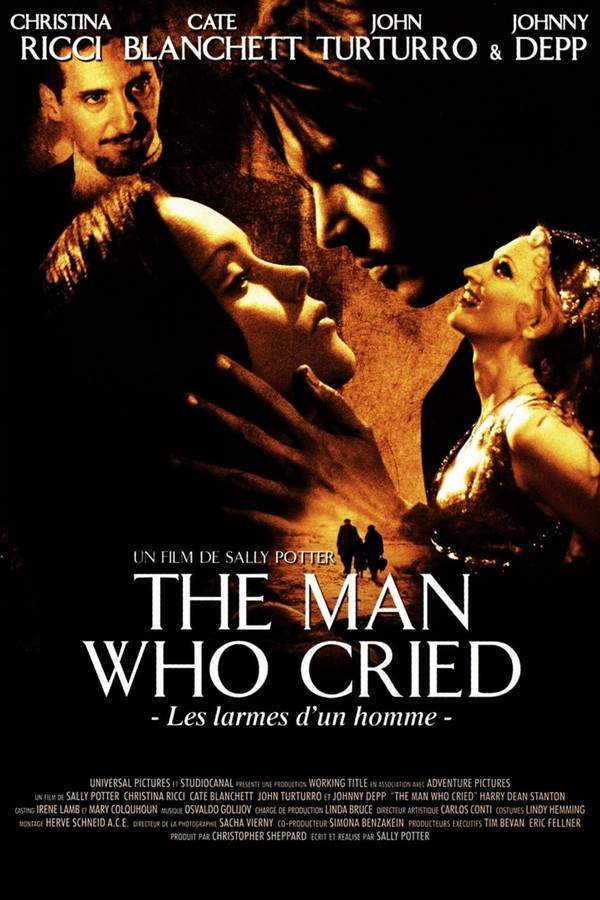
The Man Who Cried (2001) movie poster

Characters & Themes

The Man Who Cried (2001) Characters, Setting & Themes Explained

Release, runtime and language
2001 · 100 min · English
Directed by
Sally Potter
Starring
Christina Ricci

In 1927, a young Russian Jewish girl experiences a devastating loss and escapes to England, reinventing herself as Suzie, a gifted singer. She rises to prominence in the Parisian theater scene, becoming part of a lively group of international performers. Her world is further complicated by the arrival of a charismatic Russian dancer and a charming Gypsy horseman. As the Nazi invasion threatens, Suzie must undertake a dangerous journey to find her father in America, facing numerous challenges along the way.

On this page (8)
  1. 1 Where to watch
  2. 2 Characters explained (6)
  3. 3 Where & when it takes place
  4. 4 Themes & meaning (3)
  5. 5 Character & meaning questions
  6. 6 Movie threads
  7. 7 Movies like The Man Who Cried
  8. 8 Every angle

Where to watch

Where to Watch The Man Who Cried (2001)

Where can you watch The Man Who Cried? Stream, rent or buy it in the US, including on Amazon Video, Apple TV Store and Fandango At Home: current JustWatch availability with up-to-date prices.

Streaming availability powered by JustWatch

6 main characters · contains spoilers

The Man Who Cried Characters Explained: Who Is Who

The main characters of The Man Who Cried (2001), heroes and villains: what drives them, how they change over the course of the story and what each of them reveals about the film's bigger ideas.

  • Fegele Abramovich/Susan (Christina Ricci)

    Fegele is a young Russian Jew whose journey through loss and adversity defines her character arc. Her resilience and determination to find her father showcase her strength, even when faced with harsh realities. As she navigates personal identity and societal expectations, her evolution into Susan embodies hope amidst despair.

    • 🎭 Protagonist
    • 🎵 Singer
    • 🌍 Survivor
  • Lola (Cate Blanchett)

    Lola is an older Russian dancer whose vibrant personality brings warmth and companionship to Susan's life. She embodies loyalty and compassion, often prioritizing Susan's well-being during dangerous times. Lola's relationship with Dante adds complexity to her character, revealing her vulnerabilities despite her strong exterior.

    • 💃 Dancer
    • 👩‍❤️‍👩 Friend
    • ⚠️ Protector
  • Cesar (Johnny Depp)

    Cesar is a captivating horseman who catches Susan's eye with his charm. His allure creates a romantic tension but is also complicated by the threats surrounding them. Despite his initial carefree demeanor, his concern for Susan's safety highlights his deeper feelings and complexities as a character.

    • 🏇 Horseman
    • 💖 Love Interest
    • 😟 Protector
  • Dante (John Turturro)

    Dante is an Italian opera singer whose connection with Lola puts him at the center of an emotional conflict. His jealousy and later betrayal of Susan showcase the darker sides of passion and loyalty. As a character caught between love and the pressures of the time, Dante's choices underscore the film's themes of conflict and identity.

    • 🎤 Opera Singer
    • 💔 Antagonist
    • 🔥 Jealous
  • Felix Perlman (Harry Dean Stanton)

    Felix Perlman serves as a protective figure within the opera company, defending Susan when tensions rise. His understanding of the precariousness of their situation adds depth to the story as he tries to maintain a semblance of normalcy in the face of chaos. Felix embodies the struggle for solidarity amidst growing danger.

    • 🎭 Manager
    • 🛡️ Protector
    • 📜 Wise
  • Madame Goldstein (Miriam Karlin)

    Madame Goldstein is an elderly Jewish neighbor who offers wisdom and warnings to Susan. Her role as a matriarchal figure emphasizes the importance of community and vigilance during turbulent times. Through her character, the film highlights the legacy of survival among Jewish families facing persecution.

    • 👵 Matriarch
    • 🔮 Seer
    • 🏠 Neighbor

Last updated: October 22, 2024 at 21:37

Was this helpful?

Setting

Where and When Does The Man Who Cried Take Place?

The setting of The Man Who Cried (2001): the year and time period, the places and locations, and how they shape the characters, the mood and the tension of the story.

Time period

1927-1940s

The story unfolds from 1927, capturing the upheaval faced by Jewish communities during this volatile period in history. During the late 1930s, impending World War II created a climate of fear and uncertainty, as the Nazi regime began its aggressive expansion, leading many to flee their homes in search of safety.

Location

Russia, England, Paris, America

The movie takes place in various locations, starting in Russia, where Fegele's family experiences tragedy. She moves on to England, where she faces cultural challenges, followed by her journey to Paris, a city known for its vibrant arts scene and social dynamics. Finally, the narrative culminates in America, a land of hope and new beginnings.

  • 🇷🇺 Russia
  • 🇬🇧 England
  • 🇫🇷 Paris
  • 🇺🇸 America

Last updated: October 22, 2024 at 21:37

Was this helpful?

3 major themes

The Man Who Cried Meaning: Themes & Message Explained

What is The Man Who Cried (2001) really about? The emotional, social and philosophical themes the film keeps returning to, its symbolism and the message beneath the surface.

  • Identity

    The theme of identity is central to Susan's journey, as she navigates her Jewish heritage in the face of adversity. Her transformation from Fegele to Susan symbolizes her struggle in finding acceptance in a world that marginalizes her roots. The tension arising from her background and the relationships she forms reflects the complexity of identity during times of turmoil.

  • Separation

    Separation is a poignant theme that resonates throughout the film. Fegele's initial separation from her father sets the stage for her later struggles with abandonment and loss. The film explores the emotional consequences of being torn from loved ones, particularly during the rise of persecution and war.

  • Conflict

    Conflict arises both personally and politically, reflecting the dire circumstances of the time. Susan faces societal conflicts, prejudice, and betrayal, while the backdrop of Nazi threats escalates the stakes. The interplay of personal relationships against a landscape of war emphasizes the difficult choices faced by individuals caught in such a chaotic world.

Last updated: October 22, 2024 at 21:37

Was this helpful?

Character & theme questions

The Man Who Cried Characters & Meaning: Your Questions Answered

The questions people ask about The Man Who Cried (2001): who the characters really are, their relationships, what the symbols mean, where it takes place and what the movie is really about. Each answer contains spoilers.

Q1

Where is the movie set?

The Man Who Cried is set across multiple locations, beginning in Russia where the protagonist Fegele experiences tragedy. She then moves to England, followed by Paris where she builds her career as a singer, and finally to America in her quest to find her father.

  • russia
  • england
  • paris
  • america
  • settings
  • locations
Q2

What time period does the movie cover?

The story spans from 1927 through the late 1930s and early 1940s, capturing the rise of Nazi persecution against Jewish communities. This period encompasses both the personal trauma of Fegele's childhood loss and the broader historical devastation of World War II.

  • 1920s
  • 1930s
  • 1940s
  • time period
  • historical
  • world war ii
  • nazi era
Q3

What does the identity theme represent in the film?

The identity theme centers on Susan's struggle with her Jewish heritage while seeking acceptance in a world that marginalizes her roots. Her transformation from Fegele to Susan symbolizes her ongoing search for belonging, with the tension between her background and new relationships reflecting the complexity of identity during wartime.

  • identity
  • jewish heritage
  • transformation
  • acceptance
  • self discovery
Q4

How does separation function as a theme?

Separation drives the emotional core of the film, beginning with Fegele's traumatic separation from her father during the pogrom. The theme explores the profound emotional consequences of being torn from loved ones, particularly as persecution forces many Jewish families to flee their homes during the 1930s and 1940s.

  • separation
  • loss
  • abandonment
  • family
  • father
  • displacement
Q5

What role does conflict play in the story?

Conflict operates on both personal and political levels throughout the film. Susan faces societal prejudice and personal betrayals, while the escalating Nazi invasion creates external danger. The story examines the difficult choices individuals must make when personal relationships collide with the broader chaos of war.

  • conflict
  • persecution
  • prejudice
  • betrayal
  • war
  • nazi threat
Q6

Who is the main character Susan?

Susan (born Fegele) is a young Russian Jewish girl who survives a devastating loss and escapes to England. She reinvents herself as a gifted singer in Paris, rising to prominence in the theater scene while searching for her father in America. Her journey represents hope and resilience amid displacement.

  • susan
  • fegele
  • protagonist
  • russian jewish
  • singer
  • survivor
Q7

Who is Lola in the movie?

Lola is an older Russian dancer who becomes a crucial companion to Susan, providing warmth and loyalty during dangerous times. Her vibrant personality and protective nature offer Susan emotional support, while her relationship with opera singer Dante adds complexity to her character.

  • lola
  • russian dancer
  • companion
  • loyalty
  • support character
Q8

Who is Cesar in the film?

Cesar is a charismatic Gypsy horseman who captures Susan's attention with his charm and creates romantic tension in the story. Though initially appearing carefree, he demonstrates deeper feelings for Susan and concern for her safety as the Nazi threat intensifies.

  • cesar
  • gypsy
  • horseman
  • romance
  • romantic interest
Q9

What is Dante's role in the story?

Dante is an Italian opera singer involved in a relationship with Lola, creating emotional conflict within their circle. His jealousy and eventual betrayal of Susan reveal the darker aspects of passion and loyalty, underscoring the film's themes of conflict and moral complexity during wartime.

  • dante
  • italian
  • opera singer
  • jealousy
  • betrayal
  • love triangle
Q10

Who is Felix Perlman?

Felix Perlman is a protective figure within the opera company who defends Susan when tensions rise. He understands the precariousness of their situation during the growing Nazi threat and embodies the struggle to maintain community and solidarity amid escalating danger.

  • felix perlman
  • opera company
  • protector
  • support
  • solidarity
Q11

What role does Madame Goldstein play?

Madame Goldstein is an elderly Jewish neighbor who provides Susan with wisdom and warnings about the dangers facing their community. As a matriarchal figure, she represents the legacy of survival among Jewish families and emphasizes the importance of vigilance and community during times of persecution.

  • madame goldstein
  • elderly neighbor
  • wisdom
  • matriarch
  • community
  • survival
Q12

What is Paris like in the movie?

Paris serves as the cultural and professional center where Susan builds her career as a singer. The city is portrayed as a vibrant arts scene with international performers, representing both opportunity and relative safety before the Nazi invasion threatens the community's existence.

  • paris
  • arts scene
  • theater
  • singer
  • cabaret
  • performance

Movie threads

More Movies Like The Man Who Cried, by Mood & Story

Curated lists built around what makes The Man Who Cried tick: the same mood, the same kind of story or the same emotional payoff. Each list explains why these movies belong together.

Movies about artists surviving war like The Man Who Cried

Stories of artists and dreamers navigating the cruel realities of conflict and displacement. If you liked the blend of artistic passion and wartime survival in The Man Who Cried, explore these movies. They feature similar stories of musicians, performers, and artists finding love and hope while navigating displacement, persecution, and the heavy emotional weight of conflict. Discover powerful dramas with a bittersweet, melancholic tone.

  • melancholic
  • hopeful
  • nostalgic
  • tense
  • dramatic
  • romantic
  • Tone: melancholic, bittersweet, dramatic
  • Pacing: steady, character-driven
Why these movies?

The story pattern: The narrative pattern revolves around a central character whose life is defined by their art. Their personal journey of growth and romance intersects catastrophically with historical conflict, forcing them on a physical and emotional odyssey. The story often unfolds as a linear, steady progression from relative peace into deepening peril, testing the character's resilience and the power of their art to provide solace or escape.

Why they belong together: Movies are grouped here for their shared focus on the artist's experience during wartime. They consistently blend heavy emotional themes of loss and displacement with the beauty of artistic expression, resulting in a melancholic yet hopeful tone. The pacing is character-driven and steady, allowing the personal stakes to unfold alongside the larger historical drama.
Epic emotional journey movies like The Man Who Cried

Epic, character-driven journeys where profound personal loss fuels a quest for belonging. For viewers who appreciated the epic emotional scope and bittersweet ending of The Man Who Cried, this list features similar movies. Find powerful dramas about characters undertaking long journeys fueled by grief and a search for family or home. These films share a heavy emotional weight, a steady pacing that builds investment, and a ultimately poignant, bittersweet feel.

  • grieving
  • hopeful
  • nostalgic
  • dramatic
  • poignant
  • epic
  • Tone: bittersweet, melancholic, hopeful
  • Pacing: steady, epic
Why these movies?

The story pattern: These narratives typically begin with a traumatic inciting event, such as the loss of family or home. The protagonist's life becomes a long quest to fill that void, often spanning many years and locations. The journey is punctuated by new relationships and challenges that test their spirit. The climax involves a reunion or resolution that provides closure but acknowledges the irreversible changes and sacrifices made, resulting in a bittersweet conclusion.

Why they belong together: These films are united by their core narrative structure: a quest born from profound loss. They share a heavy emotional weight, a steady, epic pacing that allows the journey to feel substantial, and a tone that balances melancholy with glimmers of hope. The central theme is the bittersweet nature of finding what you were looking for, only to realize the cost of the search.

If you liked this

Movies Like The Man Who Cried

Similar movies to The Man Who Cried: the same genre, themes or kind of story. Each one comes with its own plot summary, timeline and ending explained.

Browse all movie summaries

Every angle

The Man Who Cried (2001) Explained: Plot, Timeline & Characters

Everything about The Man Who Cried in one place: what happens in the plot summary, the timeline in chronological order, the characters and meaning and a spoiler-free summary. What's After the Movie adds the cast, box office and post-credit scenes.

Coming soon on iOS and Android

The Plot Explained Movie Summary App

Plot summaries, endings explained and timelines on your phone. Catch up on any movie in minutes, save your favorites and never miss a twist again.

Be the first to know when we launch. Your email stays private, always.

Learn more about the app