Plot Explained Spoilers guaranteed!
Plot Explained

Browse by genre

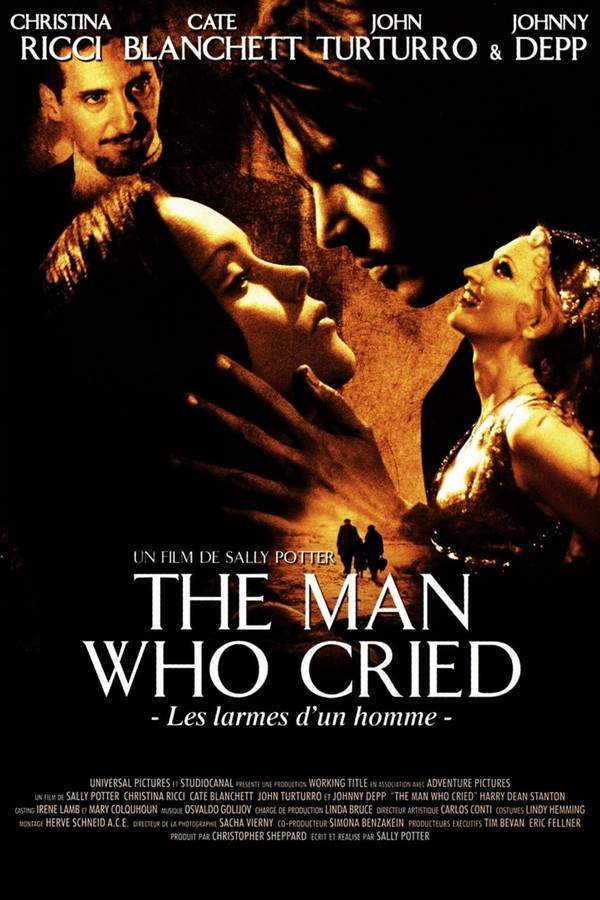
The Man Who Cried (2001) movie poster

Plot Summary

The Man Who Cried (2001) Plot Summary Explained

Release, runtime and language
2001 · 100 min · English
Loading streaming availability…
Directed by
Sally Potter
Starring
Christina Ricci

In 1927, a young Russian Jewish girl experiences a devastating loss and escapes to England, reinventing herself as Suzie, a gifted singer. She rises to prominence in the Parisian theater scene, becoming part of a lively group of international performers. Her world is further complicated by the arrival of a charismatic Russian dancer and a charming Gypsy horseman. As the Nazi invasion threatens, Suzie must undertake a dangerous journey to find her father in America, facing numerous challenges along the way.

On this page (6)
  1. 1 Where to watch
  2. 2 What happens: full plot
  3. 3 Plot questions answered
  4. 4 Movie threads
  5. 5 Movies like The Man Who Cried
  6. 6 Every angle
Loading streaming availability…

Full plot summary · contains spoilers

What Happens in The Man Who Cried: Full Plot Summary

The whole story of The Man Who Cried (2001) explained, from the opening scene to the final frame: every key event, every twist and what it all adds up to. Read it as a quick recap before the sequel, to check a scene you missed, or to finally understand what really happened.

Fegele Abramovich, played by Christina Ricci, is a young Russian Jew who experiences a heartbreaking separation from her father (Oleg Yankovsky) in 1927. As he ventures to America in search of a better life, he promises to send for Fegele and her grandmother. Before his departure, he tenderly sings "Je Crois Entendre Encore" from the Bizet opera Les pêcheurs de perles, a moment that lingers in her memory. Tragically, following her father's departure, the village falls victim to a brutal pogrom, leading to its destruction. With the help of sympathetic neighbors, Fegele narrowly escapes and finds herself onboard a boat headed for Britain, clutching a photograph of her father and a coin gifted by her grandmother.

Upon arrival in England, she is renamed "Susan" by a local official and placed in the care of foster parents. Struggling to navigate her new environment, Susan faces ridicule from her peers, who, unaware of her circumstances, mockingly refer to her as a "gypsy." Language barriers hinder her understanding, but a compassionate teacher, recognizing her talents, encourages Susan to sing and teach her English, allowing her to express herself.

As time goes by, Susan auditions for a coveted role in a singing dance troupe bound for Paris. There, she befriends an older Russian dancer named Lola (Cate Blanchett), and they form a bond living together as roommates. At a glamorous social event, the duo performs alongside a captivating horseman, Cesar (Johnny Depp), who instantly captivates Susan's interest. After their exciting performance, they hear a beautiful tenor voice inside, which belongs to Dante (John Turturro), an Italian opera singer who also catches Lola’s eye. The relationship between Lola and Dante blossoms as she seeks to earn his affection, drawn in by his charm and success. Meanwhile, Susan finds herself being introduced to Cesar's close-knit community, deepening her connection with him.

Trouble arises as Dante discovers Susan's Jewish background when he stumbles upon her father's photograph during a deceitful visit to her apartment after spending time with Lola. An elderly Jewish neighbor, Madame Goldstein (Miriam Karlin), warns Susan of the impending peril as Nazi threats loom ominously on the horizon. With the German invasion of France, a frantic exodus begins, as many, including Jews, attempt to escape the looming terror. The opera show, once vibrant with spectators, begins to empty, leaving only Susan and Dante among the performers. When Dante attempts to pursue Susan romantically, she firmly rejects him, igniting his ire against her heritage and her relationship with Cesar.

In a tense confrontation, it becomes clear that both personal and political tensions are spiraling out of control. Felix Perlman (Harry Dean Stanton), who manages the opera company, steps in to defend Susan, reminding Dante that, as an Italian in a precarious position in Paris, he too faces threats should Mussolini ally with the Nazis. As the atmosphere grows increasingly tense, Perlman decides to shut down the show, just as the Nazis breach the city limits the following day.

Reluctantly thrust back into the role of minstrel, Dante's jealousy propels him to betray Susan to a German officer. Lola, realizing the danger surrounding Susan, urges her to leave Paris. With excitement, Lola arranges a passage on an ocean liner to escape to America, a plan that meets with cataclysmic events. On the night of their departure, tragedy strikes when the Nazis attack Cesar's Romani village, killing a child, and making the need for Susan to flee all the more urgent. Despite her love for Cesar and her desire to stay and fight alongside him, he insists that her safety must come first.

As fate would have it, the ocean liner they board is tragically torpedoed during transit, claiming Lola's life in the chaos. Susan miraculously survives and is brought to New York, where her search for her father commences. In her quest, she learns that he has altered his identity, abandoned his singing career, and built a new life out west, believing his family perished in the horrific attack on their village.

When Susan finally arrives in Hollywood, she confronts the reality of her father's new life, including a new family and a terminal illness. Overcoming her feelings of abandonment, she walks past his new wife and children waiting in the hallway, making her way into his hospital room. As he recognizes her, his face lights up with joy. Filled with emotion, she sits beside him and sings "Je Crois Entendre Encore" in Yiddish, bringing tears to both of their eyes as they reconnect amidst the trials and tribulations of their tumultuous past.
Last updated: November 16, 2024 at 11:57

Was this helpful?

Plot questions answered

The Man Who Cried Plot Explained: Your Questions Answered

The questions people ask most about The Man Who Cried (2001): what happens in the confusing scenes, why the characters do what they do, the twists, hidden details and what the ending means. Each answer contains spoilers.

Q1

Why did Dante betray Susan to the German officer?

Dante betrayed Susan out of jealousy and resentment after she rejected his romantic advances. When he discovered her Jewish background through her father's photograph, he used this information to harm her. Additionally, Dante felt threatened himself as an Italian in Paris during the Nazi occupation, and his anger at being spurned combined with his precarious position led him to expose Susan to the Germans.

Foreshadowing: Dante's jealousy was foreshadowed when he visited Susan's apartment after spending time with Lola, discovering the photograph that revealed her Jewish identity.

  • dante betrayal
  • susan jewish
  • paris occupation
  • betrayal scene
Q2

What happened to the ocean liner Susan and Lola boarded?

The ocean liner they boarded to escape to America was tragically torpedoed during its voyage. This catastrophic event occurred as they attempted to flee the Nazi invasion of France. While Susan miraculously survived, Lola was killed in the chaos, devastating Susan and marking one of the film's most tragic moments.

Foreshadowing: The urgency of their departure was heightened when Nazis attacked Cesar's Romani village the night before, killing a child and making their escape critical.

  • ocean liner
  • torpedo attack
  • lola death
  • escape from france
Q3

Why did Susan's father change his identity in America?

Susan's father believed his entire family, including his daughter and mother, had been killed during the brutal pogrom that destroyed their village. Believing he was the sole survivor, he altered his identity, abandoned his singing career, and built a new life out west with a new family. He never knew that Fegele had escaped to England and survived.

Foreshadowing: The devastating destruction of Fegele's village and the assumption of her death directly led to his decision to start over.

  • father identity
  • new life
  • believed family dead
  • hollywood
Q4

What happened to Cesar after the Nazi attack on his village?

Cesar's Romani village was attacked by Nazis on the night Susan and Lola planned to depart for America. A child was killed in the attack, making the need for Susan to flee urgent. Cesar insisted she leave for her safety, despite his love for her and his desire to stay and fight. The film does not explicitly show Cesar's ultimate fate, but he chose to remain behind while Susan escaped.

Foreshadowing: The attack on Cesar's village was set up by the growing Nazi threat throughout the Paris portion of the film.

  • cesar
  • romani village
  • nazi attack
  • gypsy horseman
Q5

Why was Fegele renamed Susan in England?

When Fegele arrived in England as a young refugee orphan, a local official renamed her 'Susan' as part of the assimilation process. This was common practice at the time, where officials would anglicize names to help integrate immigrant children into their new country. She was also placed with foster parents to care for her.

  • renamed susan
  • england
  • foster parents
  • assimilation
Q6

Why did Dante react so strongly to discovering Susan was Jewish?

Dante's intense reaction stemmed from a combination of romantic rejection and the volatile political climate. When Susan rejected his romantic advances, his feelings turned to anger. Additionally, in the context of Nazi-occupied Paris, discovering someone's Jewish background could be used as leverage. Dante's jealousy was compounded by his own precarious position as an Italian when Mussolini might align with the Nazis.

Foreshadowing: Dante's interest in Lola and his presence in the opera world set up his later discovery of Susan's photograph.

  • dante jealousy
  • jewish heritage
  • opera singer
  • paris occupation
Q7

Why did Susan's father believe his family was dead?

After leaving for America in 1927, Susan's father received news (or lack thereof) about the brutal pogrom that destroyed his village. With no information about Fegele's escape to England, he reasonably concluded that his daughter and mother had perished in the attack, as many others in the village did. This devastating belief shaped his decision to start a new life.

Foreshadowing: The brutal destruction of the village and Fegele's narrow escape created the misunderstanding that led to her father's belief.

  • pogrom
  • village destruction
  • believed dead
  • father survival
Q8

What was the significance of the song Je Crois Entendre Encore?

'Je Crois Entendre Encore' from Bizet's opera *Les pêcheurs de perles* was the song Fegele's father sang to her before his departure in 1927. This tender moment became a lasting memory for her. Later, in the film's emotional climax, Susan sings the same opera aria in Yiddish at her father's hospital bedside, symbolizing their unbreakable bond despite decades of separation and hardship.

Foreshadowing: The song was introduced in the opening scene as a tender father-daughter moment that would resonate throughout the film.

  • je crois entendre encore
  • bizet
  • yiddish
  • father daughter song
Q9

Why couldn't Susan stay with Cesar instead of fleeing to America?

Cesar insisted that Susan flee to America because her life was in immediate danger. Dante had betrayed her to German officers, making her a target for arrest. Additionally, the Nazi attack on Cesar's Romani village had just occurred, killing a child. While Susan wanted to stay and fight alongside Cesar, he prioritized her survival and made her go, recognizing that staying meant almost certain death.

Foreshadowing: Lola had already arranged the ocean liner passage, and the attack on the village made immediate departure necessary.

  • cesar love
  • escape america
  • flee paris
  • danger
Q10

How did Lola die in the film?

Lola died when the ocean liner she and Susan were traveling on was torpedoed during their voyage to America. While Susan survived, Lola was killed in the attack at sea. This tragic event occurred shortly after they escaped from Nazi-occupied Paris, making the loss even more devastating for Susan.

Foreshadowing: The ocean liner departure was their only escape route from the danger in Paris.

  • lola death
  • torpedo
  • ocean liner
  • paris escape
Q11

Why did Susan reject Dante's advances?

Susan rejected Dante's romantic advances because she was in love with Cesar, the charismatic Romani horseman she had connected with earlier in Paris. Their relationship had deepened through her introduction to Cesar's community, and she had no romantic interest in Dante. This rejection, combined with his discovery of her Jewish background, fueled Dante's eventual betrayal.

Foreshadowing: Susan's interest in Cesar was established during their first meeting at the glamorous social event in Paris.

  • susan cesar
  • dante rejected
  • love triangle
  • paris romance
Q12

Why did Lola help Susan escape Paris?

Lola helped Susan escape Paris because she recognized the grave danger Susan faced after Dante betrayed her to German authorities. As Susan's close friend and roommate in Paris, Lola was aware of the Nazi threats and understood that Susan would be arrested if she remained. Lola arranged passage on the ocean liner and urged her to leave before it was too late, sacrificing her own safety in the process.

Foreshadowing: Lola's concern for Susan was established through their friendship and living arrangements in Paris.

  • lola help
  • paris escape
  • friend sacrifice
  • arranged passage

Movie threads

More Movies Like The Man Who Cried, by Mood & Story

Curated lists built around what makes The Man Who Cried tick: the same mood, the same kind of story or the same emotional payoff. Each list explains why these movies belong together.

Movies about artists surviving war like The Man Who Cried

Stories of artists and dreamers navigating the cruel realities of conflict and displacement. If you liked the blend of artistic passion and wartime survival in The Man Who Cried, explore these movies. They feature similar stories of musicians, performers, and artists finding love and hope while navigating displacement, persecution, and the heavy emotional weight of conflict. Discover powerful dramas with a bittersweet, melancholic tone.

  • melancholic
  • hopeful
  • nostalgic
  • tense
  • dramatic
  • romantic
  • Tone: melancholic, bittersweet, dramatic
  • Pacing: steady, character-driven
Why these movies?

The story pattern: The narrative pattern revolves around a central character whose life is defined by their art. Their personal journey of growth and romance intersects catastrophically with historical conflict, forcing them on a physical and emotional odyssey. The story often unfolds as a linear, steady progression from relative peace into deepening peril, testing the character's resilience and the power of their art to provide solace or escape.

Why they belong together: Movies are grouped here for their shared focus on the artist's experience during wartime. They consistently blend heavy emotional themes of loss and displacement with the beauty of artistic expression, resulting in a melancholic yet hopeful tone. The pacing is character-driven and steady, allowing the personal stakes to unfold alongside the larger historical drama.

Epic emotional journey movies like The Man Who Cried

Epic, character-driven journeys where profound personal loss fuels a quest for belonging. For viewers who appreciated the epic emotional scope and bittersweet ending of The Man Who Cried, this list features similar movies. Find powerful dramas about characters undertaking long journeys fueled by grief and a search for family or home. These films share a heavy emotional weight, a steady pacing that builds investment, and a ultimately poignant, bittersweet feel.

  • grieving
  • hopeful
  • nostalgic
  • dramatic
  • poignant
  • epic
  • Tone: bittersweet, melancholic, hopeful
  • Pacing: steady, epic
Why these movies?

The story pattern: These narratives typically begin with a traumatic inciting event, such as the loss of family or home. The protagonist's life becomes a long quest to fill that void, often spanning many years and locations. The journey is punctuated by new relationships and challenges that test their spirit. The climax involves a reunion or resolution that provides closure but acknowledges the irreversible changes and sacrifices made, resulting in a bittersweet conclusion.

Why they belong together: These films are united by their core narrative structure: a quest born from profound loss. They share a heavy emotional weight, a steady, epic pacing that allows the journey to feel substantial, and a tone that balances melancholy with glimmers of hope. The central theme is the bittersweet nature of finding what you were looking for, only to realize the cost of the search.

If you liked this

Movies Like The Man Who Cried

Similar movies to The Man Who Cried: the same genre, themes or kind of story. Each one comes with its own plot summary, timeline and ending explained.

Browse all movie summaries

Every angle

The Man Who Cried (2001) Explained: Plot, Timeline & Characters

Everything about The Man Who Cried in one place: what happens in the plot summary, the timeline in chronological order, the characters and meaning and a spoiler-free summary. What's After the Movie adds the cast, box office and post-credit scenes.

Coming soon on iOS and Android

The Plot Explained Movie Summary App

Plot summaries, endings explained and timelines on your phone. Catch up on any movie in minutes, save your favorites and never miss a twist again.

Be the first to know when we launch. Your email stays private, always.

Learn more about the app