Plot Explained Spoilers guaranteed!
Plot Explained

Browse by genre

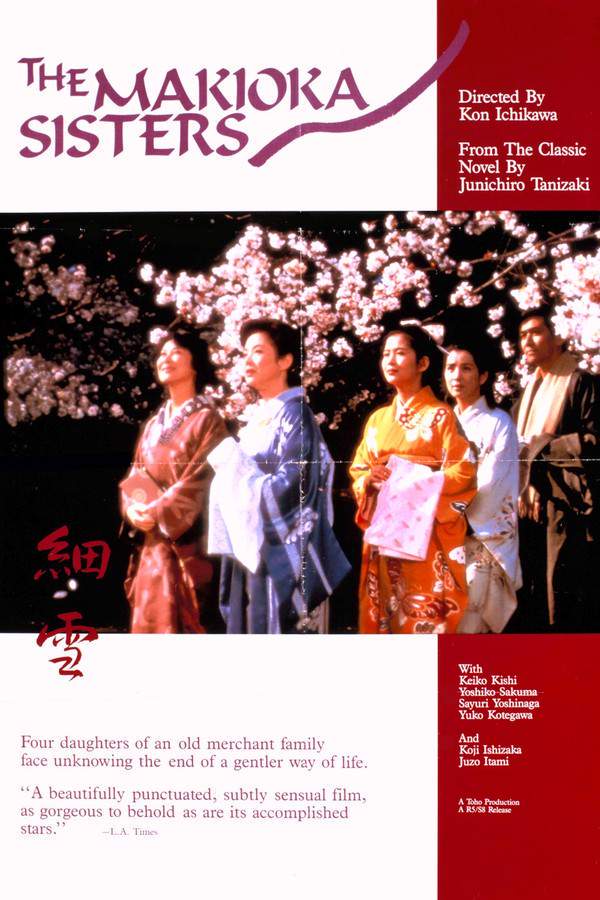
The Makioka Sisters (1983) (2011) movie poster

Characters & Themes

The Makioka Sisters (1983) (2011) Characters, Setting & Themes Explained

Release, runtime and language
2011 · 140 min · Japanese
Directed by
Kon Ichikawa

Set in pre-war Japan, this film follows the lives of four sisters whose family's kimono business struggles to survive. As the seasons change, they grapple with tradition and modernity, facing personal desires and societal expectations. The story explores the complexities of family, the weight of cultural heritage, and the poignant realities of a changing world, ultimately revealing the intertwined fates of these sisters.

On this page (6)
  1. 1 Characters explained (4)
  2. 2 Where & when it takes place
  3. 3 Themes & meaning (3)
  4. 4 Character & meaning questions
  5. 5 Movie threads
  6. 6 Every angle

4 main characters · contains spoilers

The Makioka Sisters (1983) Characters Explained: Who Is Who

The main characters of The Makioka Sisters (1983) (2011), heroes and villains: what drives them, how they change over the course of the story and what each of them reveals about the film's bigger ideas.

  • Sachiko

    Sachiko is the stabilizing force among the sisters, balancing her own family obligations with the turmoil surrounding her siblings. She embodies compassion and pragmatism, taking on the role of a caretaker while also grappling with her feelings of inadequacy. Her desire to shield her family from emotional pain highlights her deep-seated fears of loss.

    • 👩‍👧 Family
    • 💖 Love
  • Tsuruko

    As the eldest sister, Tsuruko carries the weight of expectations as an heiress of the Makioka clan. Her actions, though well-intended, often stir conflict within the family, especially regarding Yukiko's marriage prospects. She represents the struggle between tradition and personal desire, feeling adrift as family dynamics evolve.

    • 👑 Tradition
    • 😕 Confusion
  • Yukiko

    Yukiko is portrayed as a fragile yet resilient character, navigating the world of marriage prospects with reluctance. Her internal struggles with societal expectations and personal desires define her journey, which is marred by the shadow of Itakura's demise. Yukiko's evolution through grief and self-discovery is a poignant reflection of lost opportunities.

    • 💍 Marriage
    • 😔 Struggle
  • Taeko

    Taeko is the free-spirited younger sister, whose journey of self-discovery unfolds significantly throughout the film. Initially impulsive, her character development takes a transformative turn after Itakura's death. As she delves into doll-making and encounters challenges, she begins to redefine her identity and purpose beyond the scars of grief.

    • 🎨 Creativity
    • 🦋 Transformation

Last updated: October 22, 2024 at 23:12

Was this helpful?

Setting

Where and When Does The Makioka Sisters (1983) Take Place?

The setting of The Makioka Sisters (1983) (2011): the year and time period, the places and locations, and how they shape the characters, the mood and the tension of the story.

Time period

late 1930s, 1938

The story unfolds during the late 1930s, particularly in 1938, known as the Shōwa period in Japan. This era was marked by significant social and political changes, with traditional values often clashing with modern influences. The period's challenges are mirrored in the sisters' lives as they navigate familial expectations and societal pressures.

Location

Kansai region, Kobe, Osaka, Kyoto

The movie is set in the Kansai region of Japan, specifically in the bustling cities of Kobe and Osaka during the late 1930s. This area is renowned for its rich cultural heritage, beautiful landscapes, and the seasonal bloom of cherry blossoms, which symbolizes the transient beauty of life. Additionally, Kyoto's temples provide a backdrop for reflection and pilgrimage, emphasizing the importance of tradition in the sisters' lives.

  • 🏯 Locations
  • 🌸 Cherry Blossoms

Last updated: October 22, 2024 at 23:12

Was this helpful?

3 major themes

The Makioka Sisters (1983) Meaning: Themes & Message Explained

What is The Makioka Sisters (1983) (2011) really about? The emotional, social and philosophical themes the film keeps returning to, its symbolism and the message beneath the surface.

  • Sisterhood

    The theme of sisterhood is central to the film, as it explores the bond between the four Makioka sisters. Despite their individual struggles and insecurities, their connection serves as both a source of support and tension. The delicate balance of love, loyalty, and rivalry encapsulates the complexities of family dynamics.

  • Transience

    Transience is poignantly depicted through the symbolism of cherry blossoms, representing the fleeting nature of life and beauty. The sisters' experiences reflect the impermanence of their joys and sorrows, especially as they face love lost and the inevitability of change.

  • Loss

    Loss permeates the film, especially through Taeko's grief over Itakura's death and its impact on the family. The emotional turmoil stemming from personal and external losses reveals the fragility of happiness and the resilience required to move forward amidst heartache.

Last updated: October 22, 2024 at 23:12

Was this helpful?

Character & theme questions

The Makioka Sisters (1983) Characters & Meaning: Your Questions Answered

The questions people ask about The Makioka Sisters (1983) (2011): who the characters really are, their relationships, what the symbols mean, where it takes place and what the movie is really about. Each answer contains spoilers.

Q1

Where is The Makioka Sisters set?

The film is set in Japan's Kansai region, primarily in the bustling cities of Kobe and Osaka, with scenes also taking place in Kyoto. These locations are known for their rich cultural heritage and beautiful landscapes, providing a vivid backdrop that emphasizes tradition and modernity.

  • kansai
  • kobe
  • osaka
  • kyoto
  • japan setting
Q2

When does the story take place?

The story unfolds in the late 1930s, specifically around 1938, during Japan's Shōwa period. This era was marked by significant social and political changes, with traditional values clashing against modern influences, a tension that mirrors the sisters' personal struggles.

  • 1938
  • showa period
  • pre-war japan
  • 1930s
Q3

What does the film say about sisterhood?

Sisterhood is central to the film, exploring the bond between the four Makioka sisters. Their relationship serves as both a source of support and tension, balancing love, loyalty, and rivalry to capture the complex dynamics of family.

  • sisters
  • family bond
  • sibling relationships
  • sisterly love
Q4

How does the film use cherry blossoms as a symbol?

Cherry blossoms appear throughout the film as a symbol of transience, representing the fleeting nature of life and beauty. The sisters' experiences reflect the impermanence of joy and sorrow, emphasizing that all moments, both happy and sad, are temporary.

  • cherry blossoms
  • transience
  • impermanence
  • japanese symbolism
Q5

How does loss factor into the story?

Loss permeates the film, particularly through Taeko's grief over Itakura's death and its impact on the entire family. This emotional turmoil reveals the fragility of happiness and the resilience required to move forward amidst heartache.

  • grief
  • loss
  • death
  • emotional struggle
Q6

Who is Sachiko and what is her role?

Sachiko serves as the stabilizing force among the four sisters, balancing her own family obligations with the emotional turmoil surrounding her siblings. She embodies compassion and pragmatism, often acting as a caretaker while grappling with fears of loss and feelings of inadequacy.

  • sachiko
  • eldest sister
  • caretaker
  • family anchor
Q7

What is Tsuruko's role in the family?

Tsuruko is the eldest sister and heiress of the Makioka clan, carrying the weight of family expectations. Her well-intended actions often create conflict within the family, particularly regarding Yukiko's marriage prospects, as she struggles between tradition and personal desire.

  • tsuruko
  • eldest
  • heiress
  • family expectations
Q8

Who is Yukiko and what defines her journey?

Yukiko is portrayed as a fragile yet resilient character navigating the world of marriage prospects with deep reluctance. Her journey is marked by the shadow of Itakura's death, reflecting lost opportunities and her evolution through grief and self-discovery.

  • yukiko
  • marriage
  • grief
  • resilience
Q9

What defines Taeko's character arc?

Taeko is the free-spirited younger sister whose journey of self-discovery unfolds significantly throughout the film. After Itakura's death, she transforms from being impulsive, delving into doll-making and facing new challenges that help her redefine her identity and purpose.

  • taeko
  • self-discovery
  • doll making
  • transformation
Q10

How does the film address tradition versus modernity?

The film explores the tension between tradition and modernity that defined pre-war Japan. The sisters grapple with familial expectations and societal pressures while pursuing personal desires, reflecting the broader social changes occurring during the late 1930s.

  • tradition
  • modernity
  • social change
  • japanese society
Q11

What role does the family kimono business play?

The Makioka family's kimono business serves as a symbol of their cultural heritage and the traditions they struggle to maintain. Its survival represents the broader challenge of preserving cultural identity amid changing times and economic pressures.

  • kimono
  • business
  • family heritage
  • cultural preservation
Q12

What is the emotional tone of the film?

The film maintains a melancholic tone focused on loss and unfulfilled desires, balanced by moments of serenity and acceptance. The ending is bittersweet, marked by farewells and separations but also new beginnings and tranquil acceptance of inevitable change.

  • emotional tone
  • melancholy
  • bittersweet
  • acceptance

Movie threads

More Movies Like The Makioka Sisters (1983), by Mood & Story

Curated lists built around what makes The Makioka Sisters (1983) tick: the same mood, the same kind of story or the same emotional payoff. Each list explains why these movies belong together.

Elegiac Family Chronicles like The Makioka Sisters (1983)

Atmospheric stories of families navigating societal change with quiet grace. Discover movies like The Makioka Sisters that delve into the poignant lives of families facing change. These similar drama stories share a melancholic tone and slow pace, exploring cultural heritage and personal desire. If you liked the reflective, atmospheric feel of The Makioka Sisters, you'll find more films about sisterhood and societal expectations here.

  • melancholic
  • nostalgic
  • reflective
  • serene
  • atmospheric
  • poignant
  • Tone: melancholic, reflective, bittersweet
  • Pacing: slow, deliberate, episodic
Why these movies?

The story pattern: These narratives often unfold over an extended period, using the passage of time or seasons as a structural device. The central conflict arises from the friction between deeply held traditions and the inexorable pull of modernity, explored through the interconnected personal journeys of family members. The plot is typically character-driven, prioritizing emotional nuance over high-stakes drama.

Why they belong together: These films are grouped by their shared focus on the quiet, bittersweet drama of family life within a specific cultural milieu. They resonate with a similar reflective mood, deliberate pacing, and a thematic preoccupation with memory, loss, and the subtle, often painful, process of adaptation.
Movies with the Quiet Melancholy of The Makioka Sisters (1983)

Stories where personal longings are subdued by duty and circumstance. Find films that share the quiet melancholy and bittersweet ending of The Makioka Sisters. These similar reflective dramas feature characters grappling with personal desire versus duty. If you enjoyed the film's serene, poetic atmosphere and its focus on grief and unspoken feelings, explore more movies about subdued emotions and societal pressure.

  • poignant
  • melancholic
  • subdued
  • atmospheric
  • contemplative
  • serene
  • Tone: melancholic, poignant, bittersweet
  • Pacing: slow, atmospheric, meditative
Why these movies?

The story pattern: The narrative pattern follows characters who confront the gap between their inner passions and the external roles they are expected to play. Conflict is internal and interpersonal, driven by unspoken words and repressed emotions rather than overt action. The journey is one of resigned acceptance or small, poignant compromises, leading to endings that are bittersweet rather than conclusively happy or tragic.

Why they belong together: These films are united by a specific emotional texture: a gentle, pervasive melancholy derived from themes of loss, restraint, and the quiet toll of conformity. They share a slow, atmospheric pace that allows the weight of unfulfilled desires to settle deeply, creating a powerfully resonant and contemplative viewing experience.

Every angle

The Makioka Sisters (1983) (2011) Explained: Plot, Timeline & Characters

Everything about The Makioka Sisters (1983) in one place: what happens in the plot summary, the timeline in chronological order, the characters and meaning and a spoiler-free summary. What's After the Movie adds the cast, box office and post-credit scenes.

Coming soon on iOS and Android

The Plot Explained Movie Summary App

Plot summaries, endings explained and timelines on your phone. Catch up on any movie in minutes, save your favorites and never miss a twist again.

Be the first to know when we launch. Your email stays private, always.

Learn more about the app