Year: 1999
Runtime: 165 min
Language: English
Director: Giuseppe Tornatore
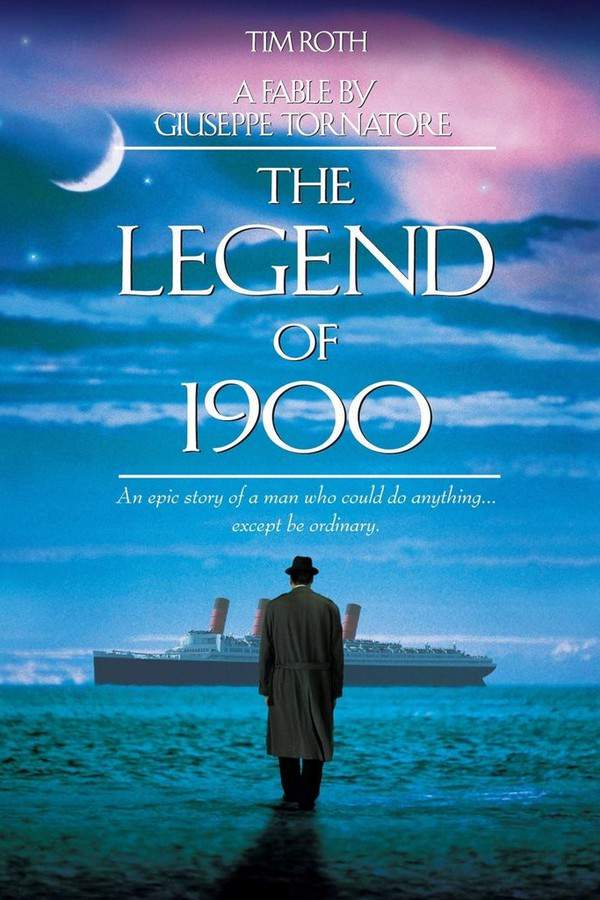
A captivating pianist appears on the deck of an ocean liner as the new century begins. Found as an infant in 1900 and raised aboard the ship, the gifted musician’s extraordinary talents enthrall the passengers. He refuses to leave the vessel, preferring his life at sea to the complexities and potential disappointments of life on land, remaining a perpetual wanderer bound to the rhythm of the waves.
Find where to stream, rent, or buy The Legend of 1900 (1999) in the US with current JustWatch availability, up-to-date pricing, and platform listings for subscription, rental, and digital purchase options.
Warning: spoilers below!
Haven’t seen The Legend of 1900 yet? This summary contains major spoilers. Bookmark the page, watch the movie, and come back for the full breakdown. If you're ready, scroll on and relive the story!
Read the complete plot breakdown of The Legend of 1900 (1999), including all key story events, major twists, and the ending explained in detail. Discover what really happened, and what it all means.
As Max Tooney (Tim Roth) steps into a quaint music shop, the story unfolds like a delicate thread in a grand tapestry. He parts with his beloved Conn trumpet, yearning for one last opportunity to immerse himself in its sweet melody. The shopkeeper consents, and as the notes drift through the air, he recognizes a tune from an ancient record matrix—a master disc brimming with secrets of a bygone era.
Max reminisces about the extraordinary tale of 1900, a boy discovered abandoned in the first-class dining room of the SS Virginian in the year 1900. A coal man named Danny Boodman finds the infant and names him Danny Boodman T. D. Lemon 1900, after himself, the fruit crate that carried him, and the year of his fateful discovery. Tragically, Danny meets an untimely end in a workplace accident. The authorities swoop in to take the orphaned infant away, yet 1900 evades capture for days, eventually reemerging with an inexplicable and extraordinary talent for piano playing—an ability mysteriously acquired and entirely self-taught.
As time flows, 1900 evolves into a brilliant pianist, captivating audiences with his unparalleled skills. In 1927, when Max joins the ship's orchestra, an enchanting friendship blossoms between the two. Despite being anchored on the vessel, 1900 remains connected to the world outside, fueled by stories from passengers who share the latest musical innovations and trends.
His reputation soars to such heights that the legendary New Orleans jazz musician Jelly Roll Morton boards the ship, eager to challenge 1900 in a piano duel. After listening to Morton's opening number, 1900 responds with a hauntingly familiar melody: > "Silent Night," leaving Morton feeling disarmed. Morton, however, is undeterred and performs a stunning piece titled > "The Crave," which provokes tears from 1900. Unfazed, 1900 meticulously reproduces the composition from memory, met only with lukewarm applause.
It's only when he unveils an original piece, executed with astonishing speed and virtuosity—so intense that the metal strings of the piano begin to burn, hot enough that he offers Morton a cigarette lit from the piano's heat—that he truly claims victory. The tale takes a turn as a record producer, intrigued by whispers of 1900's unique abilities, brings a groundbreaking recording device aboard. Captivated by a young woman who boards the ship, he crafts a demo inspired by her presence. Upon listening to the creation, 1900 is struck by the idea of his music transcending live performance; in a moment of fury, he seizes the master disc and shatters it to pieces. For 1900, the act of playing and performing is inseparable from his artistic identity.
In a flashback to the mid-1940s, we find Max (who left the ship's orchestra in 1933) desperately searching through the deserted hull of the SS Virginian, now facing a watery fate far from shore. With a haunting intention, he returns to the ship, armed with the long-ago recording 1900 made, playing it into the wind in hopes of coaxing his long-lost friend from the ship's decaying depths. The poignant reunion unravels, a touching reminder that time has not dulled 1900's unwavering commitment to the only home he has known—his beloved ship.
As this bittersweet reunion draws to a close, Max departs the shop, trumpet in hand, reclaimed by the insightful shopkeeper, who cryptically remarks, "A good story is worth more than an old trumpet." In that profound moment, it becomes evident that some stories are eternal, enduring across the boundaries of time, effortlessly bridging the gaps between the past, present, and future.
Last updated: November 22, 2024 at 10:52
Explore frequently asked questions about The Legend of 1900 (1999) with spoiler-rich answers covering the full plot summary, major story beats, character motivations, hidden details, and ending meaning. This movie summary FAQ helps explain confusing scenes, plot twists, and narrative decisions in clear, searchable detail.
1900 refuses to leave the Virginian because the ship is the only home he has ever known. Born on the vessel and raised by the coal man Danny Boodman, 1900's entire world exists within its walls. The thought of stepping onto land terrifies him because it would mean entering an infinite world of choices and possibilities that he cannot comprehend. He tells Max that the boundaries of the ship give him meaning, and the endless possibilities of land feel like a trap rather than freedom.
Early in the film, 1900 watches the horizon from the ship's deck, fascinated by the distant lights of cities he can see but never visits.
After Danny Boodman dies in a workplace accident, the orphaned infant disappears for days. When 1900 reemerges, he possesses an extraordinary, entirely self-taught ability to play the piano. The film presents this as a mysterious, almost magical gift, he simply understands music in a way no one can explain. His talent is so remarkable that he becomes the ship's main attraction, captivating passengers with performances that seem impossible for someone with no formal training.
The moment 1900 is discovered, the camera lingers on the piano in the first-class dining room, hinting at his destined connection to the instrument.
Jazz legend Jelly Roll Morton boards the Virginian specifically to challenge 1900 to a piano duel. After Morton performs his complex piece "The Crave," 1900 moves the audience to tears before reproducing Morton's composition perfectly from memory. The climax comes when 1900 plays an original piece of such technical difficulty and intensity that the piano's strings literally burn. Morton concedes defeat, and 1900's reputation as the greatest pianist spreads beyond the ship.
1900 destroys the recording because he believes music should remain ephemeral, a living, performed experience rather than a fixed, repeatable object. When he hears his own music played back from the record, he realizes that the recording has taken on a life of its own, separate from him. For 1900, allowing his music to exist without his presence would strip the performance of its meaning. He smashes the disc in a moment of fury, choosing artistic integrity over immortality.
Before the recording, 1900 is already shown questioning whether captured music can truly be his.
The woman was a passenger who boards the ship and notices 1900 playing piano. She expresses interest in his music, and 1900, deeply infatuated, creates a special demo recording inspired by her. This is the only time 1900 attempts to create music specifically for someone else. However, when he tries to give her the recording, he cannot bring himself to speak to her, and she leaves the ship without taking the disc. Her departure marks the end of his brief romantic connection to the outside world.
Danny Boodman, the coal man who discovers the abandoned infant in the first-class dining room in 1900, names the child Danny Boodman T. D. Lemon 1900. He raises the boy aboard the Virginian as his own. However, Danny dies in a workplace accident when 1900 is still a young child. This tragic loss leaves the boy orphaned, though it ultimately leads to his discovery of the piano and his extraordinary musical gift.
Danny frequently tells 1900 about the wonders of the world outside the ship, creating the irony that Danny's death prevents 1900 from ever exploring that world.
Max returns to the decaying Virginian in the mid-1940s because he has learned the ship is being scrapped. He brings with him the old recording 1900 made years earlier, the only surviving recording of his friend. Max plays the music into the wind and calls out for 1900, hoping to find him before the ship is destroyed. His mission is to convince 1900 to leave the ship and come ashore, but also, perhaps, to say goodbye.
1900 stays on the sinking Virginian because he cannot imagine living anywhere else. The ship represents his entire identity, he knows every corridor, every sound, every corner of it. For 1900, leaving the ship would mean entering a world of infinite choices (land, cities, people) that he finds paralyzing. He accepts his fate, choosing to die on the only home he has ever known rather than face the terrifying uncertainty of life on shore. He tells Max that he was never truly afraid of the unknown because he never chose to find out what was out there.
Throughout the film, 1900 repeatedly declines opportunities to go ashore, even when the ship makes port in famous cities like New York.
Max Tooney was the ship's cornet player who joined the Virginian's orchestra in 1927. He became 1900's closest friend and the only person who truly understood him. After Max left the ship in 1933, he spent years working as a musician on land but never forgot his extraordinary friend. The entire narrative is framed as Max telling 1900's story to a music shop owner, revealing that he is the narrator who has carried this tale for decades.
The film opens with Max entering the music shop, immediately establishing him as the storyteller and connecting the frame narrative to the main story.
The shopkeeper's comment that "a good story is worth more than an old trumpet" suggests that 1900's tale has become more valuable than any material possession. The trumpet Max sold represents his past and connection to 1900, but the story of 1900's life, the music, the friendship, the choices, is ultimately more enduring. The ending implies that some stories transcend time and objects, becoming immortal through memory and retelling.
Discover curated groups of movies connected by mood, themes, and story style. Browse collections built around emotion, atmosphere, and narrative focus to easily find films that match what you feel like watching right now.
Stories of brilliant artists who live in their own worlds, apart from society.If you were captivated by the story of 1900, explore more movies like The Legend of 1900 that delve into the lives of isolated geniuses. These similar films feature characters whose extraordinary talents create a beautiful but lonely existence, focusing on the artist's soul and their unique relationship with the world.
Films in this thread typically follow a character-driven arc centered on an individual with immense, often innate, talent. The central conflict arises from their inability or unwillingness to integrate into conventional society, leading to a life of seclusion, eccentricity, or confinement within a specific environment that fuels their art.
These films are grouped together because they share a deep focus on the psychology of the artist, a melancholic and nostalgic tone, and a slow, reflective pacing that allows the audience to contemplate the price of genius and the meaning of a life lived differently.
Emotional stories about characters who find meaning within self-imposed or physical limits.Discover more poignant stories like The Legend of 1900 about characters living in confined worlds. These movies share a bittersweet ending and explore themes of isolation and belonging. If you liked the poetic feeling of 1900's life aboard the ship, you'll find similar emotional journeys here.
The narrative pattern revolves around a protagonist who remains rooted in a specific, limited space (like a ship, an island, a room, or a routine) while the wider world changes around them. The story examines their reasons for staying—often fear, trauma, or a unique sense of purpose—and culminates in an ending that is both tragic and affirming of their choices.
These movies are united by a specific emotional mix: a slow, dreamlike pace, a melancholic atmosphere, and a conclusive feel that is decidedly bittersweet. They prioritize mood and philosophical themes over complex plotting, creating a uniquely poignant and reflective viewing experience.
Don't stop at just watching - explore The Legend of 1900 in full detail. From the complete plot summary and scene-by-scene timeline to character breakdowns, thematic analysis, and a deep dive into the ending - every page helps you truly understand what The Legend of 1900 is all about. Plus, discover what's next after the movie.
Track the full timeline of The Legend of 1900 with every major event arranged chronologically. Perfect for decoding non-linear storytelling, flashbacks, or parallel narratives with a clear scene-by-scene breakdown.
Discover the characters, locations, and core themes that shape The Legend of 1900. Get insights into symbolic elements, setting significance, and deeper narrative meaning - ideal for thematic analysis and movie breakdowns.
Discover movies like The Legend of 1900 that share similar genres, themes, and storytelling elements. Whether you’re drawn to the atmosphere, character arcs, or plot structure, these curated recommendations will help you explore more films you’ll love.
The Legend of 1900 (1999) Scene-by-Scene Movie Timeline
The Legend of 1900 (1999) Movie Characters, Themes & Settings
The Legend of 1900 (1999) Spoiler-Free Summary & Key Flow
Movies Like The Legend of 1900 – Similar Titles You’ll Enjoy
New York, New York (1977) Film Overview & Timeline
Pandora and the Flying Dutchman (1951) Ending Explained & Film Insights
My Twentieth Century (1990) Complete Plot Breakdown
Titanic (1997) Spoiler-Packed Plot Recap
Ragtime (1981) Movie Recap & Themes
The Jazz Singer (1927) Spoiler-Packed Plot Recap
Show Boat (1936) Complete Plot Breakdown
And the Ship Sails On (1983) Film Overview & Timeline
The Navigator (1924) Full Movie Breakdown
Atlantic (1929) Full Movie Breakdown
Over the Waves (1950) Film Overview & Timeline
Transatlantic (1931) Detailed Story Recap
Ship of Fools (1965) Full Movie Breakdown
That Girl from Paris (1936) Spoiler-Packed Plot Recap
Between Two Worlds (1944) Full Summary & Key Details