Year: 2026
Runtime: 1 h 40 m
Language: italian
Director: Francesco Sossai
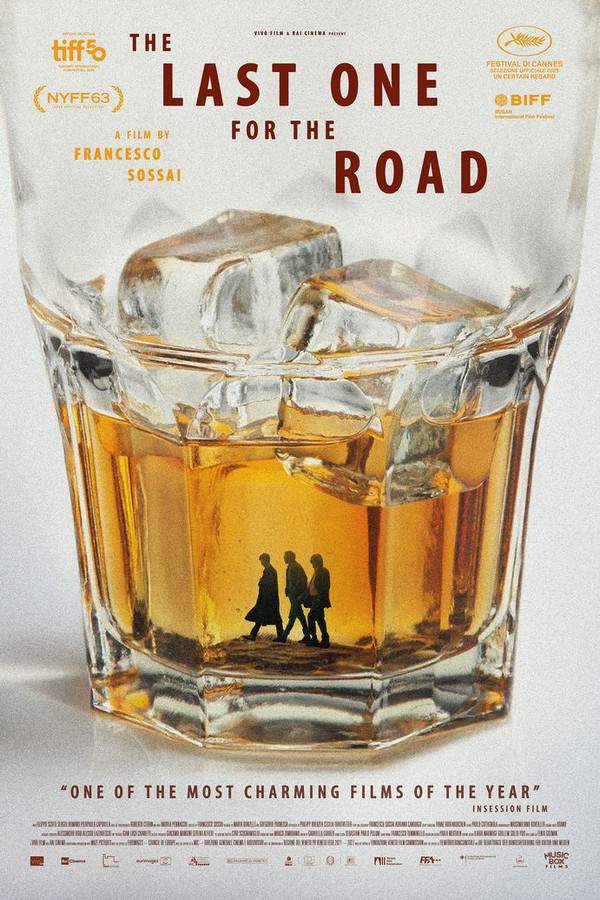
The bottom has fallen out for Carlobianchi and Doriano, two small‑time Italian crooks who haven’t pulled off a decent scam since the 2008 financial crisis and now stare at middle‑age mediocrity. When an exiled partner returns from Argentina with a promise of treasure, they get a final shot at fortune, but the plan tests their loyalty and skill.
Find where to stream, rent, or buy The Last One for the Road (2026) in the US with current JustWatch availability, up-to-date pricing, and platform listings for subscription, rental, and digital purchase options.
Warning: spoilers below!
Haven’t seen The Last One for the Road yet? This summary contains major spoilers. Bookmark the page, watch the movie, and come back for the full breakdown. If you're ready, scroll on and relive the story!
Read the complete plot breakdown of The Last One for the Road (2026), including all key story events, major twists, and the ending explained in detail. Discover what really happened, and what it all means.
Carlobianchi (played by Sergio Romano) and Doriano (played by Pierpaolo Capovilla) are two broke men in their fifties who chase the elusive hair of the dog—a Veneto phrase known as l’ultimo or l’ultima—while anxiously awaiting the return of their friend Genio from Argentina after the 2008 financial crisis. With one last drink on their minds, they decide to head to Venice in the dead of night to drink there, hoping the city will offer a final, weary respite from their stubborn luck and broken dreams.
Giulio (played by Filippo Scotti), a shy architecture student, is celebrating the graduation of his friend Giulia (played by Giulia Bertasi), a woman he secretly loves. Carlobianchi and Doriano crash the celebration, and Giulio reluctantly goes along, but soon decides to step away from the group. The two men then offer to drive him back to Mestre, insisting they can still share a few more drinks on the road.
The following morning, Giulio wakes up in Treviso, realizing that Carlobianchi had gone to the wrong airport and Genio somehow landed in Venice. Resolved to see where his two companions have wandered, Giulio decides to chase after them in hopes of finding the restaurant where Genio and the pair used to go with him. As they press on through the Venetian countryside, the trio—now bound by a brittle camaraderie—grapple with the past that binds them. They use Giulio’s architectural knowledge to keep up a convincing façade when an old villa’s owner mistakes them for surveyors, securing both alcohol and travel reimbursements through the owner’s indulgence and Carlobianchi’s charm.
That evening they unexpectedly encounter Genio again. Carlobianchi and Doriano greet him with warmth, but Genio remains distant and aloof, leaving after a terse exchange. The group decides to search for the buried money Genio once hid, hoping to salvage some of what was once theirs. They go to Genio’s house and discover the coordinates to the burial site, only to learn that a construction site has swallowed the place where the money was buried, leaving it lost and unreachable. The trio drains what remains of their resolve in more drinking and eventually sleeps at Carlobianchi’s parents’ house, the weight of their choices and the vanished fortune hanging over them.
The next morning, Giulio calls Giulia to ask if he can join her in Verona. She agrees, and Carlobianchi and Doriano offer to drive him to the nearest train station, but before parting ways they visit the Brion Memorial. At the station, Giulio bids farewell to his companions with warmth and gratitude, and as the train pulls away, Carlobianchi and Doriano follow it by car, waving goodbye with a sense of exhausted, renewed freedom, the night’s strange journey marking a quiet turning point for all of them.
As the trio reflects on their past—three friends who once worked in an eyewear factory in the 2000s, illegally selling production scraps and building a business worth hundreds of thousands—Genio’s departure and the loss of the buried money loom large. Genio fled to Argentina, burying his share of the money, while Carlobianchi squandered his, even buying a Jaguar S-Type before the factory shut down and he had to move back in with his parents. The narrative lingers on the tension between memory and possibility, the lure of one last night out, and the fragile threads that tie these men to a future they can barely imagine.
Last updated: June 09, 2026 at 07:36
Explore frequently asked questions about The Last One for the Road (2026) with spoiler-rich answers covering the full plot summary, major story beats, character motivations, hidden details, and ending meaning. This movie summary FAQ helps explain confusing scenes, plot twists, and narrative decisions in clear, searchable detail.
Genio fled to Argentina because the illegal scheme they ran at the eyewear factory collapsed. The three friends, Carlobianchi, Doriano, and Genio, had been selling production scraps illegally, amassing a fortune worth hundreds of thousands. When the operation fell apart, Genio took his share, buried it somewhere in Italy, and escaped to Argentina, leaving his partners behind to face the fallout.
Earlier scenes hint at their shared history through flashbacks revealing their business in the 2000s eyewear factory.
Carlobianchi and Doriano managed to retrieve Genio's coordinates to the burial site, but discovered that a construction site had been built over the location. The money was lost and unreachable, forcing them to accept that their chance at redemption was gone. This moment shifts the story from hope to resignation.
The earlier revelation about their factory scheme builds toward this moment of realization.
Giulio meets the two men when they crash his friend Giulia's graduation celebration. Though initially reluctant, he agrees to join them for drinks and later accepts their offer to drive him toward Mestre. His decision to chase after them the next morning, seeking the restaurant where they used to go with Genio, reveals his curiosity and desire for adventure, contrasting his shy, reserved nature.
Giulio's secret love for Giulia and his graduation mark him as someone at a crossroads, seeking direction.
After the eyewear factory closed, Carlobianchi squandered his share of the illegal earnings, including buying a Jaguar S-Type, leaving him penniless. He had to move back in with his parents, symbolizing his failed dreams and descent into middle-age mediocrity, which motivates his desperate attempt at one last score.
The flashback to their factory days hints at the lifestyle Carlobianchi once enjoyed.
Genio's coldness stems from the betrayal and time that has passed since he fled to Argentina. He left abruptly after their illegal scheme collapsed, burying his share of the money without warning. When he returns, he remains aloof and walks away after a terse exchange, indicating that the bond between the three friends has been irreparably damaged by his departure and their shared guilt.
The earlier mention of Genio's exile and the coordinates builds tension toward this reunion.
Before parting ways with Giulio, Carlobianchi and Doriano take him to visit the Brion Memorial, an architectural site near Treviso. The stop fulfills Giulio's personal wish and serves as a transitional moment, honoring his identity as an architecture student before he leaves for Verona. It also represents a rare moment of genuine connection and respect among the three.
The ending is bittersweet: Giulio departs toward a hopeful future in Verona, while Carlobianchi and Doriano remain in their cycle of drinking and diminished prospects. They wave goodbye to Giulio with a sense of exhausted freedom, they've gained companionship but not redemption. Their journey ends where it began, symbolizing that some men cannot escape their nature.
The entire road trip loops back to their starting point, reinforcing the cyclical theme.
'L'ultimo' (or 'l'ultima') is a Veneto phrase referring to 'the last one', in this case, one last drink to cure a hangover. The title 'The Last One for the Road' plays on this expression, representing the characters' desperate grasp at one final opportunity or night of escape before accepting their mediocre reality.
After the long night, Giulio calls Giulia and asks to join her in Verona. She agrees, giving him a path forward, a new relationship and a hopeful departure. Meanwhile, Carlobianchi and Doriano drive him to the train station, their send-off marked by warmth rather than resentment, showing that their strange journey created genuine bonds.
Giulio's secret love for Giulia at the graduation celebration plant the seeds for this resolution.
When the owner of an old villa mistakes them for surveyors he was expecting, Giulio uses his architectural knowledge to maintain the ruse. Carlobianchi seduces the owner, securing both alcohol and travel reimbursements. The stunt is a small success that temporarily sustains their road trip, demonstrating their enduring talent for improvisation despite their failed lives.
Giulio's architectural background was introduced earlier without purpose until this scene.
Discover curated groups of movies connected by mood, themes, and story style. Browse collections built around emotion, atmosphere, and narrative focus to easily find films that match what you feel like watching right now.
Aging friends hit the road for one last shot at redemption.Discover movies similar to The Last One for the Road about middle-aged friends on a journey. These bittersweet comedies feature road trips, failed dreams, and male bonding, perfect if you liked the film's mix of humor and melancholy.
Stories typically follow a group of aging friends who embark on a physical journey that becomes a metaphor for their search for meaning. The narrative balances humorous escapades with moments of sobering reality as characters confront their limitations and regrets.
These films share a specific emotional tone that mixes comedy with melancholy, focusing on characters facing middle-age disappointment. They feature steady pacing, medium intensity, and bittersweet endings where small personal victories outweigh material success.
Inept criminals bungle their way through hopeless schemes.Find movies similar to The Last One for the Road about incompetent criminals and failed schemes. These comedy crime films blend humor with melancholy, featuring hapless protagonists whose dreams exceed their capabilities.
The narrative follows aspiring criminals who devise elaborate plans that inevitably go wrong due to their own ineptitude, external circumstances, or betrayal. While comedic in execution, these stories often reveal deeper themes about ambition, friendship, and the gap between dreams and reality.
These films share a specific comedic tone where crime serves as a backdrop for character study rather than tension. They feature medium intensity, steady pacing, and focus on the humorous gap between ambition and capability while maintaining emotional weight.
Don't stop at just watching - explore The Last One for the Road in full detail. From the complete plot summary and scene-by-scene timeline to character breakdowns, thematic analysis, and a deep dive into the ending - every page helps you truly understand what The Last One for the Road is all about. Plus, discover what's next after the movie.
Track the full timeline of The Last One for the Road with every major event arranged chronologically. Perfect for decoding non-linear storytelling, flashbacks, or parallel narratives with a clear scene-by-scene breakdown.
Discover the characters, locations, and core themes that shape The Last One for the Road. Get insights into symbolic elements, setting significance, and deeper narrative meaning - ideal for thematic analysis and movie breakdowns.