Plot Explained Spoilers guaranteed!
Plot Explained

Browse by genre

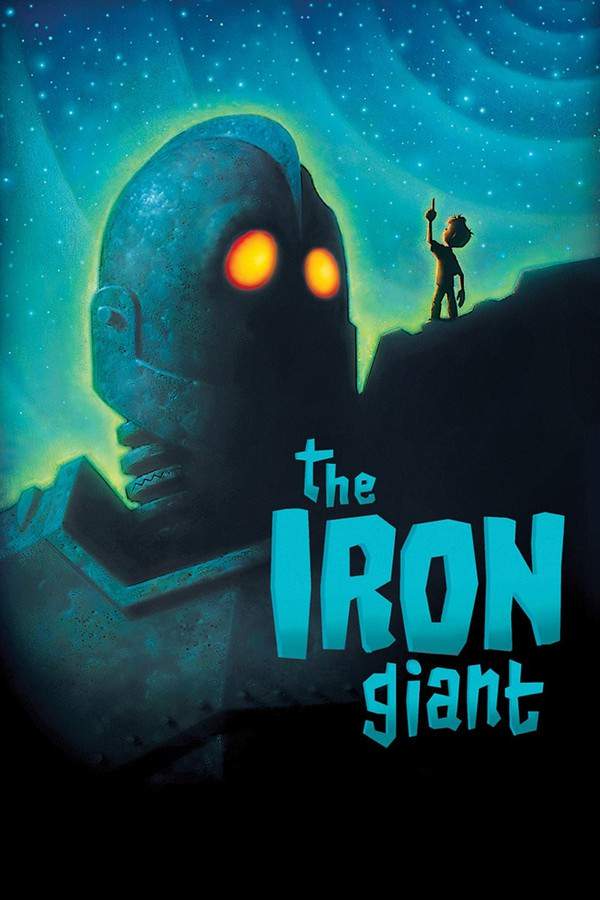
The Iron Giant (1999) movie poster

Plot Summary

The Iron Giant (1999) Plot Summary Explained

Release, runtime and language
1999 · 86 min · English
Directed by
Brad Bird
Starring
Harry Connick Jr., Eli Marienthal
Budget
$70M

In 1957 Maine, a young boy named Hogarth discovers a colossal robot from another world. As Hogarth and the giant form a special bond, they find themselves opposed by a zealous government agent, Kent Mansley, who is determined to destroy the robot. With the help of beatnik Dean McCoppin, Hogarth must find a way to protect the gentle giant from those who fear it and prevent it from falling into the wrong hands.

On this page (7)
  1. 1 Where to watch
  2. 2 What happens: full plot
  3. 3 Plot questions answered
  4. 4 The book behind the movie
  5. 5 Movie threads
  6. 6 Movies like The Iron Giant
  7. 7 Every angle

Where to watch

Where to Watch The Iron Giant (1999)

Where can you watch The Iron Giant? Stream, rent or buy it in the US, including on YouTube Free, Amazon Video and Apple TV Store: current JustWatch availability with up-to-date prices.

Streaming availability powered by JustWatch

Full plot summary · contains spoilers

What Happens in The Iron Giant: Full Plot Summary

The whole story of The Iron Giant (1999) explained, from the opening scene to the final frame: every key event, every twist and what it all adds up to. Read it as a quick recap before the sequel, to check a scene you missed, or to finally understand what really happened.

In 1957, an enormous alien robot plunges from the sky and lands near Rockwell, Maine, with no recollection of its existence. Shortly after its crash, the Iron Giant roams the landscape, sparking the curiosity of a brave nine-year-old boy named Hogarth Hughes, who diligently traces the path of the destruction through the forest. Upon finding the robot tangled in power cables at a local electrical substation, Hogarth frees him, forging an unexpected friendship. They return to Hogarth's home, where the boy lives with his widowed mother, Annie.

Excited by their newfound bond, the Giant's antics escalate when he whimsically tries to eat the rails from nearby railroad tracks. Hearing a train approach, Hogarth warns the Giant to fix the tracks, but the effort takes too long—a moment that leads to a train crashing into the Giant's head. In a rush to protect him, Hogarth hides the damaged robot in their barn, where he discovers that the Giant possesses the ability to self-repair.

As night falls, Hogarth returns to the barn with a pile of comic books to entertain his mechanical friend. The Giant is particularly taken with the story of Superman, but becomes anxious upon reading about an evil robot. Hogarth reassures the Giant that he can choose who he wants to be, encouraging him to embrace his identity.

Meanwhile, U.S. government agent Kent Mansley uncovers signs of the Giant's existence and becomes increasingly paranoid about a potential alien threat. He begins surveilling Hogarth to gather more intelligence, even renting a room in Hogarth's house after discovering a BB gun left behind by the boy. As Mansley sounds alarms about an alien invasion, Hogarth does his best to keep the Giant's existence a secret.

In an effort to protect his friend, Hogarth introduces the Giant to the beatnik artist Dean McCoppin. When Mansley and Lieutenant General Guy Rogard come snooping around, Dean cleverly passes off the Giant as an artistic creation, evading suspicion. However, during a playful moment involving a toy gun, the Giant's defensive mechanisms activate, prompting Dean to intervene and protect Hogarth.

Their adventures take them into the town of Rockwell, where the Giant performs heroically by saving two boys, quickly earning the affection of the townsfolk. However, not all is well; the military, having caught sight of the Giant, moves in for an attack. When the Giant is struck and crashes to the ground, he mistakenly assumes that Hogarth has perished. This mistake leads to a vengeful outburst, where the Giant retaliates against the army, displaying overwhelming firepower.

Amidst confusion and deception, Mansley manipulates Rogard into believing that the Giant has harmed Hogarth, urging him to target the Giant with a nuclear missile from the USS Nautilus. Having awakened to the chaos, Hogarth rushes to calm the Giant down, fully aware of the impending disaster. He bravely confronts Rogard, revealing the truth and attempting to mitigate the situation.

As the conflict escalates, Mansley, fearing for his own safety, tries to flee while the Giant heroically decides to intercept the missile. With the resolute heart of a true hero, the Giant soars high into the sky, colliding with the missile and creating an awe-inspiring explosion that lights up the atmosphere—a final act of bravery that saves Rockwell but leaves the townspeople, particularly Hogarth, mourning the loss of their friend.

In the aftermath, Annie and Dean begin a relationship, with Dean crafting a statue in honor of the Giant's memory. Just when Hogarth thinks he’s lost the Giant forever, a package arrives from General Rogard containing a small piece of the Giant—an invaluable jaw bolt. That night, a familiar beeping awakens Hogarth; realizing the Giant may still be alive and repairing itself, he opens the window, allowing the bolt to escape. Far away on the Langjökull glacier in Iceland, the various parts of the Giant draw closer to where his head lies, eyes glowing with newfound life, as the Iron Giant awakens, ready for new adventures.

Last updated: November 07, 2024 at 22:51

Was this helpful?

Plot questions answered

The Iron Giant Plot Explained: Your Questions Answered

The questions people ask most about The Iron Giant (1999): what happens in the confusing scenes, why the characters do what they do, the twists, hidden details and what the ending means. Each answer contains spoilers.

Q1

Why did the Iron Giant attack the military after he saved the townspeople?

The Giant attacked because he witnessed the train crash earlier and believed Hogarth had been killed. When the military's attack caused chaos and destruction, the Giant saw the military as the threat that harmed his friend. His defensive programming activated in response to what he perceived as a direct attack, causing him to retaliate with overwhelming firepower before realizing his mistake.

Foreshadowing: Earlier, when a train crashed into the Giant's head, Hogarth warned him about danger, establishing that the Giant responds protectively when he believes those he loves are in danger.

  • military attack
  • giant retaliates
  • hogarth safety
  • defensive programming
Q2

Why was Agent Kent Mansley so determined to destroy the Iron Giant?

Mansley was a paranoid government agent who interpreted the Giant's presence as a potential alien invasion threat. Despite having no evidence of hostile intent, his Cold War mindset led him to view any unknown extraterrestrial entity as an existential danger. He systematically manipulated General Rogard and the military into launching an attack, driven by his own fear and career ambition rather than any actual threat the Giant posed.

Foreshadowing: Mansley's paranoia is established early when he begins surveilling Hogarth and discovers the BB gun, giving him a personal connection to investigate the Giant.

  • kent mansley
  • government agent
  • alien threat
  • cold war paranoia
Q3

How did the Iron Giant survive the nuclear missile?

The Giant didn't survive the missile strike in the traditional sense, he was completely destroyed by the explosion. However, his advanced alien technology allowed his individual parts to remain intact and possess the ability to self-repair and regenerate. General Rogard returned a small piece of the Giant (a jaw bolt) to Hogarth, which contained enough of the Giant's essence or programming to eventually attract all his scattered parts back together on a remote glacier in Iceland, where he reassembled himself.

Foreshadowing: Earlier in the barn, Hogarth discovers the Giant has remarkable self-repair abilities after the train accident, establishing his regenerative capabilities.

  • nuclear missile
  • giant sacrificed
  • parts reassemble
  • self repair
  • alien technology
Q4

Why did the Iron Giant sacrifice himself to stop the missile?

The Giant chose to sacrifice himself because Hogarth had taught him that he could choose who to want to be. The Giant decided to be a hero, specifically, he wanted to be like Superman, the superhero from the comic books Hogarth shared with him. Rather than let the nuclear missile destroy Rockwell and kill the people he had come to care about, the Giant flew into the sky to intercept it, sacrificing his own existence to save others.

Foreshadowing: During comic book night, the Giant is deeply moved by the Superman story and anxious about evil robots, prompting Hogarth to tell him 'You are who you choose to be.'

  • sacrifice
  • superman hero
  • choosing to be hero
  • saving town
Q5

Why did the Giant mistakenly believe Hogarth was dead?

The Giant believed Hogarth was dead because of the chaos and destruction caused by the military attack. When the military opened fire on the Giant during the confrontation in Rockwell, the Giant saw buildings collapsing and people running in panic. Unable to locate Hogarth in the confusion, and having already witnessed the boy warn him about danger before, the Giant concluded the worst had happened, that the military had killed his friend.

Foreshadowing: The Giant's limited understanding of human danger and his protective bond with Hogarth make him vulnerable to this misunderstanding.

  • giant mistaken
  • hogarth death
  • military attack
  • confusion
Q6

What was the significance of the Superman comic book to the Iron Giant?

The Superman comic represented the Giant's aspiration to be a hero rather than a weapon. When Hogarth reads him the story, the Giant becomes deeply inspired by Superman's choice to use his powers for good. This motivates his later decision to sacrifice himself, he wants to be like Superman. Conversely, he becomes anxious about an evil robot story, prompting Hogarth to reassure him that he can choose his own identity.

Foreshadowing: The Giant's fascination with Superman directly foreshadows his heroic sacrifice at the end.

  • superman
  • choosing identity
  • hero
  • comic books
Q7

How did Dean McCoppin help hide the Iron Giant from the government?

Dean McCoppin, a beatnik artist, helped by concealing the Giant in his studio and passing him off as a piece of modern art when government agents came to investigate. His artistic credibility allowed him to deflect suspicion, and he genuinely came to care for the Giant after seeing his gentle nature. Dean also helped protect Hogarth during the final confrontation by trying to keep the boy safe from the military.

Foreshadowing: Dean's bohemian lifestyle and quick thinking were established when he first met the Giant, showing he was unconventional enough to help with the deception.

  • dean mccoppin
  • hide giant
  • art studio
  • beatnik
Q8

Why did the military attack the Iron Giant even after he saved the townspeople?

The military attacked because they perceived the Giant as an unpredictable alien threat regardless of his actions. Seeing a massive unknown robot in their town, even after he saved two boys, the military decided they couldn't risk allowing such a powerful entity to exist unchecked. Agent Mansley also manipulated General Rogard by exaggerating the danger and painting the Giant as a hostile invader, pushing them to launch a full military assault.

Foreshadowing: Mansley's constant warnings about an alien invasion and his manipulation of Rogard set the stage for the military's aggressive response.

  • military
  • government threat
  • attack town
  • kent mansley influence
Q9

Why did the Iron Giant try to eat the railroad tracks?

The Giant was new to the world and exploring his environment with childlike curiosity. Being a massive robot, he was naturally drawn to consuming metal, similar to how a curious child might put objects in his mouth. This wasn't aggression, it was simply the Giant discovering what he could do and satisfying an urge to consume metal. However, this led to the dangerous train incident, which forced Hogarth to hide him in the barn.

Foreshadowing: The Giant's innocent curiosity about the world was established when he first arrived and began exploring the forest.

  • railroad tracks
  • eating metal
  • curiosity
  • discovery
Q10

How did the Iron Giant's parts know to reassemble in Iceland?

The movie implies that the Giant's advanced alien technology has a self-repair and self-reassembly function. The small piece returned by General Rogard contained some form of beacon or essence that attracted the other parts. Given the Giant's demonstrated ability to self-repair after the train crash, it's likely his programming includes an emergency protocol to regroup when separated. The remote Langjökull glacier in Iceland was where the final piece (his head) had landed, drawing the rest of him there.

Foreshadowing: The Giant's self-repair ability was demonstrated in the barn after the train accident, establishing his regenerative technology.

  • reassembly
  • parts come together
  • iceland
  • alien technology
Q11

Why did the Giant's defensive mechanisms activate when Dean showed him a toy gun?

The Giant's programming includes automatic defensive responses when he perceives a weapon pointed at him. Even though Dean's toy gun was clearly harmless, the Giant's alien military origins meant he was designed with built-in threat detection. When the object resembling a gun was aimed at him, his defensive protocols activated regardless of intent, demonstrating that his original purpose was combat-related despite his later choice to be peaceful.

Foreshadowing: This incident reveals the Giant's original nature as a weapon, which contrasts with his later choice to be a hero.

  • defensive programming
  • weapon detection
  • toy gun
  • alien origin
Q12

Why did Annie allow Hogarth to keep the Iron Giant hidden?

Annie, Hogarth's widowed mother, was initially unaware of the Giant's presence in her home. Once she learned about him through the chaos of the military attack, she came to understand the Giant's gentle nature and saw how much he meant to her son. Her relationship with Dean McCoppin, who had interacted with the Giant, also helped her see the robot as a friend rather than a threat. Her acceptance represents the film's theme of embracing those who are different.

Foreshadowing: Annie's character as a supportive, open-minded mother is established early, making her eventual acceptance believable.

  • annie
  • hogarth mother
  • acceptance
  • family
Q13

What did the beeping sound at the end of the movie mean?

The beeping was the Giant's distress or locator signal, the same sound he made when he first crashed on Earth. When the small jaw bolt arrived in Hogarth's room and began beeping, it indicated the Giant's parts were regenerating and attempting to reconnect. This sound gave Hogarth hope that his friend was still alive, and he opened the window to let the bolt rejoin the Giant's consciousness, leading to the final scene showing the Giant reassembling in Iceland.

Foreshadowing: The beeping sound was first heard when the Giant crashed, establishing it as his unique electronic signature or signal.

  • beeping
  • giant alive
  • signal
  • regeneration
  • hope
Q14

Why did Kent Mansley manipulate General Rogard into launching the missile?

Mansley manipulated Rogard because he was obsessed with eliminating what he perceived as an alien threat and wanted to prove his warnings were justified. By convincing Rogard that the Giant had harmed Hogarth (a lie Mansley told to increase the urgency), he pushed for the extreme measure of a nuclear missile. Mansley's paranoia and career-driven ambition made him willing to risk destroying the entire town to eliminate the Giant, demonstrating how fear can drive irrational, dangerous decisions.

Foreshadowing: Mansley's character is established as paranoid and eager to escalate the situation from the moment he begins investigating.

  • mansley manipulation
  • general rogard
  • nuclear missile
  • deception
  • fear

Movie threads

More Movies Like The Iron Giant, by Mood & Story

Curated lists built around what makes The Iron Giant tick: the same mood, the same kind of story or the same emotional payoff. Each list explains why these movies belong together.

Movies with unlikely friendships like The Iron Giant

Tender stories where an outsider discovers an unexpected and loyal companion. If you liked the touching bond between Hogarth and the Giant, you'll enjoy these movies about unique friendships. Discover films where characters form life-changing connections with outsiders, robots, or fantastical creatures, all centered on themes of loyalty, protection, and understanding.

  • heartwarming
  • adventurous
  • tender
  • hopeful
  • tense
  • nostalgic
  • Tone: hopeful, heartwarming
  • Pacing: steady, character-driven
Why these movies?

The story pattern: Stories in this thread typically begin with a lonely or curious character discovering something—or someone—truly unique. The core of the narrative revolves around building trust and understanding, often in secret, while facing external threats from those who fear the unknown. The emotional journey is one of acceptance and the courage to defend a friend against all odds.

Why they belong together: These movies are grouped together because they share a core emotional experience: the warmth and hope that comes from an improbable friendship. They balance adventurous stakes with genuine heart, creating a narrative where the connection between characters is the primary driver of the plot and the main source of emotional weight.

Philosophical sci-fi stories like The Iron Giant

Science fiction stories where technology's soul is defined by its choices. Fans of The Iron Giant's message of 'you are who you choose to be' will appreciate these similar sci-fi movies. Explore stories where artificial life or outsiders grapple with their purpose, challenging human expectations and often making sacrifices for a greater good, resulting in bittersweet yet uplifting endings.

  • thought-provoking
  • bittersweet
  • tense
  • hopeful
  • wistful
  • philosophical
  • Tone: hopeful, bittersweet
  • Pacing: steady, with escalating stakes
Why these movies?

The story pattern: The narrative pattern involves an advanced being perceived as a threat learning about humanity, often through a single compassionate connection. A central conflict arises from institutional fear (military, government) that forces the being to make a definitive choice about its nature. The climax typically involves a heroic sacrifice or a profound act that redefines its existence, leaving a lasting impact.

Why they belong together: These films are united by their exploration of consciousness, choice, and prejudice through a sci-fi lens. They share a specific emotional mix: the tension of a chase, the warmth of connection, and the profound impact of a choice that defines a soul, culminating in endings that are hopeful yet tinged with sacrifice.

If you liked this

Movies Like The Iron Giant

Similar movies to The Iron Giant: the same genre, themes or kind of story. Each one comes with its own plot summary, timeline and ending explained.

Browse all movie summaries

Every angle

The Iron Giant (1999) Explained: Plot, Timeline & Characters

Everything about The Iron Giant in one place: what happens in the plot summary, the timeline in chronological order, the characters and meaning and a spoiler-free summary. What's After the Movie adds the cast, box office and post-credit scenes.

Coming soon on iOS and Android

The Plot Explained Movie Summary App

Plot summaries, endings explained and timelines on your phone. Catch up on any movie in minutes, save your favorites and never miss a twist again.

Be the first to know when we launch. Your email stays private, always.

Learn more about the app