Plot Explained Spoilers guaranteed!
Plot Explained

Browse by genre

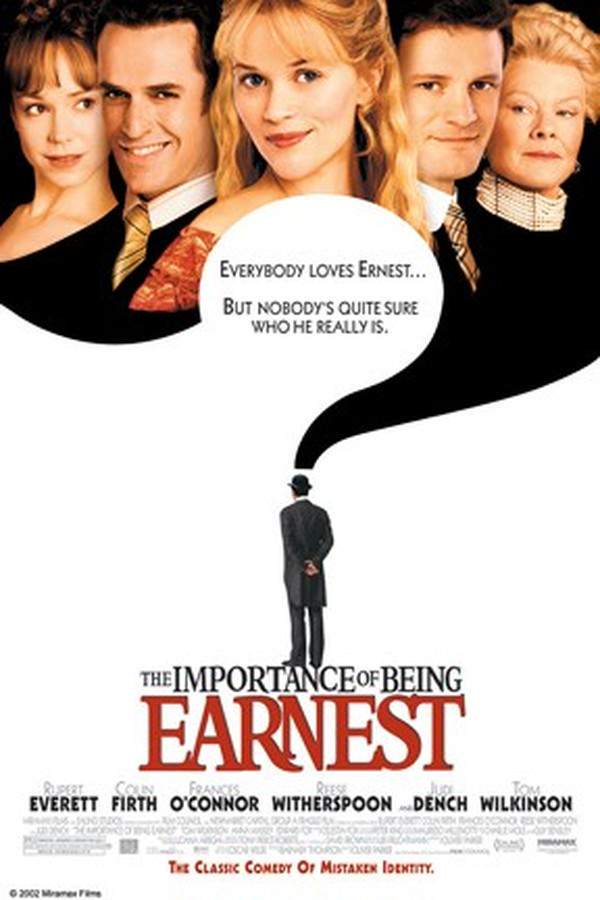
The Importance of Being Earnest (2018) movie poster

Characters & Themes

The Importance of Being Earnest (2018) Characters, Setting & Themes Explained

Release, runtime and language
2018 · More mins · English
Loading streaming availability…
Directed by
Michael Fentiman
Starring
Jeremy Swift, Stella Gonet, Geoffrey Freshwater, Sophie Thompson, Fiona Button, Jacob Fortune-Lloyd

In 1890s England, two carefree bachelors, Jack and Algernon, lead double lives, each assuming the fictitious name of "Ernest" to escape social obligations. Their deception becomes complicated when both fall for women who are captivated by the name Ernest, leading to a hilarious chain of mistaken identities and romantic entanglements. The ensuing confusion exposes a web of secrets and ultimately leads to a surprising resolution.

On this page (7)
  1. 1 Where to watch
  2. 2 Characters explained (8)
  3. 3 Where & when it takes place
  4. 4 Themes & meaning (3)
  5. 5 Character & meaning questions
  6. 6 Movie threads
  7. 7 Every angle
Loading streaming availability…

8 main characters · contains spoilers

The Importance of Being Earnest Characters Explained: Who Is Who

The main characters of The Importance of Being Earnest (2018), heroes and villains: what drives them, how they change over the course of the story and what each of them reveals about the film's bigger ideas.

  • John Worthing (Jacob Fortune-Lloyd)

    John Worthing is a carefree, respectable-looking gentleman who invents a fictitious brother named Ernest to justify his escapes to London. In the metropolis, he adopts the Ernest persona and wins the affection of Gwendolen. His pursuit of love collides with Lady Bracknell's demand for a respectable lineage. A revelation ties his identity to the country estate via Miss Prism's long-ago misplacement at Victoria Station.

    • 🎭 Protagonist
    • 🧭 Deceptive
    • 💖 Romantic
  • Algernon Moncrieff (Fehinti Balogun)

    Algernon is John's mischievous friend who thrives on bending social norms. He visits the country under the guise of Ernest, quickly becoming enchanted with Cecily. He pretends to be Ernest and falls in love, fueling the comedy of mistaken identities. His schemes drive much of the plot’s chaos until reconciliation arrives.

    • 🎭 Trickster
    • 🕵️‍♂️ Deceptive
    • 💡 Witty
  • Gwendolen Fairfax (Pippa Nixon)

    Gwendolen is Algernon's charming cousin and John Worthing’s beloved. She is enamored with the name Ernest, claiming she could only marry a man bearing that name. Her confident romanticism and insistence on appearances propel the story’s flirtations and misunderstandings. She embodies society’s playful yet stringent expectations about love and status.

    • 💖 Romantic
    • 🎭 Idealist
    • 🗣️ Assertive
  • Cecily Cardew (Fiona Button)

    Cecily is John Worthing’s ward living at the country estate, under Miss Prism’s care. She has embraced the Ernest legend and falls for Algernon when he arrives posing as Ernest. Her romantic daydreams and earnest nature contrast with social propriety and drive the plot’s romantic mischief. Her feelings help bring the couples together in the end.

    • 💞 Idealist
    • 🌟 Dreamer
    • 👫 Romantic
  • Lady Bracknell (Sophie Thompson)

    Lady Bracknell is Gwendolen’s formidable mother who guards the family’s social pedigree. She scrutinizes John Worthing’s lineage and rejects his suit unless a respectable background can be proven. Her rigid standards expose the era’s obsession with class, respectability, and proper matches. Her decisions steer the plot toward resolution, testing everyone’s acceptability.

    • 👩‍⚖️ Gatekeeper
    • 🏛️ Aristocrat
    • 🗣️ Dominant
  • Miss Prism (Stella Gonet)

    Miss Prism is Cecily’s governess and the absent-minded nurse who once misplaced a baby at Victoria Station. She serves as a crucial link to the past, whose confession helps resolve the central identity twist. Her proper demeanor and inadvertent secrets add to the farcical tension. She anchors the plot with a blend of decorum and chance.

    • 🎓 Educator
    • 🧭 Memory
    • 🧩 Revelator
  • Reverend Chasuble (Jeremy Swift)

    Reverend Chasuble is the local clergyman who embodies the era’s ritual and social etiquette. He participates in the light humor surrounding ceremonies and names. His gentle naivety and good-natured presence add to the play’s satire of earnestness and propriety. He provides a steady, courteous foil to the characters’ schemes.

    • 🙏 Clergy
    • 🕊️ Gentle
    • 🧭 Foil
  • Lane (Geoffrey Freshwater)

    Lane is Algernon’s servant who observes the country-house farce from the sidelines. He witnesses the deceptive games and the social discipline of the roles being played. His practical, observant presence underscores the class-conscious dynamics of the plot. Lane contributes a touch of servant-class wit to the overall humor.

    • 👔 Servant
    • 🗨️ Observer
    • 🧭 Wit

Last updated: October 01, 2025 at 12:31

Was this helpful?

Setting

Where and When Does The Importance of Being Earnest Take Place?

The setting of The Importance of Being Earnest (2018): the year and time period, the places and locations, and how they shape the characters, the mood and the tension of the story.

Time period

Late 19th century, Victorian era

The story unfolds in late 19th-century Victorian England, a world obsessed with propriety and reputation. Social status and marriage prospects govern much of the characters’ behavior. Witty miscommunications arise from rigid norms, social games, and the vanity of maintaining appearances.

Location

London, England, Victoria Station, English countryside estate

The action moves between London's refined drawing rooms and the quiet countryside estate where Cecily Cardew resides. Victoria Station figures prominently as the setting for the baby-misplacement twist. The settings contrast urban social performance with rural propriety, underscoring the play’s satire of class and manners.

  • 🏰 Estate setting
  • 🏙️ London location
  • 🗺️ Victorian backdrop

Last updated: October 01, 2025 at 12:31

Was this helpful?

3 major themes

The Importance of Being Earnest Meaning: Themes & Message Explained

What is The Importance of Being Earnest (2018) really about? The emotional, social and philosophical themes the film keeps returning to, its symbolism and the message beneath the surface.

  • Identity

    Identity in this tale is fluid, built on performances and disguises. Two men pretend to be Ernest, and even a baby’s identity becomes a key plot twist. The characters navigate who they are versus who they pretend to be, often with humorous consequences. The resolution suggests that name and identity are as important to social life as actual lineage.

  • Love & Marriage

    Love is entangled with social expectation, especially the pressure to marry well and to marry for the right name. Gwendolen and Cecily idealize a man named Ernest, revealing how marriage is entangled with reputation and fantasy. The play satirizes the idea of ‘earnestness’ as a social performance rather than a sincere commitment. In the end, affection prevails within the social bounds, poking fun at conventional courtship.

  • Societal Satire

    The drama skewers Victorian society’s obsession with propriety, class, and appearances. Characters deploy wit to maneuver through strict social codes, exposing the emptiness of rigid conventions. The farcical misunderstandings critique the seriousness with which society treats trivial matters like names and lineage. The play ultimately argues that social theatre can be both delightful and revealing.

Last updated: October 01, 2025 at 12:31

Was this helpful?

Character & theme questions

The Importance of Being Earnest Characters & Meaning: Your Questions Answered

The questions people ask about The Importance of Being Earnest (2018): who the characters really are, their relationships, what the symbols mean, where it takes place and what the movie is really about. Each answer contains spoilers.

Q1

What time period is depicted in the film?

The film is set in late 19th-century Victorian England, a period defined by strict social codes, obsession with propriety, and heavy emphasis on reputation and class standing. This era's rigid conventions drive much of the comedy and character behavior.

  • victorian era
  • late 19th century
  • historical setting
  • 1890s england
Q2

Where does the story take place?

The action alternates between London's elegant drawing rooms, where urban social life thrives, and a peaceful country estate where Cecily Cardew lives. Victoria Station also features prominently as the site of a crucial identity revelation.

  • london
  • countryside estate
  • victoria station
  • england settings
Q3

What does the name Ernest represent in the story?

The name Ernest symbolizes sincerity and earnestness in Victorian society, but the play twists this by showing that the characters who call themselves Ernest are actually deceiving everyone. The name becomes valued for its social sound rather than any genuine trait, satirizing how reputation matters more than truth.

  • ernest name
  • identity
  • sincerity
  • social reputation
Q4

What does the film say about Victorian society?

The film satirizes Victorian society's obsession with appearances, class, and proper behavior. Characters obsess over trivial matters like names and lineage while engaging in their own deceptions. The comedy exposes how rigid social conventions create hollow performances where maintaining the appearance of respectability matters more than actual virtue.

  • victorian society
  • class
  • social satire
  • manners
  • propriety
Q5

Who is Jack Worthing in the film?

Jack Worthing is a respectable gentleman who lives at the country estate but invented a fictional brother named Ernest to justify his trips to London. In the city, he adopts the Ernest persona and falls in love with Gwendolen. His dual identity represents the conflict between rural simplicity and urban social performance.

  • jack worthing
  • algernon
  • dual identity
  • invented brother
Q6

Who is Lady Bracknell and what is her role?

Lady Bracknell is Gwendolen's mother and a formidable guardian of her family's social standing. She insists that any suitor prove respectable lineage before she will approve a marriage. Her rigid demands drive much of the plot's tension and ultimately lead to the identity revelation that resolves the story.

  • lady bracknell
  • social class
  • marriage approval
  • gwendolen
Q7

How does the film portray love and marriage?

The film portrays Victorian marriage as entangled with social expectation and status rather than pure romance. Both Gwendolen and Cecily are drawn to the name Ernest itself, revealing how marriage prospects were tied to reputation and fantasy. The play humorously critiques Courtship that prioritizes social standing over genuine connection.

  • love
  • marriage
  • courtship
  • social expectations
  • gwendolen
  • cecily
Q8

How is identity explored in the film?

Identity in the film is shown as fluid and performed rather than fixed. Two men pretend to be Ernest, and even a baby's identity becomes a plot twist. Characters navigate who they truly are versus who they pretend to be, with the resolution suggesting that social identity matters as much as actual lineage in Victorian England.

  • identity
  • disguise
  • performance
  • dual life
  • ernest
Q9

Who is Algernon Moncrieff?

Algernon is Jack's mischievous friend who lives in London and enjoys bending social norms. He visits the country estate under the pretense of being Ernest, falls in love with Cecily, and his schemes drive much of the comedy. He represents the play's themes of deception and rebellion against societal rules.

  • algernon moncrieff
  • cecily
  • deception
  • comic character
Q10

What is the significance of the baby plot twist?

The revelation that Jack was the baby Miss Prism accidentally misplaced at Victoria Station decades earlier ties his identity to the estate and resolves the marriage question. This coincidental twist exposes how lineage and identity in the story are as arbitrary as the fictional Ernest persona.

  • baby
  • victoria station
  • miss prism
  • identity twist
  • lineage
Q11

Who is Cecily Cardew?

Cecily is Jack Worthing's young ward living at the country estate under Miss Prism's care. She has heard the stories about the fictional Ernest and happily falls for Algernon when he arrives posing as Ernest. Her romantic idealism contrasts with the social artifice driving the其他 characters.

  • cecily cardew
  • ward
  • country estate
  • algernon
  • romance

Movie threads

More Movies Like The Importance of Being Earnest, by Mood & Story

Curated lists built around what makes The Importance of Being Earnest tick: the same mood, the same kind of story or the same emotional payoff. Each list explains why these movies belong together.

Witty romantic farces like The Importance of Being Earnest

Deceptions and mistaken identities fuel sophisticated romantic comedies. If you enjoyed the fast-paced deceptions and sophisticated banter of The Importance of Being Earnest, you'll love these movies. Discover more romantic comedies where mistaken identities and witty dialogue create a whirlwind of charming chaos and elegant humor, perfect for fans of clever stories.

  • witty
  • charming
  • romantic
  • playful
  • sophisticated
  • comedic
  • Tone: whimsical, lighthearted
  • Pacing: fast, energetic
Why these movies?

The story pattern: The narrative pattern revolves around a central deception—often a mistaken identity or concealed truth—that spirals out of control, creating a domino effect of comic situations. Characters navigate a web of their own making, leading to a series of reveals and confrontations that ultimately resolve happily, often reinforcing the idea that love conquers all, even the most elaborate lies.

Why they belong together: These movies are grouped together because they share a primary focus on intellectual, dialogue-heavy humor, lighthearted romantic plots driven by deception, and a consistently whimsical tone. The pacing is brisk, the emotional stakes are social rather than deeply traumatic, and the endings are satisfyingly happy.
Comedies of manners similar to The Importance of Being Earnest

Satirical stories that playfully critique the rules of high society. Find more movies like The Importance of Being Earnest that offer a satirical look at social conventions. These comedies of manners feature sophisticated characters navigating the absurdities of their world with wit and charm, perfect for viewers who enjoy sharp social observation and elegant humor.

  • satirical
  • sophisticated
  • witty
  • charming
  • historical
  • elegant
  • Tone: sophisticated, satirical
  • Pacing: steady, conversational
Why these movies?

The story pattern: The narrative journey typically follows characters as they attempt to navigate or subvert the complex rules of their social milieu. Conflict comes from the tension between personal authenticity and societal performance, often resolved when characters find a way to reconcile their true selves with the world's expectations, or when the folly of those expectations is comically exposed.

Why they belong together: These films are united by their satirical focus on social conventions, their use of a specific historical or class-based setting as a source of humor, and a tone that is more witty and observational than broadly slapstick. They share a feeling of sophistication and a lighthearted critique of human folly.

Every angle

The Importance of Being Earnest (2018) Explained: Plot, Timeline & Characters

Everything about The Importance of Being Earnest in one place: what happens in the plot summary, the timeline in chronological order, the characters and meaning and a spoiler-free summary. What's After the Movie adds the cast, box office and post-credit scenes.

Coming soon on iOS and Android

The Plot Explained Movie Summary App

Plot summaries, endings explained and timelines on your phone. Catch up on any movie in minutes, save your favorites and never miss a twist again.

Be the first to know when we launch. Your email stays private, always.

Learn more about the app