




Plot Explained Spoilers guaranteed!
Plot Explained

Browse by genre

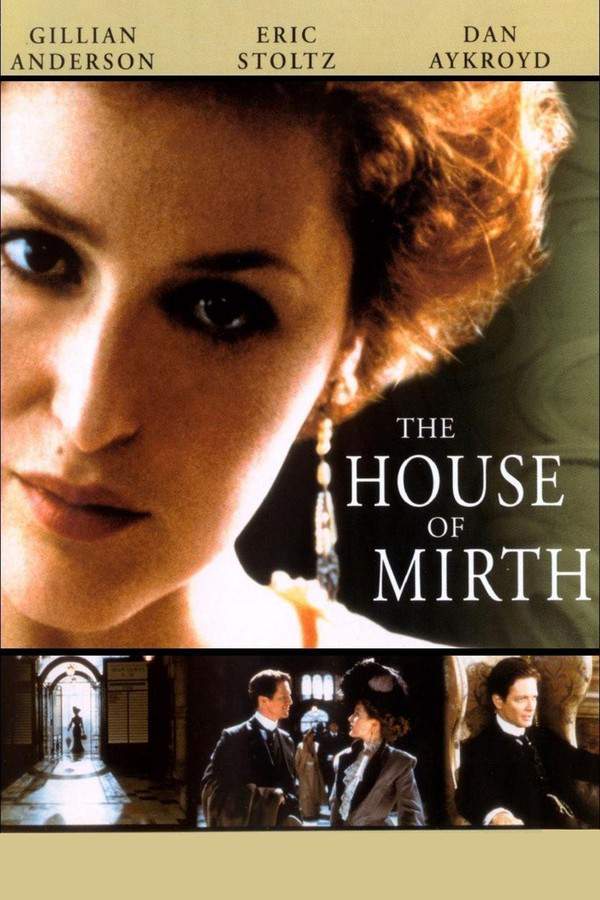
The House of Mirth (2000) movie poster

Timeline

The House of Mirth (2000) Timeline Explained – Every Event in Order

Release, runtime and language
2000 · 140 min · English
Directed by
Terence Davies
Starring
Dan Aykroyd, Gillian Anderson

In the lavish setting of Gilded Age New York, Lily Bart possesses beauty and charm, but finds them a double-edged sword. She struggles to maintain her position within the rigid social hierarchy, caught between genuine affection and the allure of wealth and status. As she pursues advantageous connections, Lily becomes entangled in a web of desire and deception, ultimately facing heartbreaking consequences when her carefully constructed world comes crashing down.

On this page (7)
  1. 1 Where to watch
  2. 2 Events in order (14)
  3. 3 Timeline questions answered
  4. 4 The book behind the movie
  5. 5 Movie threads
  6. 6 Movies like The House of Mirth
  7. 7 Every angle

Where to watch

Where to Watch The House of Mirth (2000)

Where can you watch The House of Mirth? Stream, rent or buy it in the US, including on fuboTV and Paramount Plus Premium: current JustWatch availability with up-to-date prices.

Streaming availability powered by JustWatch

14 events in order · contains spoilers

The House of Mirth Timeline: Events in Chronological Order

Every key event of The House of Mirth (2000) in order, scene by scene, with when and where it takes place. Use it to untangle flashbacks, time jumps and parallel storylines, to refresh your memory before the sequel or to find the exact scene you are thinking of.

  1. Lily Bart's precarious New York life

    Lily Bart is an impoverished socialite who relies on a small allowance from her wealthy aunt, Julia Peniston. She shares a modest household with Grace Stepney and dreams of comfort beyond her means. Her status hangs on appearances in New York society.

    When
    early in the story
    Where
    New York
  2. Lily's longing for Selden but social limits

    She admires Lawrence Selden, a lawyer she hopes to marry, but his lack of wealth makes him an unlikely match. Lily's options are constrained to roguish wealth: Simon Rosedale and Percy Gryce, with Selden remaining an unattainable ideal. The social divide shadows every choice she makes.

    When
    early in the story
    Where
    New York
  3. Country weekend and a kiss

    During a country weekend, Lily and Selden walk together and share a kiss, giving Lily a surge of hope about a future with him. The moment underscores the tension between affection and the social realities that limit their union. The kiss promises possibility, even as risk remains.

    When
    country weekend
    Where
    Countryside, outside New York
  4. Gus Trenor's financial manipulation begins

    Lily confides her troubles to Gus Trenor, who then suggests a path to money through investments. He hints at financial leverage and control over her fortune, leading Lily to trust him further. This marks the start of a dangerous entanglement between her finances and social ambitions.

    When
    after confiding in Trenor
    Where
    New York, with Trenor
  5. Lily buys Bertha Dorset's letters

    Lily purchases scandalous letters that Bertha Dorset wrote, revealing that Selden was Bertha's lover. The letters threaten Lily's security and Selden's reputation, fueling the social peril she already faces. She keeps them close, intending to use them if needed.

    When
    after the purchase
    Where
    New York
  6. Wedding money and expectations

    At a wedding, Gus Trenor gives Lily a $5,000 check and claims to have reinvested more money for her. The windfall deepens Lily's dependence on Trenor and binds her to his financial scheme. She feels both relief and growing unease.

    When
    at the wedding
    Where
    New York social circle
  7. Opera night and Trenor's pressure

    Trenor invites Lily to the opera, where Julia and Selden spot her with Trenor and Rosedale. He then hustles her away from the public scene and tries to kiss her, arguing that she’s not playing fair when she accepts money but resists his romantic advances. The incident marks a turning point in how she is perceived.

    When
    after the opera
    Where
    The opera house and Trenor's home
  8. Julia's refusal to lend money; Lily's crisis

    Back at home, Julia refuses to lend Lily the money to repay Trenor. Lily confides in Grace, who reveals a secret: she secretly loves Lawrence Selden and advises against relying on him. Lily's options tighten as her financial dependence grows.

    When
    after the opera
    Where
    Julia Peniston's home / New York
  9. George Rosedale's proposal and Lily's choices

    George Rosedale visits, offering money and security, and proposes to Lily. She rejects him, torn between social ambition and genuine affection. Meanwhile, Lily remains haunted by the possibility of turning to Selden for support.

    When
    after Rosedale's visit
    Where
    New York social scene
  10. Bertha Dorset invites Lily onto the yacht

    Bertha Dorset invites Lily to join a European cruise aboard the Dorsets' yacht, a chance to escape gossip and debt. Lily accepts in desperation, hoping the voyage will alter her fortunes. The invitation marks a shift from New York confinement to international society.

    When
    before the cruise
    Where
    Dorsets' yacht, then Europe
  11. Monte Carlo and social intrigue on the yacht

    In Monte Carlo, Selden and Carry Fisher worry about Lily's safety while she travels with the Dorsets. A tense dynamic unfolds aboard the yacht as a poet reads to Bertha and Lily confronts Bertha when she returns ashore. Bertha accuses Lily of adultery with George because Lily had been alone with him.

    When
    during the cruise
    Where
    Monte Carlo; aboard the Dorset yacht
  12. Return to New York; Julia dies; inheritance settles

    Back in New York, Julia dies and Lily discovers she will receive only a fraction of the fortune, with most left to her cousin Grace. Now homeless and adrift, Lily confronts a cruel social reality that money—and status—will not easily save. She seeks shelter with Carry Fisher for the summer.

    When
    after the cruise
    Where
    New York
  13. Carry Fisher's circle and Lily's decline

    Carry Fisher offers Lily a place to stay, and Lily begins working for Mrs. Hatch as her secretary and companion to survive. Selden's warnings about social standing weigh on her as she tumbles further from her former sophistication. The struggle marks a descent into precarious employment and social scrutiny.

    When
    summer after Julia's death
    Where
    Carry Fisher's circle in New York
  14. Final ruin: burning letters, debt, and death

    Lily's despair deepens as she embraces laudanum and loses her last stabilizing anchors. She attempts to use Bertha's letters to restore her standing, then burns them in Selden's presence in a final dramatic moment. She cashes in her inheritance and writes another check to Trenor to settle debts, then takes a fatal dose of laudanum; Selden rushes to her deathbed, weeping as he proclaims his love.

    When
    final moments
    Where
    Lily's boarding room; Selden's presence

Last updated: October 09, 2025 at 15:45

Was this helpful?

Timeline questions answered

The House of Mirth Timeline Explained: Your Questions Answered

When does it happen, and why in that order? The questions people ask about the chronology of The House of Mirth (2000): time jumps, flashbacks, cause and effect between scenes and the correct order of events, each answered with spoilers.

Q1

Why does Lily Bart turn down Simon Rosedale's marriage proposal?

Lily rejects Rosedale despite his wealth because she still harbors genuine feelings for Lawrence Selden. Though Selden lacks the financial means she desperately needs, Lily cannot force herself to marry for money alone when her heart pulls her toward true affection. This decision reflects her tragic inability to choose practicality over romantic idealism, ultimately sealing her social and financial ruin.

Foreshadowing: Earlier, during the country weekend, Lily shares a kiss with Selden, hinting at her emotional attachment that compels her to reject a secure but loveless future.

  • simon rosedale
  • lily bart
  • marriage proposal
  • rejection
  • lawrence selden
Q2

What do the letters Lily buys from Bertha Dorset reveal?

The letters are scandalous correspondence between Bertha Dorset and Lawrence Selden, proving they had been lovers. Lily purchases them intending to use them as leverage to restore her own social standing when necessary. She keeps them hidden throughout the story, finally attempting to use them against Bertha before ultimately burning them.

Foreshadowing: When Lily first hears about Bertha's indiscretions during the Monte Carlo cruise, she already possesses written proof but has never used it.

  • bertha dorset letters
  • lawrence selden
  • scandal
  • leverage
Q3

Why does Bertha Dorset accuse Lily of adultery with her husband?

Bertha accuses Lily of adultery to deflect attention from her own affair with the young poet aboard the yacht. When Lily confronts Bertha about her behavior and refuses to continue distracting George Dorset from his wife's infidelities, Bertha retaliates by claiming Lily spent the night alone with George. This calculated lie destroys Lily's remaining reputation and forces her to return to New York in disgrace.

Foreshadowing: Earlier, Lily and George are left alone together while searching for Bertha and the poet ashore, giving Bertha the perfect opportunity to fabricate the scandal.

  • bertha dorset
  • accusation
  • adultery
  • george dorset
  • yacht scandal
Q4

Why does Aunt Julia refuse to lend Lily the money to repay Trenor?

Julia refuses because she has discovered Lily appearing publicly with Gus Trenor in compromising circumstances, at the opera sitting beside Trenor and Rosedale, then leaving with Trenor alone. Julia's refusal marks a critical turning point, severing Lily's last financial safety net and forcing her deeper into Trenor's manipulations. Without Julia's support, Lily has no way to escape the growing debt that Trenor weaponizes against her.

Foreshadowing: The opera scene earlier shows Julia and Selden witnessing Lily with Trenor, establishing why Julia loses trust in her niece.

  • julia peniston
  • money refusal
  • trenor
  • lily bart
  • financial support
Q5

What does Gus Trenor actually want in exchange for the money he gives Lily?

Trenor uses the $9,000 he gives Lily, not from investments but from his own funds, as leverage to extract romantic attention. When Lily cannot repay and refuses his advances, he tricks her into attending the opera with him, then attempts to kiss her, declaring she hasn't played fair by taking his money while denying him intimacy. His financial 'help' is revealed as a calculated attempt to purchase Lily's favors rather than genuine assistance.

Foreshadowing: The timeline shows Lily confiding in Trenor about her financial troubles, which he exploits by positioning himself as her savior.

  • gus trenor
  • money
  • manipulation
  • romantic advances
  • debt
Q6

Why does Lily burn Bertha's letters in Selden's fireplace?

Lily burns the letters as a final act of love and surrender. By this point, her reputation is destroyed and she has no wish to use the letters as leverage anymore. Throwing them into Selden's lit fireplace while he is not looking represents her release of both the weapon she held over others and her lingering hope that Selden might still love her. The burning signifies her acceptance of defeat and her desire to remove any remaining ties to the social world that has destroyed her.

Foreshadowing: Earlier, Rosedale advises her to use the letters to force Bertha's reconciliation, but Lily ultimately chooses destruction over manipulation.

  • burning letters
  • selden
  • bertha dorset
  • final act
  • surrender
Q7

Why does Grace Stepney refuse to help Lily after Julia's death?

Grace refuses because she secretly loves Lawrence Selden and has always been jealous of Lily's connection to him. When Lily confides she might turn to Selden for help, Grace callously advises against it, knowing this would hurt her own chances with Selden. Additionally, Grace has inherited the bulk of Julia's fortune and could easily help Lily, making her refusal particularly cruel and motivated by both jealousy and greed.

Foreshadowing: Early in the story, Grace advises Lily against relying on Selden, revealing her romantic feelings for him.

  • grace stepney
  • refusal
  • lily cousin
  • inheritance
  • selden jealousy
Q8

Why does Lily accept Bertha Dorset's invitation to join the yacht cruise?

Lily accepts the invitation out of desperate necessity. She is drowning in debt, facing social whispers and criticism in New York, and has no financial security. The yacht cruise to Europe offers an escape from her problems and a chance to rebuild her reputation in a new social setting. The invitation represents her final gamble to restore her fortunes before it's too late.

Foreshadowing: The opera scandal and Trenor's manipulation have already damaged her reputation, making escape seem necessary.

  • yacht cruise
  • bertha dorset
  • desperation
  • escape
  • social reputation
Q9

What leads Lily Bart to take her own life at the end?

Lily's suicide results from the cumulative collapse of every aspect of her life: she is homeless after receiving only a fraction of Julia's inheritance, destitute despite her inheritance check arriving too late to restore her standing, addicted to laudanum, fired from her jobs, and utterly alone with no one to help her. Her final acts, paying off Trenor and writing her bank check, represent her attempt to die with some dignity and honor, having refused to live in further dependency or social disgrace.

Foreshadowing: Her gradual decline is traced through losing her place with the Gormers, then being fired by Mrs. Hatch, and finally losing her millinery job due to addiction.

  • suicide
  • laudanum
  • death
  • despair
  • financial ruin
Q10

Why does Lily take a job as Mrs. Hatch's secretary despite knowing it harms her reputation?

Lily accepts the position because she desperately needs money to survive. With her inheritance reduced and no family willing to help, she has no choice but to accept employment that Selden warns will further damage her already fragile social standing. The job represents her fall from the upper echelons of society to mere servitude, a position she never imagined occupying but cannot avoid.

Foreshadowing: Earlier, she rejected working for a living as beneath her social position, but desperation eventually forces this compromise.

  • mrs hatch
  • secretary
  • employment
  • social fall
  • desperation
Q11

What is the nature of Lily and Lawrence Selden's relationship?

Lily and Selden share genuine mutual affection that neither can act upon due to social and financial constraints. Selden loves Lily but lacks the wealth to support her lifestyle, while Lily loves Selden but cannot abandon her need for financial security. Throughout the story, they remain drawn to each other yet perpetually separated by the rigid class expectations of Gilded Age society. At her death, Selden finally declares his love, making their tragedy complete.

Foreshadowing: The country weekend kiss establishes their mutual feelings, yet both recognize the impossibility of their situation.

  • lawrence selden
  • love
  • mutual affection
  • class constraints
  • romance

Movie threads

More Movies Like The House of Mirth, by Mood & Story

Curated lists built around what makes The House of Mirth tick: the same mood, the same kind of story or the same emotional payoff. Each list explains why these movies belong together.

Gilded Cage Tragedies like The House of Mirth

Stories of characters crushed by the oppressive rules of a glamorous society. If you liked the societal pressure and tragic downfall in The House of Mirth, explore more movies about characters trapped by the glittering rules of high society. These similar dramas depict the emotional cost of maintaining appearances and the heartbreaking consequences of social failure.

  • oppressive
  • genteel
  • tragic
  • somber
  • desperate
  • claustrophobic
  • Tone: melancholic, tragic, somber
  • Pacing: slow, deliberate
Why these movies?

The story pattern: The narrative centers on a protagonist, often a woman, who initially possesses the charm and beauty required to succeed within a strict, wealthy society. The plot unfolds as they attempt to secure their position, only to become entangled in a web of reputation, betrayal, and financial peril, leading to an irreversible and tragic downfall.

Why they belong together: Movies in this thread are grouped by their shared focus on the conflict between individual desire and societal expectation within an opulent setting. They create a coherent experience through a consistently melancholic tone, slow pacing that mirrors the deliberate nature of social maneuvering, and a heavy emotional weight stemming from themes of systemic oppression and personal destruction.
Slow Burn Descent into Despair like The House of Mirth

Character-driven stories where a quiet dread builds to an inevitable, sad conclusion. Fans of the gradual, heartbreaking downfall in The House of Mirth will appreciate these similar slow burn character studies. These movies like The House of Mirth feature a slow pacing and melancholic tone, building emotional weight as characters face irreversible consequences from their choices and circumstances.

  • slow burn
  • somber
  • tragic
  • desperate
  • reflective
  • heavy
  • Tone: melancholic, somber, bleak
  • Pacing: slow burn, deliberate
Why these movies?

The story pattern: The narrative pattern is one of gradual, irreversible decline. The story follows a linear but emotionally complex path where the protagonist's initial situation deteriorates step by step. The conflict is often internal or societal, with tension derived from the slow erosion of security, status, or hope, culminating in a conclusively sad ending.

Why they belong together: These films are grouped by their shared emotional journey and technical execution. They are united by a SLOW pacing that allows the tragedy to feel inevitable, a MELANCHOLIC tone that permeates every scene, and a HEAVY emotional weight resulting from a SAD ending. The experience is defined by a pervasive sense of loss rather than dramatic action.

If you liked this

Movies Like The House of Mirth

Similar movies to The House of Mirth: the same genre, themes or kind of story. Each one comes with its own plot summary, timeline and ending explained.

Browse all movie summaries

Every angle

The House of Mirth (2000) Explained: Plot, Timeline & Characters

Everything about The House of Mirth in one place: what happens in the plot summary, the timeline in chronological order, the characters and meaning and a spoiler-free summary. What's After the Movie adds the cast, box office and post-credit scenes.

Coming soon on iOS and Android

The Plot Explained Movie Summary App

Plot summaries, endings explained and timelines on your phone. Catch up on any movie in minutes, save your favorites and never miss a twist again.

Be the first to know when we launch. Your email stays private, always.

Learn more about the app