Plot Explained Spoilers guaranteed!
Plot Explained

Browse by genre

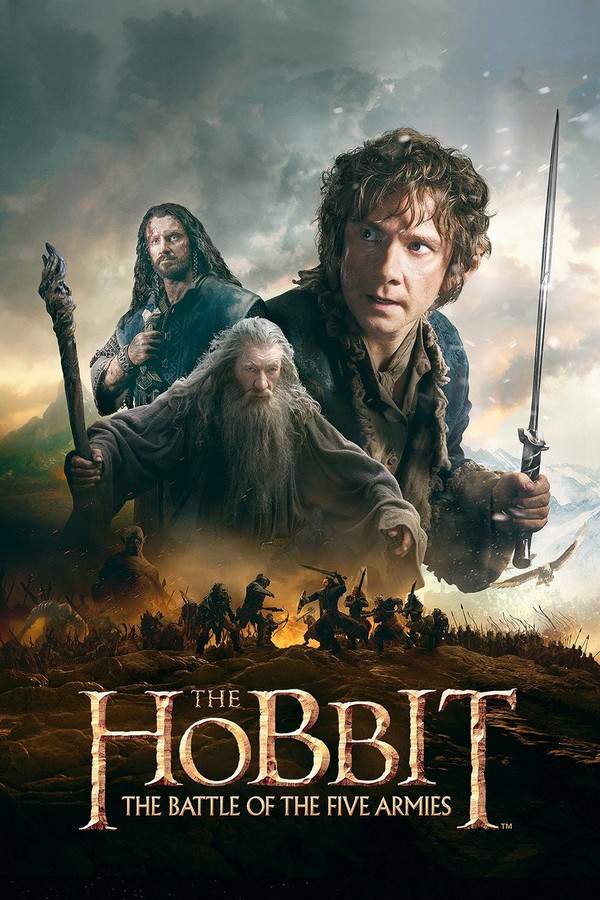
The Hobbit: The Battle of the Five Armies (2014) movie poster

Characters & Themes

The Hobbit: The Battle of the Five Armies (2014) Characters, Setting & Themes Explained

Release, runtime and language
2014 · 144 min · English
Loading streaming availability…
Directed by
Peter Jackson
Starring
Cate Blanchett, Benedict Cumberbatch, Evangeline Lilly, Hugo Weaving, Martin Freeman, Ian McKellen

Following the destruction of Lake-town by Smaug, Thorin's relentless pursuit of treasure leads him to make devastating choices. Bilbo Baggins desperately tries to reason with him, but his warnings are ignored. As Thorin’s obsession deepens, unseen dangers arise, with Sauron’s forces mobilizing and heading toward the Lonely Mountain. Now, Dwarves, Elves, and Men must set aside their differences and join forces to confront the looming threat and determine the fate of Middle-earth.

On this page (8)
  1. 1 Where to watch
  2. 2 Characters explained (5)
  3. 3 Where & when it takes place
  4. 4 Themes & meaning (3)
  5. 5 Character & meaning questions
  6. 6 The book behind the movie
  7. 7 Movie threads
  8. 8 Every angle
Loading streaming availability…

5 main characters · contains spoilers

The Hobbit: The Battle of the Five Armies Characters Explained: Who Is Who

The main characters of The Hobbit: The Battle of the Five Armies (2014), heroes and villains: what drives them, how they change over the course of the story and what each of them reveals about the film's bigger ideas.

  • Bilbo Baggins

    Bilbo is portrayed as resourceful, brave, and reflective, often serving as the moral center of the group. His journey from a humble hobbit to a crucial player in the grand conflict showcases his growth and resilience. Despite his small stature, Bilbo's courage and decision-making impact the fate of many.

    • 🧙‍♂️ Hobbits
    • 🏹 Resourcefulness
  • Thorin Oakenshield

    played by Richard Armitage

    Thorin is depicted as proud and noble, but his obsession with gold leads to tragic consequences. His steadfast courage and leadership qualities are countered by his greed, causing a rift between him and his allies. Ultimately, his journey reflects themes of redemption and the weight of leadership.

    • 👑 Leadership
    • 💔 Tragedy
  • Bard

    played by Benedict Cumberbatch

    Bard is a determined leader who emerges as a hero amidst chaos, showing bravery and resourcefulness. He is characterized by his willingness to fight for his people, proving himself capable of great sacrifice and resilience. Bard’s leadership contrasts with Thorin's stubbornness, showcasing the importance of collaboration.

    • 🛡️ Leadership
    • ⚔️ Valor
  • Gandalf

    played by Ian McKellen

    Gandalf is the wise and powerful wizard, serving as a guiding force against darkness. His foresight and deep understanding of the conflict highlight his essential role in uniting allies. He embodies wisdom, knowledge, and concern for the greater good, often warning others of impending dangers.

    • 🧙‍♂️ Wisdom
    • 🌌 Power
  • Tauriel

    played by Evangeline Lilly

    Tauriel is a fierce and independent Elf, defying her people's expectations to fight for what is right. She represents strength and compassion, balancing her warrior nature with a deep emotional connection to her companions. Her character development underscores themes of love and sacrifice.

    • 🏹 Strength
    • ❤️ Empowerment

Last updated: October 22, 2024 at 21:58

Was this helpful?

Setting

Where and When Does The Hobbit: The Battle of the Five Armies Take Place?

The setting of The Hobbit: The Battle of the Five Armies (2014): the year and time period, the places and locations, and how they shape the characters, the mood and the tension of the story.

Time period

Medieval Fantasy Era

Set in a time of great strife and mythical battles, the Medieval Fantasy Era is marked by conflict between various races. The struggle for power and greed lead to significant confrontations, notably among Dwarves, Elves, and Men. This period showcases the battle for survival against dark forces threatening peace and harmony.

Location

Laketown, Erebor, Dale, Dol Guldur, Mount Gundabad

Laketown, once a bustling settlement, faces devastation as Smaug rains fire upon it. Erebor, the Lonely Mountain, is the Dwarves' ancestral home, filled with riches but also greed. Dale, the nearby city, symbolizes hope and resilience amidst turmoil, while Dol Guldur and Mount Gundabad serve as ominous strongholds for dark forces.

  • 🏞️ Fantasy
  • 🏰 Kingdom
  • 🔥 Destruction

Last updated: October 22, 2024 at 21:58

Was this helpful?

3 major themes

The Hobbit: The Battle of the Five Armies Meaning: Themes & Message Explained

What is The Hobbit: The Battle of the Five Armies (2014) really about? The emotional, social and philosophical themes the film keeps returning to, its symbolism and the message beneath the surface.

  • War

    The film centers around the epic Battle of the Five Armies, highlighting the physical and moral struggles of its characters. Themes of loyalty, sacrifice, and the devastating effects of war resonate throughout the story. With every battle, the cost of pride and greed takes a toll on friendships and familial bonds.

  • Greed

    Greed manifests prominently in Thorin's characterization, especially regarding the Arkenstone and the gold of Erebor. This greed leads to conflict not only among allies but also leads to tragic losses. The film warns of the destructive nature of greed and its capacity to blind individuals to their responsibilities.

  • Friendship

    The relationships between Bilbo and the Dwarves, particularly the tense bond with Thorin, portray the struggles of friendship amidst conflict. Despite the disagreements and challenges faced, moments of understanding and reconciliation ultimately define their journeys. This theme emphasizes loyalty and the importance of bonds forged through adversity.

Last updated: October 22, 2024 at 21:58

Was this helpful?

Character & theme questions

The Hobbit: The Battle of the Five Armies Characters & Meaning: Your Questions Answered

The questions people ask about The Hobbit: The Battle of the Five Armies (2014): who the characters really are, their relationships, what the symbols mean, where it takes place and what the movie is really about. Each answer contains spoilers.

Q1

Where does the Battle of the Five Armies take place?

The Battle of the Five Armies takes place at the Lonely Mountain, also known as Erebor. This is the ancient Dwarven kingdom beneath the mountain that Thorin and his company seek to reclaim. The surrounding areas including Dale and the slopes of the mountain serve as the primary battleground where the conflict unfolds.

  • lonely mountain
  • erebor
  • battleground
  • five armies location
Q2

What is the Lonely Mountain in The Hobbit movies?

The Lonely Mountain, or Erebor, is the ancestral home of the Dwarves of Durin's Folk. It was once a magnificent kingdom filled with vast treasures and gold, but was abandoned centuries ago after the dragon Smaug took residence. The mountain represents both the Dwarves' lost heritage and the ultimate source of conflict in the film due to its legendary hoard.

  • erebor
  • dwarven kingdom
  • lonely mountain
  • treasure
Q3

What time period is The Battle of the Five Armies set in?

The film is set in a Medieval Fantasy Era within Tolkien's Middle-earth. This is a time of mythical conflict between various races including Dwarves, Elves, and Men. The story takes place roughly 60 years before The Lord of the Rings, during a period of great strife where dark forces threaten the free peoples of Middle-earth.

  • medieval fantasy
  • middle-earth
  • tolkien era
  • timeline
Q4

What drives Thorin Oakenshield in The Battle of the Five Armies?

Thorin Oakenshield is driven by his determination to reclaim Erebor, the Lonely Mountain, and restore his people's lost kingdom. His pride and obsession with the ancient Dwarven treasure, particularly the Arkenstone, lead him to greed that blinds him to reason. This greed ultimately causes conflict with his allies and tragic consequences before his eventual redemption.

  • thorin oakenshield
  • dwarven king
  • arkenstone
  • greed
  • leadership
Q5

What is the theme of greed in The Battle of the Five Armies?

Greed is a central theme that drives much of the film's conflict. Thorin's obsession with the gold of Erebor and the Arkenstone causes him to neglect his alliances and make devastating decisions. The movie warns that greed can blind individuals to their responsibilities and destroy relationships, as shown through Thorin's rift with Bard, the Elves, and even his own company.

  • greed
  • arkenstone
  • corruption
  • treasure
  • obsession
Q6

How does The Battle of the Five Armies portray war?

The film portrays war as devastating with both physical and moral consequences. The epic battle highlights the cost of pride and greed, showing how warfare takes tolls on friendships and familial bonds. The story emphasizes that victory comes with significant tragic losses, reflecting the heavy emotional weight of the narrative.

  • war
  • battle
  • sacrifice
  • consequences
  • conflict
Q7

What role does Bilbo Baggins play in The Battle of the Five Armies?

Bilbo Baggins serves as the moral center of the story despite being a small Hobbit in a world of warriors. His resourcefulness, bravery, and compassion drive key decisions throughout the film. He attempts to reason with Thorin and prevent the destructive path of greed, ultimately showcasing how courage and integrity can impact the fate of many even from the humblest of characters.

  • bilbo baggins
  • hobbit
  • moral compass
  • heroism
  • courage
Q8

Who leads Laketown against Smaug in The Hobbit?

Bard leads Laketown against Smaug. He is a bowman who emerges as a heroic leader during the dragon's attack, using his skill and determination to protect his people. Bard's leadership style contrasts sharply with Thorin's stubbornness, emphasizing the importance of collaboration and sacrifice over pride and isolation.

  • bard
  • laketown
  • dragon
  • bowman
  • leadership
Q9

What does the friendship between Bilbo and the Dwarves represent?

The friendship between Bilbo and the Dwarves represents loyalty and bonds forged through adversity. Despite disagreements and challenges, their relationship demonstrates the importance of standing by one's companions even when faced with difficult choices. The theme emphasizes that true friendship endures conflict and can lead to moments of understanding and reconciliation.

  • bilbo
  • dwarves
  • friendship
  • loyalty
  • bonds
Q10

What are the Five Armies in The Battle of the Five Armies?

The Five Armies consist of the Dwarves of Erebor, the Elves of Mirkwood, the Men of Dale and Laketown, the Goblins and Orcs from the north, and the Easterlings. These five forces clash in the film's climactic battle, with former enemies eventually forced to unite against the common threat of the Goblin and Orc armies.

  • five armies
  • dwarves
  • elves
  • orcs
  • goblins
  • battle
Q11

Where is Dol Guldur and what significance does it have?

Dol Guldur is a dark fortress located in Mirkwood Forest that serves as a stronghold for dark forces, including the necromancer. In the film, this location represents the growing threat of Sauron's return and the larger evil looming over Middle-earth. The fortress symbolizes the ominous, spreading darkness that characters like Gandalf work to confront.

  • dol guldur
  • dark fortress
  • necromancer
  • sauron
  • mirkwood
Q12

Who is Tauriel in The Hobbit films?

Tauriel is a fierce and independent Elf warrior from Mirkwood who defies her people's expectations to fight for what she believes is right. She represents strength, compassion, and the capacity for love and sacrifice beyond the boundaries of her race. Her character adds depth to the themes of love and loyalty amid the larger conflicts of Middle-earth.

  • tauriel
  • elf warrior
  • mirkwood
  • love
  • sacrifice

Movie threads

More Movies Like The Hobbit: The Battle of the Five Armies, by Mood & Story

Curated lists built around what makes The Hobbit: The Battle of the Five Armies tick: the same mood, the same kind of story or the same emotional payoff. Each list explains why these movies belong together.

Epic War Climaxes with Bittersweet Victory like in The Hobbit: The Battle of the Five Armies

Large-scale battles where victory is achieved but comes with profound personal loss. For viewers who enjoyed the massive battle and heavy emotional cost in The Hobbit: The Battle of the Five Armies. This section features movies with similar epic final confrontations and bittersweet endings, where triumph is tempered by loss. Find other fantasy and historical films that capture this poignant mix of heroic action and somber consequence.

  • epic
  • tragic
  • heroic
  • somber
  • action-packed
  • gripping
  • Tone: tense, tragic, heroic, somber
  • Pacing: fast, building relentlessly to climax
Why these movies?

The story pattern: These narratives build towards an inevitable, large-scale battle that serves as the story's climax. The journey involves uniting disparate factions against a common foe. The central conflict resolves the external threat, but the resolution is emotionally complex, often focusing on the personal toll and sacrifices required for the greater good.

Why they belong together: Movies are grouped here for their shared structure of a culminating epic war, their high emotional weight stemming from character deaths, and their consistently bittersweet endings. The tone balances grand, action-packed spectacle with a somber, reflective aftermath, creating a specific and powerful viewing experience.
Hero's Fall from Grace and Redemption Arc like in The Hobbit: The Battle of the Five Armies

Stories where a heroic figure succumbs to corruption before a fatal redemption. If you were captivated by Thorin's descent into greed and his final redemption in The Hobbit: The Battle of the Five Armies, explore this thread. Discover similar movies about tragic heroes, their moral collapse under pressure, and their poignant, often costly, paths to redemption. Find powerful stories of flawed leadership and sacrifice.

  • tragic
  • gripping
  • somber
  • character-driven
  • moral conflict
  • redemptive
  • Tone: tense, tragic, somber
  • Pacing: fast, character-driven descent
Why these movies?

The story pattern: The narrative pattern follows a central character's internal struggle. A personal weakness is exploited, leading to a moral decline that threatens allies and the mission. The story's tension arises from this internal conflict, culminating in a moment of clarity and a redemptive act that often requires the character's ultimate sacrifice, bringing a tragic but resolved conclusion.

Why they belong together: These films are connected by a powerful, tragic character arc focused on a fall and redemption. They share a heavy emotional weight, a tense tone driven by internal conflict, and a bittersweet ending where personal salvation is achieved but at a great cost. The pacing is often fast, reflecting the character's rapid descent.

Every angle

The Hobbit: The Battle of the Five Armies (2014) Explained: Plot, Timeline & Characters

Everything about The Hobbit: The Battle of the Five Armies in one place: what happens in the plot summary, the timeline in chronological order, the characters and meaning and a spoiler-free summary. What's After the Movie adds the cast, box office and post-credit scenes.

Coming soon on iOS and Android

The Plot Explained Movie Summary App

Plot summaries, endings explained and timelines on your phone. Catch up on any movie in minutes, save your favorites and never miss a twist again.

Be the first to know when we launch. Your email stays private, always.

Learn more about the app