Plot Explained Spoilers guaranteed!
Plot Explained

Browse by genre

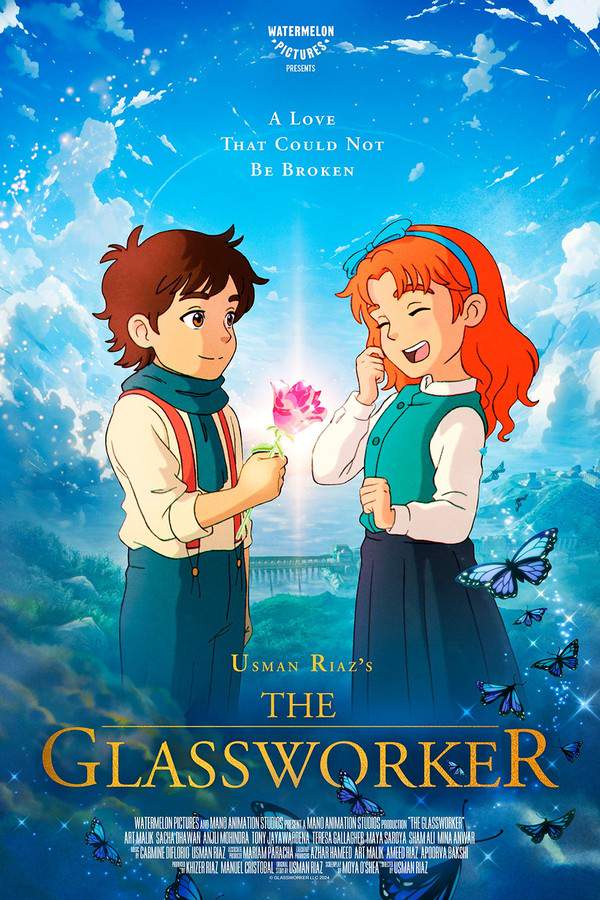
The Glassworker (2025) movie poster

Ending Explained

The Glassworker (2025) Ending Explained – Final Scene & Meaning

Release, runtime and language
2025 · 1 h 38 m · English
Echo score 89
Loading streaming availability…
Directed by
Usman Riaz
Starring
Anjli Mohindra, Alex Jordan, Art Malik, Sacha Dhawan, Tony Jayawardena, Nila Aalia
Budget
$11.6M

Set in a town split by duty and class, Vincent, the son of a glassmaker, and Alliz, a violinist and colonel’s daughter, fall deeply in love. Their bond is strained as old family rivalries and rising tensions threaten to separate them. Rendered in hand‑drawn animation, the film is a poetic look at first love, family loyalty, and the sacrifices needed to stay true to one’s art.

On this page (7)
  1. 1 Where to watch
  2. 2 What happens at the end
  3. 3 Final events in order
  4. 4 Ending questions answered
  5. 5 Movie threads
  6. 6 Movies like The Glassworker
  7. 7 Every angle
Loading streaming availability…

Ending explained · contains spoilers

What Happens at the End of The Glassworker?

How The Glassworker (2025) ends, what the final scene means, which earlier moments set it up and how to read the ending if the film leaves it open. The full ending explained, with every spoiler.

Vincent finally gathers the old box that has haunted him for years, opens it, and discovers a delicate glass butterfly, a ruby and a long‑forgotten letter from Alliz, the girl he loved as a child. As he reads her words, the memory of their friendship—and the trauma of the war that tore them apart—breaks his resolve. He tosses the letter into the furnace of the workshop, hoping to let go of the past. The fire flares into an impossible blue light, the letter turns to ash, and Alliz materialises beside him, as if summoned by the blaze.

The two walk hand‑in‑hand toward the sea, where the sand shimmers with the same ethereal glow that led Vincent to the hidden box. There, a djinn that had lingered in the cave by the shore watches over them. The film leaves it ambiguous whether Alliz has truly returned, whether she has become the benevolent djinn, or whether Vincent’s grief has simply transformed her memory into a vivid apparition. Either way, the ending suggests that the fragile beauty of glass—and the even more fragile connections forged by art and love—can survive, even be reborn, after the devastation of war.

Last updated: October 13, 2025 at 19:20

Was this helpful?

The last 4 events

How The Glassworker Ends: The Final Events in Order

The last events of The Glassworker (2025) in chronological order, the run-up to the ending explained above. The complete timeline has all 10 events, scene by scene.

Open the full timeline
  1. Vincent Witnesses Alliz’s Performance and Confronts Soldiers

    Vincent watches Alliz’s performance from the roof after being barred entry, feeling helpless. He then leaves to confront approaching soldiers, determined to protect her. Inside, Malik arrives with the injured Colonel Amano, earning Alliz’s gratitude and a kiss, which Vincent witnesses.

    Where
    Waterfront
  2. Vincent sabotages the military glass rectifiers to stop the war, feeling remorseful for his actions. His sabotage inadvertently causes Tomas to lose his arm during a bombing, adding tragedy and guilt to the story. Meanwhile, Alliz and her family are caught in a bombing while leaving by train, their fate uncertain.

    Where
    Waterfront
  3. Vincent finishes reading Alliz’s heartfelt letter where she professes her love for him. As he prepares for his glass exhibition, he is distracted by a recurring blue flame, symbolizing their connection. He attempts to burn her letter, but it transforms into a vision of Alliz, signifying their eternal bond.

    Where
    Waterfront
  4. The film concludes with Vincent and Alliz reunited on the beach, holding hands with a blue flame glowing between them. This ending symbolizes their everlasting love and the unbreakable connection forged through their shared experiences and memories.

    Where
    Beach

Ending questions answered

The Glassworker Ending: Your Questions Answered

The questions people ask most about the ending of The Glassworker (2025): what the final scene means, how the twist works, what happens to each character and how to read the ending. Each answer contains spoilers.

Q1

Why does Alliz appear when Vincent throws the letter into the furnace?

When Vincent burns the letter, the furnace fire transforms into an impossible blue light and Alliz materializes beside him as if summoned by the blaze. The film presents this as a magical realist moment where grief and memory collide with the mystical elements established earlier in the story. Whether this is a supernatural occurrence or Vincent's emotional breaking point manifest as a vision remains deliberately unclear.

Foreshadowing: Earlier, Vincent discovers a hidden cave by the shore where a djinn dwells, establishing that mystical elements exist in this world.

  • vincent
  • alliz
  • furnace
  • letter
  • blue fire
  • appearance
Q2

Is Alliz actually alive at the end or is she a ghost?

The film deliberately leaves this ambiguous. Alliz could have truly returned, become the benevolent djinn that watches over the shore, or exists only as a vivid apparition created by Vincent's grief. The ending refuses to confirm whether she died during the war, survived elsewhere, or exists in some supernatural form.

Foreshadowing: The djinn's presence at the shore and the ethereal blue light that guided Vincent to the hidden box suggest the supernatural is woven into the story's fabric.

  • alliz
  • ghost
  • alive
  • dead
  • apparition
  • djinn
Q3

What does the blue fire in the furnace represent?

The blue fire appears when Vincent attempts to destroy Alliz's letter, suggesting the act of letting go doesn't erase love but transforms it into something mystical. The same ethereal blue glow led Vincent to the hidden box containing the letter, ruby, and glass butterfly, creating a visual connection between memory, loss, and the supernatural.

Foreshadowing: The blue glow that guided Vincent to the hidden box mirrors the furnace fire, linking the discovery of the past to its transformation.

  • blue fire
  • furnace
  • mystical
  • symbolism
  • transformation
Q4

What is the djinn's purpose in the ending?

The djinn appears at the shore watching over Vincent and Alliz as they walk toward the sea together. Given that the ending suggests Alliz may have become a benevolent djinn, the creature could represent a guardian spirit overseeing their reunion. This ties the mystical elements introduced earlier in the film to the central love story.

Foreshadowing: Vincent previously found a djinn lingering in a cave by the shore, establishing the creatures as part of this world's mythology.

  • djinn
  • shore
  • sea
  • guardian
  • supernatural
Q5

What happened to Alliz after she left Vincent?

The letter Vincent discovers reveals their childhood friendship and the trauma of war that separated them. Alliz apparently left or was taken away during the conflict, and her letter represents the connection severed by those events. The exact circumstances of her departure and whether she survived the war remain unclear until the ending's ambiguous reunion.

Foreshadowing: The war is established as the force that tore Vincent and Alliz apart, with Tomas losing an arm as a consequence of the conflict.

  • alliz
  • war
  • separation
  • letter
  • childhood
Q6

What does the glass butterfly in the box symbolize?

The delicate glass butterfly represents the fragility of love and art, themes central to the film. Glass, as the medium Vincent's family works with, connects to his identity, while the butterfly suggests transformation, freedom, and the delicate beauty that can emerge from painful processes (like glassblowing). It may also symbolize the ephemeral nature of memory and love shattered by war.

Foreshadowing: Vincent is the son of a glassmaker, making glass a recurring symbol of both his craft and emotional state.

  • glass butterfly
  • symbolism
  • fragility
  • art
  • love
Q7

Does Vincent let go of the past or hold onto it by burning the letter?

Vincent's act of burning the letter appears to be an attempt to let go, yet it paradoxically brings Alliz back, suggesting that true release doesn't mean forgetting but transforming memory into something that can coexist with the present. The burning becomes an act of summoning rather than destruction, implying that some connections cannot be destroyed by physical means.

Foreshadowing: The letter has haunted Vincent for years, indicating his struggle between clinging to and releasing the past.

  • vincent
  • letter
  • letting go
  • past
  • closure
Q8

What does the glowing sand at the shore signify?

The sand shimmers with the same ethereal blue glow that led Vincent to the hidden box, creating a mystical path connecting his workshop to the sea. This suggests the boundary between the physical and supernatural is permeable, and love/memory can create tangible magical pathways.

Foreshadowing: The blue glow guided Vincent to the box, and now the same light guides him and Alliz toward the sea.

  • glowing sand
  • sea
  • shore
  • blue glow
  • mystical
Q9

Is the ending of the film hopeful or bittersweet?

The ending is bittersweet because while Vincent and Alliz appear reunited, the film leaves uncertain whether their reunion is real or a grief-induced vision. The hopeful element lies in the suggestion that love and art, symbolized by glass, can survive and even be reborn after war's devastation. However, Alliz's physical fate remains ambiguous, preventing a purely happy conclusion.

Foreshadowing: The meta notes confirm the tone is bittersweet, with the hopeful symbolic ending preventing an overwhelmingly bleak feeling.

  • ending
  • hopeful
  • bittersweet
  • emotional tone
  • interpretation
Q10

Why does the film leave whether Alliz truly returned ambiguous?

The ambiguity serves the film's thematic interest in the enduring power of memory and art. By not confirming whether Alliz is alive, a ghost, or a djinn, the film suggests that the emotional truth of love transcends physical reality. This allows the ending to function both as a literal reunion and as a metaphorical representation of how lost love lives on in memory.

Foreshadowing: The mystical elements throughout (djinns, blue light) prepare viewers for a reality that isn't purely literal.

  • ambiguity
  • interpretation
  • mystical
  • love
  • memory
Q11

What does Vincent and Alliz walking toward the sea represent?

Walking toward the sea represents a journey toward the unknown and the mystical. The sea often symbolizes transition, the unconscious, or a boundary between worlds. Given the djinn's presence there and the glowing sand, the sea seems to be a threshold between physical reality and the supernatural realm where their love can exist beyond the war's destruction.

Foreshadowing: The djinn was found in a cave by the shore, marking this location as a place where the supernatural intrudes on the physical world.

  • sea
  • shore
  • walking
  • journey
  • transition
Q12

How does the ending suggest art and love survive after war?

The ending explicitly states that the fragile beauty of glass, and the connections forged by art and love, can survive and even be reborn after war's devastation. Vincent's craft (glasswork) and his love for Alliz both survive the conflict, and their reunion (whether literal or spiritual) symbolizes art's and love's resilience. The glass butterfly and the mystical transformation embody this theme.

Foreshadowing: The entire film contrasts the delicate beauty of glass and music with the destructive forces of war and family rivalry.

  • art
  • love
  • war
  • survival
  • rebirth
  • glass

Movie threads

More Movies Like The Glassworker, by Mood & Story

Curated lists built around what makes The Glassworker tick: the same mood, the same kind of story or the same emotional payoff. Each list explains why these movies belong together.

Bittersweet animated romances like The Glassworker

Hand-drawn love stories where romance is intertwined with melancholy and sacrifice. If you liked the tender yet tragic love story in The Glassworker, explore more movies like it. This collection features beautifully animated dramas where first love faces impossible odds, blending romantic hope with the ache of sacrifice and the enduring power of art.

  • romantic
  • melancholic
  • poetic
  • nostalgic
  • dreamlike
  • tragic
  • Tone: bittersweet, melancholic
  • Pacing: steady, contemplative
Why these movies?

The story pattern: Stories typically follow a central love story, often a first love, that is tested by external forces such as war, family duty, or class divides. The plot unfolds in a linear, character-driven manner, leading to an ending that is hopeful yet tinged with loss, emphasizing the beauty and pain of love and memory.

Why they belong together: These films are grouped by their unique blend of romantic yearning and poignant sadness, often expressed through a distinct visual art style. They share a steady pacing and a medium emotional weight, focusing on the emotional truth of love and loss rather than complex plot twists.

Movies about artistic passion like The Glassworker

Stories where characters must stay true to their art in the face of war and duty. Find more films like The Glassworker that explore the lives of artists and musicians. These stories often involve a conflict between creative passion and duty, set against backdrops of war or social divide, and celebrate the resilience of the human spirit through art.

  • artistic
  • contemplative
  • dramatic
  • hopeful
  • tragic
  • poetic
  • Tone: bittersweet, contemplative
  • Pacing: steady, character-driven
Why these movies?

The story pattern: The narrative pattern follows a protagonist dedicated to their art form, whose peaceful world is disrupted by larger conflicts. Their personal journey becomes a metaphor for preserving beauty and humanity in dark times, often involving a symbolic reunion or resolution that transcends the literal plot.

Why they belong together: Movies are grouped here by their central theme of artistic integrity under pressure. They share a bittersweet tone, a steady pacing that allows for reflection on art, and a medium intensity that balances personal drama with wider societal issues without becoming overwhelmingly bleak.

If you liked this

Movies Like The Glassworker

Similar movies to The Glassworker: the same genre, themes or kind of story. Each one comes with its own plot summary, timeline and ending explained.

Browse all movie summaries

Every angle

The Glassworker (2025) Explained: Plot, Ending, Timeline & Characters

Everything about The Glassworker in one place: what happens in the plot summary, the timeline in chronological order, the characters and meaning, the ending explained and a spoiler-free summary. What's After the Movie adds the cast, box office and post-credit scenes.

Coming soon on iOS and Android

The Plot Explained Movie Summary App

Plot summaries, endings explained and timelines on your phone. Catch up on any movie in minutes, save your favorites and never miss a twist again.

Be the first to know when we launch. Your email stays private, always.

Learn more about the app