








Plot Explained Spoilers guaranteed!
Plot Explained

Browse by genre

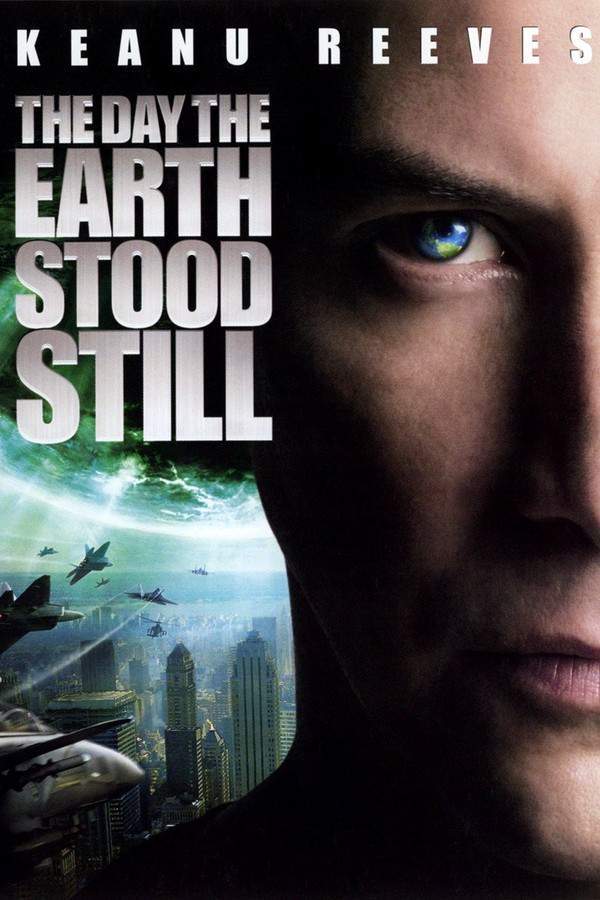
The Day the Earth Stood Still (1951) movie poster

Timeline

The Day the Earth Stood Still (1951) Timeline Explained – Every Event in Order

Release, runtime and language
1951 · 92 min · English
JustWatch #9,220 15
Directed by
Robert Wise
Starring
Patricia Neal, Hugh Marlowe, Billy Gray, Sam Jaffe, Frances Bavier, Lock Martin

An alien visitor named Klaatu arrives on Earth, sending the planet into a state of panic and confusion. Governments struggle to respond as scientists attempt to understand his purpose. Dr. Helen Benson and her stepson find themselves at the center of the unfolding events, trying to interpret Klaatu's ambiguous message of peace and the potential consequences for humanity. The arrival sparks global unrest and forces a reckoning with the future of humankind.

On this page (6)
  1. 1 Where to watch
  2. 2 Events in order (15)
  3. 3 Timeline questions answered
  4. 4 The book behind the movie
  5. 5 Movie threads
  6. 6 Every angle

Where to watch

Where to Watch The Day the Earth Stood Still (1951)

Where can you watch The Day the Earth Stood Still? Stream, rent or buy it in the US, including on Cultpix, FXNow and Hoopla: current JustWatch availability with up-to-date prices.

Streaming availability powered by JustWatch

15 events in order · contains spoilers

The Day the Earth Stood Still Timeline: Events in Chronological Order

Every key event of The Day the Earth Stood Still (1951) in order, scene by scene, with when and where it takes place. Use it to untangle flashbacks, time jumps and parallel storylines, to refresh your memory before the sequel or to find the exact scene you are thinking of.

  1. Discovery of the Sphere

    In 1928, a solitary mountaineer is exploring the Karakoram mountains in India when he encounters a mysterious glowing sphere. After losing consciousness due to an unknown force, he awakens to find the sphere vanished, leaving behind a scar on his hand.

    When
    1928
    Where
    Karakoram Mountains, India
  2. Detection of a Threat

    In the present day, scientists detect a rapidly moving object beyond Jupiter's orbit that poses a catastrophic threat to Earth. The U.S. government quickly mobilizes, assembling a team of scientists, including Helen Benson and Michael Granier, to devise a survival strategy.

  3. Arrival of the Spaceship

    The object suddenly slows and descends into Manhattan, revealing itself to be a large spherical spaceship. Helen, the scientists, and military forces rush to the scene to assess the situation as curiosity and fear grip the onlookers.

    Where
    Manhattan
  4. Alien Emergence

    An alien emerges from the spaceship, prompting Helen to approach it with hopeful intentions. Unfortunately, the situation escalates when the alien is shot amidst the chaos, leading to a sense of urgent danger.

    Where
    Manhattan
  5. Introduction of GORT

    A gigantic humanoid robot appears at the scene, temporarily paralyzing everything with a high-pitched noise. After the alien commands the robot to cease its defensive actions, the tension in the air begins to shift once again.

    Where
    Manhattan
  6. Klaatu's Transformation

    The wounded alien is taken to a laboratory where scientists discover its bioengineered exterior skin. After extracting the bullet, the being ages rapidly into Klaatu, resembling the mountaineer from 1928, which reveals the depth of the mystery surrounding him.

    Where
    Laboratory
  7. Klaatu's Mission

    Klaatu asserts to Secretary of Defense Regina Jackson that he is here to communicate with Earth's leaders about saving the planet from ecocide. However, his mission is jeopardized when Jackson has him sent for interrogation instead of facilitating dialogue.

    Where
    Government Facility
  8. Global Panic Ensues

    Following Klaatu's arrival, the appearance of other smaller spheres around the globe incites widespread panic and military action. A drone attack is launched against the main sphere, but it is quickly thwarted by the powerful robot, GORT.

  9. Meeting with Mr. Wu

    Klaatu connects with Mr. Wu, another alien who has assimilated into human society. Wu enlightens Klaatu about the destructive tendencies of humans, yet expresses his personal attachment to Earth, showcasing the duality of their mission.

  10. Animal Specimens Collection

    Klaatu gives the order for the smaller spheres to collect specimens of Earth's animal species. His intention is to preserve life for reintroduction, revealing his desire to save Earth from humanity's self-destructive path.

  11. Discussion with Professor Barnhardt

    Helen introduces Klaatu to Professor Barnhardt, where they discuss the dire need for humanity to evolve and transform to avert disaster. Barnhardt implores Klaatu to reconsider his stance on Earth's ability to change for the better.

  12. GORT's Transformation

    While being studied by the military, GORT undergoes a transformation into a self-replicating swarm of nano-machines. The swarm consumes every man-made structure in its path, escalating the tension as the military tries to contain the situation.

    Where
    Mount Weather Facility, Virginia
  13. Klaatu and Jacob's Escape

    Klaatu escapes military custody with Jacob, experiencing through him the complexity of human emotions and relationships. As they traverse the perilous landscape, Klaatu's understanding of humanity deepens.

  14. Desperate reunion at the Grave

    After a heart-wrenching moment at Jacob's father's grave, Klaatu realizes that he cannot resurrect the dead. Despite the emotional turmoil, Klaatu reflects on humanity's potential for growth, leading to a pivotal change in his mission.

  15. Final Sacrifice

    In a climactic moment, Klaatu touches the Central Park sphere, right before being consumed by the swarm. His actions deactivate the swarm and save humanity, but at a grave cost of shutting down all electronic systems on Earth.

    Where
    Central Park, New York

Last updated: January 19, 2025 at 18:49

Was this helpful?

Timeline questions answered

The Day the Earth Stood Still Timeline Explained: Your Questions Answered

When does it happen, and why in that order? The questions people ask about the chronology of The Day the Earth Stood Still (1951): time jumps, flashbacks, cause and effect between scenes and the correct order of events, each answered with spoilers.

Q1

Why was the alien shot when it emerged from the spaceship?

The alien was shot during the chaotic scene because the military was on high alert and nervous. When the alien emerged, there was confusion and fear among the armed forces present. Despite Helen Benson stepping forward in a gesture of peace, a nervous soldier fired a shot, wounding the alien. Thistriggered the appearance of GORT, the giant robot, which responded defensively to protect its creator.

Foreshadowing: The tension between peaceful first contact and military aggression is established early when the government mobilizes scientists for a survival strategy rather than preparing for diplomacy.

  • alien shot
  • first contact
  • military
  • chaos
  • arrival
Q2

What does "Klaatu barada nikto" mean?

"Klaatu barada nikto" is the command the alien speaks to stop GORT from continuing its destructive attack. When translated, it essentially means "GORT, stop" or "GORT, cease your actions." This phrase orders the robot to halt its high-pitched noise attack that was disabling all electronic devices in the area. The command works immediately, showing that GORT is programmed to obey this specific instruction.

Foreshadowing: The alien's ability to control GORT with a simple phrase hints at the deep technological connection between them, suggesting GORT was created by the same civilization.

  • klaatu barada nikto
  • gort command
  • robot control
  • phrase meaning
Q3

What's the connection between the 1928 mountaineer and Klaatu?

The mountaineer who discovered the sphere in 1928 in the Karakoram Mountains is the same entity as Klaatu. When scientists examine the alien in the laboratory, they discover its exterior is a bioengineered space suit. After the bullet is removed, the being rapidly ages and transforms into Klaatu, who bears a striking resemblance to the mountaineer from 1928. This reveals Klaatu has been visiting Earth for decades, possibly studying humanity.

Foreshadowing: The mysterious scar on the mountaineer's hand from 1928 foreshadows the alien nature of the encounter and suggests long-term observation of Earth.

  • mountaineer
  • 1928
  • connection
  • identity
  • scar
Q4

Why did GORT transform into a swarm of nanobots?

GORT (Genetically Organized Robotic Technology) transformed into a self-replicating swarm of insect-like nano-machines when examined at the Mount Weather facility. This appears to be a defensive or judgment mechanism programmed into GORT by its creators. Once activated, the swarm began consuming everything man-made, destroying the entire underground facility and emerging above ground to continue its destruction. The transformation represents an automated response to what Klaatu's civilization perceived as a threat.

Foreshadowing: GORT's massive humanoid form was merely a container for the actual nanotech weapon, hinting at technology far beyond human understanding.

  • gort transformation
  • nanobots
  • swarm
  • robots
  • nanomachines
Q5

Why did Klaatu decide to save humanity instead of destroying it?

Klaatu changed his mind about destroying humanity after experiencing human emotions and relationships through Jacob. His conversations with Professor Barnhardt about how Klaatu's own civilization underwent drastic collaborative evolution to prevent extinction also influenced him. Most importantly, Jacob's grief at his father's grave and his mother's love for him demonstrated the depth of human connection. These experiences convinced Klaatu that humans deserved a chance to change, leading him to sacrifice himself to stop the GORT swarm.

Foreshadowing: Helen's efforts to show Klaatu the good side of humanity through Professor Barnhardt and Jacob plant the seeds for his eventual change of heart.

  • klaatu decision
  • save humanity
  • sacrifice
  • humanity change
  • moral choice
Q6

What happened to the animals collected by the smaller spheres?

Klaatu commanded the smaller spheres to gather specimens of various animal species from around the world. His intention was to preserve Earth's biodiversity for eventual reintroduction, suggesting he planned to allow life to continue even if humanity was destroyed. The animals were stored inside these smaller spheres as a safeguard against extinction. When Klaatu sacrificed himself and the main sphere deactivated the swarm, the fate of these collected animals becomes uncertain, though they presumably remained preserved within the spheres.

Foreshadowing: The animal collection demonstrates Klaatu's original dual mission: to judge humanity while also preserving Earth's biosphere.

  • animals
  • spheres
  • collection
  • preservation
  • species
Q7

Why did Jacob tell the authorities about Klaatu's location?

Jacob betrayed Klaatu's location to the authorities because he was a scared young boy overwhelmed by the chaos and danger around him. Despite forming a bond with Klaatu during their escape, Jacob panicked when faced with the extreme circumstances of the military pursuit and the widespread destruction. His decision reflects the impulsiveness of youth under extreme stress, though it leads to tragic consequences and forces Klaatu to act more quickly.

Foreshadowing: Jacob's earlier conversations with Klaatu about his father's death hint at his emotional instability and tendency to make reckless decisions when frightened.

  • jacob
  • betrayal
  • authorities
  • military
  • loyalty
Q8

What caused the sphere to shut down all electronics on Earth?

When Klaatu made contact with the Central Park sphere and was consumed by the swarm, his sacrifice activated a system that deactivated the GORT nanobots. As part of this deactivation process, the sphere emitted an electromagnetic pulse that shut down all electronic systems on Earth. This appears to be a programmed safety mechanism built into the sphere's technology. The shutdown was necessary to stop the nanobot swarm and prevent further destruction, though it left humanity technologically crippled.

Foreshadowing: The earlier high-pitched noise that GORT emitted to disable electronics establishes that this civilization possesses electromagnetic disruption technology.

  • electronics shutdown
  • pulse
  • sphere
  • deactivation
  • technology
Q9

What was Klaatu's original mission on Earth?

Klaatu's original mission was to deliver a warning to Earth's leaders about the ecological destruction humanity is causing. He came as an emissary from a coalition of intergalactic civilizations who have observed humanity's destructive impact on the planet. Klaatu's purpose was to give humanity a chance to change their ways before taking drastic action. However, instead of being received as a diplomatic envoy, he was captured and imprisoned for interrogation, which caused him to reconsider whether humanity deserved salvation.

Foreshadowing: The detection of the object beyond Jupiter initially framed as an extinction-level threat was actually a diplomatic mission, not an attack.

  • klaatu mission
  • warning
  • ecocide
  • intergalactic
  • diplomacy
Q10

Why did the government imprison Klaatu instead of listening to his message?

Secretary of Defense Regina Jackson ordered Klaatu imprisoned for interrogation rather than facilitating dialogue with world leaders. The government treated Klaatu as a potential security threat rather than a diplomatic emissary. This Cold War-era paranoia led them to view the alien through a military lens rather than engaging with his peaceful message about preventing ecological disaster. Their refusal to treat him as an official representative of alien civilizations directly contributed to the escalating crisis.

Foreshadowing: The immediate military response to the sphere's arrival, including armed forces surrounding the scene, establishes the government's aggressive posture from the start.

  • government
  • imprisonment
  • interrogation
  • cold war
  • diplomacy failure

Movie threads

More Movies Like The Day the Earth Stood Still, by Mood & Story

Curated lists built around what makes The Day the Earth Stood Still tick: the same mood, the same kind of story or the same emotional payoff. Each list explains why these movies belong together.

Cold War Allegory Movies like The Day the Earth Stood Still

Sci-fi thrillers where global tension reflects deep-seated human anxieties. If you liked The Day the Earth Stood Still, explore more movies that use science fiction as a lens for political commentary. These films capture the tense, paranoid atmosphere of the Cold War era or similar ideological conflicts, often presenting humanity's flaws through the arrival of an external, superior force.

  • anxious
  • ominous
  • urgent
  • paranoid
  • contemplative
  • somber
  • Tone: tense, ominous, contemplative
  • Pacing: fast, urgent
Why these movies?

The story pattern: Stories in this thread often begin with a disruptive event that challenges humanity's self-image. The central conflict is less about action and more about diplomatic and ideological standoffs, where characters must navigate suspicion and fear to prevent a cataclysm. The narrative arc typically involves a tense, urgent race to understand a new threat and what it reveals about ourselves.

Why they belong together: Movies are grouped here for their shared mood of high-stakes anxiety rooted in political allegory. They share a tense tone, fast pacing, and a heavy emotional weight, using sci-fi concepts to explore themes of fear, aggression, and the possibility of human extinction.

Ambiguous Alien Encounter Movies like The Day the Earth Stood Still

Stories where alien arrivals force humanity to confront its own nature. Find more movies like The Day the Earth Stood Still where the arrival of extraterrestrials sparks global unrest and deep moral questioning. These similar sci-fi dramas feature mysterious visitors, widespread panic, and stories that question whether humanity is worthy of salvation or destined for destruction.

  • contemplative
  • ominous
  • somber
  • philosophical
  • urgent
  • anxious
  • Tone: somber, ominous, contemplative
  • Pacing: steady, building to urgent climax
Why these movies?

The story pattern: The narrative pattern involves a mysterious, often powerful, alien emissary arriving on Earth. Instead of immediate conflict, the story unfolds through attempts at communication and understanding, creating a tense, dialogue-driven plot. The climax typically involves a choice or a judgment about humanity's future, leading to an ambiguous or bittersweet ending that leaves the ultimate fate unresolved.

Why they belong together: These films are connected by their core premise of a non-hostile but morally ambiguous alien presence. They share an ominous and contemplative mood, a focus on scientific and ethical responsibility, and an ending that is thought-provoking rather than neatly resolved.

Every angle

The Day the Earth Stood Still (1951) Explained: Plot, Timeline & Characters

Everything about The Day the Earth Stood Still in one place: what happens in the plot summary, the timeline in chronological order, the characters and meaning and a spoiler-free summary. What's After the Movie adds the cast, box office and post-credit scenes.

Coming soon on iOS and Android

The Plot Explained Movie Summary App

Plot summaries, endings explained and timelines on your phone. Catch up on any movie in minutes, save your favorites and never miss a twist again.

Be the first to know when we launch. Your email stays private, always.

Learn more about the app