Plot Explained Spoilers guaranteed!
Plot Explained

Browse by genre

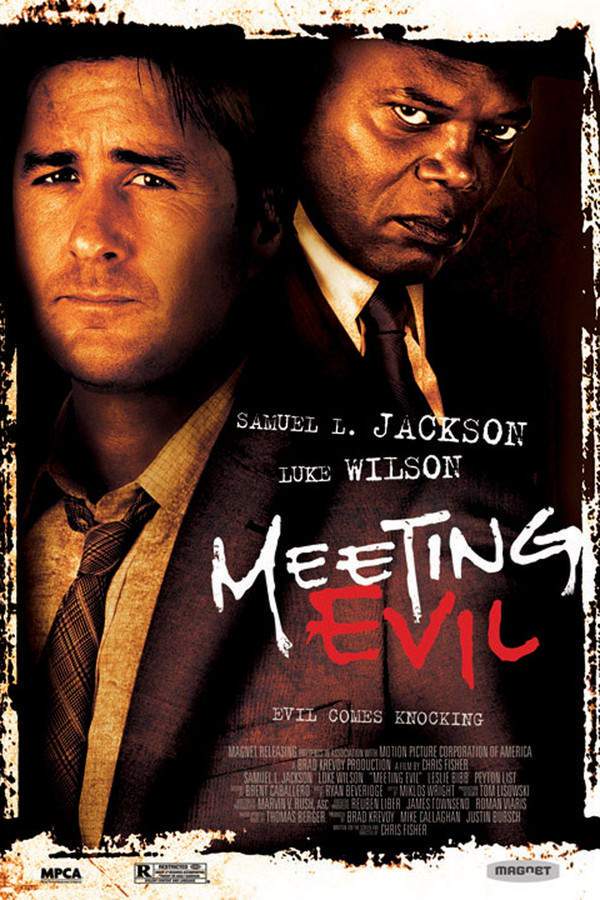
Meeting Evil (2012) movie poster

Plot Summary

Meeting Evil (2012) Plot Summary Explained

Release, runtime and language
2012 · 89 min · English
Directed by
Chris Fisher
Starring
Leslie Bibb, Samuel L. Jackson, Luke Wilson, Peyton List

An ordinary man's life is thrown into turmoil when he unexpectedly finds himself on a dangerous journey with a sinister and unpredictable psychopath. As he experiences the darker aspects of human behavior firsthand, he is forced to examine his own values and face unsettling truths about himself and the world around him. The encounter tests his limits and challenges his perception of right and wrong.

On this page (5)
  1. 1 What happens: full plot
  2. 2 Plot questions answered
  3. 3 Movie threads
  4. 4 Movies like Meeting Evil
  5. 5 Every angle

Full plot summary · contains spoilers

What Happens in Meeting Evil: Full Plot Summary

The whole story of Meeting Evil (2012) explained, from the opening scene to the final frame: every key event, every twist and what it all adds up to. Read it as a quick recap before the sequel, to check a scene you missed, or to finally understand what really happened.

John Felton, portrayed by Samuel L. Jackson, returns to his home in Orly County, situated in a nameless southern state—possibly Louisiana—only to confront an unwelcome surprise: a foreclosure notice glaring from his front door. While his wife Joanie and their two children, Sam and John Jr., eagerly prepare for a surprise birthday celebration, John's mood sours when he realizes the timing could not be worse. In a moment of frustration, he lashes out, prompting his family to flee to a nearby park and leaving him alone to wrestle with his mounting troubles.

Standing in his backyard, John's gaze falls upon a construction site where a swimming pool is being installed, stirring darker thoughts within him. Just as despair begins to pull him under, a series of persistent knocks at the front door interrupts his melancholy. Enter Richie, a strange yet charming figure in a suit and fedora, who claims that his 1972 Pontiac GTO has broken down and asks for assistance. Despite his peculiar demeanor raising red flags, John’s good nature leads him to help, but a sudden backfire from the car leaves him with a painful injury to his left knee.

Reluctantly, John allows Richie to drive him to the hospital, but in his distraction, he realizes too late that he’s left his wallet and phone at home. As they travel, John's discomfort grows due to Richie's unsettling behavior, especially his alarming habit of whistling “Dixie.” Their journey takes an unexpected turn when Richie stops at a local bar, pushing John to venture across the street to reach a cell phone dealership. However, he finds himself denied help by Rhonda, an unhelpful clerk with a problem attitude.

At the bar, John encounters Trevor, his former boss, and Tammy Strate, the woman who left Trevor for him, unveiling tensions from his past. The meeting escalates just as police cars begin to gather outside, prompting Richie to suggest a hasty departure. As they hit the road, a run-in with an aggressive truck driver forces them to pull over, deepening the chaos surrounding them.

As John's initial kindness spirals into catastrophic events, Rhonda's boyfriend mistakenly targets him, only to meet a gruesome end at the hands of Richie, a cold-blooded killer behind Rhonda’s unjust demise. Compounding the confusion, local officers Frank and Latisha misdirect their suspicions, believing John to be responsible for the unfolding violence.

Caught in a torrent of danger with no escape in sight, John and Tammy are trapped in a web of violence, culminating in John’s arrest by Frank, who dismisses his claims regarding Richie's true identity. As the night progresses, Latisha begins to unravel the mystery and realizes that John is innocent while Richie remains at large.

Freed from custody, John returns home to Joanie and their kids, blissfully unaware of the looming threat. Unbeknownst to him, Richie has already entered their lives, instigating havoc by disclosing Joanie's affair and her plot to eliminate John for insurance money.

Fueled by rage over this betrayal, John's confrontation with Joanie spirals into chaos, with Joanie fighting back with a knife and then a golf club. Their violent clash ends with John stabbing Richie and both tumbling into the pool hole, newly filled with rainwater.

As Frank and Latisha arrive at the scene, Latisha delivers the final blow that extinguishes Richie's reign of terror. In the aftermath, as Joanie seeks comfort from John, he remains eerily silent, chillingly echoing Richie's sinister theme by whistling "Dixie" into the stormy night.
Last updated: November 21, 2024 at 09:06

Was this helpful?

Plot questions answered

Meeting Evil Plot Explained: Your Questions Answered

The questions people ask most about Meeting Evil (2012): what happens in the confusing scenes, why the characters do what they do, the twists, hidden details and what the ending means. Each answer contains spoilers.

Q1

Why does John agree to help Ritchie after his car breaks down?

John's good nature and desire to be helpful override his instinct when Ritchie appears at his door. Though Ritchie raises red flags with his peculiar demeanor in a suit and fedora, John cannot turn away someone in need. This decision sets the catastrophic chain of events in motion, as John's willingness to help a stranger exposes his family to a predator.

Foreshadowing: Earlier, John had been contemplating darker thoughts while staring at the construction site, hinting that his judgment is already compromised by his financial desperation.

  • john felton
  • ritchie
  • car trouble
  • good samaritan
  • manipulation
Q2

What does Ritchie want from John throughout the movie?

Ritchie appears to seek entertainment and psychological thrills rather than any material gain. He uses John as a pawn to orchestrate chaos, watching how an ordinary man reacts to escalating violence and moral corruption. By the end, Ritchie reveals he wanted to destroy John's entire life from the inside, exposing his wife's affair and plotting with her to kill John for insurance money.

Foreshadowing: Ritchie's unsettling habit of whistling 'Dixie' and his calm demeanor during violent encounters hint at his sadistic enjoyment of others' suffering.

  • ritchie motivation
  • psychopath
  • manipulation
  • sadism
  • psychological thriller
Q3

Why does Joanie plot against John in the movie?

Joanie is having an affair and has teamed up with her lover to kill John for the insurance money. Richie discovers this plot and uses it as a weapon, disclosing Joanie's betrayal to John during the climax. The foreclosure on their home likely motivated Joanie to see John's death as a financial solution rather than facing bankruptcy together.

Foreshadowing: The movie hints at marital tension early on when John lashes out at his family over the foreclosure, pushing them to the park.

  • joanie affair
  • betrayal
  • insurance money
  • infidelity
  • murder plot
Q4

How does Ritchie kill Rhonda and her boyfriend in the movie?

Rhonda's boyfriend mistakenly attacks John, believing he is the man who wronged Rhonda at the phone dealership. However, Ritchie is the one who kills both Rhonda and her boyfriend, revealing his cold-blooded nature. John is left to take the blame as the violence unfolds around him, with Ritchie pulling the strings from the shadows.

Foreshadowing: Ritchie insists on stopping at the bar while John is trying to get help, deliberately placing John in a dangerous situation.

  • ritchie murders
  • rhonda death
  • violent escalation
  • frame job
  • cold-blooded killer
Q5

Why is John arrested despite being innocent?

John is arrested because Officers Frank and Latisha misdirect their investigation, believing he is responsible for the violence at the bar and Rhonda's death. John's presence with Ritchie and his disputed story make him the primary suspect. The officers dismiss his claims about Ritchie's true identity as desperate lies from a guilty man.

Foreshadowing: The police arrive at the bar just as chaos erupts, and John is the one found at the scene with no alibi.

  • john arrest
  • police investigation
  • false accusation
  • officers frank latisha
  • wrongful arrest
Q6

Why does John whistle Dixie at the end of the movie?

After Ritchie's death, John stands in the rain and eerily whistles 'Dixie,' the same tune Ritchie repeatedly whistled throughout the film. This chilling moment suggests John has been corrupted by his experience, he has absorbed aspects of the monster he fought. The ambiguous ending implies that witnessing and participating in such violence has permanently darkened John's soul.

Foreshadowing: Ritchie whistles 'Dixie' multiple times throughout the movie as his signature theme, making it a symbol of his evil influence.

  • dixie whistling
  • ambiguous ending
  • moral corruption
  • psychological transformation
  • unsettling conclusion
Q7

What happens during the swimming pool confrontation?

During the climactic fight, Joanie attacks John with a knife and then a golf club after he discovers her betrayal. In the struggle, John stabs Ritchie, and both men tumble into the newly filled swimming pool hole filled with rainwater. This violent confrontation represents the complete destruction of John's family life, as his marriage and morality collapse simultaneously.

Foreshadowing: John gazes at the construction site with the swimming pool early in the film, associating it with his darker thoughts about escape or destruction.

  • swimming pool
  • final fight
  • joanie attack
  • climax
  • violent struggle
Q8

Why does the truck driver encounter escalate the violence?

The aggressive truck driver confrontation forces Ritchie and John to pull over, trapping them in a dangerous situation. This encounter demonstrates how Ritchie's presence continually draws John into higher-stakes confrontations. The truck driver incident serves as another example of how ordinary situations spiral into chaos around Ritchie.

Foreshadowing: Each stop Ritchie makes, starting with the bar, leads to increased danger and violence, showing a pattern of escalation.

  • truck driver
  • road rage
  • escalating danger
  • confrontation
  • chaos
Q9

Why is the foreclosure important to the story?

The foreclosure notice on John's door sets the entire tragedy in motion. It creates the emotional desperation that makes John vulnerable to Ritchie's manipulation. The financial stress also reveals the fracture in John's marriage, as Joanie's affair and plot to kill him may have been motivated by wanting the insurance money to escape their financial ruin.

Foreshadowing: John's frustration over the foreclosure causes him to lash out at his family, driving them to the park and leaving him alone for Ritchie to find.

  • foreclosure
  • financial desperation
  • motivation
  • marriage problems
  • money troubles
Q10

When does Ritchie's true nature as a psychopath get revealed?

Ritchie's psychopathic nature is revealed gradually through his unsettling behavior, whistling Dixie, calm demeanor during chaos, and lack of empathy. The full revelation comes when he kills Rhonda and her boyfriend without hesitation, showing John and the audience that he is a cold-blooded killer who manipulates situations for his own entertainment.

Foreshadowing: Ritchie's peculiar appearance in a suit and fedora, combined with his strange requests, hints from the start that he is not who he claims to be.

  • ritchie psychopath
  • serial killer
  • reveal true colors
  • manipulation
  • deceptive personality

Movie threads

More Movies Like Meeting Evil, by Mood & Story

Curated lists built around what makes Meeting Evil tick: the same mood, the same kind of story or the same emotional payoff. Each list explains why these movies belong together.

Movies about descent into chaos like Meeting Evil

An ordinary life unravels during a forced partnership with a charming psychopath. If you enjoyed the dark partnership and moral unraveling in Meeting Evil, you'll find similar thematic resonance here. These movies, often psychological thrillers and crime dramas, feature ordinary people thrust into dangerous situations by sinister companions, leading to a fast-paced, high-intensity examination of evil.

  • sinister
  • anxious
  • chaotic
  • claustrophobic
  • unsettling
  • brutal
  • Tone: dark, sinister, tense
  • Pacing: fast, relentless
Why these movies?

The story pattern: The narrative follows a straightforward but intense path: a chance encounter with a dangerously charismatic individual spirals into a series of increasingly violent events. The protagonist is not just a victim but an active participant, forced to make difficult choices that challenge their core identity, often leading to an ambiguous or bleak conclusion about human nature.

Why they belong together: They are grouped by their shared focus on the dynamic between a 'normal' person and a captivating force of destruction. This creates a specific, claustrophobic tension, a fast pace, and a heavy emotional weight centered on the themes of moral corruption and the seductive nature of chaos.

Thrillers about shattered ordinary lives like Meeting Evil

When a single day of violence fractures a fragile family and identity. For viewers who liked the high-stakes domestic crisis and moral examination in Meeting Evil, this collection features similar stories. These movies often blend thriller and drama elements, showing how a single encounter with extreme violence exposes deep-seated personal and familial problems under high tension.

  • unsettling
  • anxious
  • melancholic
  • domestic
  • brutal
  • tense
  • Tone: dark, melancholic, tense
  • Pacing: fast, urgent
Why these movies?

The story pattern: The narrative pattern involves a catalyst of extreme violence that acts as a pressure cooker for pre-existing domestic issues—like infidelity, financial stress, or emotional distance. The protagonist's journey is as much about surviving the external threat as it is about facing the unsettling truths of their own life, often resulting in a profoundly changed or broken individual.

Why they belong together: They share a cohesive vibe of high-tension realism, where the threat feels close to home. The combination of a fast pace, dark tone, and heavy emotional weight stemming from both violence and personal failure creates a uniquely unsettling and anxious viewing experience.

If you liked this

Movies Like Meeting Evil

Similar movies to Meeting Evil: the same genre, themes or kind of story. Each one comes with its own plot summary, timeline and ending explained.

Browse all movie summaries

Every angle

Meeting Evil (2012) Explained: Plot, Timeline & Characters

Everything about Meeting Evil in one place: what happens in the plot summary, the timeline in chronological order, the characters and meaning and a spoiler-free summary. What's After the Movie adds the cast, box office and post-credit scenes.

Coming soon on iOS and Android

The Plot Explained Movie Summary App

Plot summaries, endings explained and timelines on your phone. Catch up on any movie in minutes, save your favorites and never miss a twist again.

Be the first to know when we launch. Your email stays private, always.

Learn more about the app