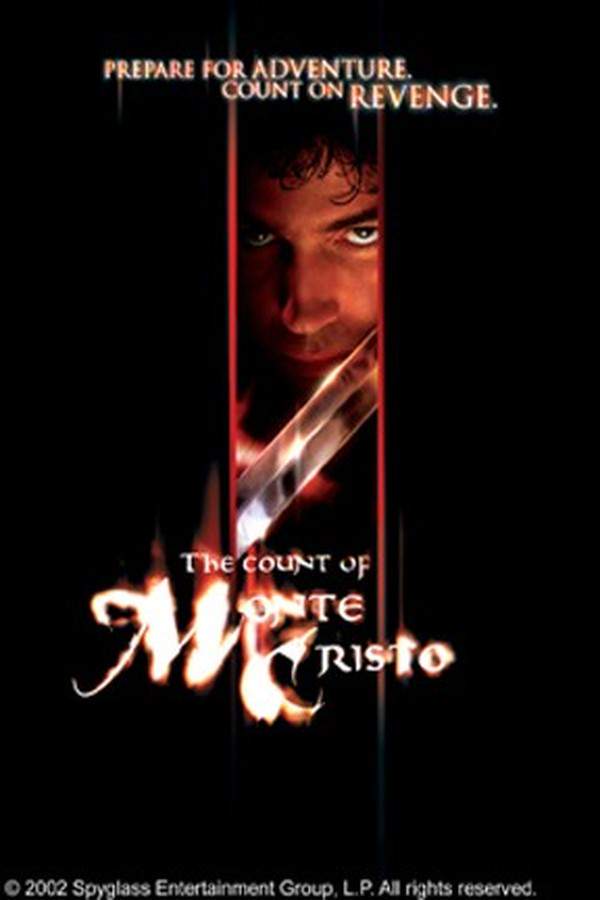
Year: 2002
Runtime: 131 min
Language: English
Director: Kevin Reynolds
Budget: $35M
A young sailor, Edmond Dantes, is falsely accused and imprisoned by jealous rivals. During his years of unjust confinement, he transforms himself and meticulously plans a daring escape and a calculated revenge. He vows to punish those who conspired against him, navigating a complex web of betrayal and enduring love for Mercedes. Edmond's quest for justice becomes a thrilling adventure filled with cunning and retribution.
Find where to stream, rent, or buy The Count of Monte Cristo (2002) in the US with current JustWatch availability, up-to-date pricing, and platform listings for subscription, rental, and digital purchase options.
Warning: spoilers below!
Haven’t seen The Count of Monte Cristo yet? This summary contains major spoilers. Bookmark the page, watch the movie, and come back for the full breakdown. If you're ready, scroll on and relive the story!
Trace every key event in The Count of Monte Cristo (2002) with our detailed, chronological timeline. Perfect for unpacking nonlinear stories, spotting hidden connections, and understanding how each scene builds toward the film’s climax. Whether you're revisiting or decoding for the first time, this timeline gives you the full picture.
Last updated: November 21, 2024 at 15:00
Find frequently asked questions about the The Count of Monte Cristo (2002) timeline, including chronological order, nonlinear jumps, cause-and-effect links, and scene sequence clarifications. This timeline FAQ helps explain when key events happen, how moments connect, and why the story unfolds in that specific order.
Edmond was imprisoned because Fernand Mondego and Danglars conspired against him out of jealousy. Fernand wanted Mercédès for himself, while Danglars envied Edmond's promotion to captain. They revealed to Magistrate Villefort that Edmond was carrying a secret letter from Napoleon Bonaparte, which they claimed proved Edmond was a Bonapartist. Villefort initially planned to pardon Edmond but changed his mind when he discovered the letter was addressed to his own father, a Bonapartist loyalist. To protect his family name, Villefort had Edmond imprisoned in the Château d'If.
Fernand's jealousy is first shown when he watches Edmond receive the letter from Napoleon, with a dark expression hinting at his intentions.
Villefort initially intended to pardon Edmond after receiving Napoleon's letter, as the letter itself appeared innocent. However, when Edmond revealed the letter was addressed to Monsieur Clarion, Villefort realized this was a code name for his own father, who was a loyal Bonapartist. Since protecting his family's political standing was paramount, Villefort chose to have Edmond imprisoned instead of allowing him to potentially expose the family's secret support for Napoleon.
Edmond escaped by assuming the identity of Abbé Faria, the fellow prisoner who had been teaching him. When a tunnel collapse killed Faria, Edmond took the treasure map and dragged Warden Dorleac into the sea during what appeared to be a burial at sea. While underwater, Edmond escaped and swam to freedom, leaving Dorleac to drown. This daring escape transformed Edmond and marked the beginning of his quest for vengeance.
Abbé Faria had been digging his own escape tunnel for years, and Edmond helped him complete it, learning the route in the process.
Abbé Faria was a priest who had been imprisoned in the Château d'If for eleven years. He was confined for protecting the location of the Spada family treasure, which he refused to reveal under torture. During his captivity, he spent his time teaching Edmond various subjects including history, science, and combat skills. Before dying from injuries sustained in a tunnel collapse, he gave Edmond his treasure map, urging him to use the wealth for noble purposes.
Fernand betrayed Edmond primarily because he was deeply in love with Mercédès and resentful that she chose Edmond. When Edmond was promoted to captain and was about to marry Mercédès, Fernand's jealousy reached its peak. He conspired with Danglars to have Edmond imprisoned, hoping that Edmond's disappearance would allow him to win Mercédès' affection. This betrayal was motivated by both romantic envy and the promise of personal gain.
The narrative shows Fernand watching jealously as Edmond receives the letter from Napoleon and as Edmond celebrates his engagement to Mercédès.
After escaping prison, Edmond used the treasure map given to him by Abbé Faria to sail to Montecristo island. There he discovered immense hidden wealth belonging to the Spada family. Using this fortune, he adopted the identity of the Count of Monte Cristo, a persona that allowed him to gain entry into Parisian high society. This new identity and his vast wealth became the tools through which he executed his carefully planned revenge against his enemies.
Faria had spent eleven years protecting the location of the Spada treasure and chose Edmond as the worthy heir to use it for justice.
Edmond meticulously destroyed each enemy using their own weaknesses. Against Danglars, he planted rumors about the Spada treasure that led to Danglars being exposed for financial deceit. For Villefort, Edmond revealed that Villefort had been complicit in Edmond's father's imprisonment and death, destroying the magistrate's reputation. Fernand was financially ruined and exposed for his role in Edmond's original betrayal. Each vengeance was calculated to strip away what each man valued most.
Edmond spent years studying his enemies and learning their secrets before returning to Paris under his new identity.
Albert is actually Edmond Dantès' biological son, not Fernand's. Mercédès reveals this devastating truth after reconnecting with Edmond. She had married Fernand only after believing Edmond was dead, but she was already pregnant with Edmond's child at the time. This revelation adds tragic complexity to the final confrontation, as Edmond discovers he has a son he never knew about.
Mercédès married Fernand because she believed Edmond was truly dead or would never return after his imprisonment at the Château d'If. She was pregnant with Edmond's child at the time and needed to provide for her unborn son. She chose Fernand as a practical decision to ensure her security and that of her child, not out of love for him.
After achieving his revenge, Edmond initially planned to demolish the Château d'If as a symbol of his triumph over the injustice he suffered. However, he ultimately chose to leave it standing as a testament to his transformation and as a reminder of his promise to Abbé Faria to use his wealth for noble causes. Instead of destruction, Edmond chose to channel his resources toward building a better future with his reformed family.
Edmond's father died of poverty and grief while Edmond was imprisoned in the Château d'If. When Edmond returned to Marseille, Morrell told him that his father had been evicted from their home and died from starvation and heartbreak after being denied assistance from Morrell's company. This tragedy motivated Edmond to seek vengeance not just for his own suffering but also for his father's death.
Napoleon gave Edmond a secret letter to deliver to the mainland in exchange for medical assistance for the ship's ailing captain. The letter was addressed to Monsieur Clarion, which was actually a code name for Villefort's father, a Bonapartist loyalist. This letter was the catalyst for Edmond's entire ordeal, as its existence was discovered and used as evidence that Edmond was a Bonapartist conspirator.
Napoleon's encounter with Edmond on Elba is depicted as a fateful meeting that will change Edmond's life forever.
Discover curated groups of movies connected by mood, themes, and story style. Browse collections built around emotion, atmosphere, and narrative focus to easily find films that match what you feel like watching right now.
Stories of profound betrayal leading to meticulously crafted, high-stakes vengeance.If you enjoyed the intricate vengeance plot of The Count of Monte Cristo, you'll find similar movies here. These stories feature characters who, after a devastating betrayal, meticulously plan and execute complex revenge, blending thrilling action with heavy emotional stakes.
The narrative typically begins with a devastating injustice that shatters the protagonist's life. After a period of suffering and transformation, they re-emerge with a new identity and a complex, multi-stage plan to systematically dismantle the lives of those who wronged them, leading to a climactic and morally complex confrontation.
Movies are grouped here based on their shared focus on the revenge arc, driven by themes of betrayal, transformation, and the high-stakes, calculated nature of the protagonist's quest. They share a dark tone, heavy emotional weight, and a sense of gripping, transformative justice.
Characters who endure profound suffering and emerge reinvented, driven by a new purpose.Fans of Edmond Dantès's journey from innocent sailor to calculating Count will appreciate these movies about personal reinvention. Discover films where characters endure great trials, undergo a profound change, and return with a powerful new identity and purpose.
These narratives follow a 'death and rebirth' structure. The protagonist's old life is violently taken away, leading to a period of intense suffering and isolation that forges them anew. They gain power, knowledge, or wealth during this time, allowing them to return to their former world not as a victim, but as a master of their own destiny.
These films are united by the central theme of radical personal transformation fueled by hardship. They share a heavy emotional weight, a steady pacing that allows for deep character development, and a tone that balances dark suffering with the empowering, albeit bittersweet, results of reinvention.
Don't stop at just watching - explore The Count of Monte Cristo in full detail. From the complete plot summary and scene-by-scene timeline to character breakdowns, thematic analysis, and a deep dive into the ending - every page helps you truly understand what The Count of Monte Cristo is all about. Plus, discover what's next after the movie.
Read a complete plot summary of The Count of Monte Cristo, including all key story points, character arcs, and turning points. This in-depth recap is ideal for understanding the narrative structure or reviewing what happened in the movie.
Discover the characters, locations, and core themes that shape The Count of Monte Cristo. Get insights into symbolic elements, setting significance, and deeper narrative meaning - ideal for thematic analysis and movie breakdowns.
Discover movies like The Count of Monte Cristo that share similar genres, themes, and storytelling elements. Whether you’re drawn to the atmosphere, character arcs, or plot structure, these curated recommendations will help you explore more films you’ll love.
The Count of Monte Cristo (2002) Plot Summary & Movie Recap
The Count of Monte Cristo (2002) Scene-by-Scene Movie Timeline
The Count of Monte Cristo (2002) Spoiler-Free Summary & Key Flow
Movies Like The Count of Monte Cristo – Similar Titles You’ll Enjoy
The Count of Monte Cristo Part 1 - The Prisoner of Kastell (1943) Full Summary & Key Details
The Count of Monte Cristo (1961) Plot Summary & Ending Explained
El conde de Montecristo (1942) Full Movie Breakdown
The Count of Monte Cristo (1934) Complete Plot Breakdown
The Son of Monte Cristo (1940) Plot Summary & Ending Explained
Monte Cristo (1929) Movie Recap & Themes
El conde de Montecristo (1953) Full Summary & Key Details
The Count of Monte Cristo (1954) Spoiler-Packed Plot Recap
The Count of Monte-Cristo (1975) Movie Recap & Themes
The Count of Monte Cristo Part 2 - The Retaliation (1943) Ending Explained & Film Insights
Prince Of The Revenge (1950) Detailed Story Recap
The Count of Monte Cristo (1000) Full Movie Breakdown
The Sword of Monte Cristo (1951) Spoiler-Packed Plot Recap
Monte Cristo (1922) Plot Summary & Ending Explained
The Count of Monte Cristo (1996) Film Overview & Timeline