Plot Explained Spoilers guaranteed!
Plot Explained

Browse by genre

The Case for Christ (2007) movie poster

Timeline

The Case for Christ (2007) Timeline Explained – Every Event in Order

Release, runtime and language
2007 · 71 mins · English
Directed by
Michael Eaton, Timothy Eaton
Starring
Ben Witherington, Lee Strobel, Craig Blomberg, Leslie Strobel, Mark Strauss, J.P. Moreland

A journalist’s personal investigation of the evidence for Jesus, drawn from the Gold‑Medallion award‑winning bestseller. It chronicles Lee Strobel’s two‑year quest, moving from atheism to belief as he scrutinizes biblical texts, historical sources and the life of Christ, presenting the findings of his rigorous search.

On this page (6)
  1. 1 Where to watch
  2. 2 Events in order (11)
  3. 3 Timeline questions answered
  4. 4 Movie threads
  5. 5 Movies like The Case for Christ
  6. 6 Every angle

Where to watch

Where to Watch The Case for Christ (2007)

Where can you watch The Case for Christ? Stream, rent or buy it in the US, including on fuboTV, Tubi TV and YouTube Free: current JustWatch availability with up-to-date prices.

Streaming availability powered by JustWatch

11 events in order · contains spoilers

The Case for Christ Timeline: Events in Chronological Order

Every key event of The Case for Christ (2007) in order, scene by scene, with when and where it takes place. Use it to untangle flashbacks, time jumps and parallel storylines, to refresh your memory before the sequel or to find the exact scene you are thinking of.

  1. Alison's rescue during celebratory dinner

    During a celebratory dinner after Lee's recognition, Alison chokes on a piece of candy. Alfie, a nurse, intervenes and saves her life. She credits the event to God's will, which Leslie takes to heart, planting the seed for the couple's later journey of faith.

    When
    1980
    Where
    Chicago restaurant
  2. Leslie grows closer to Alfie and to church

    Leslie and Alfie become friends and start attending a Christian church together. Lee watches as Leslie's faith deepens, creating tension in their marriage.

    When
    1980
    Where
    Church
  3. Lee begins pursuing evidence to disprove the resurrection

    Following his mentor's advice, Lee begins gathering information to disprove the resurrection. He embarks on a rigorous investigation to challenge the central claim.

    When
    1980
    Where
    Lee's newsroom
  4. Birth of Kyle adds personal stakes

    Leslie gives birth to their son Kyle, adding personal stakes to Lee's scholarly pursuit. The new child reshapes the family dynamics and Lee's motivation.

    When
    1980
    Where
    Hospital
  5. Hypnosis hypothesis challenged by psychology

    Lee tests whether witnesses could have been hypnotized to produce false memories of the resurrection. A psychologist counters his hypothesis, undermining that line of evidence.

    When
    1980s
    Where
    Psychologist's office
  6. Death on the cross defended by medical analysis

    Lee considers the claim that Jesus may not have died on the cross, but a physician argues that death on the cross is the historical conclusion.

    When
    1980s
    Where
    Medical clinic
  7. Estranged father seeks reconciliation

    Lee's estranged father reaches out to mend their relationship, signaling a possible reconciliation. The moment unsettles Lee and adds a new layer to his personal journey.

    When
    1980s
    Where
    Lee's family home
  8. Father dies; Lee learns of his father's love

    The father dies soon after the attempted reconciliation. The revelation that his father truly loved him shocks Lee and adds a personal dimension to his journey.

    When
    1980s
    Where
    Funeral
  9. Police shooting case leads to a surprising breakthrough

    At the same time, Lee investigates a police officer's shooting. It initially seems the convict is guilty, but Lee reveals the cop shot himself with a hidden pen gun, leading to the convict's release.

    When
    1980s
    Where
    Courthouse
  10. Colleague's speech shifts Lee toward faith

    A colleague delivers a speech about the role of faith in proving Jesus' real existence. His words move Lee to reconsider his approach and take a leap of faith.

    When
    1980s
    Where
    Colleague's office
  11. Leap of faith and reconciliation

    Lee decides to take the leap of faith and believe in the resurrection. He shares his decision with Leslie, and the couple reconciles and prays together.

    When
    1980s
    Where
    Home

Last updated: October 09, 2025 at 16:37

Was this helpful?

Timeline questions answered

The Case for Christ Timeline Explained: Your Questions Answered

When does it happen, and why in that order? The questions people ask about the chronology of The Case for Christ (2007): time jumps, flashbacks, cause and effect between scenes and the correct order of events, each answered with spoilers.

Q1

Why did Lee Strobel decide to investigate the evidence for Jesus's resurrection?

After his daughter Alison nearly died from choking, a nurse named Alfie saved her and credited the rescue to God's will. This inspired Lee's wife Leslie to attend church, which irritated Lee. Following advice from his mentor, Lee decided to investigate the resurrection to find evidence against it rather than simply dismiss the claims.

  • lee strobel
  • investigation
  • resurrection
  • atheism
  • mentor
Q2

What was the hypnosis theory about the resurrection witnesses?

Lee proposed that the witnesses who claimed to see Jesus after his resurrection might have been hypnotized, creating false memories. He consulted a psychologist who demonstrated that hypnotism cannot produce the kind of detailed, consistent testimony described in the biblical accounts, effectively disproving this hypothesis.

Foreshadowing: Earlier scenes show Lee grasping at any possible explanation to challenge the resurrection claim.

  • hypnosis
  • witnesses
  • false memories
  • resurrection
  • psychological theory
Q3

Why was the claim that Jesus didn't actually die on the cross medically disproven?

Lee explored the theory that Jesus may have survived the crucifixion or was taken down prematurely. A physician explained that death on a cross was historically well-documented, the physical trauma, inability to breathe, and statistical certainty of death on a cross made survival virtually impossible, supporting the traditional account of Jesus's death.

  • jesus
  • crucifixion
  • death
  • medical evidence
  • cross
Q4

How did the police shooting case relate to Lee's religious investigation?

While investigating the resurrection, Lee simultaneously worked on a separate case involving a police officer who was shot. The convict appeared guilty, but Lee discovered the officer had secretly shot himself with a pen-shaped gun disguised as a writing instrument, proving the convict's innocence. This case demonstrated Lee's investigative skills and paralleled his quest for truth in both secular and religious contexts.

  • police shooting
  • pen gun
  • investigation
  • court
  • convict
Q5

What happened with Lee's estranged father during the investigation?

Lee's father, who had been estranged from the family, reached out hoping to reconcile. Lee rejected his attempt at reconciliation. Shortly after, Lee's father died, and Lee was shocked to learn that his father had truly loved him all along. This personal loss added emotional weight to Lee's journey and contributed to his eventual shift toward faith.

Foreshadowing: The estranged relationship is introduced early as Lee reflects on his family history.

  • father
  • death
  • reconciliation
  • estranged
  • family
Q6

What finally caused Lee Strobel to accept faith in Jesus?

After exhaustively investigating historical and medical evidence, Lee's mentor explained that the final step in proving Jesus's existence requires faith. A colleague then delivered a speech about the role of faith in believing in Jesus's resurrection. These conversations, combined with his evidence gathering, led Lee to take what he described as a 'leap of faith' and believe.

  • faith
  • belief
  • conversion
  • colleague speech
  • leap of faith
Q7

How did Alfie save Alison during the celebratory dinner?

During a dinner celebrating Lee's recognition at the Chicago Tribune, his daughter Alison choked on a piece of candy. Alfie, a nurse who was at the restaurant, performed the Heimlich maneuver and saved Alison's life. Alfie credited the rescue to God's will, which deeply affected Leslie and sparked her interest in faith.

  • alfie
  • alison
  • choking
  • rescue
  • heimlich
  • nurse
Q8

Why did Leslie start attending church with Alfie?

After Alfie saved Alison from choking and attributed the rescue to God's will, Leslie began a friendship with Alfie. The two started attending a Christian church together, which initially irritated Lee, who was still an atheist. This marked the beginning of Leslie's spiritual journey and created tension in the marriage.

  • leslie
  • alfie
  • church
  • faith
  • friendship
Q9

What role did Lee's mentor play in his investigation?

Lee's mentor advised him to investigate the resurrection claims rather than simply dismiss them. This encouragement led Lee to embark on his two-year investigation, systematically testing various hypotheses against expert opinions in psychology, medicine, and biblical scholarship. The mentor also guided Lee toward understanding that faith would ultimately be required.

  • mentor
  • advice
  • investigation
  • journalism
  • guidance
Q10

What was the significance of the pen gun in the police shooting case?

In the subplot, Lee investigated a police officer's shooting where a convict was already convicted. Lee discovered the officer had used a specially designed gun disguised as a pen, which he used to shoot himself and frame the convict. This breakthrough freed the innocent man and showcased Lee's investigative abilities, which he later applied to his religious inquiry.

  • pen gun
  • police officer
  • frame
  • evidence
  • courtroom

Movie threads

More Movies Like The Case for Christ, by Mood & Story

Curated lists built around what makes The Case for Christ tick: the same mood, the same kind of story or the same emotional payoff. Each list explains why these movies belong together.

Investigative faith journeys like The Case for Christ

Personal quests that apply rigorous logic to questions of belief. If you liked the logical exploration of faith in The Case for Christ, you'll find similar stories here. This thread gathers movies about journalists, academics, and skeptics who embark on intellectual quests, examining spiritual beliefs through a lens of evidence and reason, often leading to profound personal transformation.

  • investigative
  • intellectual
  • thoughtful
  • transformative
  • skeptical
  • deliberate
  • Tone: thoughtful, investigative, hopeful
  • Pacing: steady, methodical
Why these movies?

The story pattern: Narratives in this thread typically begin with a protagonist firmly grounded in doubt or a secular worldview. A catalyst prompts a deep, personal investigation, following a logical progression of research, interviews, and contemplation. The central conflict is intellectual and internal, culminating in a paradigm shift that is both reasoned and emotionally resonant, often leading to reconciliation and hope.

Why they belong together: These films are grouped by their shared focus on the process of intellectual inquiry into matters of faith. They balance a skeptical starting point with a steady, deliberate pacing and a tone that becomes increasingly hopeful as evidence mounts and understanding deepens, offering a satisfying journey from doubt to conviction.
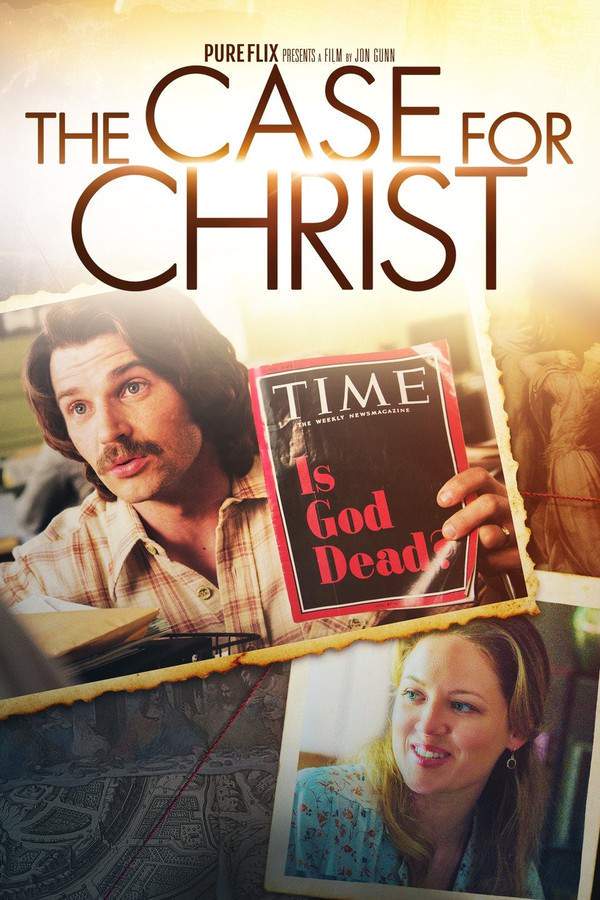

Documentaries about personal transformation like The Case for Christ

Real-life stories where a search for truth leads to a changed life. For viewers who enjoyed the personal investigative journey in The Case for Christ, this section highlights similar documentaries. These films follow real people on quests for truth that fundamentally alter their lives, blending factual inquiry with heartfelt human stories of change and rediscovery.

  • deliberate
  • thoughtful
  • hopeful
  • transformative
  • investigative
  • personal
  • Tone: hopeful, deliberate, transformative
  • Pacing: steady, character-driven
Why these movies?

The story pattern: These documentaries are structured around a central figure's mission to resolve a pressing personal or philosophical question. The plot unfolds linearly, presenting interviews, research, and personal reflections that build a convincing case. The emotional arc mirrors the intellectual one, moving from a state of uncertainty or conflict to one of resolution, clarity, and often, renewed purpose.

Why they belong together: Movies in this thread share a steady, deliberate pacing that allows for deep immersion in the subject's thought process. They possess a medium emotional weight, balancing factual presentation with the high personal stakes of the protagonist's journey, and consistently end on a hopeful, satisfying note of transformation.

If you liked this

Movies Like The Case for Christ

Similar movies to The Case for Christ: the same genre, themes or kind of story. Each one comes with its own plot summary, timeline and ending explained.

Browse all movie summaries

Every angle

The Case for Christ (2007) Explained: Plot, Timeline & Characters

Everything about The Case for Christ in one place: what happens in the plot summary, the timeline in chronological order, the characters and meaning and a spoiler-free summary. What's After the Movie adds the cast, box office and post-credit scenes.

Coming soon on iOS and Android

The Plot Explained Movie Summary App

Plot summaries, endings explained and timelines on your phone. Catch up on any movie in minutes, save your favorites and never miss a twist again.

Be the first to know when we launch. Your email stays private, always.

Learn more about the app