Year: 2008
Runtime: 94 min
Language: English
Director: Mark Herman
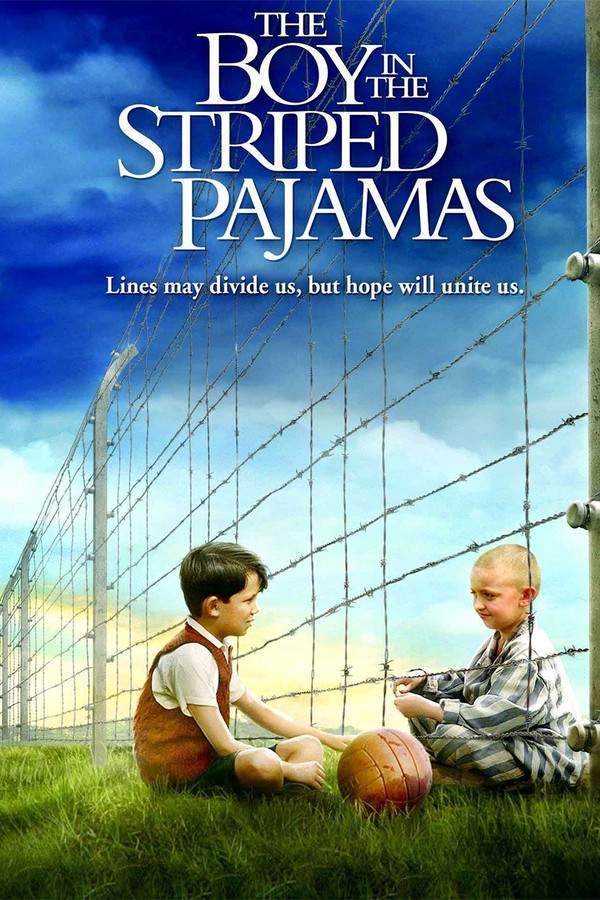
During World War II, an 8-year-old German boy named Bruno discovers the harsh realities of the conflict when his family is relocated to a concentration camp. There, he befriends Shmuel, a young boy on the other side of the barbed wire fence. Their innocent connection deepens as Bruno learns about the suffering of those imprisoned, highlighting the tragic impact of war and prejudice on individuals and families.
Find where to stream, rent, or buy The Boy in the Striped Pajamas (2008) in the US with current JustWatch availability, up-to-date pricing, and platform listings for subscription, rental, and digital purchase options.
Warning: spoilers below!
Haven’t seen The Boy in the Striped Pajamas yet? This summary contains major spoilers. Bookmark the page, watch the movie, and come back for the full breakdown. If you're ready, scroll on and relive the story!
Read the complete plot breakdown of The Boy in the Striped Pajamas (2008), including all key story events, major twists, and the ending explained in detail. Discover what really happened, and what it all means.
Bruno, an eight-year-old boy from Berlin, is suddenly relocated to the countryside of occupied Poland after his father, Ralf, a high-ranking SS officer, receives a promotion. From his bedroom window, Bruno spots what he assumes is a farm behind his house, unaware it’s actually an extermination camp. Despite his curiosity, his mother, Elsa, forbids him from exploring the back garden.
To further indoctrinate Bruno and his older sister Gretel, their father enlists the help of Herr Liszt, a tutor who promotes Nazi propaganda and antisemitism. Gretel becomes infatuated with Lieutenant Kurt Kotler, a young officer, deepening her alignment with the Nazi ideology. In contrast, Bruno is bewildered by the teachings, especially when he befriends Pavel, a Jewish doctor who has been forced into servitude after sustaining a minor injury.
Bruno’s adventurous spirit leads him into the woods where he discovers a barbed wire fence enclosing the camp. Here, he meets Shmuel, another boy his age who shares that he is a Jew, taken to the camp with his parents. Their friendship blossoms as Bruno secretly brings him food during their encounters.
Things take a dark turn when Elsa overhears Kurt discussing the camp’s true horrors, including the scent of burning prisoners. Her confrontation with Ralf brings tension into their home, especially after a confrontation involving Kurt and Pavel turns violent. Bruno, unaware of these complexities, offers cake to Shmuel during a visit but later finds himself denying their friendship in front of Kurt, leading to Shmuel’s absence for several days.
Eventually, as Bruno continues to visit the fence, Shmuel reappears, albeit injured. They reconcile and Bruno’s family experiences further turmoil when Ralf’s mother, Nathalie, dies in an Allied bombing. As family tensions rise, Elsa voices her desire to move away from the camp, prompting Ralf to announce a plan to send the children to live with relatives until the war ends.
Before leaving, Bruno learns from Shmuel that his father is missing after a transfer and resolves to help find him. Shmuel provides Bruno with striped clothes to disguise himself as a prisoner. In a bid to sneak under the fence, their adventurous endeavor is abruptly interrupted by guards rounding them up.
Meanwhile, Gretel and Elsa are frantic when they discover Bruno is missing, leading to an urgent search. Unfortunately, Ralf’s efforts culminate in a tragic discovery when he finds Bruno within the camp just as the prisoners are herded into a gas chamber. The horrific scene culminates in the death of both boys, leaving Ralf, Elsa, and Gretel to grapple with the profound loss and anguish that follows.
Last updated: November 08, 2024 at 03:21
Explore frequently asked questions about The Boy in the Striped Pajamas (2008) with spoiler-rich answers covering the full plot summary, major story beats, character motivations, hidden details, and ending meaning. This movie summary FAQ helps explain confusing scenes, plot twists, and narrative decisions in clear, searchable detail.
Bruno's family relocates because his father Ralf receives a promotion to a high-ranking SS officer. This promotion requires the family to move to occupied Poland, where Ralf will oversee operations at the extermination camp. The move is presented to the children as a new adventure, though the true reason is Ralf's career advancement within the Nazi regime.
The relocation sets up the tragic irony that Bruno will unknowingly live adjacent to the camp where Shmuel is imprisoned.
Bruno is only eight years old and has been sheltered from the truth about the Holocaust. His parents forbid him from exploring the back garden, and the adults deliberately hide the camp's purpose from the children. Bruno sees what looks like a farm with people wearing striped pajamas, so he assumes it's a work camp rather than an extermination camp. His innocence and the adults' deception keep him ignorant of the reality.
Bruno's naive interpretation of the camp as a farm creates the tragic premise that allows his friendship with Shmuel to form.
When Kurt Kotler questions Bruno about the boy by the fence, Bruno becomes frightened and ashamed. He fears getting in trouble and instinctively lies, saying he doesn't know Shmuel. This moment reveals Bruno's vulnerability and confusion between his friendship and the dangerous ideology surrounding him. The denial is a childish reaction rather than a conscious choice to betray Shmuel.
This denial directly leads to Shmuel's temporary disappearance and deepens the emotional stakes of their friendship.
After Bruno denies knowing him, Shmuel disappears for several days. When he returns, he is visibly injured, bearing marks of having been beaten. The exact details of his absence are not shown, but it's implied he was punished or tortured. Despite this, the boys reconcile, though the incident further illustrates the precariousness of life in the camp.
Shmuel's injuries foreshadow the violence that ultimately claims both their lives.
Before Bruno is sent away to live with relatives, Shmuel tells him that his father has been transferred and is missing. Moved by their friendship and wanting to help before leaving, Bruno decides to sneak into the camp to search for Shmuel's father. This decision stems from Bruno's innocent sense of loyalty and adventure, though he underestimates the deadly danger he will face.
Bruno's determination to help reveals his innocence, which makes his tragic fate more devastating.
Bruno disguises himself in the striped clothes Shmuel provides to sneak under the fence into the camp. While searching for Shmuel's father, guards suddenly round up prisoners, including the two boys. In the chaos and confusion typical of camp operations, they are herded into a gas chamber with other prisoners. The guards do not realize Bruno is not a prisoner, and by the time Ralf finds him, it is too late.
The striped pajamas that Bruno wears to help his friend become the very symbol of his tragic fate.
Ralf doesn't recognize his son because Bruno is disguised in the same striped pajamas worn by all the prisoners. In the chaotic moment of the roundup, with hundreds of identical-looking figures, Ralf fails to see Bruno among them. Additionally, the horror of the situation and the speed at which events unfold prevent him from realizing his son is there until it's too late.
Ralf's inability to recognize Bruno underscores the dehumanizing effect of the camp system, where prisoners become indistinguishable.
Elsa overhears Lieutenant Kurt Kotler discussing the camp's true horrors, including the scent of burning prisoners. This realization horrifies her and creates a major rift with her husband Ralf. She confronts him about living beside such atrocities, which intensifies the tension in their marriage and eventually leads her to demand they leave.
Elsa's discovery marks the beginning of the family's collapse and her growing awareness of her husband's true role.
Pavel is a Jewish doctor who has been forced into servitude at Bruno's house after being injured. During a confrontation between Kurt Kotler and Pavel, Kurt assaults the defenseless man, beating him brutally. Pavel's fate after this incident is not explicitly shown, but his mistreatment illustrates the casual violence faced by Jewish prisoners at the hands of the Nazis.
Pavel's treatment demonstrates the dehumanization that occurs in the camp system, foreshadowing the boys' own fate.
The friendship between Bruno and Shmuel, despite the fence separating them, represents innocent human connection transcending the hateful ideology of the Nazis. Their bond highlights the tragedy of the Holocaust by showing that the victims and perpetrators' children were not so different. The friendship makes the ending devastating because it proves that even innocence cannot survive when placed in the path of such systematic evil.
The very fence that allows their friendship also becomes the mechanism of their doom.
After Elsa discovers the truth about the camp's purpose and witnesses the violence against Pavel, she becomes increasingly desperate to leave. The tension between her and Ralf escalates as she confronts him about the horrors beside which they live. When Ralf's mother dies in an Allied bombing, the family stress increases, and Ralf eventually agrees to send the children away, though Elsa's pleas for the whole family to leave come too late.
Elsa's desperate desire to protect her children makes the final tragedy even more heartbreaking.
The film conveys that the Holocaust was a tragedy that destroyed innocent lives on all sides, including children who did not understand the ideology surrounding them. It demonstrates how the Nazi regime dehumanized both victims and perpetrators, and shows that ignorance of evil does not protect one from its consequences. The story argues that blindness to injustice, whether through willful ignorance like Bruno's parents or innocent naivety like Bruno himself, can lead to catastrophic outcomes.
The tragic ending, where Bruno dies in the gas chamber with the boy he befriended, is the ultimate realization of this message.
Discover curated groups of movies connected by mood, themes, and story style. Browse collections built around emotion, atmosphere, and narrative focus to easily find films that match what you feel like watching right now.
Stories told through the naive lens of a child confronting darkness.Find movies like The Boy in the Striped Pajamas that frame adult conflicts through a child's eyes. These similar stories use innocence as a powerful narrative tool, often leading to devastating realizations and a profound sense of loss. If you liked the naive viewpoint in The Boy in the Striped Pajamas, explore these films.
The narrative follows a child protagonist as they navigate a world they don't fully understand, often involving war, societal collapse, or family secrets. Their journey is one of gradual, and often tragic, disillusionment. The plot's power comes from the audience understanding more than the child, creating dramatic irony and deepening the emotional payoff.
These films are grouped together because they share the unique narrative device of a naive perspective. They create a specific emotional texture of innocence being stripped away, resulting in a deeply poignant and sometimes shattering viewing experience defined by this stark contrast.
Sobering dramas about real-world atrocities and their human cost.Watch more movies like The Boy in the Striped Pajamas that explore real historical atrocities through personal stories. These similar war dramas and historical tragedies share a heavy emotional weight and a commitment to depicting the grim reality of events like the Holocaust. For viewers seeking profound, somber stories.
Stories in this thread are typically set against a backdrop of well-documented historical conflict or oppression. The plot follows individuals or families caught in the machinery of injustice, often leading to inevitable tragedy. The narrative structure serves to bear witness, focusing on emotional truth and the devastating consequences of ideological extremism.
These movies are connected by their shared commitment to portraying historical darkness with emotional honesty. They possess a similar somber mood, high emotional intensity, and a bleak or tragic tone that refuses to sugarcoat reality, creating a cohesive experience for viewers seeking impactful historical drama.
Don't stop at just watching - explore The Boy in the Striped Pajamas in full detail. From the complete plot summary and scene-by-scene timeline to character breakdowns, thematic analysis, and a deep dive into the ending - every page helps you truly understand what The Boy in the Striped Pajamas is all about. Plus, discover what's next after the movie.
Track the full timeline of The Boy in the Striped Pajamas with every major event arranged chronologically. Perfect for decoding non-linear storytelling, flashbacks, or parallel narratives with a clear scene-by-scene breakdown.
Discover the characters, locations, and core themes that shape The Boy in the Striped Pajamas. Get insights into symbolic elements, setting significance, and deeper narrative meaning - ideal for thematic analysis and movie breakdowns.