Plot Explained Spoilers guaranteed!
Plot Explained

Browse by genre

The Boston Strangler (1968) movie poster

Timeline

The Boston Strangler (1968) Timeline Explained – Every Event in Order

Release, runtime and language
1968 · 116 mins · English
Directed by
Richard Fleischer
Starring
Jeff Corey, James Brolin, Murray Hamilton, George Kennedy, Tony Curtis, Henry Fonda

Boston is terrorized by a series of murders of women—thirteen opened their doors to the killer—culminating with the notorious Boston Strangler. Based on true events, the film follows investigators as they pursue scarce leads, introducing the murderer only later. The story is told from detectives’ viewpoint, highlighting struggle with sparse evidence.

On this page (6)
  1. 1 Where to watch
  2. 2 Events in order (14)
  3. 3 Timeline questions answered
  4. 4 Movie threads
  5. 5 Movies like The Boston Strangler
  6. 6 Every angle

Where to watch

Where to Watch The Boston Strangler (1968)

Where can you watch The Boston Strangler? Stream, rent or buy it in the US, including on Amazon Video, Apple TV Store and Fandango At Home: current JustWatch availability with up-to-date prices.

Streaming availability powered by JustWatch

14 events in order · contains spoilers

The Boston Strangler Timeline: Events in Chronological Order

Every key event of The Boston Strangler (1968) in order, scene by scene, with when and where it takes place. Use it to untangle flashbacks, time jumps and parallel storylines, to refresh your memory before the sequel or to find the exact scene you are thinking of.

  1. The Boston Strangler emerges

    Three elderly women are found murdered in Boston, their deaths marked by strangulation and the insertion of foreign objects. The violence forms a serial pattern across multiple jurisdictions. Investigators begin linking the cases and racing to identify the killer before more victims appear.

    When
    1962
    Where
    Boston, Massachusetts
  2. Strangler Bureau formed

    With the murder spree expanding, Massachusetts Attorney General Edward W. Brooke orders a coordinated response. John S. Bottomly is appointed to head a special task force called the 'Strangler Bureau' to unify detectives across jurisdictions. The move aims to speed leads, share information, and pressure suspects more effectively.

    When
    1962-1963
    Where
    Massachusetts, USA
  3. Psychic tip-off points to a suspect

    Bottomly brings in a psychic, Peter Hurkos, who claims to pinpoint Eugene T. O'Rourke as fitting the killer's profile. The alleged breakthrough injects new energy into a case already stretched across borders. Detectives begin intense scrutiny of O'Rourke as they try to verify the claim.

    When
    1963
    Where
    Boston
  4. O'Rourke placed under observation

    O'Rourke is taken in for psychiatric observation for ten days, but early evaluations fail to tie him to the murders. Doctors debate whether a split personality could still be involved, complicating the path to a confession. The case remains unresolved as the investigation continues.

    When
    1963
    Where
    Psychiatric facility
  5. Another murder tests the theory

    While O'Rourke is under observation, a new murder is committed, effectively clearing him of involvement. Investigators must reconsider the suspect pool and the signature methods of the killer. The pressure to solve the case grows as clues remain elusive.

    When
    1963
    Where
    Boston
  6. JFK funeral and DeSalvo's absence

    During the televised funeral of John F. Kennedy, Albert DeSalvo leaves his wife Irmgard and children under the pretext of work. This timing places him near the next attack window and underscores the killer's ongoing opportunity to act. The personal life of a suspect becomes part of the investigative shadow.

    When
    November 22, 1963
    Where
    Boston area
  7. DeSalvo's first attack on Dianne Cluny

    DeSalvo gains entry to Dianne Cluny's apartment by posing as a plumber. He ties her to her bed with ripped fabric and begins the attack, only to be startled by his own reflection in a mirror. Dianne fights back, biting his hand, and DeSalvo flees the scene.

    When
    1963-11-22
    Where
    Dianne Cluny's apartment
  8. DeSalvo is halted by police

    On a subsequent entry attempt, DeSalvo is interrupted by a husband at home and is apprehended by a passing patrol. He is found incompetent to stand trial for attempted breaking and entering and is committed to a hospital for psychiatric observation. The authorities begin to build a case against him based on behavior and injuries sustained.

    When
    November 1963
    Where
    Boston
  9. Police connect DeSalvo to the Strangler

    Bottomly and Detective DiNatale visit Dianne's survivor and encounter DeSalvo in an elevator, noticing the wound on his hand. The victim's memory of biting him provides a crucial clue linking him to the Boston Strangler murders. The investigation tightens its net around him.

    When
    November 1963
    Where
    Hospital elevator / building
  10. Dr. Nagy's split-personality theory

    Interviews reveal the doctors' belief in a split personality: a 'normal' self fabricates memories to hide the murderous 'strangler' persona. Conventional interrogation yields little because the two identities are unaware of each other. The medical team acknowledges that bringing the truth to light could risk destabilizing the patient.

    When
    1963-1964
    Where
    Hospital
  11. Bottomly's final interviews

    Under defense counsel restrictions that nothing can be admitted in court, Bottomly conducts a final round of interviews with DeSalvo. After several sessions, he manages to elicit the hidden personality behind the murders. The psychological breakthrough leaves DeSalvo shaken and destabilized.

    When
    1964
    Where
    Hospital
  12. The reveal and its aftermath

    The intense sessions reveal DeSalvo's hidden personality, strengthening the claim that he is responsible for the Boston Strangler murders. The shock of the revelation contributes to a catatonic state in DeSalvo. Investigators weigh how this mental break affects potential legal action.

    When
    1964
    Where
    Hospital
  13. Medical and legal tension

    Doctors debate whether forcing the confrontation between personalities could push DeSalvo into catatonia, highlighting the clash between clinical insight and courtroom strategy. Bottomly contemplates the implications for achieving a conviction. The case demonstrates the friction between science and law.

    When
    1964
    Where
    Hospital
  14. Status of the Strangler case

    With the hidden personality exposed but not yet legally established as a confession, the case lingers in limbo. DeSalvo remains catatonic, and the search for definitive evidence continues. The public question of guilt remains unresolved in the wake of the revelation.

    When
    1964
    Where
    Boston area

Last updated: October 09, 2025 at 14:06

Was this helpful?

Timeline questions answered

The Boston Strangler Timeline Explained: Your Questions Answered

When does it happen, and why in that order? The questions people ask about the chronology of The Boston Strangler (1968): time jumps, flashbacks, cause and effect between scenes and the correct order of events, each answered with spoilers.

Q1

Why did the police bring in a psychic to help solve the Boston Strangler case?

With traditional investigation yielding no breakthroughs and the killer striking repeatedly across jurisdictions, investigators were desperate for new leads. Bottomly brought in psychic Peter Hurkos, who profiled Eugene T. O'Rourke as a severely masochistic suspect matching the killer's psychological profile. While unconventional, this was an attempt to generate fresh leads when conventional detective work had stalled.

Foreshadowing: Earlier failed interrogations and the lack of physical evidence had left investigators increasingly frustrated.

  • Peter Hurkos
  • psychic
  • Eugene O'Rourke
  • investigation
  • leads
Q2

How was Eugene O'Rourke cleared as a suspect in the Boston Strangler murders?

O'Rourke was taken in for ten days of psychiatric observation, but while he was under surveillance, another murder occurred in Boston. This new killing proved O'Rourke could not have been the Boston Strangler since he was being watched at the time, forcing investigators to abandon this lead and reconsider their approach.

Foreshadowing: The psychic's tip had pointed to O'Rourke, creating a false sense of progress.

  • Eugene O'Rourke
  • cleared
  • alibi
  • murder
  • observation
Q3

How did police eventually connect Albert DeSalvo to the Boston Strangler murders?

After DeSalvo was apprehended for attempted breaking and entering, Bottomly and Detective DiNatale visited Dianne Cluny, the surviving victim who had bitten her attacker. In the hospital elevator afterward, they noticed DeSalvo had a wound on his hand that matched Cluny's account of biting him during her escape. This physical evidence linked DeSalvo directly to the attack on Cluny and shifted suspicion toward him as the Strangler.

Foreshadowing: DeSalvo's earlier escape from Cluny's apartment left him with a distinctive wound.

  • Albert DeSalvo
  • Dianne Cluny
  • wound
  • bite
  • evidence
  • connection
Q4

What was the split personality theory about Albert DeSalvo?

Dr. Nagy believed DeSalvo suffered from dissociative identity disorder, with a "normal" personality that fabricated memories to shield a separate "killer" identity responsible for the murders. This explained why conventional interrogation failed, each personality was unaware of the other's actions. The doctor warned that forcing the hidden identity to confront its crimes could trigger catatonia.

Foreshadowing: DeSalvo's inconsistent statements during earlier interviews had puzzled investigators.

  • split personality
  • dissociative identity
  • Dr. Nagy
  • catatonia
  • confession
Q5

Why did Bottomly risk causing DeSalvo to become catatonic during interrogation?

Bottomly faced mounting pressure to solve the case and knew that conventional interrogation methods had failed due to DeSalvo's split personality. With defense counsel restricting what could be admitted in court, Bottomly conducted final interviews outside those constraints. He concluded that forcing the hidden personality to confront its crimes was worth the risk, believing a catatonic DeSalvo would be the "second-best outcome" to an actual conviction. The resulting catatonia left the case legally unresolved.

Foreshadowing: Dr. Nagy had warned that the shock of confrontation could be dangerous.

  • Bottomly
  • catatonia
  • interrogation
  • confession
  • legal
  • outcome
Q6

Why did Albert DeSalvo choose to attack during JFK's funeral?

DeSalvo left his wife and children on November 22, 1963, under the pretense of work during the televised funeral of John F. Kennedy. The chaos and national distraction during this moment provided cover, most people were indoors watching the funeral, making it an opportune time for DeSalvo to approach Dianne Cluny's apartment undetected.

Foreshadowing: The film specifically notes this timing as DeSalvo's opportunity window.

  • JFK funeral
  • timing
  • attack
  • opportunity
  • distraction
Q7

How did Dianne Cluny's bite help identify the Boston Strangler?

During DeSalvo's attack, Cluny fought back and bit his hand hard enough to draw blood, causing a distinctive wound. When DeSalvo was later apprehended and Bottomly encountered him in the hospital elevator, the detectives noticed the fresh wound on his hand. Cluny's description of biting her attacker became crucial physical evidence linking DeSalvo to her assault and, by extension, to the Strangler attacks.

Foreshadowing: DeSalvo had been startled by his reflection and fled before completing the attack.

  • Dianne Cluny
  • bite
  • wound
  • hand
  • identification
  • survivor
Q8

Why was Albert DeSalvo initially found incompetent to stand trial?

After being caught attempting to break into another apartment, DeSalvo was evaluated and found incompetent to stand trial on the charges of attempted breaking and entering. The court committed him to a hospital for psychiatric observation rather than proceeding with criminal prosecution at that time.

Foreshadowing: DeSalvo had been apprehended while trying to enter a home where the husband was present.

  • incompetent
  • trial
  • psychiatric
  • observation
  • commitment
Q9

What happened to the Boston Strangler case after DeSalvo became catatonic?

After Bottomly forced the hidden personality to confront its crimes, DeSalvo slipped into a catatonic state. This created a legal and procedural crisis, the psychological breakthrough had revealed the killer's identity, but DeSalvo could not stand trial. The case remained in limbo, with the confession inadmissible in court and no resolution to the legal proceedings. The true scope of the killings was revealed, but justice remained uncertain.

Foreshadowing: Dr. Nagy had warned that catatonia was a real risk of the confrontation.

  • catatonic
  • confession
  • case
  • unresolved
  • legal
  • limbo
Q10

Why did Albert DeSalvo flee from Dianne Cluny's apartment?

DeSalvo was startled by his own reflection in a mirror while attempting to subdue Cluny. This moment of self-recognition appears to have destabilized him psychologically. Cluny used this distraction to break free from her bindings and fight back, biting his hand hard enough to draw blood. DeSalvo fled into the night rather than completing the attack.

Foreshadowing: The mirror reflection created an unexpected psychological break in the assault.

  • mirror
  • reflection
  • flee
  • Dianne Cluny
  • attack
  • psychological

Movie threads

More Movies Like The Boston Strangler, by Mood & Story

Curated lists built around what makes The Boston Strangler tick: the same mood, the same kind of story or the same emotional payoff. Each list explains why these movies belong together.

Grim Procedural Investigations like The Boston Strangler

Methodical police hunts for killers in a city gripped by fear. If you liked the methodical police work and oppressive atmosphere of The Boston Strangler, explore more movies like it. These films are tense, true-crime-inspired procedurals where the focus is on the desperate, often morally complex hunt for a killer.

  • tense
  • methodical
  • grim
  • oppressive
  • anxious
  • true crime
  • Tone: tense, bleak, methodical
  • Pacing: steady, procedural
Why these movies?

The story pattern: These narratives unfold linearly, tracking the investigation from the first crime to its ambiguous or ethically fraught resolution. The journey is less about shocking twists and more about the cumulative weight of the search, the psychological toll on the detectives, and the unsettling nature of the truth they uncover.

Why they belong together: Movies are grouped here by their shared commitment to a realistic, methodical investigative pace, a bleak and tense tone, and a heaviness stemming from true-life horrors. They offer a similar experience of being embedded within a high-stakes, morally gray police hunt.

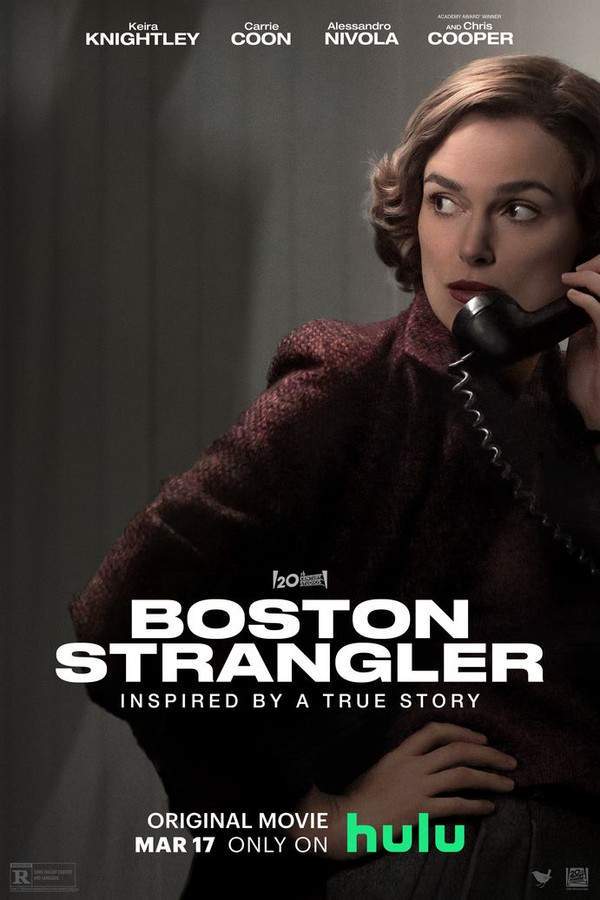
Psychologically Unsettling Killer Portraits like in The Boston Strangler

Stories that delve into the fractured psyche of a murderer. For viewers fascinated by the psychological profiling and complex portrayal of the killer in The Boston Strangler, this thread collects similar movies. These thrillers and dramas delve deep into disturbed minds, creating a feeling of deep unease and moral ambiguity.

  • unsettling
  • psychological
  • disturbing
  • tense
  • ambiguous
  • dark
  • Tone: tense, unsettling, ambiguous
  • Pacing: steady, psychological
Why these movies?

The story pattern: The narrative often builds towards a psychological breakdown or revelation, examining the killer's personality fractures, such as split identities. The conclusion tends to be ambiguous, leaving lingering questions about justice, sanity, and the nature of evil rather than providing tidy closure.

Why they belong together: This thread connects films that share a heavy emotional weight and a focus on the psychological dimension of crime. They are united by an ambiguous ending feel, a tense tone, and a commitment to exploring the unsettling reality of a disturbed mind, often based on true events.

If you liked this

Movies Like The Boston Strangler

Similar movies to The Boston Strangler: the same genre, themes or kind of story. Each one comes with its own plot summary, timeline and ending explained.

Browse all movie summaries

Every angle

The Boston Strangler (1968) Explained: Plot, Timeline & Characters

Everything about The Boston Strangler in one place: what happens in the plot summary, the timeline in chronological order, the characters and meaning and a spoiler-free summary. What's After the Movie adds the cast, box office and post-credit scenes.

Coming soon on iOS and Android

The Plot Explained Movie Summary App

Plot summaries, endings explained and timelines on your phone. Catch up on any movie in minutes, save your favorites and never miss a twist again.

Be the first to know when we launch. Your email stays private, always.

Learn more about the app