






Plot Explained Spoilers guaranteed!
Plot Explained

Browse by genre

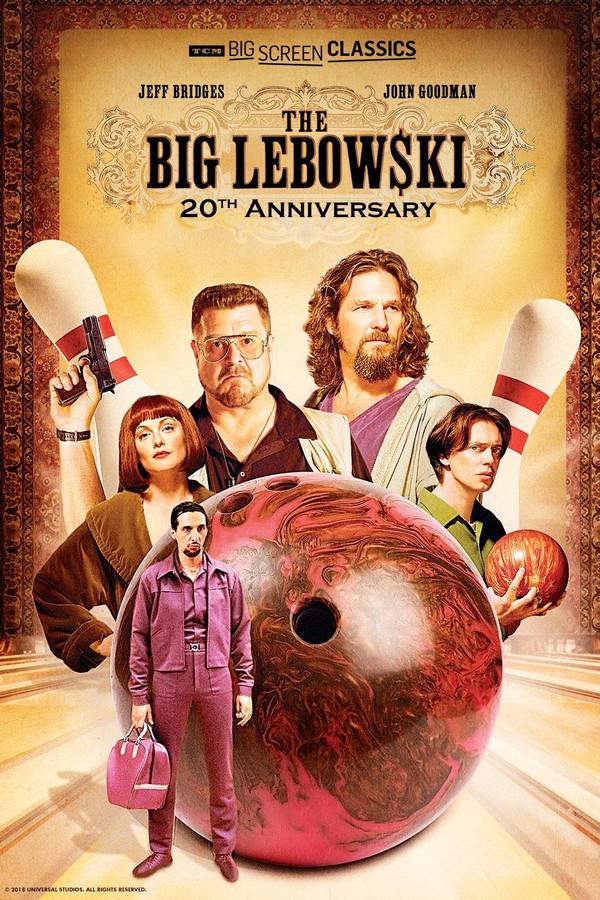
The Big Lebowski (1998) movie poster

Timeline

The Big Lebowski (1998) Timeline Explained – Every Event in Order

Release, runtime and language
1998 · 117 min
Directed by
Ethan Coen, Joel Coen
Starring
Philip Seymour Hoffman, John Goodman, Steve Buscemi, Jeff Bridges, Julianne Moore, Peter Stormare

A case of mistaken identity throws "The Dude," a perpetually relaxed slacker, into a bizarre and chaotic situation. After being confused for a wealthy man, he's embroiled in a scheme involving a stolen rug and a request for compensation. This sets him on a surreal journey filled with eccentric personalities, unexpected violence, and plenty of bowling, ultimately blurring the lines between reality and absurdity.

On this page (6)
  1. 1 Where to watch
  2. 2 Events in order (14)
  3. 3 Timeline questions answered
  4. 4 Movie threads
  5. 5 Movies like The Big Lebowski
  6. 6 Every angle

Where to watch

Where to Watch The Big Lebowski (1998)

Where can you watch The Big Lebowski? Stream, rent or buy it in the US, including on Pluto TV, Amazon Video and Apple TV Store: current JustWatch availability with up-to-date prices.

Streaming availability powered by JustWatch

14 events in order · contains spoilers

The Big Lebowski Timeline: Events in Chronological Order

Every key event of The Big Lebowski (1998) in order, scene by scene, with when and where it takes place. Use it to untangle flashbacks, time jumps and parallel storylines, to refresh your memory before the sequel or to find the exact scene you are thinking of.

  1. The Introduction of The Dude

    The story begins with a narration by a mysterious figure known as The Stranger. He introduces Jeffrey Lebowski, better known as The Dude, describing him as one of the laziest men in Los Angeles, embodying a laid-back lifestyle that stands in stark contrast to the chaos around him.

    When
    1990
    Where
    Los Angeles
  2. A Quick Trip to Ralph's

    Dude makes a quick stop at a Ralph's grocery store to buy a carton of cream. To his surprise, he pays with a post-dated check for just 69 cents, marking the beginning of a bizarre chain of events that will spiral out of control.

    When
    1990
    Where
    Ralph's Grocery Store
  3. Ambushed in His Apartment

    Back at his apartment, The Dude finds himself ambushed by two men who mistakenly think he owes money to a figure named Jackie Treehorn. They drag him to the bathroom, dunking his head in the toilet and leaving him shocked and bewildered.

    When
    1990
    Where
    The Dude's Apartment
  4. Destruction of the Beloved Rug

    During the ambush, one of the assailants ruins The Dude's cherished rug by urinating on it, declaring, 'Ever thus to deadbeats, Lebowski!' This event becomes a catalyst for The Dude's subsequent actions throughout the story.

    When
    1990
    Where
    The Dude's Apartment
  5. A Bowling Night with Friends

    The Dude meets up with his bowling teammates, Walter and Donny, where Walter goes on an angry rant about the incident in the apartment. This encounter reveals Walter's fiery personality and sets off discussions about a mix-up with a millionaire who shares The Dude's name.

    When
    1990
    Where
    Bowling Alley
  6. Meeting the Big Lebowski

    The Dude decides to confront the millionaire Big Lebowski to seek compensation for his ruined rug. Upon reaching the lavish mansion, he meets Brandt, who informs him of Lebowski's philanthropic efforts before The Dude faces rejection from the elder Lebowski.

    When
    1990
    Where
    Big Lebowski's Mansion
  7. An Unexpected Proposition

    While at the mansion, The Dude encounters Bunny, Big Lebowski's young trophy wife, who provocatively suggests a sexual encounter in exchange for money. This interaction adds another layer of complexity to The Dude's already convoluted situation.

    When
    1990
    Where
    Big Lebowski's Mansion
  8. Chaos at the Bowling Alley

    During a bowling night, Walter causes an uproar by bringing an ex-wife's dog into the alley, leading to a confrontation with another bowler named Smokey. Tensions escalate as Walter brandishes a gun in defense of his honor, showcasing his volatile nature.

    When
    1990
    Where
    Bowling Alley
  9. The Kidnapping of Bunny

    The situation takes a darker turn when The Dude learns that Bunny has been kidnapped. Big Lebowski enlists The Dude as a go-between for a ransom drop of $1 million, which involves the same thugs responsible for vandalizing his personal belongings.

    When
    1990
    Where
    Big Lebowski's Mansion
  10. Reluctantly Delivering the Ransom

    Despite his reservations, The Dude agrees to deliver the ransom, feeling that Bunny might be complicit in the chaos. What follows is a series of absurd and comedic misadventures as The Dude and his friends navigate the bizarre circumstances.

  11. Confrontation with the Nihilists

    The Dude, Walter, and Donny encounter a group of nihilists as their misadventures unfold. This encounter adds to the absurdity and chaos that the trio faces, emphasizing the comedic elements of the storyline.

    When
    1990
    Where
    Los Angeles
  12. Tragic Demise of Donny

    The film reaches a climax with the tragic and unexpected death of Donny. His demise serves as a stark reminder of the unpredictability of life and the fragility of friendship amidst the ongoing absurdity.

  13. Meeting Maude

    Later in the narrative, The Dude meets Maude, an artist who brings a new perspective to his life. Their interactions provide moments of warmth and tenderness, amidst the madness that surrounds The Dude's chaotic journey.

    Where
    Los Angeles
  14. Acceptance of Life's Absurdities

    As the story concludes, The Dude embraces the philosophy of 'The Dude abides.' This acceptance represents his journey of finding peace amid the chaos and a reflection on life’s trivialities, symbolizing the essence of his character.

    Where
    Los Angeles

Last updated: November 03, 2024 at 13:23

Was this helpful?

Timeline questions answered

The Big Lebowski Timeline Explained: Your Questions Answered

When does it happen, and why in that order? The questions people ask about the chronology of The Big Lebowski (1998): time jumps, flashbacks, cause and effect between scenes and the correct order of events, each answered with spoilers.

Q1

Why was The Dude attacked in his apartment?

The Dude was attacked because Bunny Lebowski claimed her husband could cover her debts to Jackie Treehorn. The thugs mistook The Dude for the wealthy Big Lebowski since they share the same name. One thug specifically urinated on The Dude's rug while declaring 'Ever thus to deadbeats, Lebowski!'

  • thugs attack
  • Jackie Treehorn
  • mistaken identity
  • rug destroyed
Q2

Why did Big Lebowski refuse to pay for the rug?

Big Lebowski viewed The Dude as just another loser trying to scam money from him. He explicitly stated he wouldn't be responsible for every rug mishap in town and dismissed The Dude's pleading about the rug 'tying the room together' because he despised The Dude's slacker lifestyle and saw him as undeserving of charity.

  • Big Lebowski
  • rug
  • compensation
  • refused payment
Q3

Why was The Dude chosen to deliver the ransom?

Big Lebowski chose The Dude specifically because he needed a middleman with no real connection to his family or the situation. Since The Dude was already involved through the rug incident and shared his name, Lebowski figured he was disposable enough to send into a potentially dangerous situation without worrying about consequences.

  • ransom
  • Bunny kidnapping
  • Big Lebowski
  • middleman
Q4

Was Bunny actually kidnapped or did she orchestrate it?

The kidnapping was indeed real - German nihilists actually abducted Bunny. However, it's strongly implied she may have conspired with them or at least staged the whole thing to access Big Lebowski's money, since she had previously suggested The Dude could pay her debts and was suspiciously calm about the whole situation.

  • Bunny kidnapping
  • German nihilists
  • real or fake
Q5

What happened to the $1 million ransom?

The Dude accidentally left the briefcase containing the ransom in the back of a taxi that was later stolen by the nihilists. When The Dude tried to recover it, he discovered the case was filled with old newspapers instead of actual money - Big Lebowski had planned to swindle everyone involved by not actually paying the ransom.

  • million dollars
  • briefcase
  • taxi
  • nihilists
  • newspapers
Q6

Why did Walter bring the dog to the bowling alley?

Walter brought his ex-wife's dog to the bowling alley because he was trying to keep it safe after she threatened to take it to the pound during their custody battle. He decided to smuggle it into the alley rather than leave it at home, which led to the confrontation with Smokey and Walter pulling a gun.

  • Walter
  • dog
  • bowling alley
  • Smokey
  • gun
Q7

Why did Donny die and what was his significance?

Donny was killed during a confrontation with the nihilists in the parking lot of the bowling alley - he suffered a fatal heart attack after being struck when a car door was flung open during the chaos. His death served as a rare moment of genuine tragedy in the film, showing that even in absurd circumstances, real consequences and loss can occur, deeply affecting The Dude and Walter.

  • Donny death
  • heart attack
  • nihilists
  • parking lot
Q8

Why does The Dude care so much about the rug?

The Dude's attachment to the rug represents his desire for some stability and beauty in his otherwise chaotic, unstructured life. As a man who embraces minimalism and rejects materialistic values, the rug 'tying the room together' symbolized the one piece of order and comfort he had in his apartment - its destruction was about more than fabric, it was about losing the small things that make a space feel like home.

  • rug
  • stability
  • comfort
  • material possession
  • The Dude's values
Q9

What is the purpose of The Stranger's narration?

The Stranger serves as a Greek chorus, providing commentary on The Dude's journey from an outside, omniscient perspective. He frames the entire story as a legend about a man out of his time, emphasizing themes of acceptance and laid-back philosophy while bridging the gap between the chaotic events and their deeper meaning.

  • The Stranger
  • narration
  • Sam Elliott
  • philosophical commentary
Q10

Why does Maude appear so late in the story?

Maude Lebowski is introduced late because she's been estranged from her father Big Lebowski and lived separately in her own art world. She only becomes involved when she learns about The Dude's involvement with her father's scheme - she's actually the one who provides him with information about the stolen briefcase and helps him recover the money owed to her.

  • Maude Lebowski
  • Julianne Moore
  • late introduction
  • estranged daughter
Q11

Who are the nihilists and why are they involved?

The nihilists are a group of German punk rockers who were hired by Bunny (who had connections to their scene) to stage her kidnapping. They drive a Porsche, play in a band, and embrace a philosophy of meaninglessness, which they use to justify their criminal actions. They ultimately steal the briefcase of worthless papers thinking they've actually stolen a million dollars.

  • German nihilists
  • Bunny
  • kidnapping
  • Porsche
  • band
Q12

What does 'The Dude abides' mean at the end?

The phrase 'The Dude abides' represents The Dude's core philosophy of accepting life's chaos without fighting it. Rather than resisting or trying to control the absurd situations around him, he simply endures and persists on his own terms. The ending shows him achieving peace by letting go of his attachment to the rug and accepting whatever life throws at him.

  • The Dude abides
  • acceptance
  • philosophy
  • peace
  • ending

Movie threads

More Movies Like The Big Lebowski, by Mood & Story

Curated lists built around what makes The Big Lebowski tick: the same mood, the same kind of story or the same emotional payoff. Each list explains why these movies belong together.

Absurdist Crime Capades like The Big Lebowski

Complicated crimes tackled by unlikely heroes who are in way over their heads. If you liked the convoluted, low-stakes crime plot of The Big Lebowski, you'll enjoy these movies. This thread features comedies and capers where bumbling protagonists navigate absurd criminal underworlds, focusing on quirky characters and surreal humor over intense drama. Discover more movies like The Big Lebowski with a similarly whimsical take on crime.

  • absurd
  • quirky
  • convoluted
  • comic
  • eccentric
  • surreal
  • Tone: whimsical, comic
  • Pacing: steady, meandering
Why these movies?

The story pattern: The narrative follows a linear but convoluted plot where a simple goal or misunderstanding plunges an unassuming protagonist into a web of eccentric characters and red herrings. The journey is meandering, filled with comic detours and misunderstandings, with the central 'crime' often serving as a MacGuffin to explore absurdity and character dynamics rather than building genuine suspense.

Why they belong together: Movies are grouped here for their shared tone of whimsical absurdity applied to crime stories. They feature a light emotional weight, a steady pace that allows for character-driven humor, and a focus on the comic potential of chaos rather than the consequences of violence.
Movies about Laid-Back Slackers like The Big Lebowski

Stories about relaxed outsiders who find meaning by just being themselves. Fans of The Dude's relaxed outlook in The Big Lebowski will appreciate these films. This collection highlights stories about slacker protagonists who maintain their zen-like composure through life's absurdities. Find movies like The Big Lebowski that celebrate a laid-back lifestyle and the wisdom of just 'abiding'.

  • laid-back
  • quirky
  • philosophical
  • accepting
  • comic
  • chill
  • Tone: whimsical, accepting
  • Pacing: steady, unhurried
Why these movies?

The story pattern: The narrative is character-driven, following a protagonist whose core conflict is maintaining their easygoing identity in the face of external pressures or chaotic events. The plot serves as a backdrop to test and ultimately reaffirm their philosophical approach to life. The ending is typically happy or content, validating the character's choice to live differently.

Why they belong together: These films are united by their focus on a specific character archetype: the slacker philosopher. They share a light emotional weight, a whimsical or neutral tone, and a central theme of finding contentment outside conventional success. The pacing is often steady, reflecting the protagonist's unhurried view of life.

If you liked this

Movies Like The Big Lebowski

Similar movies to The Big Lebowski: the same genre, themes or kind of story. Each one comes with its own plot summary, timeline and ending explained.

Browse all movie summaries

Every angle

The Big Lebowski (1998) Explained: Plot, Timeline & Characters

Everything about The Big Lebowski in one place: what happens in the plot summary, the timeline in chronological order, the characters and meaning and a spoiler-free summary. What's After the Movie adds the cast, box office and post-credit scenes.

Coming soon on iOS and Android

The Plot Explained Movie Summary App

Plot summaries, endings explained and timelines on your phone. Catch up on any movie in minutes, save your favorites and never miss a twist again.

Be the first to know when we launch. Your email stays private, always.

Learn more about the app