














Plot Explained Spoilers guaranteed!
Plot Explained

Browse by genre

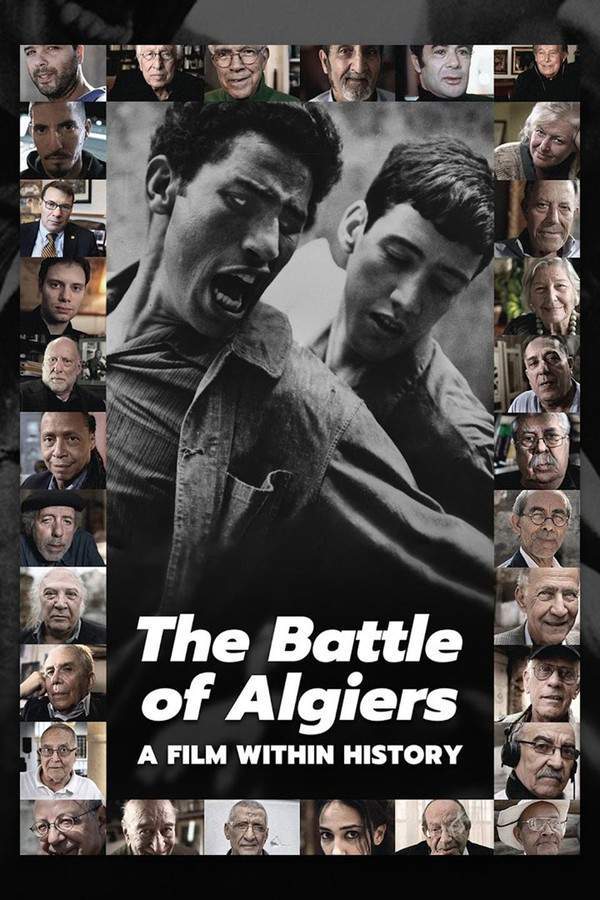
The Battle of Algiers (1966) movie poster

Timeline

The Battle of Algiers (1966) Timeline Explained – Every Event in Order

Release, runtime and language
1966 · 121 mins · Arabic
JustWatch #5,933 7
Directed by
Gillo Pontecorvo
Starring
Brahim Hadjadj, Jean Martin, Samia Kerbash, Ugo Paletti, Mohamed Ben Kassen, Franco Moruzzi

The film follows the Algerian War of Independence through the eyes of Ali, a petty thief who becomes a prominent FLN operative before his 1957 capture. It portrays the rebels’ guerrilla tactics and the French government’s increasingly harsh counter‑insurgency, illustrating the brutal spiral of violence that reshaped both sides.

On this page (6)
  1. 1 Where to watch
  2. 2 Events in order (12)
  3. 3 Timeline questions answered
  4. 4 Movie threads
  5. 5 Movies like The Battle of Algiers
  6. 6 Every angle

Where to watch

Where to Watch The Battle of Algiers (1966)

Where can you watch The Battle of Algiers? Stream, rent or buy it in the US, including on HBO Max, TCM and Kanopy: current JustWatch availability with up-to-date prices.

Streaming availability powered by JustWatch

12 events in order · contains spoilers

The Battle of Algiers Timeline: Events in Chronological Order

Every key event of The Battle of Algiers (1966) in order, scene by scene, with when and where it takes place. Use it to untangle flashbacks, time jumps and parallel storylines, to refresh your memory before the sequel or to find the exact scene you are thinking of.

  1. Casbah becomes ground for FLN organization

    The film opens with revolutionary cells taking shape in the Casbah, as groups recruit, train, and lay the groundwork for the uprising. Residents discuss politics and grievances, and early acts of resistance begin to form the backbone of the revolt. This origin story sets the tone for the three-year struggle that follows.

    When
    Nov 1954
    Where
    Casbah, Algiers
  2. France deploys paratroopers to Algiers

    French paratroopers descend on Algiers to crush the FLN and capture its leadership. The occupation brings a harsher, more organized violence that targets both militants and civilians. The campaign aims to isolate the insurgent command and break the movement from within.

    When
    1954-1955
    Where
    Algiers
  3. FLN leadership is targeted and neutralized

    The paratroopers focus on decapitating the FLN, neutralizing its leadership through assassinations or arrests. As the environment turns deadly in the Casbah, the network of cells adapts to tighter surveillance and harsher repression. The struggle intensifies, creating cycles of retaliation.

    When
    1955
    Where
    Casbah, Algiers
  4. Ali La Pointe radicalizes in prison and joins FLN

    Ali La Pointe, a petty criminal, becomes politically radicalized in prison. He is recruited by FLN commander El-Hadi Jafar and rises as a key figure within the movement’s urban network. His personal arc mirrors the broader turn from local grievance to organized rebellion.

    When
    Early 1950s
    Where
    Prison, Algiers
  5. FLN women join with urban guerrilla attacks

    Three women militants—Djamila, Zohra, and Hassiba—join the struggle, carrying out an urban terrorist attack as part of the FLN’s strategy to broaden its reach. Their actions challenge traditional gender roles and show how the insurgency mobilizes women within the Casbah. The attack underscores the spread of violence into everyday life.

    When
    1955-1956
    Where
    Casbah, Algiers
  6. Milk Bar Café bombing as real-world tactic

    The Milk Bar Café bombing is depicted as one of the signature attacks used to harass Europeans and disrupt daily routines. The act of terrorism escalates fear and leads to a harsher security response from authorities. It also highlights the moral ambiguities of both sides in the conflict.

    When
    1956
    Where
    Milk Bar Café, Algiers
  7. Casbah is seized by FLN as the movement expands

    The FLN commandeers the Casbah, imposing a parallel authority and conducting summary executions of criminals and suspected French collaborators. The area becomes a theater for public displays of power and fear. The civilians are swept into the broader insurgency as participants or victims.

    When
    1955-1956
    Where
    Casbah, Algiers
  8. French paratroopers intensify crackdown with torture

    French paratroopers intensify the crackdown with torture, intimidation, and murder to extract information and deter resistance. The brutality fuels further resentment and drives some locals toward the FLN's cause. The cycle of violence hardens loyalties on both sides.

    When
    1955-1957
    Where
    Algiers
  9. Ali La Pointe emerges as FLN commander figure

    Ali La Pointe’s leadership within the FLN’s urban insurgency grows as he coordinates local cells under El-Hadi Jafar's command. His transformation from petty criminal to guerilla organizer embodies the broader shift of Algerians toward organized resistance. The Casbah's street-level warfare centers on his efforts.

    When
    1956-1957
    Where
    Casbah, Algiers
  10. Little Omar acts as FLN messenger

    Little Omar, a street urchin, serves as an FLN messenger, illustrating how the rebellion extends into all layers of society. His presence shows the movement’s reliance on even the youngest and most vulnerable to relay information. The character highlights the insurgency’s reach into daily life.

    When
    1955-1957
    Where
    Algiers Casbah
  11. Raid on Ali La Pointe’s hideout

    In 1957 a raid on Ali La Pointe’s hideout follows after a compatriot betrays him under torture. The paratroopers surround his home and declare the 'organization' finished, delivering a bleak turning point for the urban struggle. The sequence closes the film’s flashback before returning to the present.

    When
    1957
    Where
    Ali La Pointe’s hideout, Algiers
  12. Coda: nationalist demonstrations and the war’s ambiguous end

    The coda shows nationalist demonstrations and riots as a sign of popular support for independence. It suggests that while France may have won the Battle of Algiers tactically, the broader war for Algerian independence was ultimately lost. The film ends on a sobering note about the costs of occupation and the inevitability of change.

    When
    December 1957
    Where
    Algiers

Last updated: December 06, 2025 at 16:32

Was this helpful?

Timeline questions answered

The Battle of Algiers Timeline Explained: Your Questions Answered

When does it happen, and why in that order? The questions people ask about the chronology of The Battle of Algiers (1966): time jumps, flashbacks, cause and effect between scenes and the correct order of events, each answered with spoilers.

Q1

Why does Ali La Pointe join the FLN?

Ali La Pointe joins the FLN after being radicalized in prison, where he is recruited by commander El-Hadi Jafar. Originally a petty criminal, Ali is transformed through political education and personal experience of colonial oppression. His recruitment represents how the FLN drew from marginalized populations, turning individuals with criminal backgrounds into committed revolutionaries who could operate within the Casbah's underground network.

  • ali la pointe
  • fln recruitment
  • political radicalization
  • prison
  • el-hadi jafar
Q2

How does the French counter-insurgency work in Algiers?

The French deploy paratroopers under Lieutenant-Colonel Philippe Mathieu to crush the FLN through a strategy of targeting leadership, using torture to extract information, and intimidating civilians. Their approach aims to decapitate the FLN command structure while simultaneously breaking the insurgency from within by turning informants through coercion. This brutal cycle of violence escalates as both sides respond to each other's tactics with increasing harshness.

  • french paratroopers
  • counter-insurgency
  • torture
  • philippe mathieu
  • repression
Q3

Why does the FLN bomb the Milk Bar Café?

The Milk Bar Café bombing is depicted as a deliberate FLN tactic to target European civilians and disrupt daily life in Algiers, creating fear among the colonial population. This terrorist action forms part of the FLN's strategy to force France to respond with excessive force, thereby driving neutral civilians toward supporting the independence cause. The attack illustrates the moral ambiguities of revolutionary violence and its consequences.

  • milk bar café
  • bombing
  • terrorist attack
  • european civilians
  • fln tactics
Q4

What happens to Ali La Pointe at the end?

In 1957, Ali La Pointe is captured when a comrade betrays his hideout location under French torture. The paratroopers raid his location and declare the FLN organization finished. His capture represents the crushing of the urban insurgency in Algiers, though the film suggests this tactical defeat did not end the broader independence movement.

Foreshadowing: The raid echoes earlier scenes showing French torture methods extracting information from captured rebels.

  • ali la pointe capture
  • raid
  • hideout
  • 1957
  • betrayal
  • torture
Q5

Why does the French army use torture in the film?

The French paratroopers use torture as a counter-insurgency tool to extract intelligence about FLN operations, locations, and leadership. The film depicts this brutality as a systematic practice designed to break the insurgency by turning captured rebels into informants. This approach, while initially effective for gathering information, ultimately fuels further resentment and drives more civilians toward the FLN cause.

  • torture
  • counter-insurgency
  • french paratroopers
  • intelligence gathering
  • brutality
Q6

Did France win the Battle of Algiers?

The film presents an ambiguous conclusion: France wins the tactical battle, successfully crushing the FLN urban insurgency in Algiers and capturing or killing its leadership. However, the ending shows nationalist demonstrations suggesting the broader war for independence continues. The coda implies France ultimately lost the political struggle, as the brutal methods used alienated the population and made Algerian independence inevitable.

  • french victory
  • political defeat
  • independence
  • nationalist demonstrations
  • ambiguous ending
Q7

Why does the FLN execute suspected collaborators?

The FLN conducts summary executions of criminals and suspected French collaborators within the Casbah as a means of maintaining control and eliminating informers. These executions serve dual purposes: eliminating potential security threats and demonstrating the FLN's authority over the neighborhood. This practice shows how revolutionary movements enforce discipline through fear, even targeting their own community members suspected of betrayal.

  • executions
  • collaborators
  • casbah
  • fln authority
  • summary justice
Q8

What role do women play in the FLN insurgency?

Female militants like Djamila, Zohra, and Hassiba participate directly in urban guerrilla operations, including carrying out terrorist attacks that target European civilians. Their involvement challenges traditional gender roles and demonstrates how the FLN mobilized all segments of society for the independence struggle. Women also serve as messengers and facilitators, using their ability to move through checkpoints more easily than men.

  • women guerrillas
  • djamila
  • zohra
  • hassiba
  • female militants
  • gender roles
Q9

How is Ali La Pointe betrayed to the French?

Ali La Pointe is betrayed when a captured FLN comrade reveals his hideout location under French torture. This betrayal leads directly to the 1957 raid that ends his leadership of the urban insurgency. The scene demonstrates how the French counter-insurgency's use of torture systematically broke down the FLN network by turning captured militants into informants.

Foreshadowing: Earlier scenes establish the French practice of torturing prisoners to extract information.

  • betrayal
  • torture
  • comrade
  • hideout
  • 1947 raid
  • informant
Q10

Why do nationalist demonstrations appear at the end of the film?

The nationalist demonstrations in the film's coda represent the enduring popular support for Algerian independence despite the FLN's military defeat in Algiers. These scenes suggest that while France succeeded in crushing the urban insurgency through force, the political goal of independence remained alive among the population. The demonstrations foreshadow the eventual Algerian victory in the broader war and underscore the film's theme that military success cannot override the desire for self-determination.

  • nationalist demonstrations
  • independence
  • popular support
  • political outcome
  • casbah
Q11

Why is controlling the Casbah important for both sides?

The Casbah represents the heart of Algerian identity and resistance, and controlling it means controlling the revolutionary base. When the FLN commandeers the Casbah, they establish a parallel authority and transform it into a sanctuary for their operations. For the French, seizing the Casbah means dismantling the insurgent network by cutting off its supply of recruits, weapons, and hiding places. The neighborhood becomes the primary battleground where the conflict's intensity is concentrated.

  • casbah
  • control
  • territory
  • neighborhood
  • insurgency base
Q12

Why does the FLN target the French leadership?

The FLN specifically targets French leadership as part of their decapitation strategy, aiming to collapse the colonial structure by removing its commanders. By neutralizing figures like El-Hadi Jafar and other senior organizers, the French hoped to destroy the FLN's coordination and demoralize the broader movement. This reflects the film's depiction of the conflict as a strategic chess match between two hierarchical organizations fighting for control of Algiers.

  • fln leadership
  • decapitation strategy
  • el-hadi jafar
  • command structure
  • targets

Movie threads

More Movies Like The Battle of Algiers, by Mood & Story

Curated lists built around what makes The Battle of Algiers tick: the same mood, the same kind of story or the same emotional payoff. Each list explains why these movies belong together.

Movies about political resistance like The Battle of Algiers

Gripping stories of insurgency, rebellion, and the brutal cost of freedom. If you were captivated by the raw depiction of revolution in The Battle of Algiers, explore these similar films. This collection features stories of insurgency, anti-colonial struggles, and political rebellion, focusing on gritty, realistic portrayals of conflict and the human cost of fighting for freedom.

  • gripping
  • brutal
  • urgent
  • harrowing
  • oppressive
  • revolutionary
  • Tone: tense, bleak, unflinching
  • Pacing: fast, urgent
Why these movies?

The story pattern: Stories in this thread typically follow a group or individual as they organize and execute a resistance against a powerful state or colonial force. The narrative charts the escalation of tactics on both sides, from clandestine operations to open warfare, often exploring the moral sacrifices and ideological fervor that fuel the conflict. The journey is less about individual heroism and more about the collective, chaotic, and often tragic process of revolution.

Why they belong together: Movies are grouped here for their shared focus on the practical and ethical dimensions of armed resistance. They share a commitment to historical or fictional realism, a tense and urgent atmosphere, and a sobering look at the spiral of violence inherent in such struggles. The experience is defined by its intellectual and emotional weight.
Gritty and complex war films like The Battle of Algiers

War films that focus on the chaotic, personal, and ambiguous nature of conflict. Fans of The Battle of Algiers who appreciate its realistic and morally complex view of conflict will find more to explore here. These movies are similar in their unflinching portrayal of warfare, often focusing on urban guerrilla tactics, counter-insurgency, and the heavy psychological toll on all involved, presenting war as a brutal and ambiguous affair.

  • tense
  • brutal
  • unflinching
  • gripping
  • urgent
  • harrowing
  • Tone: tense, harrowing, morally ambiguous
  • Pacing: fast, procedural
Why these movies?

The story pattern: The narrative pattern involves a close examination of a specific conflict, charting its escalation through a series of strategic actions and counter-actions. Character arcs are often defined by radicalization, disillusionment, or the erosion of morality under extreme pressure. The structure is typically chronological and procedural, building a sense of inevitable, tragic momentum.

Why they belong together: These films are grouped by their shared aesthetic and thematic approach to war: a documentary-like realism, a fast and tense pace, and a focus on the grim, unheroic aspects of fighting. They prioritize atmosphere and ideological tension over traditional character arcs, creating a visceral and thought-provoking experience about the nature of modern conflict.

If you liked this

Movies Like The Battle of Algiers

Similar movies to The Battle of Algiers: the same genre, themes or kind of story. Each one comes with its own plot summary, timeline and ending explained.

Browse all movie summaries

Every angle

The Battle of Algiers (1966) Explained: Plot, Timeline & Characters

Everything about The Battle of Algiers in one place: what happens in the plot summary, the timeline in chronological order, the characters and meaning and a spoiler-free summary. What's After the Movie adds the cast, box office and post-credit scenes.

Coming soon on iOS and Android

The Plot Explained Movie Summary App

Plot summaries, endings explained and timelines on your phone. Catch up on any movie in minutes, save your favorites and never miss a twist again.

Be the first to know when we launch. Your email stays private, always.

Learn more about the app