Plot Explained Spoilers guaranteed!
Plot Explained

Browse by genre

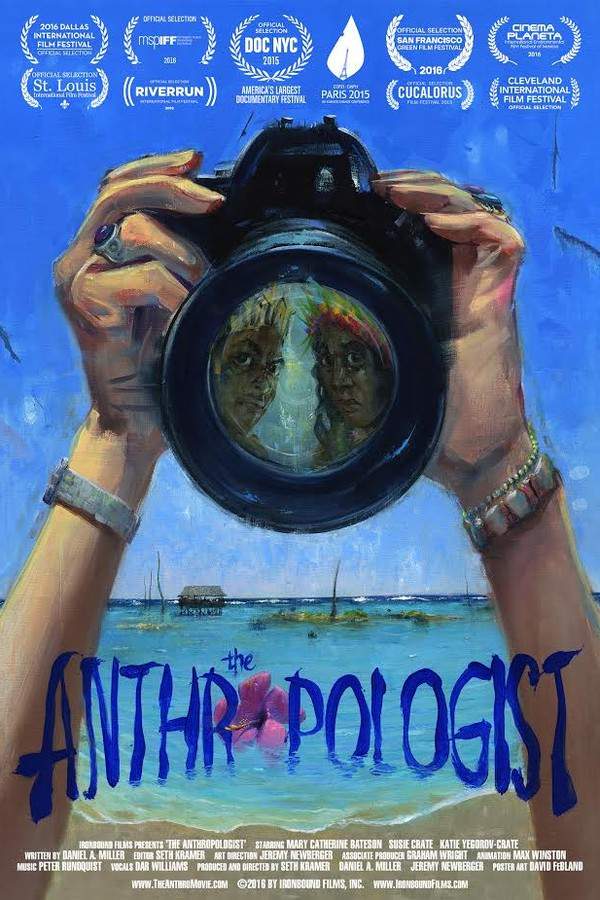
The Anthropologist (2016) movie poster

Timeline

The Anthropologist (2016) Timeline Explained – Every Event in Order

Release, runtime and language
2016 · 78 min · English
Loading streaming availability…
Directed by
Daniel A. Miller, Jeremy Newberger, Seth Kramer

Margaret Mead, a groundbreaking cultural anthropologist, and Susie Crate, an environmentalist studying humanity’s response to climate change, are linked by a shared curiosity about societal adaptation. Through the perspectives of their daughters, their stories intertwine, revealing how different generations grapple with disruption and change. The film explores resilience and transformation as tradition confronts the challenges of a rapidly evolving world, highlighting the profound impact of upheaval on individuals and cultures.

On this page (6)
  1. 1 Where to watch
  2. 2 Events in order (14)
  3. 3 Timeline questions answered
  4. 4 Movie threads
  5. 5 Movies like The Anthropologist
  6. 6 Every angle
Loading streaming availability…

14 events in order · contains spoilers

The Anthropologist Timeline: Events in Chronological Order

Every key event of The Anthropologist (2016) in order, scene by scene, with when and where it takes place. Use it to untangle flashbacks, time jumps and parallel storylines, to refresh your memory before the sequel or to find the exact scene you are thinking of.

  1. Margaret Mead Popularizes Cultural Anthropology

    In the twentieth century, Margaret Mead brought cultural anthropology to audiences around the world. Her groundbreaking studies of communities facing unprecedented change made her one of the most influential anthropologists of her era. Her career serves as the historical foundation for the film's story.

    When
    Twentieth century
  2. Mary Catherine Bateson Becomes the Film's Storyteller

    Mary Catherine Bateson, Margaret Mead's daughter, serves as one of the film's narrators at 76 years old. As a cultural anthropologist herself, she offers unique insights into her mother's legacy. Her reflections provide historical context that parallels the modern story unfolding on screen.

  3. Susie Crate Studies the Human Impact of Climate Change

    Environmental anthropologist Susie Crate studies how climate change is transforming communities around the world. Her research takes her to some of the most vulnerable regions on the planet. Her work directly parallels Mead's studies of people confronting dramatic change.

  4. Katie Begrudgingly Joins Her Mother's Expeditions

    Katie Yegorov-Crate, Susie's teenage daughter, reluctantly accompanies her mother on research trips around the world. At first she is hostile toward the expeditions and sees little value in them. Her journey begins at age 13, with the film documenting her growth over five years.

    When
    Katie is 13 years old
  5. Mother and Daughter Travel to Siberia

    Susie and Katie journey to Siberia, a place with deep personal significance for their family. It was here that Susie met Katie's father while conducting research years earlier. The region becomes a powerful starting point for their exploration of climate-driven change.

    Where
    Siberia
  6. Katie's Family Confronts Relocation

    In Siberia, Katie's family faces the difficult prospect of relocating from land they have occupied for centuries. The changing environment makes their ancestral home increasingly difficult to sustain. This moment transforms the abstract concept of climate change into something deeply personal and real for Katie.

    Where
    Siberia
  7. Expedition to the South Pacific

    Susie and Katie continue their journey to the South Pacific, visiting island communities dealing with the effects of global warming. Rising seas threaten homes that families have held for generations. The residents are forced to rethink how they live and whether relocating makes sense.

    Where
    South Pacific
  8. Visit to the Andes

    The pair travels to the Andes, where mountain communities face their own climate-related challenges. Changing environmental conditions disrupt traditional ways of life that have persisted for generations. Susie documents how these communities are adapting to their new realities.

    Where
    The Andes
  9. The Chesapeake Bay Coast

    Susie and Katie visit the Virginia coast of the Chesapeake Bay, where rising waters threaten long-established communities. Residents must weigh their deep connection to the land against the practical realities of a changing environment. The visit brings the issue of climate displacement close to home for an American audience.

    Where
    Virginia coast of the Chesapeake Bay
  10. Communities Rethink How They Live

    Across every destination, the communities Susie and Katie visit are forced to reconsider their futures because of global warming. Many must decide whether staying on their ancestral lands is still viable or whether moving is the only option. These parallel struggles form the heart of the film's exploration of environmental change.

  11. Bateson Connects Mead's Work to Today's Crisis

    Mary Catherine Bateson explains how her mother studied people facing unprecedented change brought on by modernity, globalization, and war. Her insights into how those communities adapted provide valuable context for what Susie and Katie discover. The comparison reveals that humanity has always grappled with transformation.

  12. Katie's Perspective Begins to Shift

    Once hostile toward the expeditions, Katie begins to appreciate learning about the similar struggles faced by peoples around the world. Seeing her own family's Siberian situation mirrored in distant communities opens her eyes. She starts to understand why her mother's work matters.

  13. Katie Learns the Tools of Her Mother's Trade

    Over the course of their travels, Katie begins to learn the value and tools of her mother's trade. What started as a reluctant obligation grows into a genuine appreciation for anthropology. Her personal transformation mirrors the broader themes of adaptation and change.

  14. Five Years of Growth Come Full Circle

    Shot over the course of five years, the film captures Katie's evolution from a reluctant 13-year-old into an 18-year-old with a deeper understanding of the world. Her journey of personal change reflects the film's core message about humanity's struggle with transformation. The shared experiences of mother and daughter bind the personal and global stories together.

    When
    Over five years (ages 13 to 18)

Last updated: October 26, 2026 at 13:31

Was this helpful?

Timeline questions answered

The Anthropologist Timeline Explained: Your Questions Answered

When does it happen, and why in that order? The questions people ask about the chronology of The Anthropologist (2016): time jumps, flashbacks, cause and effect between scenes and the correct order of events, each answered with spoilers.

Q1

Why is Siberia the most personal part of Katie's journey?

Siberia is where Susie met Katie's father while doing research, and it is also the ancestral home Katie's family may have to leave as environmental conditions worsen. That combination gives the expedition stakes beyond fieldwork: climate displacement becomes a family issue for Katie rather than an abstract subject. It is where her mother's research becomes personally urgent.

  • siberia
  • katie yegorov-crate
  • susie crate
  • climate displacement
  • ancestral lands
Q2

How are Margaret Mead and Susie Crate connected?

They are connected through a shared interest in how people adapt when their world is disrupted. The Anthropologist pairs Mead's work on cultural change with Crate's research on climate change, while their daughters, Mary Catherine Bateson and Katie Yegorov-Crate, frame the historical and contemporary stories. Their connection is thematic rather than a literal collaboration.

Foreshadowing: Mary Catherine's early reflections on Mead's legacy establish the historical side of the film's comparison.

  • margaret mead
  • susie crate
  • cultural anthropology
  • climate change
  • mary catherine bateson
Q3

Why does Katie travel with Susie at age 13?

Katie does not begin by choice: at 13, she accompanies Susie reluctantly and sees little value in the fieldwork. The film does not tie her resistance to one specific event; it presents it as her starting attitude before repeated experiences change it. By the end, her participation has developed into genuine curiosity about anthropology.

Foreshadowing: Katie's early resistance to the expeditions foreshadows the gradual reversal in her attitude.

  • katie yegorov-crate
  • reluctant travel
  • field research
  • susie crate
Q4

How does her family's potential relocation change Katie's attitude?

Her family's possible move makes global warming concrete and personal, undermining her initial belief that the expeditions concern only other people. When she later encounters communities facing the same choice, she recognizes her family's experience as part of a broader pattern. The personal stakes help turn her reluctant participation into genuine attention to her mother's work.

  • katie yegorov-crate
  • family relocation
  • climate change
  • personal stakes
Q5

Why are the visited communities considering relocation?

Environmental change makes long-held homes and traditional livelihoods increasingly difficult to sustain. Rising seas and other shifting conditions force residents to weigh their attachment to ancestral land against the practical viability of remaining. Relocation is therefore a response to changed circumstances rather than a single decision imposed identically on every community.

  • community relocation
  • rising seas
  • climate change
  • ancestral lands
  • cultural adaptation
Q6

What does Katie learn by comparing her family with other climate-affected communities?

Katie realizes that climate-driven displacement is a shared human problem rather than an isolated family misfortune. Seeing similar choices repeated across different cultures changes why her mother's work matters to her: anthropology provides a way to recognize common patterns. This is the intellectual turn that transforms her reluctant travel into engagement.

Foreshadowing: Katie's early dismissal of fieldwork sets up her later recognition of a common struggle across cultures.

  • katie yegorov-crate
  • shared human struggle
  • cultural anthropology
  • climate displacement
Q7

What tools does Katie learn from her mother's work?

Katie begins learning the tools her mother uses to understand and document how communities respond to change. That knowledge gives her a framework for comparing different experiences instead of seeing each crisis as unrelated. It is also the practical basis for her growing respect for her mother's profession.

  • anthropology tools
  • field documentation
  • katie yegorov-crate
  • susie crate
Q8

Why does Mary Catherine Bateson narrate Margaret Mead's story?

Mary Catherine presents Mead's legacy from the perspective of both her daughter and a fellow anthropologist. Her reflections explain how Mead's studies of societies facing modernity, globalization, and war became a foundation for thinking about present-day adaptation. She gives the historical strand emotional and intellectual context rather than serving as a simple biographical narrator.

  • mary catherine bateson
  • margaret mead
  • cultural anthropology
  • historical context
Q9

Why does the film follow Katie for five years?

The five-year span makes Katie's transformation observable rather than merely reported. Viewers see her move from a resistant 13-year-old to an 18-year-old who understands and values her mother's discipline. Repeated travel also drives that change, because each new community adds to her growing perspective.

  • katie yegorov-crate
  • five years
  • character growth
  • susie crate
Q10

What does the film mean by cultural adaptation?

Cultural adaptation means changing how people live in response to environmental or social pressure while deciding what can be preserved. Across the film's locations, that may involve relocation, altered livelihoods, or revised inherited practices without simply abandoning cultural identity. The film presents tradition and change as overlapping pressures rather than a simple choice between the past and the future.

Foreshadowing: The repeated choices about staying or moving establish adaptation as the film's central test before the ending reflects it.

  • cultural adaptation
  • margaret mead
  • susie crate
  • tradition
  • climate change
Q11

Why does the film visit so many different regions?

The multiple locations show that climate change creates different local pressures while producing the same broad conflict between cultural attachment and practical viability. Rising seas threaten island homes in the South Pacific, changing conditions disrupt established ways of life in the Andes, and rising waters affect communities along the Virginia coast. Repeated exposure to this pattern also drives Katie's education and personal change.

  • south pacific
  • andes
  • chesapeake bay
  • climate change
  • field expeditions
Q12

Why is the ending hopeful but not fully resolved?

The ending offers hope through Katie's transformation rather than through a solution to global warming. She gains a sense of purpose and appreciation for anthropology, while the visited communities demonstrate resilience through adaptation. However, the environmental crisis and resulting displacement remain unresolved, which keeps the conclusion cautious rather than triumphant.

Foreshadowing: Katie's initial hostility toward fieldwork makes her eventual sense of purpose the clearest source of hope in the ending.

  • ending
  • katie yegorov-crate
  • hope
  • climate crisis
  • anthropology

Movie threads

More Movies Like The Anthropologist, by Mood & Story

Curated lists built around what makes The Anthropologist tick: the same mood, the same kind of story or the same emotional payoff. Each list explains why these movies belong together.

Intergenerational stories like The Anthropologist

Interwoven journeys reveal how inherited ideas become catalysts for self-discovery and change. Discover movies like The Anthropologist that pair personal coming-of-age with historical perspectives, weaving parallel journeys through reflective interviews, observational scenes, and conceptual links. These thoughtful documentary stories reward viewers who enjoy complex narratives about identity, family influence, and discovering a purpose.

  • reflective
  • contemplative
  • intergenerational
  • intellectual
  • intimate
  • historical
  • Tone: reflective, contemplative, intimate
  • Pacing: slow, layered, observational
Why these movies?

The story pattern: These narratives typically move between a present-day family story and another era, letting a younger character encounter, question, and eventually reshape an inherited vocation. The past provides context rather than a simple explanation, while the present supplies an emotional arc toward greater agency.

Why they belong together: The strongest connection is structural and character based: maternal influence, a daughter's intellectual awakening, and two timelines linked by ideas rather than direct causality. Slow observation and reflective interviews let viewers read each life against the other, creating meaning through juxtaposition.

Somber hopeful stories like The Anthropologist

Urgent struggles unfold slowly, leaving vulnerability beside persistence and cautious hope. Find movies like The Anthropologist with somber subject matter, reflective pacing, and cautious optimism rather than neat triumph. These dramas and documentaries explore disruption through intimate human stories, leaving larger problems unresolved while preserving hope for adaptation, resilience, and meaningful change.

  • somber
  • cautiously hopeful
  • reflective
  • resilient
  • intimate
  • contemplative
  • Tone: somber, cautiously hopeful
  • Pacing: slow, contemplative, deliberate
Why these movies?

The story pattern: The emotional journey typically moves from unease or resistance toward greater understanding without erasing the stakes that prompted it. Intimate decisions and observed community responses provide modest progress, and the conclusion balances a character's sense of purpose with an acknowledgment that the larger crisis remains.

Why they belong together: The connection comes from the tonal balance: serious concerns are treated slowly and thoughtfully, humor is minimal, and hope appears as persistence rather than easy victory. Characters and communities can move forward without the world becoming fully safe or settled.

If you liked this

Movies Like The Anthropologist

Similar movies to The Anthropologist: the same genre, themes or kind of story. Each one comes with its own plot summary, timeline and ending explained.

Browse all movie summaries

Every angle

The Anthropologist (2016) Explained: Plot, Timeline & Characters

Everything about The Anthropologist in one place: what happens in the plot summary, the timeline in chronological order, the characters and meaning and a spoiler-free summary. What's After the Movie adds the cast, box office and post-credit scenes.

Coming soon on iOS and Android

The Plot Explained Movie Summary App

Plot summaries, endings explained and timelines on your phone. Catch up on any movie in minutes, save your favorites and never miss a twist again.

Be the first to know when we launch. Your email stays private, always.

Learn more about the app