Plot Explained Spoilers guaranteed!
Plot Explained

Browse by genre

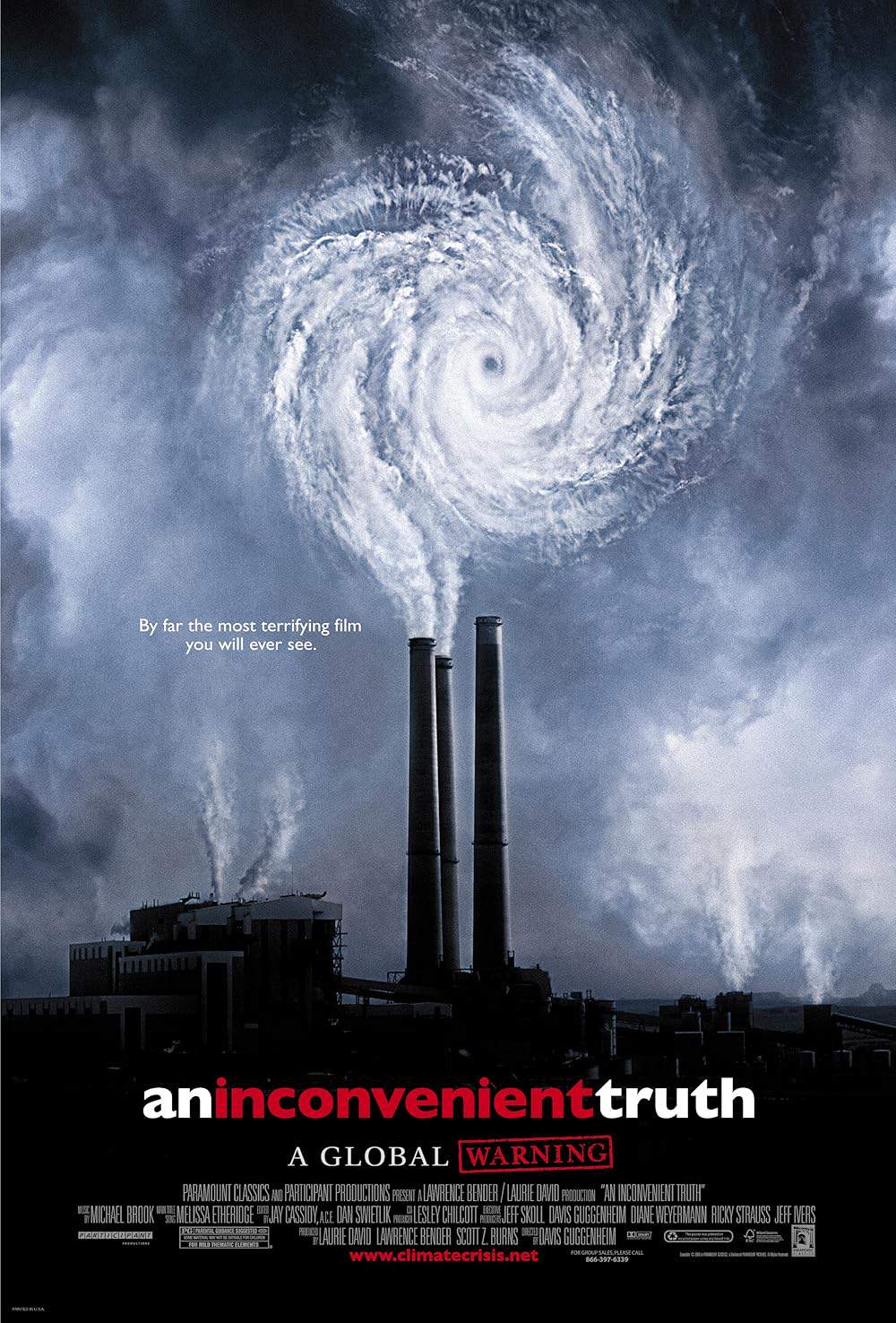
An Inconvenient Truth (2006) movie poster

Plot Summary

An Inconvenient Truth (2006) Plot Summary Explained

Release, runtime and language
2006 · 100 min · English
Directed by
Davis Guggenheim
Starring
Al Gore

This documentary explores the urgent issue of climate change and presents a case for increased awareness. It follows former Vice President Al Gore as he presents a comprehensive overview of the scientific evidence, potential consequences, and possible solutions. While highlighting the severity of the problem, the film also encourages a balanced understanding of environmental challenges and the complexities involved in addressing them, prompting viewers to consider a range of perspectives.

On this page (6)
  1. 1 Where to watch
  2. 2 What happens: full plot
  3. 3 Plot questions answered
  4. 4 Movie threads
  5. 5 Movies like An Inconvenient Truth
  6. 6 Every angle

Where to watch

Where to Watch An Inconvenient Truth (2006)

Where can you watch An Inconvenient Truth? Stream, rent or buy it in the US, including on Amazon Video, Apple TV Store and Fandango At Home: current JustWatch availability with up-to-date prices.

Streaming availability powered by JustWatch

Full plot summary · contains spoilers

What Happens in An Inconvenient Truth: Full Plot Summary

The whole story of An Inconvenient Truth (2006) explained, from the opening scene to the final frame: every key event, every twist and what it all adds up to. Read it as a quick recap before the sequel, to check a scene you missed, or to finally understand what really happened.

Director Davis Guggenheim masterfully intertwines the intricate science behind global warming with the personal narratives of Al Gore, showcasing his profound commitment to combatting the ramifications of climate change. An unwavering environmental advocate, Gore presents a myriad of facts and compelling data in a manner that is not only thought-provoking but also deeply engaging.

Throughout the documentary, we witness Al Gore as he strips his presentations of any political bias, instead providing a platform where audiences are encouraged to form their own conclusions through his charismatic, humorous, and engaging delivery. By the conclusion of his presentation, viewers are left profoundly affected, finding themselves on the edge of their seats, captivated by his poignant message about the environmental crisis looming over our planet, a sentiment echoed by Guggenheim.

The film reminds us of the catastrophic impacts of Hurricane Katrina, which ravaged New Orleans in 2005, and reflects on the increasingly frequent extreme weather events that characterize our times. As Gore points out, Earth is a delicately small haven in the vastness of space, a reality that demands our urgent attention. The thinness of our atmosphere is alarming; it can be altered dramatically by human actions. The sun’s rays penetrate our atmosphere, but as pollution accumulates, a smaller portion of these rays is allowed to escape back into space, signifying a dangerous upward trend in global temperatures.

Over the past 45 years, atmospheric levels of carbon dioxide have risen consistently, and we are beginning to witness the distressing results of this increase. Glaciers around the world are retreating, and the icy peaks are diminishing year by year, serving as a stark reminder of the ongoing climate crisis. By analyzing ice cores, scientists can decipher historical climate patterns and pinpoint temperatures from thousands of years ago, revealing a disconcerting correlation between CO2 levels and global temperatures.

Remarkably, in Antarctica, researchers can delve back 650,000 years to unearth global temperature data and CO2 concentrations. Historically, CO2 levels have not exceeded 300 parts per million, yet today we find ourselves at a staggering 650 ppm—a clear indication of human-induced change. This troubling trend will likely escalate in the next half-century.

Through his reflections, Gore emphasizes our critical relationship with nature, urging us to recognize that what we take for granted today may become scarce for future generations. He highlights that the ten hottest years on record have occurred within just the last 14 years, with the 2003 heatwave resulting in the tragic loss of 35,000 lives in Europe. Our oceans are experiencing alarming temperature increases, which correlate to the severity of storms and hurricanes, as already evidenced by the record-breaking weather patterns affecting countries across the globe.

In the recollection of his loss in the 2000 presidential election to George Bush in the swing state of Florida, Gore clarifies that his commitment to addressing climate change only strengthened thereafter. The notion that global warming increases moisture in our atmosphere leads to extreme precipitation and flooding has been tangible, with major flooding events occurring in India, China, and the US, driving insurance claims to unprecedented heights. The phenomenon also causes significant droughts, with Lake Chad once standing as the largest lake worldwide in 1963 but now nearly vanished.

The film presents alarming data about the thawing of the Arctic, Greenland, and Alaska, where permafrost is melting, destabilizing crucial infrastructure built atop it. Over the past 40 years, the thickness of the Arctic ice cap has diminished by 40%, projecting a future where the North Pole could be ice-free in summer within the next 70 years. Once a gigantic mirror reflecting 90% of the sun's rays, the loss of Arctic ice now allows for increased absorption of solar energy by the oceans, further exacerbating rising temperatures.

As the Arctic continues to warm, it disrupts the vital ocean current conveyor belt, which relies on temperature variance to function. Without it, Europe faces the threat of an ice age. The US stands as a leading contributor to the exacerbation of climate change, with politicians only likely to act when the public demands it.

Furthermore, global warming has birthed new insect species that were once eradicated by winter conditions, threatening entire forests and shifting the range of infectious diseases, leading to the emergence of 30 new diseases in the last two and a half decades. The bleaching of coral reefs and the loss of biodiversity are accelerating at rates 1,000 times faster than the natural course of extinction should allow.

With Antarctica boasting the largest ice reserves on Earth, the breaking off of the Antarctic Ice Shelf poses a significant threat, particularly as land-based ice contributes to rising sea levels. Projections suggest that the melting of the Greenland and West Antarctic Ice sheets alone could result in a rise of 20 feet, submerging low-lying regions globally.

As the world reckons with a projected population increase to 9 billion by 2050, the demand for food will rise correspondingly, with agricultural practices contributing 30% of annual CO2 emissions through deforestation for crop cultivation. Misguided technological advancements, such as the diversion of rivers for irrigation, only further exacerbate the situation by drying up essential inland lakes.

The US is notable for being the leading contributor to carbon emissions, responsible for 30% of global emissions. However, a group of skeptics aims to recast global warming as a mere theory rather than an observable fact, despite the scientific consensus that acknowledges it as a man-made crisis. The situation is further complicated by the US auto industry lagging in competitiveness due to lower fuel efficiency standards compared to its global counterparts.

Despite the overwhelming evidence, hope remains. Humans possess the capability to make a significant impact on reducing carbon emissions—we only need the political resolve to act. The international community came together to resolve the ozone crisis, and now cities and states across the US are stepping up to ratify the Kyoto Protocol, demonstrating that collective action is essential in the fight against climate change.

Last updated: January 02, 2025 at 17:54

Was this helpful?

Plot questions answered

An Inconvenient Truth Plot Explained: Your Questions Answered

The questions people ask most about An Inconvenient Truth (2006): what happens in the confusing scenes, why the characters do what they do, the twists, hidden details and what the ending means. Each answer contains spoilers.

Q1

Why does Al Gore mention his 2000 presidential election loss in the documentary?

Gore mentions his loss to George Bush in the 2000 election to illustrate that his commitment to climate change only intensified after leaving office. He frames it as a turning point that freed him to focus entirely on environmental advocacy without political constraints, suggesting that this personal setback ultimately allowed him to dedicate himself more fully to raising awareness about global warming.

  • al gore
  • 2000 election
  • george bush
  • florida
  • political journey
Q2

How does carbon dioxide cause global warming according to the film?

The film explains that carbon dioxide acts like a blanket in the atmosphere. The sun's rays penetrate the atmosphere and warm the Earth's surface, but as CO2 accumulates, it traps more heat that would normally escape back into space. This process, known as the greenhouse effect, causes global temperatures to rise continuously.

Foreshadowing: Earlier in the film, Gore shows the thinness of Earth's atmosphere to emphasize how easily it can be altered.

  • carbon dioxide
  • global warming
  • greenhouse effect
  • atmosphere
  • heat
Q3

Why is the melting Arctic ice so critical to the climate?

The Arctic ice acts as a giant mirror, reflecting about 90% of the sun's rays back into space. As the ice melts due to rising temperatures, darker ocean water is exposed, which absorbs more solar energy instead of reflecting it. This creates a feedback loop where warming causes more ice to melt, which then causes more warming. The ice cap has thinned by 40% over the past 40 years.

Foreshadowing: The film earlier shows how global temperatures have been steadily rising, setting up this consequence.

  • arctic ice
  • ice cap
  • melting
  • feedback loop
  • reflection
  • north pole
Q4

What is the ocean conveyor belt and why does it matter if it shuts down?

The ocean conveyor belt is a global system of ocean currents that circulates warm and cold water around the planet, driven by temperature differences. This system keeps Europe temperate. As the Arctic warms and fresh water from melting ice enters the ocean, it disrupts this circulation pattern. If the conveyor belt stops, Europe could experience an ice age despite global warming.

  • ocean currents
  • conveyor belt
  • europe
  • climate
  • circulation
Q5

What does the film say about Hurricane Katrina and climate change?

The film uses Hurricane Katrina, which devastated New Orleans in 2005, as an example of how climate change intensifies extreme weather events. Gore argues that warmer ocean temperatures fuel more powerful hurricanes, making them more destructive. The film presents this as a tangible, real-world consequence of the warming trend.

  • hurricane katrina
  • new orleans
  • extreme weather
  • storms
  • 2005
Q6

How do ice cores prove the correlation between CO2 and temperature?

Scientists drill into ice sheets in Antarctica to extract ice cores that contain air bubbles dating back 650,000 years. These bubbles preserve samples of ancient atmosphere, allowing researchers to measure historical CO2 levels and temperatures. The data shows a clear correlation: when CO2 levels were high, global temperatures were also high, and vice versa. Today, CO2 levels at 650 ppm far exceed the historical maximum of 300 ppm.

  • ice cores
  • Antarctica
  • carbon dioxide
  • temperature
  • scientific evidence
  • 650000 years
Q7

Why is the film hopeful despite presenting such alarming information?

The film ends on a hopeful note by emphasizing that humans have the technology and capability to reduce carbon emissions and address climate change. Gore points to the successful international response to the ozone crisis as proof that global cooperation can work. He also highlights that cities and states across the US are ratifying environmental agreements like the Kyoto Protocol, suggesting that political will can be built through public demand.
  • hope
  • solutions
  • kyoto protocol
  • political will
  • human capability
  • ozone crisis
Q8

What is the significance of the 35,000 deaths mentioned in the film?

Gore cites the 2003 European heatwave as an example of climate change's deadly impact. That summer, extreme temperatures across Europe caused approximately 35,000 deaths, particularly among elderly populations. This event demonstrates how climate change directly threatens human life beyond the gradual effects of rising seas.

  • 2003 heatwave
  • europe
  • deaths
  • extreme heat
  • mortality
Q9

Why does the film show Lake Chad drying up as evidence of climate change?

Lake Chad was once the largest lake in the world in 1963 but has nearly vanished today. The film uses this as a stark example of how climate change causes droughts and alters ecosystems. The shrinking of Lake Chad represents the broader issue of freshwater scarcity that climate change will exacerbate globally.

  • lake chad
  • drought
  • africa
  • water scarcity
  • ecosystem
Q10

What role does the United States play in global carbon emissions according to the film?

The film identifies the United States as the leading contributor to carbon emissions, responsible for about 30% of global emissions. Gore notes that US politicians are unlikely to act on climate change unless the public demands it. He also criticizes the US auto industry for lagging behind global competitors in fuel efficiency standards.

  • united states
  • carbon emissions
  • auto industry
  • politics
  • fuel efficiency
Q11

Why does the film mention coral reef bleaching?

Coral reefs are bleaching because rising ocean temperatures stress the corals, causing them to expel the algae that give them color and nutrients. The film presents this as one of many biodiversity crises caused by climate change, noting that species extinctions are occurring 1,000 times faster than the natural rate.

  • coral reefs
  • bleaching
  • biodiversity
  • extinction
  • oceans
  • marine life
Q12

What is the connection between population growth and climate change shown in the film?

The film projects that the global population will reach 9 billion by 2050, increasing demand for food and resources. This growth drives deforestation for agriculture, which contributes 30% of annual CO2 emissions. The film suggests that addressing climate change must account for this rising demand for food and land.

  • population
  • 2050
  • deforestation
  • agriculture
  • food demand
  • 9 billion

Movie threads

More Movies Like An Inconvenient Truth, by Mood & Story

Curated lists built around what makes An Inconvenient Truth tick: the same mood, the same kind of story or the same emotional payoff. Each list explains why these movies belong together.

Urgent Warnings with Hopeful Resolve like in An Inconvenient Truth

Documentaries that deliver alarming evidence but conclude with a motivational path forward. Movies like An Inconvenient Truth that investigate serious global threats. If you enjoyed the mix of alarming scientific evidence with a motivational call to action, these documentaries and dramas share a similar journey from crisis awareness to hopeful engagement.

  • urgent
  • sobering
  • thought-provoking
  • motivational
  • alarming
  • captivating
  • Tone: tense, sobering, motivational
  • Pacing: steady, methodical
Why these movies?

The story pattern: The narrative follows a clear arc: establishing a severe problem through compelling evidence, exploring the dire consequences of inaction, and ultimately shifting to a message of hope and empowerment, focusing on human ingenuity and the possibility of change.
Why they belong together: These films are grouped by their shared emotional trajectory—they are heavy and tense in their core message but share a fundamentally optimistic and motivational ending. The experience balances alarm with agency.

Sobering Journeys into Existential Threats like in An Inconvenient Truth

Films that explore large-scale dangers to humanity with a grave and compelling tone. If you liked the heavy, grave tone of An Inconvenient Truth, explore these similar movies. They delve into catastrophic events, survival of humanity, and other existential threats, offering a thought-provoking and sobering viewing experience.

  • sobering
  • urgent
  • anxious
  • thought-provoking
  • alarming
  • grave
  • Tone: sobering, grave, urgent
  • Pacing: steady, deliberate
Why these movies?

The story pattern: Stories in this thread systematically unpack a vast, complex threat, often weaving together scientific data, political context, and human stories. The narrative is driven by the urgency of the problem rather than individual character arcs, creating a collective sense of peril.

Why they belong together: These films share a specific, intense mood: they are urgent, anxious, and thought-provoking, dealing with themes of mass-scale danger. They prioritize gravitas over entertainment, creating a captivating yet psychologically demanding experience.

If you liked this

Movies Like An Inconvenient Truth

Similar movies to An Inconvenient Truth: the same genre, themes or kind of story. Each one comes with its own plot summary, timeline and ending explained.

Browse all movie summaries

Every angle

An Inconvenient Truth (2006) Explained: Plot, Timeline & Characters

Everything about An Inconvenient Truth in one place: what happens in the plot summary, the timeline in chronological order, the characters and meaning and a spoiler-free summary. What's After the Movie adds the cast, box office and post-credit scenes.

Coming soon on iOS and Android

The Plot Explained Movie Summary App

Plot summaries, endings explained and timelines on your phone. Catch up on any movie in minutes, save your favorites and never miss a twist again.

Be the first to know when we launch. Your email stays private, always.

Learn more about the app