















Plot Explained Spoilers guaranteed!
Plot Explained

Browse by genre

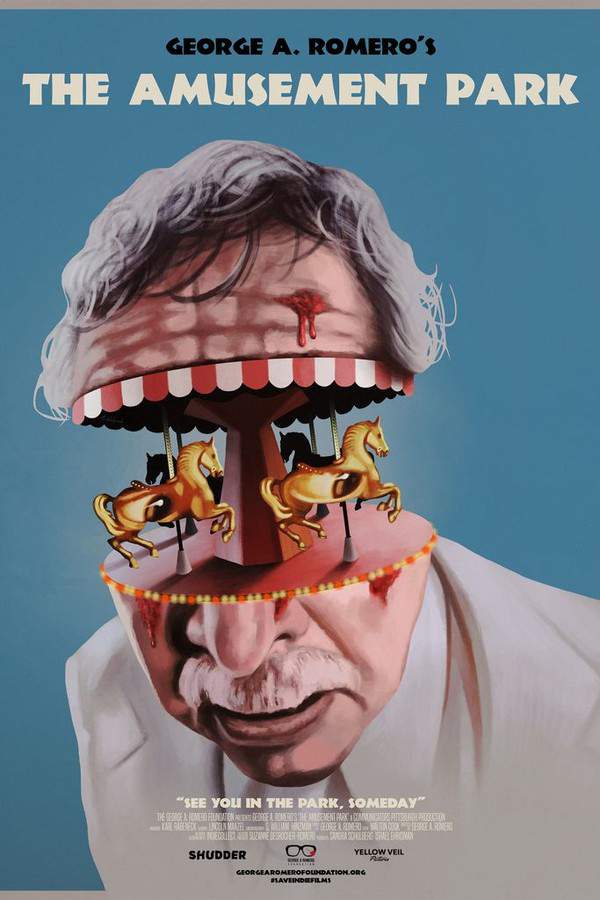
The Amusement Park (2021) movie poster

Timeline

The Amusement Park (2021) Timeline Explained – Every Event in Order

Release, runtime and language
2021 · 54 min · English
Echo score 74
JustWatch #23,449 1
Directed by
George A. Romero
Starring
Bob Koppler, Halem Joseph, Harry Albacker, Jack Gottlob, Lincoln Maazel, Marion Cook

A retired man finds himself disoriented and trapped within a bizarre, never-ending amusement park. As he experiences a cycle of humiliation and despair, the unsettling realities of aging and mortality are reflected in chaotic crowds and distorted attractions. The film explores the dark side of growing old and the anxieties of the American experience.

On this page (5)
  1. 1 Where to watch
  2. 2 Events in order (15)
  3. 3 Timeline questions answered
  4. 4 Movie threads
  5. 5 Every angle

Where to watch

Where to Watch The Amusement Park (2021)

Where can you watch The Amusement Park? Stream, rent or buy it in the US, including on AMC+, Philo and Shudder: current JustWatch availability with up-to-date prices.

Streaming availability powered by JustWatch

15 events in order · contains spoilers

The Amusement Park Timeline: Events in Chronological Order

Every key event of The Amusement Park (2021) in order, scene by scene, with when and where it takes place. Use it to untangle flashbacks, time jumps and parallel storylines, to refresh your memory before the sequel or to find the exact scene you are thinking of.

  1. Prologue of Neglect

    The film opens with a moving prologue delivered by Lincoln Maazel, emphasizing the societal neglect and undervaluation the elderly face. He urges the audience to reflect on this pervasive issue as they journey through the narrative.

  2. Elderly Man in Distress

    In a stark, white room, an elderly man appears, bandaged and bloodied, symbolizing his suffering. His pristine white suit contrasts sharply with his current condition, setting the stage for his emotional journey.

  3. Young Man's Entrance

    A younger version of the elderly man enters, embodying cheerfulness and optimism. He encourages his weary counterpart to join him at the park, despite the elder's reluctance and despair about the outside world.

  4. Journey to the Park

    Ignoring the elder's protest, the younger man opens a door that leads to a vibrant park, a vivid contrast to the sterile white room. This marks the beginning of the younger man's explorative adventure through a metaphorical landscape.

    Where
    Park
  5. Ticket Taker's Exploitation

    As the younger man enjoys the ambiance of the park, he encounters a ticket taker who cheats elderly patrons out of their money. This moment highlights the exploitation faced by older individuals in society.

    Where
    Park
  6. Rollercoaster Ride

    In a celebratory moment, the younger man boards a rollercoaster. His exhilaration is short-lived as he witnesses a tragic scene on a train where an older passenger appears to die, highlighting the theme of neglect for the elderly.

    Where
    Park
  7. Police Involvement

    At the bumper cars attraction, a staged accident occurs, provoking the appearance of a police officer and a lawyer. The younger man’s struggle with his eyesight prevents him from being taken seriously, emphasizing his lack of agency.

    Where
    Park
  8. Dining Experience

    Seeking food, the younger man finds himself overlooked as wait staff cater to wealthier patrons. This moment underscores the societal pattern of ignoring the needs of the elderly, even in simple situations.

    Where
    Food Stand
  9. Encounter with Children

    While attempting to connect with children, the younger man suffers humiliation when accused of being a 'degenerate' by a young individual. This painful encounter highlights the generational divide and prejudice against the elderly.

  10. Fortune Teller's Grim Vision

    In a moment of curiosity, the younger man visits a fortune teller. The seer reveals a troubling future for a young couple, filled with neglect and solitude, triggering a violent reaction from the young man directed at the elderly.

  11. Abandonment in the Park

    As the younger man regains consciousness, he finds the park deserted except for a few bikers who assault him and steal his tickets. This abandonment reflects the isolation many elderly individuals experience in society.

    Where
    Park
  12. Medical Center Experience

    In his pursuit of assistance, the younger man arrives at a medical center that feels chaotic and uncaring. There, he receives minimal treatment, illustrating the lack of support available for the elderly.

    Where
    Medical Center
  13. Encounter at the Freak Show

    The younger man falls victim to a pickpocket, who manages a freak show featuring casually dressed seniors. Upset by this degrading spectacle, he attempts to leave but is chased by angry patrons, further reflecting societal disdain.

  14. A Moment of Connection

    In a brief moment of solace, a little girl invites the younger man to read a story and share some food. However, her indifferent mother quickly takes her away, deepening the man's sense of rejection and heartache.

  15. Return to the White Room

    Defeated, the elderly man ultimately returns to the stark white room. A fresh version of him re-enters, repeating the earlier hopeful invitation, yet the elder watches in powerless despair as the cycle continues.

Last updated: November 15, 2024 at 20:36

Was this helpful?

Timeline questions answered

The Amusement Park Timeline Explained: Your Questions Answered

When does it happen, and why in that order? The questions people ask about the chronology of The Amusement Park (2021): time jumps, flashbacks, cause and effect between scenes and the correct order of events, each answered with spoilers.

Q1

Why does the young man attack the elderly protagonist at the fortune teller?

The young man attacks after witnessing a disturbing vision of his future, living in a dilapidated apartment, neglected by neighbors and doctors. Frustrated by this grim prophecy and unable to accept his inevitable decline, he lashes out at the elderly man, symbolizing how society blames the elderly for the anxieties and fears that aging provokes in younger generations.

Foreshadowing: Earlier in the park, the protagonist struggles with poor eyesight and is dismissed as unreliable, foreshadowing his inability to be seen as a credible or valued member of society.

  • fortune teller
  • attack
  • vision
  • violence
  • aging anxiety
Q2

What does the amusement park represent in the film?

The park functions as a surreal allegory for American society's treatment of the elderly. Each attraction symbolizes a different form of elder mistreatment: exploitation by financial predators, neglect in healthcare, dismissal by authority figures, and dehumanization in public spaces. The park appears welcoming but ultimately subjects its elderly visitors to humiliation, violence, and isolation.

Foreshadowing: The prologue explicitly establishes the film as a metaphorical portrayal of how society neglects and undervalues the elderly, setting up the park as an allegorical space.

  • allegory
  • metaphor
  • society
  • elder neglect
  • symbolism
Q3

What is the significance of the white room in the movie?

The stark white room represents a threshold between existence and death, or perhaps a holding space where the elderly exist before passing on. The elderly, bandaged version appears after each ordeal, while the younger version represents his former self or the lingering hope of youth. The cycle suggests an inescapable pattern of degradation that repeats with each generation of aging.

Foreshadowing: The elder's opening line 'there is nothing out there' hints at the futility of escape from this cyclical space.

  • white room
  • cycle
  • death
  • threshold
  • rebirth
Q4

Why does the film end with the same scene repeating?

The repeating cycle reinforces the film's bleak message about the inescapable nature of elder mistreatment. Each time a fresh, optimistic version enters the park, the outcome remains the same, humiliation, violence, and return to the white room. This suggests that societal neglect of the elderly is a perpetual, unbroken cycle rather than a problem with a solution.

Foreshadowing: The repeated opening scene mirrors the protagonist's failed attempts to navigate a society that systematically dismisses and harms its elders.

  • ending
  • cycle
  • repetition
  • despair
  • hopelessness
Q5

Why isn't the protagonist taken seriously when he tries to help at the bumper cars?

The protagonist struggles with failing eyesight, which prevents him from being perceived as a reliable witness. When a staged accident occurs at the bumper cars, his poor vision and elderly status cause police and others to dismiss his account entirely. This moment illustrates how the elderly are often discounted as credible contributors to society due to age-related limitations.

Foreshadowing: His eyesight issues are established early when he struggles to see clearly at various attractions, limiting his ability to function in the park.

  • eyesight
  • credibility
  • police
  • dismissal
  • ageism
Q6

Why do the bikers attack and rob the protagonist in the park?

After the violent incident at the fortune teller, the protagonist regains consciousness to find the park deserted. Three bikers assault him and steal his tickets (representing his remaining resources and value). This attack exemplifies the predatory nature of those who exploit vulnerable elderly individuals, taking what little they have left.

Foreshadowing: The fortune teller scene marks a turning point where the protagonist loses agency, transitioning from observer to victim.

  • bikers
  • assault
  • robbery
  • exploitation
  • vulnerability
Q7

What does the fortune teller reveal that triggers such a violent reaction?

The fortune teller shows a young couple their future: they will live in a decaying apartment, ignored by neighbors and medical professionals. This vision of neglect and decline represents the protagonist's own fate and reflects society's broader fear of aging, being forgotten, unwatched, and uncared for. The young man's violent response stems from confronting the unavoidable reality of growing old.

Foreshadowing: Throughout the park, the elderly are consistently ignored, dismissed, and exploited, building toward this prophetic revelation of total neglect.

  • fortune teller
  • prophecy
  • neglect
  • aging
  • future
Q8

Why does the mother take the little girl away from the elderly protagonist?

Despite a brief moment of genuine connection where a little girl offers to share food and read a story, her mother abruptly snatches her away upon noticing the elderly man. This rejection reflects society's suspicion and fear of elderly individuals, treating them as potential threats or inconveniences rather than vulnerable members of community. The moment deepens the protagonist's isolation and emotional despair.

Foreshadowing: Earlier, the protagonist was accused of being a 'degenerate' when attempting to interact with children, establishing the pattern of being perceived as dangerous or undesirable.

  • little girl
  • mother
  • rejection
  • isolation
  • fear
Q9

What happens to the elderly passenger on the train ride?

While riding the rollercoaster, the protagonist witnesses a tragic scene on an adjacent train: an older passenger appears to die and is immediately placed in a coffin, yet the other passengers continue on indifferently, ignoring the death entirely. This horrifying moment underscores the theme of societal neglect, even death among the elderly goes unnoticed and unacknowledged.

Foreshadowing: The prologue establishes that the elderly are undervalued, and this scene literalizes that neglect by showing a death met with complete indifference.

  • train
  • death
  • coffin
  • neglect
  • indifference
Q10

Why does the medical center give the protagonist only a band-aid and cane?

The medical center, portrayed as a chaotic shop filled with elderly equipment, provides minimal care before quickly expelling him. This satirizes inadequate healthcare for the elderly, receiving superficial treatment (just a band-aid) and being handed a mobility aid (cane) before being pushed back out. It reflects the systemic failure to provide meaningful medical support to aging individuals.

Foreshadowing: Earlier, the protagonist is injured throughout the park yet continues to be subjected to further harm, illustrating the cycle of damage without proper care.

  • medical center
  • healthcare
  • band-aid
  • neglect
  • elderly care
Q11

What is the freak show encounter about in the film?

The protagonist is pickpocketed by someone who runs a freak show featuring casually dressed seniors displayed for entertainment. This disturbing spectacle represents the final degradation, elderly individuals reduced to sideshow curiosities, their dignity stripped entirely for public amusement. It embodies how society can commodify and exploit the elderly as objects of entertainment or pity.

Foreshadowing: Throughout the park, the elderly are treated as less than human, from financial exploitation to physical assault, building toward this ultimate dehumanization.

  • freak show
  • exploitation
  • dehumanization
  • display
  • seniors
Q12

What is the relationship between the two versions of the man in the film?

The two versions represent the protagonist's past and present self. The younger, optimistic version experiences the park's horrors anew, while the elderly, battered version has already endured them and knows the futile outcome. Their coexistence in the white room suggests the eternal presence of both hope and experience within an aging individual, or perhaps the cycle of one soul repeatedly undergoing this ordeal.

Foreshadowing: The opening establishes both versions immediately, with the younger man dismissing the elder's warnings that 'there is nothing out there.'

  • two versions
  • younger self
  • elder self
  • cycle
  • identity

Movie threads

More Movies Like The Amusement Park, by Mood & Story

Curated lists built around what makes The Amusement Park tick: the same mood, the same kind of story or the same emotional payoff. Each list explains why these movies belong together.

Surreal allegorical horror movies like The Amusement Park

Stories that use bizarre settings as metaphors for societal anxieties. If you liked The Amusement Park's use of a surreal setting as a metaphor, you'll find similar experiences here. These movies use bizarre, nightmarish worlds to explore heavy themes like societal decay, existential dread, and psychological turmoil, creating a uniquely disorienting and thought-provoking watch.

  • surreal
  • allegorical
  • disorienting
  • thought-provoking
  • oppressive
  • symbolic
  • Tone: dark, unsettling
  • Pacing: variable, dreamlike
Why these movies?

The story pattern: These narratives often follow a protagonist navigating a strange, illogical world that physically represents a core theme, such as aging, bureaucracy, or mental illness. The plot is driven by symbolic encounters rather than traditional conflict, leading to a climax that reinforces the central allegory, often with a bleak or ambiguous resolution.

Why they belong together: Movies in this thread are grouped by their shared approach to storytelling: using surrealism and metaphor as the primary vehicle for their message. They create a distinct feeling of cognitive dissonance and thematic weight, appealing to viewers who enjoy deciphering symbolic meaning within a dark, imaginative framework.
Movies about alienation and despair like The Amusement Park

Films that trap characters in cycles of psychological isolation and systemic failure. For viewers seeking more films with the heavy mood of The Amusement Park, this thread collects stories centered on profound alienation and cyclical despair. These movies often feature protagonists trapped by uncaring systems, leading to bleak endings and a consistently oppressive, melancholic atmosphere.

  • isolating
  • oppressive
  • melancholic
  • bleak
  • despair
  • claustrophobic
  • Tone: bleak, melancholic
  • Pacing: variable, often methodical
Why these movies?

The story pattern: The narrative typically follows an isolated individual struggling against an impersonal or actively cruel system—be it societal, institutional, or even metaphysical. Their efforts to find connection or dignity are repeatedly thwarted, creating a cyclical structure of humiliation and defeat that culminates in a starkly bleak conclusion, reinforcing the inescapability of their plight.

Why they belong together: This thread unites films that share a core emotional throughline: a deep, pervasive focus on the experience of being utterly alone and powerless against overwhelming forces. The similarity lies in the overwhelming mood of melancholy, the thematic focus on systemic neglect, and the emotionally heavy, often hopeless, narrative arc.

Every angle

The Amusement Park (2021) Explained: Plot, Timeline & Characters

Everything about The Amusement Park in one place: what happens in the plot summary, the timeline in chronological order, the characters and meaning and a spoiler-free summary. What's After the Movie adds the cast, box office and post-credit scenes.

Coming soon on iOS and Android

The Plot Explained Movie Summary App

Plot summaries, endings explained and timelines on your phone. Catch up on any movie in minutes, save your favorites and never miss a twist again.

Be the first to know when we launch. Your email stays private, always.

Learn more about the app