Plot Explained Spoilers guaranteed!
Plot Explained

Browse by genre

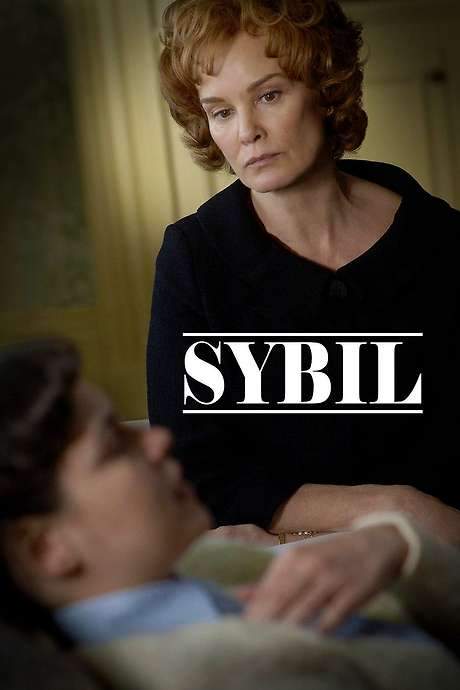
Sybil (2007) movie poster

Plot Summary

Sybil (2007) Plot Summary Explained

Release, runtime and language
2007 · 89 mins · English
Loading streaming availability…
Directed by
Joseph Sargent
Starring
Jessica Lange, JoBeth Williams, Fab Filippo, Tammy Blanchard, Alison Murray, Ron White

A true story of a young woman whose abusive childhood results in her developing a multiple personality disorder.

On this page (6)
  1. 1 Where to watch
  2. 2 What happens: full plot
  3. 3 Plot questions answered
  4. 4 Movie threads
  5. 5 Movies like Sybil
  6. 6 Every angle
Loading streaming availability…

Full plot summary · contains spoilers

What Happens in Sybil: Full Plot Summary

The whole story of Sybil (2007) explained, from the opening scene to the final frame: every key event, every twist and what it all adds up to. Read it as a quick recap before the sequel, to check a scene you missed, or to finally understand what really happened.

Troubled Columbia University art student and later student teacher Sybil Dorsett [Tammy Blanchard] is referred to psychiatrist Dr. Cornelia Wilbur [Jessica Lange] by Dr. Atcheson [Ron White], a colleague who believes the young woman is suffering from female hysteria. As her treatment progresses, Sybil confesses that she frequently experiences blackouts and cannot account for large blocks of time. Wilbur helps her recall a childhood in which she suffered physical, emotional, and sexual abuse at the hands of her disturbed mother Hattie [JoBeth Williams].

Eventually, 16 identities varying in age and personal traits begin to emerge, chief among them is Victoria, a French woman who explains to Dr. Wilbur how she shepherds the many parts of Sybil's whole.** The tension grows as colleagues object to what they see as potential manipulation, and Sybil's father Willard [Brian Downey] refuses to admit his late wife Hattie was anything other than a loving mother.

Although she had promised never to hypnotize Sybil, Wilbur takes her to her home by a lake and hypnotizes her into having all 16 personalities be the same age as she and become just aspects of Sybil. By nightfall, Sybil claims she feels different, and emotionally declares her hatred toward Hattie.

The film closes by recounting the history of Shirley Ardell Mason, the real woman who was known by the pseudonym of Sybil Dorsett.

Last updated: February 20, 2026 at 12:14

Was this helpful?

Plot questions answered

Sybil Plot Explained: Your Questions Answered

The questions people ask most about Sybil (2007): what happens in the confusing scenes, why the characters do what they do, the twists, hidden details and what the ending means. Each answer contains spoilers.

Q1

Why did Sybil develop multiple personalities?

Sybil developed multiple personalities as a coping mechanism to survive severe childhood abuse inflicted by her mother Hattie. The physical, emotional, and sexual trauma was so overwhelming that her mind fragmented into 16 separate identities to contain and protect her from the memories. Each identity represents a different facet of her personality that emerged to handle specific aspects of the abuse or to hold memories too painful for Sybil to process consciously.

Foreshadowing: The film hints at this fragmentation early on when Sybil experiences blackouts and cannot account for large blocks of time.

  • dissociative identity disorder
  • childhood abuse
  • trauma response
  • multiple personalities
  • mental health
Q2

What role does Victoria play among Sybil's identities?

Victoria is a French woman who serves as the central organizing identity among Sybil's 16 personalities. She acts as a shepherd or caretaker who manages the other identities and helps Dr. Wilbur understand the internal system. Victoria represents the part of Sybil that possesses self-awareness about her condition and works to protect the different facets of her fragmented self.

Foreshadowing: Victoria first emerges during mid-treatment sessions when Sybil's dissociative condition becomes more apparent.

  • Victoria
  • identity system
  • Sybil's alters
  • French identity
  • protective personality
Q3

Why did Dr. Wilbur hypnotize Sybil despite promising not to?

Dr. Wilbur broke her promise and hypnotized Sybil because she believed it was necessary to achieve integration of the 16 personalities. Taking Sybil to her lakehouse, Wilbur guided her through an intense hypnotic session aimed at unifying all identities into one coherent self. This controversial method was an attempt to merge the different aspects of Sybil's personality so they would become simply facets of a single person rather than separate entities.

Foreshadowing: The tension between Wilbur's colleagues and her own ethical boundaries foreshadows this pivotal decision.

  • Dr. Cornelia Wilbur
  • hypnosis
  • integration
  • controversial treatment
  • ethical boundaries
Q4

What caused Sybil's blackouts and memory gaps?

Sybil's blackouts and memory gaps are symptoms of dissociative identity disorder caused by severe childhood trauma. When the abuse became unbearable, her mind would dissociate, causing one identity to take control while others remained hidden. Sybil was unable to account for these lost periods because different identities held different memories, and they were not consciously aware of what the others did or experienced.

Foreshadowing: The early sessions show Dr. Wilbur noting these memory gaps as crucial symptoms that hint at hidden trauma.

  • memory gaps
  • blackouts
  • dissociation
  • dissociative amnesia
  • trauma response
Q5

Why does Sybil's father refuse to acknowledge the abuse?

Willard Dorsett refuses to acknowledge his wife Hattie's abuse because he cannot accept that his marriage involved such severe violence against their daughter. His denial protects his own psychological stability and preserves his memory of Hattie as a loving mother. This refusal complicates Sybil's therapy significantly, as family denial and the need for validation from a parent who witnessed the abuse adds another layer of emotional trauma to her healing process.

Foreshadowing: Willard's denial first emerges during mid-treatment when Wilbur attempts to involve the family in Sybil's recovery.

  • Willard Dorsett
  • Hattie Dorsett
  • family denial
  • father
  • victim-blaming
Q6

What happens during the integration of Sybil's identities?

The integration is Dr. Wilbur's attempt to merge all 16 personalities into one cohesive self. During the lakehouse hypnosis, Wilbur guides Sybil to unify the identities so they become different aspects of one person rather than separate entities. After the procedure, Sybil reports feeling different and is finally able to express emotions directly, including declaring her hatred toward her mother Hattie. The process is presented as both a breakthrough and an emotionally costly treatment.

Foreshadowing: The earlier emergence of multiple identities sets up integration as the ultimate therapeutic goal.

  • integration
  • identity fusion
  • therapy outcome
  • hypnosis treatment
  • wholeness
Q7

How does the lake hypnosis scene change Sybil?

The lake hypnosis scene represents a turning point where Sybil gains the ability to directly confront her trauma. Following the integration attempt, she reports feeling fundamentally different and openly expresses hatred toward her mother Hattie. This emotional declaration marks the first time Sybil can fully access and articulate her feelings about the abuse rather than having those emotions fragmented among different identities.

Foreshadowing: Wilbur's earlier resistance to hypnosis and colleagues' warnings about manipulation set the stakes for this pivotal moment.

  • lakehouse
  • emotional breakthrough
  • confrontation
  • trauma expression
  • transformation
Q8

Is Sybil based on a true story?

Yes, Sybil is based on the true story of Shirley Ardell Mason, the real patient who was known by the pseudonym Sybil Dorsett. The film concludes by recounting this real history, grounding the dramatic events in actual medical and psychological case study material. Mason was a student at Columbia University who was treated by Dr. Cornelia Wilbur, and her case became one of the most famous studies in dissociative identity disorder history.

Foreshadowing: The biographical framing is introduced in the film's conclusion to validate the narrative.

  • Shirley Ardell Mason
  • true story
  • based on real events
  • case study
  • historical basis
Q9

Why was Sybil's mother Hattie abusive?

The film presents Hattie as severely mentally disturbed, though her exact psychology is not fully explored. She subjected Sybil to physical, emotional, and sexual abuse beginning in early childhood. The film suggests her disturbed mental state drove the abuse, creating an environment so toxic that Sybil's mind fractured into multiple identities as a survival mechanism.

Foreshadowing: The abuse memories surface gradually as therapy deepens, revealing the foundation of Sybil's dissociation.

  • Hattie Dorsett
  • abusive mother
  • childhood trauma
  • mental illness
  • origin of trauma
Q10

What is female hysteria and why is Sybil diagnosed with it?

Female hysteria was a historic psychiatric diagnosis used to describe a wide range of symptoms in women, including anxiety, insomnia, and emotional distress. Dr. Atcheson initially referred Sybil to Dr. Wilbur suspecting she suffered from this outdated condition. In the context of the film, this early misdiagnosis highlights how little was understood about trauma and dissociation at the time, and how modern psychology would later recognize Sybil's symptoms as dissociative identity disorder.

Foreshadowing: The referral sets the stage for Wilbur's evolving understanding of Sybil's condition.

  • female hysteria
  • psychiatric history
  • diagnosis
  • historical context
  • treatment history

Movie threads

More Movies Like Sybil, by Mood & Story

Curated lists built around what makes Sybil tick: the same mood, the same kind of story or the same emotional payoff. Each list explains why these movies belong together.

Movies about psychological healing like Sybil

Stories of slow, painful, but ultimately hopeful psychological recovery. If you were captivated by Sybil's journey of therapy and recovery, this list features similar films. Discover other powerful dramas that explore the slow, painful, but ultimately hopeful process of psychological healing and confronting deep trauma.

  • cathartic
  • somber
  • therapeutic
  • anxious
  • introspective
  • disturbing
  • Tone: dark, cathartic
  • Pacing: slow, methodical
Why these movies?

The story pattern: The narrative follows a linear but emotionally complex path of a character uncovering repressed memories or grappling with a severe psychological condition. The central conflict is internal, often structured around therapy sessions or a methodical process of remembering, leading to a hard-won but meaningful resolution.

Why they belong together: These movies share a specific emotional mix: they begin in a place of deep distress and confusion, build tension through the difficult process of confronting painful truths, and culminate in a cathartic, hopeful release. The slow pacing and heavy emotional weight create a uniquely immersive and therapeutic viewing experience.


Disturbing psychological dramas like Sybil

Immersive, heavy dramas that delve into the darkest corners of the human mind. Fans of Sybil's intense and dark exploration of mental illness will find more films here. These movies share a high emotional intensity and a focus on disturbing themes, creating a similarly immersive and thought-provoking viewing experience.

  • disturbing
  • somber
  • anxious
  • tragic
  • introspective
  • heavy
  • Tone: dark, disturbing
  • Pacing: slow, intense
Why these movies?

The story pattern: The narrative is character-driven, focusing on the internal struggle of a protagonist dealing with the effects of profound psychological injury. The plot is often secondary to the atmospheric build-up of tension and the graphic, emotional depiction of the character's suffering and resilience.

Why they belong together: These films are grouped by their exceptionally heavy atmosphere and their commitment to portraying psychological distress with unflinching honesty. They share a dark tone, high intensity, and a focus on disturbing themes like abuse and mental fragmentation, creating a cohesive vibe of psychological unease.

If you liked this

Movies Like Sybil

Similar movies to Sybil: the same genre, themes or kind of story. Each one comes with its own plot summary, timeline and ending explained.

Browse all movie summaries

Every angle

Sybil (2007) Explained: Plot, Timeline & Characters

Everything about Sybil in one place: what happens in the plot summary, the timeline in chronological order, the characters and meaning and a spoiler-free summary. What's After the Movie adds the cast, box office and post-credit scenes.

Coming soon on iOS and Android

The Plot Explained Movie Summary App

Plot summaries, endings explained and timelines on your phone. Catch up on any movie in minutes, save your favorites and never miss a twist again.

Be the first to know when we launch. Your email stays private, always.

Learn more about the app