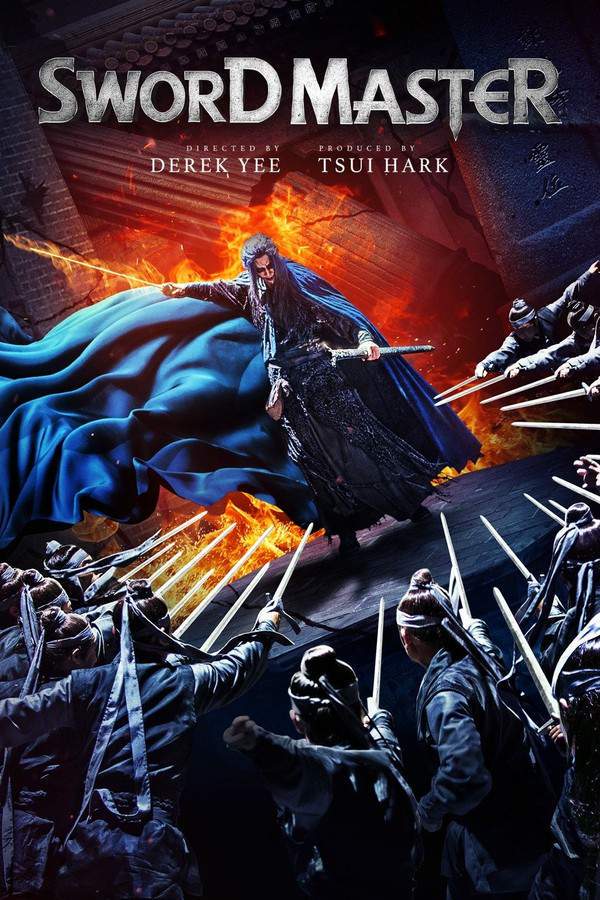
Yen Shisan (Peter Ho), a tattooed swordsman and assassin, has spent his life moving in the shadow of the legendary Third Master, also known as Shao-Feng. When Mu-Yung Chiu-Ti (Jiang Yiyan) claims to be Shao-Feng’s abandoned bride and asks him to kill the master, Yen Shisan refuses the contract, yet his curiosity pulls him toward the only opponent believed to have a chance against Shao-Feng. He arrives at Supreme Sword Manor only to be told by Cult Leader Hsieh that Shao-Feng died 36 days earlier. With his rival gone, Yen Shisan faces a new burden: a slowly fatal sickness and a mysterious pill that can heal every wound except his own. In response, he abandons the life of a hunter and takes up the grim duty of a gravedigger, trying to live decently in the dwindling time he has left while watching the wulin grow ever more dangerous.
A wild card enters the village in the form of a drunken, nameless rascal who drifts into a brothel and, penniless, is pressed into service by the owners. Known only as Ah-Chi, he earns the nickname because he refuses to reveal a name. When he stands up for Hsiao Li, one of the lowest-status prostitutes, he finds himself drawn into an unlikely bond with her. After resisting a promotion to a higher rung in the brothel’s hierarchy, Ah-Chi is redirected by fate toward the village’s poorer, more honest nightsoil workers, where life is rough but real. Hsiao Li, meanwhile, escapes the abuse she endures at the brothel by fleeing with her earnings back to the villagers who welcomed Ah-Chi, creating a fragile sense of kinship amid hardship.
The Big Boss learns of Ah-Chi and Hsiao Li, and he dispatches enforcers to reclaim what he believes is his property. Yen Shisan, carrying a gravestone as a peculiar talisman and weapon, defeats the assault and returns to the Big Boss’ frontier with a message: a duel with Shao-Feng awaits. The villagers, witnessing Yen Shisan’s power, beg him to teach them kung fu and to help defend their home against the looming threat of the Big Boss’s regime. Driven by a shared sense of justice, he defeats the Big Boss and most of his men, and, in a rare moment of generosity, shares his hard-won knowledge with Ah-Chi, teaching him a distinctive set of moves known as his “13 Strikes.”
Meanwhile, Chiu-Ti and her retinue locate Ah-Chi in the village and unmask him as Shao-Feng himself, coercing him into a marriage he would rather avoid. She presses him to settle into a life of quiet domesticity, promising that this time she will share in the simple life he yearns for. He explains the two times he left her before: first, because the cycle of slaughter and vengeance sickened him, and second, after he had ridden away on the eve of a marriage to someone she did not love. This time, she vows to pursue the quiet life with him, but her resolve fractures when she discovers that “the simple life” requires more humility and restraint than she is prepared to tolerate. She resolves to exact revenge instead, leaving her husband alone and pursuing her own cruel agenda.
As the truth about Ah-Chi’s identity sinks in, Yen Shisan realizes that this Shao-Feng is his rival and swears to meet him in combat, even though he now understands that his own techniques may not be enough to prevail against his former mentor. Shao-Feng returns to the village to rest, and Hsiao Li makes another overture toward him, attempting to seduce him not for the first time. Before their moment can come to fruition, Chiu-Ti arrives and launches an attack. Yen Shisan acts quickly, spirit-walking Shao-Feng away to preserve his life, but this act has devastating consequences for the village: it is burned, and almost all its inhabitants are slaughtered. Shao-Feng arrives with Yen Shisan at the smoldering ruins and can only save Hsiao Li, who remains barely alive and is later restored to health by Yen Shisan’s miraculous pill.
In the wake of the devastation, the two swordsmen discuss the looming assault on the Supreme Sword Manor, and Shao-Feng shows reluctance to take up arms. Yen Shisan convinces him that with his extraordinary skill and the two styles they possess, they can repel an invasion without resorting to killing. The manor’s defenses crumble under the coordinated onslaught of Chiu-Ti’s warriors and Divine Might’s masked fighters. Yen Shisan arrives at a crucial moment to prevent an act of honor suicide and Shao-Feng manages to defeat the invaders with ease. In the chaos, the Divine Might operatives are revealed to be nothing more than branded outcasts from Supreme Sword Manor, and Chiu-Ti, in a final act of revenge, fatally wounds her own chief servant before Shao-Feng delivers a killing blow to her back, ending the attempted alliance and sealing her fate in his arms as she dies, her last gesture a fateful marriage that never came to be.
With the attackers repelled, Shao-Feng and Yen Shisan face each other in a climactic duel born of rivalry, mutual respect, and the weight of their shared history. The duel ends with Yen Shisan disarmed and killed, choosing to die with honor beside the weapon he respected. In a gesture that honors their bond, Shao-Feng places Yen Shisan’s sword at his grave, signaling the end of one era and the beginning of another. The wandering swordsman’s path beckons, and he, now dressed in the black and white robes of a nomad, departs with Hsiao Li as his companion. Their future is uncertain, but their vow is clear: they will go on to “right wrongs and fight for justice.” When Hsiao Li asks if they will kill, Shao-Feng answers with quiet resolve, “I will save them.” The final image cuts to vines parting in a tranquil forest, revealing the serene face of Goddess Kuan Yin, the Bodhisattva of Compassion, a haunting emblem of mercy that frames their next journey in the wulin.
This retelling preserves the core beats and emotional threads of the original narrative while expanding the connective tissue between key character choices, betrayals, and the shifting loyalties within the martial world. The story remains a meditation on rivalry, honor, and the price of choosing a path of justice over the easy road of vengeance.