







Plot Explained Spoilers guaranteed!
Plot Explained

Browse by genre

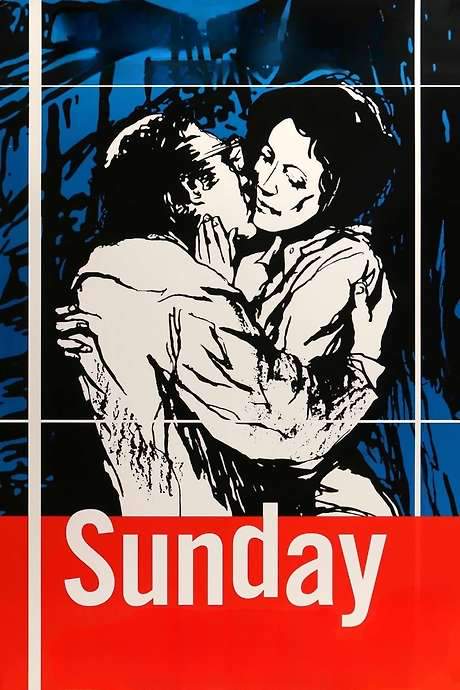
Sunday Bloody Sunday (1971) movie poster

Timeline

Sunday Bloody Sunday (1971) Timeline Explained – Every Event in Order

Release, runtime and language
1971 · 110 mins · English
JustWatch #5,020 67
Directed by
John Schlesinger
Starring
Peter Finch, Jon Finch, Peggy Ashcroft, Martin Lawrence, June Brown, Richard Loncraine

Recently divorced career woman Alex Greville begins a romance with mod artist Bob Elkin, fully aware that Bob is also involved with middle‑aged doctor Daniel Hirsh. For both Alex and Daniel, Bob represents an escape from their repressive pasts, and despite the rivalry, neither is willing to give up youthful energy he brings to their lives.

On this page (6)
  1. 1 Where to watch
  2. 2 Events in order (12)
  3. 3 Timeline questions answered
  4. 4 Movie threads
  5. 5 Movies like Sunday Bloody Sunday
  6. 6 Every angle

Where to watch

Where to Watch Sunday Bloody Sunday (1971)

Where can you watch Sunday Bloody Sunday? Stream, rent or buy it in the US, including on Amazon Prime Video, fuboTV and MGM Plus: current JustWatch availability with up-to-date prices.

Streaming availability powered by JustWatch

12 events in order · contains spoilers

Sunday Bloody Sunday Timeline: Events in Chronological Order

Every key event of Sunday Bloody Sunday (1971) in order, scene by scene, with when and where it takes place. Use it to untangle flashbacks, time jumps and parallel storylines, to refresh your memory before the sequel or to find the exact scene you are thinking of.

  1. Open love triangle established

    In London, Daniel, Alex, and Bob maintain an open love triangle, aware of each other's involvement. They tolerate the arrangement largely to avoid losing Bob, who moves freely between them. The dynamic sets a tension-filled tone for the narrative as affection mixes with fear of change.

    Where
    London
  2. Sunday dinners with the Hodsons

    Daniel and Alex are close friends with the Hodsons, a bohemian middle-class family. They alternate Sunday dinners and the Hodsons know about the relationships but don’t discuss them, while the Hodson children snicker. The dinners ground the characters in a social circle that both supports and unsettles them.

    Where
    Hodsons' home, leafy London suburb
  3. Alex and Daniel sleep together; Bob arrives

    Alex and Daniel share a private night at Alex's flat, testing the limits of their arrangement. Their time together exposes deeper tensions beneath the casual surface. Bob's arrival forces them to pretend they are merely having a casual drink.

    Where
    Alex's flat, London
  4. Bob proclaims openness

    Bob arrives and maintains an easygoing attitude toward the others, telling Alex that he has no problem with her sleeping with other men. He asserts that the trio is 'free' to pursue their desires, which unsettles Daniel and Alex in equal measure.

    Where
    Alex's flat
  5. Hodsons' dog accident

    The Hodsons' family dog is run over by a truck, an alarming incident that also puts Lucy, the eldest daughter, at risk of harm. The event shocks the suburban circle and underscores how fragile daily life can be. It adds a layer of crisis to the comfortably bohemian setting.

    Where
    Hodsons' street, leafy London suburb
  6. Daniel's struggle with an old flame and theft

    Daniel deals with a former lover who is a heroin addict, attempting to help by filling a prescription, but cannot prove he is a doctor at the pharmacy. The episode exposes the fragility of his professional life, and soon afterward his medical bag is stolen from his car.

    Where
    Pharmacy and car, London
  7. Alex's inner life deepens

    Behind the casual veneer, Alex confronts a growing disillusion with her professional life, a failed marriage, and an uneasy sense of childhood. These reflections complicate her involvement with Bob and the open relationship.

    Where
    London
  8. Daniel's escape from Jewish upbringing

    Daniel interprets the open arrangement as an escape from the repressed nature of his Jewish upbringing, seeking freedom but aware of its costs. His longing for happiness collides with the instability of the situation.

    Where
    Daniel's perspective; London
  9. Bob decides to move to New York

    Bob receives an offer to open his own art gallery in New York and makes the decision to leave London for the United States. The move marks a turning point in the trio's dynamic and the sense that permanency is out of reach.

    Where
    London; move to New York
  10. Confrontation and realization of impermanence

    Bob's impending departure leads to a face-to-face confrontation between Daniel and Alex, where they acknowledge the lack of lasting permanence in their situation. They agree that it is time to move on, each seeking their own path.

    Where
    Across their shared social circle; London
  11. Bob leaves for the United States

    Bob finally leaves for New York, closing the chapter on the triangle for the time being. Daniel and Alex reflect on the experience and its emotional toll, even as their friendship persists within the broader social circle.

    Where
    London
  12. Final direct address to the audience

    Daniel delivers an unconventional speech to the audience, sharing his thoughts on his relationship with Bob and the concerns of his friends. He admits he is happy, apart from missing him, and ends with the cough-related punchline: 'I only came about my cough.' The moment blurs the line between film and confession.

    When
    End
    Where
    Direct address to camera

Last updated: October 09, 2025 at 12:40

Was this helpful?

Timeline questions answered

Sunday Bloody Sunday Timeline Explained: Your Questions Answered

When does it happen, and why in that order? The questions people ask about the chronology of Sunday Bloody Sunday (1971): time jumps, flashbacks, cause and effect between scenes and the correct order of events, each answered with spoilers.

Q1

Why does Daniel tolerate being in an open relationship with Bob?

Daniel tolerates the arrangement because losing Bob feels worse than the emotional complexity it creates. As a middle-aged doctor who has never fully lived according to his own desires, Daniel sees Bob as an escape from the constraints of his Jewish upbringing and repressive past. The film portrays his tolerance as a conscious choice between enduring painful freedom and experiencing a emptiness from complete loss.

Foreshadowing: Earlier scenes establish Daniel's deep attachment to Bob through his willingness to maintain the unconventional arrangement despite visible discomfort.

  • daniel
  • bob
  • love triangle
  • acceptance
  • emotional compromise
Q2

Why does Alex stay in the relationship knowing Bob sees Daniel too?

Alex stays because Bob represents a youthful energy and freedom she lost through her failed marriage and restrictive childhood. Rather than return to a conventional life that felt stifling, she chooses the complexity of the open arrangement. The film shows her tolerating the pain because the alternative, being without Bob entirely, feels worse than sharing him.

Foreshadowing: Alex's background of a failed marriage and restrictive childhood is established early, explaining her willingness to accept unconventional terms.

  • alex
  • bob
  • love triangle
  • freedom
  • failed marriage
Q3

What does Bob mean when he says they are 'free'?

When Bob tells Alex they are 'free,' he means the trio has agreed to pursue their desires without conventional possessiveness or jealousy. He articulates a liberal view that allows him to sleep with both Alex and Daniel without guilt. However, his definition of freedom is somewhat self-serving, it lets him maintain independence while both partners accept the arrangement.

Foreshadowing: Bob's arrival at Alex's flat and his easygoing attitude about her sleeping with others establishes his philosophy early in the film.

  • bob
  • freedom
  • open relationship
  • philosophy
Q4

Why does Bob decide to move to New York?

Bob decides to leave London after receiving an offer to open his own art gallery in New York. This represents his commitment to independence and artistic growth, values he has consistently prioritized throughout the film. His departure marks a turning point that forces Daniel and Alex to confront the impermanence of their arrangement.

Foreshadowing: Bob's character is established as a restless artist who values independence, making the move consistent with his values.

  • bob
  • new york
  • art gallery
  • departure
  • independence
Q5

What does Daniel's final monologue about happiness mean?

In the closing monologue, Daniel tells the audience he is happy but admits he misses Bob, the absence coexists with his happiness. This reframes the entire film as a meditation on happiness that includes loss. His final line about coming for his cough adds dark humor, suggesting happiness is mundane and clinical, not a grand emotional state.

Foreshadowing: The entire film builds toward this acceptance, with Daniel gradually acknowledging the impermanence of his connections.

  • daniel
  • ending
  • happiness
  • monologue
  • acceptance
Q6

Why is the Hodsons' dog being hit by a truck important?

The dog's death serves as a jarring real-world tragedy that punctures the illusion of safety in the bohemian suburban setting. It underscores the film's themes of fragility and unexpected loss, even in a comfortable world, tragedy can intrude. The incident also rattles the family and reflects the underlying fragility of all relationships in the film.

Foreshadowing: The dog appears during Sunday dinners, symbolizing the comfortable domestic life that will be disrupted.

  • hodson family
  • dog
  • tragedy
  • fragility
  • suburb
Q7

Why can't Daniel fill the heroin prescription at the pharmacy?

Daniel cannot fill the prescription because he cannot prove he is a doctor at the pharmacy. This exposes the fragility of his professional identity and his inability to help an old lover who has become a heroin addict. Shortly after, his medical bag is stolen from his car, further emphasizing his loss of control and professional authority.

Foreshadowing: Daniel's professional life is introduced earlier, and his failed attempt to help shows the limits of his expertise.

  • daniel
  • heroin
  • prescription
  • pharmacy
  • medical bag
Q8

What does Alex's background reveal about her character?

Alex grew up in a stifling environment that contributed to her failed marriage. Her professional life as a counselor adds another layer, she helps others navigate their problems while struggling with her own emotional conflicts. This background explains her willingness to embrace an unconventional relationship as an escape from her restrictive past.

Foreshadowing: Alex's work with a depressed client facing age discrimination mirrors her own concerns about aging and relevance.

  • alex
  • childhood
  • failed marriage
  • professional life
  • escape
Q9

Why is Daniel's Jewish background relevant to his choices?

Daniel interprets his involvement in the open relationship as an escape from the repressed nature of his Jewish upbringing. Through this unconventional arrangement, he attempts to redefine personal happiness beyond the identities and expectations imposed on him. However, he remains aware of the cultural and emotional costs of this rebellion.

Foreshadowing: Daniel's perspective on his background is introduced as a motivation for seeking freedom from conventional constraints.

  • daniel
  • jewish upbringing
  • freedom
  • identity
  • rebellion
Q10

What happens to Daniel and Alex after Bob leaves?

After Bob leaves for New York, Daniel and Alex confront the reality that their arrangement has run its course. They acknowledge the lack of lasting permanence in their situation and agree to move on, each following their own path. Their friendship persists within the broader social circle, but the romantic chapter closes quietly without rancor.

Foreshadowing: The confrontation between Daniel and Alex about impermanence happens before Bob's departure, preparing for this ending.

  • bob departure
  • daniel
  • alex
  • moving on
  • friendship
Q11

Why does Daniel break the fourth wall at the end?

Daniel's direct address to the camera at the end is an unconventional narrative choice that blurs the line between film and personal confession. It allows him to deliver his meditation on happiness and loneliness directly to the audience, making the film's themes feel more intimate and universal. The technique reinforces the film's exploration of human connection and truth-telling.

Foreshadowing: This choice is consistent with the film's overall tone of emotional honesty and boundary-pushing.

  • fourth wall
  • direct address
  • ending
  • technique
  • confession

Movie threads

More Movies Like Sunday Bloody Sunday, by Mood & Story

Curated lists built around what makes Sunday Bloody Sunday tick: the same mood, the same kind of story or the same emotional payoff. Each list explains why these movies belong together.

Mature Melancholic Love Triangles like Sunday Bloody Sunday

Adult characters navigating complex, bittersweet romantic entanglements without easy answers. Movies like Sunday Bloody Sunday that explore the quiet heartache of adult romantic entanglements. If you enjoyed the film's nuanced look at love triangles and the bittersweet acceptance of imperfection, you'll find similar emotionally resonant stories here.

  • melancholic
  • intimate
  • reflective
  • bittersweet
  • adult drama
  • romantic angst
  • Tone: melancholic, bittersweet
  • Pacing: slow, deliberate
Why these movies?

The story pattern: The narrative typically follows a small group of adults, often in a non-traditional relationship structure like a love triangle or open arrangement. The conflict is internal, driven by characters' insecurities, desires for freedom, and the melancholy understanding that happiness is often fleeting. Endings are rarely neat, favoring acceptance over resolution.

Why they belong together: These films are grouped by their shared focus on adult, character-driven romance with a melancholic tone. They prioritize emotional authenticity over dramatic confrontation, exploring the grey areas of love and commitment with a slow, observant pace.

Character Studies in Urban Loneliness like Sunday Bloody Sunday

Intimate portraits of individuals searching for connection in the quiet sprawl of the city. Discover movies similar to Sunday Bloody Sunday that capture the feeling of urban isolation and the quiet search for meaningful connection. These character-driven dramas use their city settings to enhance the mood of melancholy and the fragile, sometimes transient, nature of relationships.

  • reflective
  • melancholic
  • intimate
  • unsettling
  • nostalgic
  • quiet
  • Tone: reflective, melancholic, intimate
  • Pacing: slow, observational
Why these movies?

The story pattern: Stories unfold through the accumulation of small, everyday moments in an urban environment. The city is not just a location but a character that reflects the protagonists' internal states of alienation or longing. The plot is often minimal, serving as a framework for deep character observation and the exploration of themes like aging, identity, and the fragility of life.

Why they belong together: This thread connects films that share a specific mood: a reflective, sometimes unsettling melancholy born from urban life. They are united by a slow, intimate pace, a medium emotional weight, and a visual and narrative style that makes the personal feel universal within the anonymous cityscape.

If you liked this

Movies Like Sunday Bloody Sunday

Similar movies to Sunday Bloody Sunday: the same genre, themes or kind of story. Each one comes with its own plot summary, timeline and ending explained.

Browse all movie summaries

Every angle

Sunday Bloody Sunday (1971) Explained: Plot, Timeline & Characters

Everything about Sunday Bloody Sunday in one place: what happens in the plot summary, the timeline in chronological order, the characters and meaning and a spoiler-free summary. What's After the Movie adds the cast, box office and post-credit scenes.

Coming soon on iOS and Android

The Plot Explained Movie Summary App

Plot summaries, endings explained and timelines on your phone. Catch up on any movie in minutes, save your favorites and never miss a twist again.

Be the first to know when we launch. Your email stays private, always.

Learn more about the app