Plot Explained Spoilers guaranteed!
Plot Explained

Browse by genre

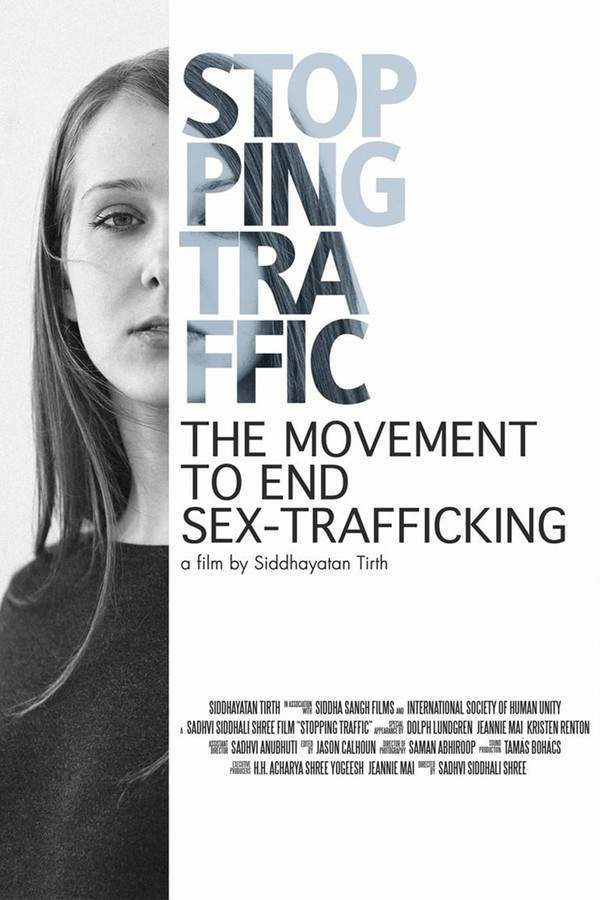
Stopping Traffic (2017) movie poster

Timeline

Stopping Traffic (2017) Timeline Explained – Every Event in Order

Release, runtime and language
2017 · 79 min · English
Loading streaming availability…
Directed by
Sadhvi Siddhali Shree
Starring
Dolph Lundgren, Carolina Douthit, Cecilia Flores-Oebanda, Jeannie Mai, John A. King, Karla Jacinto

Stopping Traffic exposes the disturbing reality of global sex trafficking, focusing on child exploitation within the United States and internationally. Through the experiences of survivors and the work of dedicated advocates, the documentary reveals a complex network connecting child sexual abuse, online pornography, social media, and human trafficking. It highlights the scope of the problem and urges viewers to take action against this pervasive crime.

On this page (6)
  1. 1 Where to watch
  2. 2 Events in order (15)
  3. 3 Timeline questions answered
  4. 4 Movie threads
  5. 5 Movies like Stopping Traffic
  6. 6 Every angle
Loading streaming availability…

15 events in order · contains spoilers

Stopping Traffic Timeline: Events in Chronological Order

Every key event of Stopping Traffic (2017) in order, scene by scene, with when and where it takes place. Use it to untangle flashbacks, time jumps and parallel storylines, to refresh your memory before the sequel or to find the exact scene you are thinking of.

  1. Opening the Investigation

    The documentary opens by framing the international crisis of human sex trafficking, with a particular focus on the trafficking of minors. It approaches the subject from a deeply personal point of view, setting the stage for the powerful stories that follow.

  2. Survivors and Activists Speak Out

    Child sexual abuse and sex trafficking survivors come forward to share their harrowing first-hand experiences. Veteran activists join them, offering perspectives shaped by years spent fighting modern slavery. Their combined voices put a human face on a crisis that is often discussed only in statistics.

  3. The Scale of the Crisis Revealed

    Citing a 2014 report by the International Labour Organisation, the film reveals that 27 million people are being trafficked worldwide every year. This staggering exploitation delivers $150 billion a year to their captors, underscoring the enormous scale of the industry.

    When
    2014
    Where
    Worldwide
  4. Trafficking in the Philippines

    The documentary explores trafficking cases throughout the Philippines, providing raw images and first-hand documentation of the crimes. The segment illustrates how the crisis manifests in this part of Southeast Asia.

    Where
    Philippines
  5. Trafficking in Mexico

    The film documents trafficking operations in Mexico, shedding light on how victims are exploited in the country. First-hand footage captures the harsh reality of the trade in the region.

    Where
    Mexico
  6. Trafficking in Thailand

    The documentary turns its lens on Thailand, another location in the global trafficking network. It presents raw imagery and documentation of the exploitation taking place there.

    Where
    Thailand
  7. Trafficking in Iraq

    Cases from Iraq are examined, showing how trafficking thrives even in regions affected by conflict and instability. The film documents the conditions that leave people vulnerable to exploitation in the country.

    Where
    Iraq
  8. Trafficking in the United States

    The story explores trafficking cases in major U.S. cities, proving the crisis is not confined to distant countries. It demonstrates that human trafficking operates within American communities as well.

    Where
    United States
  9. Exploitation Within Families

    The documentary examines trafficking practices that occur within families, revealing how those closest to children can become their exploiters. This intimate betrayal is presented as one of the most disturbing entry points into trafficking.

  10. Recruitment in the Streets

    The film explains how a child or young adult becomes trafficked, detailing street-level recruitment practices. It shows the methods traffickers use to lure and exploit vulnerable people.

  11. The Chilling Economics of Trafficking

    The documentary breaks down the economics of the trade, revealing that a trafficker acquires a victim at an average cost of just $90. Yet a single victim holds the potential to yield thousands of dollars, explaining the tragic profitability of trafficking.

  12. America's Demand Problem

    The creators establish the United States as the biggest source of sex traffickers' customers. This finding shifts attention from supply to demand, implicating American consumers in sustaining the global trade.

    Where
    United States
  13. The Super Bowl Connection

    The documentary identifies the Super Bowl as the most popular event for scoring a trafficking arrangement. This revelation links one of America's biggest sporting events to a peak in trafficking activity.

    When
    During the Super Bowl
    Where
    United States
  14. Expert Commentary

    Social service agents, doctors, and academics contribute their expertise throughout the film, explaining the systems that enable trafficking. Young activists also add their commentary, representing a new generation joining the fight against modern slavery.

  15. A Call to Action

    The documentary concludes by suggesting nine specific ways the public can help stop trafficking. These include writing to authorities, reporting alleged trafficking, and simply talking to friends about the subject.

Last updated: October 11, 2026 at 16:45

Was this helpful?

Timeline questions answered

Stopping Traffic Timeline Explained: Your Questions Answered

When does it happen, and why in that order? The questions people ask about the chronology of Stopping Traffic (2017): time jumps, flashbacks, cause and effect between scenes and the correct order of events, each answered with spoilers.

Q1

Why does Stopping Traffic identify the United States as the largest source of customers for sex traffickers?

The documentary makes a deliberate claim that the U.S. drives global demand by being the biggest consumer base for purchased commercial sex, including trafficking victims. By establishing American buyers as the primary market, the film reframes trafficking not as a distant foreign problem but as a crime sustained by domestic demand, which is why so much screen time is given to U.S. cases alongside international ones.

  • united states demand
  • sex buyers
  • american consumers
  • trafficking customers
  • demand-side
Q2

What is the connection between the Super Bowl and sex trafficking that the documentary exposes?

Stopping Traffic identifies the Super Bowl as the single most popular event for traffickers to arrange and execute illegal operations. Massive gatherings of adult men, hotel vacancies, and out-of-town visitors create ideal conditions for buyers and sellers to converge, which is why trafficking activity spikes around the game each year and why advocates use the event to push awareness campaigns.

  • super bowl trafficking
  • major sporting events
  • trafficking spikes
  • hotel-based exploitation
Q3

Why does Stopping Traffic emphasize trafficking that happens within families?

The documentary devotes a segment to intra-familial exploitation to show that children are often first victimized by parents or relatives before ever reaching a trafficker. By exposing this betrayal of trust, the film argues that grooming and recruitment frequently begin inside the home, which complicates the common assumption that strangers on the street are the primary threat.

  • family trafficking
  • intra-familial abuse
  • child grooming
  • parental exploitation
Q4

How does the $90 acquisition cost reveal the economics of human trafficking?

The documentary breaks down the trafficking economy by noting that it costs a trafficker an average of only $90 to acquire a victim, while that individual can be exploited for thousands of dollars in profit. This extreme ratio is presented to explain why the trade keeps expanding: the upfront investment is negligible compared to the returns, making recruitment of new victims a near-constant operation.

  • trafficking economics
  • $90 acquisition cost
  • profit margin
  • low-cost recruitment
Q6

How does Stopping Traffic describe how victims are recruited on the streets?

The film documents street-level recruitment as a coordinated practice where traffickers target vulnerable children and young adults in public spaces, luring them with promises of money, shelter, food, or relationships. Once a victim leaves with the trafficker, they are quickly moved to a controlled environment where escape becomes nearly impossible, which is why the documentary stresses early intervention and community awareness.

  • street recruitment
  • trafficking methods
  • luring tactics
  • vulnerable youth
Q7

What role does online pornography and social media play in the trafficking network according to the film?

Stopping Traffic links online pornography and social media directly to child exploitation by showing how platforms are used to groom victims, distribute imagery, and coordinate buyer-seller transactions. The documentary treats the internet as a force multiplier for trafficking rather than a neutral tool, arguing that digital demand and digital access have reshaped how the crime is committed.

  • online pornography
  • social media trafficking
  • digital grooming
  • online exploitation
Q8

How does the documentary connect child sexual abuse to broader trafficking networks?

The film argues that early sexual abuse, whether inside or outside the home, is often the entry point into trafficking rather than a separate crime. Survivors describe how abusers introduce them to commercial exploitation, sell them to networks, or normalize their treatment until they are recruited into street-level or online trade. This connection is used to show why preventing child abuse is also a trafficking-prevention strategy.

  • child sexual abuse
  • abuse-to-trafficking pipeline
  • survivor pathway
Q9

What is the significance of the 27 million trafficked people statistic the documentary cites?

The 27 million figure comes from a 2014 International Labour Organisation report and is used in Stopping Traffic to anchor the documentary in measurable scale rather than anecdote. By opening with this number alongside the $150 billion annual revenue estimate, the film establishes that trafficking is a mass, industrial crime rather than a fringe activity.

  • 27 million trafficked
  • ILO 2014 report
  • trafficking statistics
  • $150 billion industry
Q10

Why are celebrities like Dolph Lundgren and Jeannie Mai featured in Stopping Traffic?

The filmmakers include public figures to push the documentary past activist audiences and into mainstream viewership, since trafficking prevention relies on widespread awareness rather than insider knowledge. Celebrity involvement also gives survivors' stories a wider platform and signals that anti-trafficking work crosses political and cultural lines.

  • dolph lundgren
  • jeannie mai
  • celebrity advocates
  • mainstream awareness
Q11

Why does Stopping Traffic end with nine specific action steps instead of just exposing the problem?

The film explicitly chooses an action-oriented conclusion so the audience leaves with agency rather than despair. Writing to authorities, reporting suspected activity, and educating peers are framed as concrete behaviors that compound into systemic pressure, transforming the documentary's emotional weight into measurable civic impact.

  • call to action
  • nine steps
  • reporting trafficking
  • public engagement
Q12

Who are the main survivors and advocates featured in Stopping Traffic?

The documentary centers survivors such as Karla Jacinto alongside veteran advocates including Cecilia Flores-Oebanda, Rosi Orozco, and John A. King, with additional commentary from social workers, doctors, and academics. Their combined testimony gives the film both emotional grounding and institutional credibility, showing trafficking from the survivor's perspective while explaining the systems designed to fight it.

  • karla jacinto
  • cecilia flores-oebanda
  • rosi orozco
  • john a. king
  • survivor interviews

Movie threads

More Movies Like Stopping Traffic, by Mood & Story

Curated lists built around what makes Stopping Traffic tick: the same mood, the same kind of story or the same emotional payoff. Each list explains why these movies belong together.

Investigative exposé documentaries like Stopping Traffic

Hard-hitting documentaries that pull back the curtain on hidden systemic horrors. If documentaries like Stopping Traffic left you shaken and wanting more, this thread features hard-hitting investigative films that expose hidden crimes, systemic abuses, and global injustices through survivor testimony and expert analysis. Expect steady pacing, dark tones, and emotionally heavy viewing that demands your attention and refuses to look away from uncomfortable truths.

  • disturbing
  • exposé
  • urgent
  • heavy
  • confrontational
  • eye-opening
  • Tone: dark, somber, urgent
  • Pacing: steady, investigative pace
Why these movies?

The story pattern: These documentaries typically open with a clear hook, then layer in survivor stories, expert voices, and on-the-ground footage to construct a comprehensive picture of a hidden crisis. They move between personal narratives and systemic analysis, weaving statistics and investigative reporting with raw human testimony. The arc moves from exposure of the problem to a deeper understanding of its scale, leaving viewers emotionally wrecked but intellectually equipped.

Why they belong together: Films are grouped here because they share a commitment to unflinching truth-telling through structured documentary storytelling. The pacing is steady, the tone is dark, and the emotional weight is heavy. They balance multiple perspectives and locations while maintaining a clear thematic through-line, combining survivor interviews with expert commentary to build a damning portrait of systemic injustice.

From outrage to action movies like Stopping Traffic

Stories that transform despair into empowerment and hand you the tools to fight back. If movies like Stopping Traffic moved you from horror to action, this thread gathers films that channel grief and outrage into empowerment. These stories expose difficult truths but refuse to end in despair, offering survivors, advocates, and viewers a path forward through awareness and activism. Perfect for viewers seeking socially conscious films that still leave room for hope.

  • empowering
  • urgent
  • activist
  • survivor-centered
  • cathartic
  • hopeful
  • Tone: heavy, then empowering
  • Pacing: steady build toward action
Why these movies?

The story pattern: Films in this thread typically begin by establishing a serious injustice or crisis through testimony and evidence. Midway, they pivot from pure documentation toward the people and movements fighting back. The climax often highlights advocacy work, survivor resilience, or systemic reform, and the ending deliberately offers viewers a sense of agency. The emotional trajectory moves from devastation through determination toward cautious but genuine empowerment.

Why they belong together: These films are grouped because they share a distinctive emotional arc that converts disturbing subject matter into a call to engagement. They balance heavy themes with constructive resolution, ending on a mixed note rather than bleak despair. Whether documentary or narrative, they treat the audience as capable of action, and their pacing and structure deliberately build toward mobilization and resource-driven hope.

If you liked this

Movies Like Stopping Traffic

Similar movies to Stopping Traffic: the same genre, themes or kind of story. Each one comes with its own plot summary, timeline and ending explained.

Browse all movie summaries

Every angle

Stopping Traffic (2017) Explained: Plot, Timeline & Characters

Everything about Stopping Traffic in one place: what happens in the plot summary, the timeline in chronological order, the characters and meaning and a spoiler-free summary. What's After the Movie adds the cast, box office and post-credit scenes.

Coming soon on iOS and Android

The Plot Explained Movie Summary App

Plot summaries, endings explained and timelines on your phone. Catch up on any movie in minutes, save your favorites and never miss a twist again.

Be the first to know when we launch. Your email stays private, always.

Learn more about the app