Plot Explained Spoilers guaranteed!
Plot Explained

Browse by genre

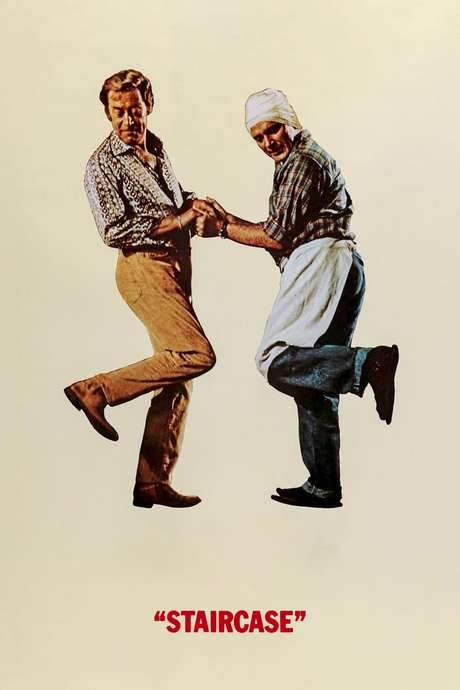
Staircase (1969) movie poster

Timeline

Staircase (1969) Timeline Explained – Every Event in Order

Release, runtime and language
1969 · 96 mins · English
Directed by
Stanley Donen
Starring
Cathleen Nesbitt, Michael Rogers, Richard Burton, Pat Heywood, Rex Harrison, Stephen Lewis

An aging gay couple runs a barber shop in London’s East End. One partner, a part‑time actor, faces a trial for allegedly propositioning a police officer. Over one night they reminisce about their tender yet volatile shared past and contemplate a uncertain future apart, offering a bittersweet portrait of love and loss.

On this page (6)
  1. 1 Events in order (14)
  2. 2 Timeline questions answered
  3. 3 The book behind the movie
  4. 4 Movie threads
  5. 5 Movies like Staircase
  6. 6 Every angle

14 events in order · contains spoilers

Staircase Timeline: Events in Chronological Order

Every key event of Staircase (1969) in order, scene by scene, with when and where it takes place. Use it to untangle flashbacks, time jumps and parallel storylines, to refresh your memory before the sequel or to find the exact scene you are thinking of.

  1. Life at Chez Harry

    Harry Leeds and Charles 'Charlie' Dyer run Chez Harry, a barbershop in London's East End, where Harry's bedridden mother stays upstairs. They have been a couple for twenty years, and their relationship is seasoned with sharp verbal banter. Harry hides his alopecia with a bandage rather than wearing a toupee.

    Where
    Chez Harry, East End, London
  2. Charlie brags about his acting career

    Charlie is an actor who frequently boasts about his one television commercial and the opportunities it brings. He uses his acting status to press his point during arguments and to feel superior. The couple's banter is sharpened by his swagger and Harry's stubborn streak.

    Where
    Chez Harry
  3. Charlie summoned to court for lewd behavior

    One night, Charlie learns he has been summoned to court on a charge of lewd public behavior for dressing in drag. The looming trial unsettles both men and threatens the stability of their life together. They worry about how society will judge their relationship and whether Charlie's reputation will survive.

    When
    Evening
    Where
    Court, London
  4. Motorcycle ride to a park to discuss children

    The next morning, they ride a motorcycle to a park and discuss whether to have children. Their conversation reveals different life goals and concerns about aging and acceptance. The ride shows their reliance on each other even as tensions bubble beneath the surface.

    When
    Morning
    Where
    Park in London
  5. Harry tends to alopecia; reaffirms no toupee

    Later that night, Harry tends to his alopecia and reiterates that he will never wear a toupee. He stands by his sense of self and resists the illusion of appearances. This moment reinforces his stubbornness and their ongoing friction.

    When
    Night
    Where
    Their home
  6. Charlie visits his mother at the nursing home

    The next morning, Charlie visits his mother in a nursing home, but she does not recognize him. The moment highlights Charlie's aging and the fragility of memory. Harry consoles Charlie outside, reminding him that they share a life and history.

    When
    Morning
    Where
    Nursing home, London
  7. Park visit with Charlie's nerves calmed by Harry

    Harry consoles Charlie outside, and they head to another park filled with young adults. Charlie contemplates the harsh punishment he could face if convicted. The park scene underscores the tension between social judgment and their intimate relationship.

    When
    Daytime
    Where
    Park in London
  8. Charlie invites Jack into their apartment

    On another night, Charlie invites a younger man named Jack into their apartment. The invitation triggers insecurities in Harry, who has grown tired of Charlie's boasting about his acting career and his reluctance to meet Cassy. Tensions rise as boundaries blur between longtime couple and a third party.

    When
    Night
    Where
    Their apartment
  9. Argument and Jack leaves; Harry unconscious in the bathroom

    After Jack leaves, Harry goes into the bathroom where Charlie finds him lying unconscious, though Harry recovers. The incident intensifies the strain and raises questions about their safety and futures. They are left to confront what they mean to each other in the wake of the event.

    When
    Night
    Where
    Apartment bathroom
  10. Morning before the trial; contemplation of life without Harry

    The next morning, before Charlie heads for his trial, he contemplates life without Harry and prays for guidance. He wrestles with fear, guilt, and the possibility of losing their shared life. The moment sets up the emotional stakes for the next events.

    When
    Morning
    Where
    Flat
  11. Harry wears a toupee; asks for judgment

    Harry comes downstairs wearing a dark-haired toupee and asks Charlie for his judgment. Charlie tries to be kind but is honest about his feelings, which devastates the moment. Harry then chooses to return to his bandage as a symbol of authenticity.

    When
    Morning
    Where
    Chez Harry, downstairs
  12. Charlie declines to take Harry to the trial

    Harry asks to accompany Charlie to his trial, but Charlie declines, intending to face the proceedings alone. The decision underscores the strain in their relationship and the limits of their shared life. Nevertheless, the couple remains connected as they step toward the door.

    When
    Morning
    Where
    Flat
  13. Charlie leaves for the trial; calls for Harry

    As Charlie steps out to begin the trial, he calls for Harry. The two hurry to the doorway and walk out together, signifying a quiet reconciliation. The scene suggests that despite conflicts, they still face the world as a duo.

    When
    Morning
    Where
    Front door of the flat; street
  14. Closing moment: a fragile but enduring bond

    Although their relationship has endured turbulence, the final moment shows them leaving together, suggesting a fragile but enduring bond. The film closes on their union as they confront the unknown future together. This ending emphasizes that truth, love, and mutual support endure beyond conflict.

    When
    End
    Where
    Outside the flat, London

Last updated: October 07, 2025 at 09:23

Was this helpful?

Timeline questions answered

Staircase Timeline Explained: Your Questions Answered

When does it happen, and why in that order? The questions people ask about the chronology of Staircase (1969): time jumps, flashbacks, cause and effect between scenes and the correct order of events, each answered with spoilers.

Q1

Why is Charlie facing a trial in the movie?

Charlie is summoned to court on a charge of lewd public behavior for dressing in drag. The accusation threatens his reputation and the stability of their life together, casting a shadow over their relationship as they await the trial outcome.

Foreshadowing: Earlier scenes establish Charlie's flamboyant personality and his tendency to perform, setting up the circumstances that lead to his legal trouble.

  • charlie trial
  • lewd behavior
  • drag charges
  • court case
Q2

Why does Harry refuse to wear a toupee?

Harry has alopecia and stubbornly refuses to wear a toupee, instead covering his bald head with a simple bandage. This refusal represents his insistence on authenticity and self-acceptance, he refuses to disguise himself to meet societal expectations of how he should look.

Foreshadowing: The film's opening establishes Harry's bandage as a defining trait, reinforcing his stubborn sense of self throughout their arguments.

  • harry alopecia
  • toupee refusal
  • self-identity
  • authenticity
Q3

Why does Harry wear a toupee when asking for Charlie's judgment?

In a vulnerable moment before Charlie's trial, Harry appears wearing a dark-haired toupee, essentially disguising himself to seek Charlie's approval. When Charlie is honest about his feelings, Harry returns to his bandage, reaffirming his commitment to authenticity over pretense.

Foreshadowing: This scene mirrors the film's ongoing exploration of identity versus appearance, contrasting with Harry's earlier refusal to wear a toupee.

  • harry toupee
  • self-acceptance
  • appearance vs truth
Q4

Why does Charlie invite Jack into their apartment?

Charlie invites a younger man named Jack into their apartment, which triggers Harry's insecurity and resentment. The invitation seems driven by Charlie's need for validation and attention, possibly stemming from his aging concerns and fear of losing relevance, especially as his acting career remains stagnant.

Foreshadowing: Earlier scenes show Charlie constantly boasting about his acting career and seeking external validation, foreshadowing his need for attention from others.

  • charlie jack
  • younger man
  • invitation
  • insecurity
Q5

What happens to Harry in the bathroom after Jack leaves?

After Jack leaves, Harry goes into the bathroom where Charlie finds him unconscious. Though Harry quickly recovers, the incident is clearly traumatic, it suggests an emotional breakdown or possibly a suicide attempt, intensifying the strain between the couple and raising questions about their future together.

Foreshadowing: The argument preceding this moment is particularly heated, with Harry expressing weariness over Charlie's behavior, building to this distressing event.

  • harry unconscious
  • bathroom
  • emotional breakdown
  • suicide attempt
Q6

Why does Charlie refuse to let Harry accompany him to trial?

Charlie declines Harry's offer to come to the trial, insisting he must face the consequences alone. This decision reflects both the strain in their relationship and Charlie's sense of responsibility, though their bond remains fragile, Charlie chooses to confront this judgment independently.

Foreshadowing: The earlier tension between them, including Harry's health scare and their ongoing conflicts, sets up this moment of separation before their reconciliation.

  • charlie trial alone
  • facing consequences
  • independence
Q7

Why do Harry and Charlie discuss having children?

During a motorcycle ride to a park, the couple discusses whether to have children. This conversation reveals their different hopes and concerns about the future, Charlie seems open to the idea while Harry appears more hesitant, reflecting their divergent views on family and aging together.

Foreshadowing: The park scene with young people later reinforces the stakes of this conversation, highlighting their anxieties about acceptance and legacy.

  • children discussion
  • future planning
  • family plans
Q8

Why does Charlie's mother not recognize him at the nursing home?

Charlie visits his mother at a nursing home, but she does not seem to recognize him, highlighting the fragility of memory and Charlie's own fears about aging and being forgotten. Harry consoles him outside, reinforcing their role as each other's primary support system.

Foreshadowing: This scene underscores the film's themes of aging and loss, paralleling the couple's fear of being judged and abandoned by society.

  • charlie mother
  • nursing home
  • memory loss
  • aging
Q9

What does Charlie calling for Harry at the door signify?

As Charlie steps out to face his trial, he calls for Harry. They rush to the doorway and walk out together, symbolizing their reconciliation and mutual choice to face the uncertain future as a united couple rather than divided by fear.

Foreshadowing: This hopeful moment reverses the earlier tension where Charlie insisted on going alone, showing that despite their conflicts, their bond prevails.

  • charlie calls harry
  • reconciliation
  • walking out together
  • united front
Q10

How long have Harry and Charlie been a couple?

Harry and Charlie have shared their lives and business for two decades, running Chez Harry together. Their relationship is seasoned with sharp verbal banter, affection, and the accumulated irritations of long-term intimacy.

Foreshadowing: The entire film is structured as a retrospective of their twenty-year relationship, with memories and arguments revealing the depth of their bond.

  • twenty years
  • couple
  • relationship history
  • chez harry
Q11

Why do Harry and Charlie argue so much?

Their arguments are sharp, witty, and laced with stubborn pride, reflecting the tension of a long-term relationship where intimacy has worn thin patience. Yet these verbal battles also sustain their bond, revealing a love that endures through continuous friction.

Foreshadowing: The film's dialogue establishes their banter as a language of intimacy, with arguments serving as both conflict and connection.

  • arguments
  • banter
  • relationship tension
  • verbal sparring
Q12

What is the situation with Cassy, Charlie's daughter?

Cassy is Charlie's daughter, and there is tension about bringing her into their unconventional family life. Harry has grown weary of Charlie's reluctance to introduce Cassy to their world, creating another source of conflict in their relationship.

Foreshadowing: The uncertainty about Cassy represents their differing views on family commitment and their reluctance to fully bridge their private and public lives.

  • cassy daughter
  • family integration
  • charlie daughter

Movie threads

More Movies Like Staircase, by Mood & Story

Curated lists built around what makes Staircase tick: the same mood, the same kind of story or the same emotional payoff. Each list explains why these movies belong together.

Intimate relationship dramas like Staircase

Stories that explore the tender complexities and weathered affection of enduring partnerships. Discover movies like Staircase that focus on the intricate, bittersweet dynamics of long-term partnerships. If you appreciated the tender yet volatile portrait of an aging gay couple, you'll find similar emotional depth and nuanced character studies in these films about love, commitment, and the weight of shared history.

  • intimate
  • bittersweet
  • contemplative
  • tender
  • melancholic
  • emotional
  • Tone: bittersweet, tender, melancholic
  • Pacing: slow, contemplative
Why these movies?

The story pattern: Narratives in this thread often unfold over a confined timeframe, using dialogue-heavy scenes and reminiscence to explore the layers of a shared life. The central conflict is typically internal to the relationship, driven by external pressures, personal regrets, or the simple, daunting challenge of navigating a future together.

Why they belong together: Movies are grouped here for their shared focus on the bittersweet reality of long-term intimacy, their slow, character-driven pacing, and their ability to find both warmth and strain within a single relationship. They share a mood that is tender, contemplative, and intimately melancholic.

Movies about quiet personal crises like Staircase

Personal turmoil unfolds in intimate settings, where conversation carries the weight of drama. Explore films similar to Staircase where a looming external threat forces a couple to confront their past and future in one tense night. These movies use a confined setting and heavy dialogue to build emotional tension, focusing on the quiet drama of domestic life under pressure.

  • claustrophobic
  • anxious
  • contemplative
  • dialogue-heavy
  • intimate
  • tense
  • Tone: anxious, contemplative, bittersweet
  • Pacing: slow, dialogue-driven
Why these movies?

The story pattern: The narrative pattern involves a confined timeframe (often a single night or day) and a limited setting where characters are forced to confront a pressing external issue. The plot is secondary to the emotional revelations and character dynamics that unfold through extended, charged conversations, often revisiting the past to understand the present crisis.

Why they belong together: This thread connects films through their use of a confined setting and limited timeframe to amplify emotional stakes. They share a slow, deliberate pacing that allows for deep character exploration, a medium intensity derived from high personal stakes, and a mood that is anxious, intimate, and contemplative.

If you liked this

Movies Like Staircase

Similar movies to Staircase: the same genre, themes or kind of story. Each one comes with its own plot summary, timeline and ending explained.

Browse all movie summaries

Every angle

Staircase (1969) Explained: Plot, Timeline & Characters

Everything about Staircase in one place: what happens in the plot summary, the timeline in chronological order, the characters and meaning and a spoiler-free summary. What's After the Movie adds the cast, box office and post-credit scenes.

Coming soon on iOS and Android

The Plot Explained Movie Summary App

Plot summaries, endings explained and timelines on your phone. Catch up on any movie in minutes, save your favorites and never miss a twist again.

Be the first to know when we launch. Your email stays private, always.

Learn more about the app