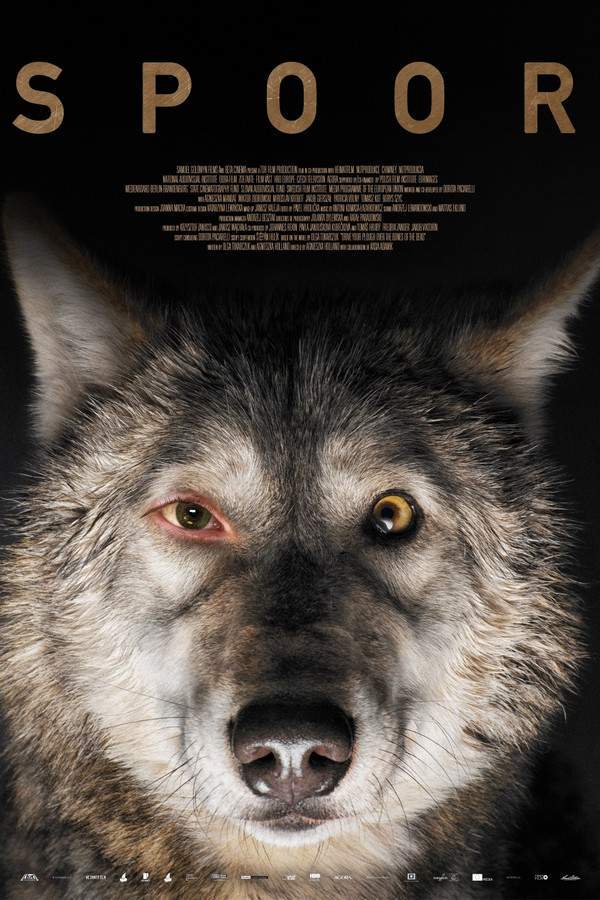
Janina Duszejko, Agnieszka Mandat, an eccentric elderly woman living with her two dogs in a remote mountainous region of the Kłodzko Valley in south-western Poland, becomes entangled in a disturbing sequence of deaths that rattles a tight-knit community. When her dogs vanish after she gives a local woman, known as Dobra Nowina, a ride to the store, Duszejko confronts her neighbor, a notorious poacher whom locals nickname “Big Foot,” whose traps leave animals to die in agony. The case swiftly pulls in a web of power and money: the town’s police chief is pressed by Borys Szyc as a local businessman named Wnetrzak pushes him for a payoff, and Duszejko’s pleas about animal suffering are dismissed or ridiculed by authorities who seem weary of her unconventional beliefs.
From the outset, Duszejko finds herself dismissed by the local authorities when she reports missing dogs, but she does not stay silent. She voices complaints to the town priest, only to be chastised for treating animals with human concern. The priest’s reaction reflects deeper tensions between tradition, religion, and the animal world that Duszejko insists are interwoven with the region’s fate. The investigation unfolds with Duszejko becoming a reluctant observer of how money and status shape justice. She watches as Wnetrzak’s influence seeps into the prosecutor’s office, complicating any chance of an unbiased inquiry, while the prosecutor, played by Tomasz Kot, remains skeptical of Duszejko’s unusual theories and insistence on astrological signs and animal tracks as evidence.
In the winter, Duszejko and her tech-savvy ally Dyzio, Jakub Gierszał, uncover the police chief’s body near a site marked by animal prints. The scene deepens Duszejko’s conviction that hunters and weaponized nature are at the heart of the violence. The prosecutor, who is Matoga’s son, questions Duszejko about the tracks she found and her belief that the killings may be tied to a predator’s behavior rather than human malice. Duszejko’s bond with Dyzio grows as they share secrets—their friendship becomes a lifeline against a hostile system. Dobra Nowina, meanwhile, continues to work for Wnetrzak by day in a shop and by night in a brothel that the businessman runs, a fact that complicates Duszejko’s suspicions about who might profit from the chaos. Dyzio helps keep Duszejko’s epilepsy a secret, a detail that matters for his own job security and her safety in a community wary of outsiders.
As summer arrives, Duszejko meets Boros Schneider, a Czech entomologist, Miroslav Krobot, who reveals that Wnetrzak’s body has lain hidden in the forest for months. A tender romance blossoms between Duszejko and Boros, who shares her fascination with pheromones and the way scent can influence insect behavior. Their collaboration adds scientific texture to Duszejko’s unconventional worldview and strengthens her resolve to expose the environmental and social abuses around hunting and animal cruelty. Duszejko’s arguments gain a new dimension when Dobra Nowina is arrested after threats she allegedly made against Wnetrzak, forcing Duszejko to navigate a legal system that seems bent on silencing the marginalized.
That summer culminates in a lurid, chaotic ball where the town’s secrets surface. At the event, the drunken mayor, Wolsky, is seen abusing his wife, and Duszejko steps in to comfort the wife and direct her toward safety. The next day, the police arrest Duszejko for the mayor’s death—the last person seen with him—though her insistence that she only searched for him that night and that her astrological readings explain the sequence of events unsettles the officers. A church service becomes another flashpoint: Duszejko, distressed by a sermon praising hunters, is escorted out. Outside, a magpie’s behavior—carrying a glowing object to the church tower—echoes a theory she once voiced about birds and fire, foreshadowing the escalating tension.
In a series of vivid flashbacks, Duszejko recalls two pivotal acts: she killed the police chief after finding him skiing near her property, leaving animal tracks around the body, and she lured Wnetrzak into the forest under a pretense about money and then killed him, releasing the animals at his fox farm. The younger character Dyzio pieces together these clues and realizes that Duszejko may be responsible for the string of deaths. Yet Duszejko’s inner logic—her astrology and her belief that the victims were hunters killed by animal forces—remains compelling to her and to Boros, who stands by her as the case spirals outward.
As the manhunt tightens, Duszejko, Dyzio, Dobra Nowina, and Dobra Nowina’s brother join forces with Matoga, the prosecutor’s colleague—though the group’s plan hinges on cutting power to the town, which Dyzio achieves using his IT skills. The film closes with a quasi-escape sequence that suggests conspiracy and resistance: Duszejko, now accompanied by two new dogs, Matoga, Dyzio, Dobra Nowina, her younger companion, and Boros, share a quiet, almost domestic lunch in a house that appears to be outside Poland’s borders. The image is both serene and uncanny, a reward for survival that comes at a high price.
Throughout the story, the cast interplay—Duszejko’s stubborn independence clashing with local authority, Wnetrzak’s wielding of wealth and influence, the prosecutor’s guarded rationalism, and Boros’s calm rationality—drives the tension. The film’s atmosphere blends stark winter landscapes with sunlit summer woods, using the shifting seasons to mirror Duszejko’s evolving understanding of justice, community, and the boundaries between humans and animals. It is a meditation on power, guilt, and the costs of speaking truth to a society that often prefers expediency to ethics.
- Janina Duszejko, Agnieszka Mandat
- Wnetrzak, Borys Szyc
- Prokurator Świerszczyński, Tomasz Kot
- Prezes Wolsky, Andrzej Grabowski
- Żona Prezesa, Katarzyna Herman
- Ksiądz Szelest, Marcin Bosak
- Boros Schneider, Miroslav Krobot
- Matoga, Wiktor Zborowski
- Komendant, Andrzej Konopka
- Strażniczka Miejska, Monika Anna Wojtyllo
- Listonosz, Sebastian Pawlak
- Dyzio, Jakub Gierszał
- Duszejko, Agnieszka Mandat
- Dobra Nowina, Patrycja Volny
- Młody Policjant, Adam Bobik
- Śledczy, Maciej Namysło
- Dyrektorka, Katarzyna Skarżanka
- Wielka Stopa, Adam Ruciński
- Wąsaty, Juliusz Krzysztof Warunek
- Sekretarka na komendzie, Aldona Struzik
- Sekretarka w prokuraturze, Katarzyna Bednarz