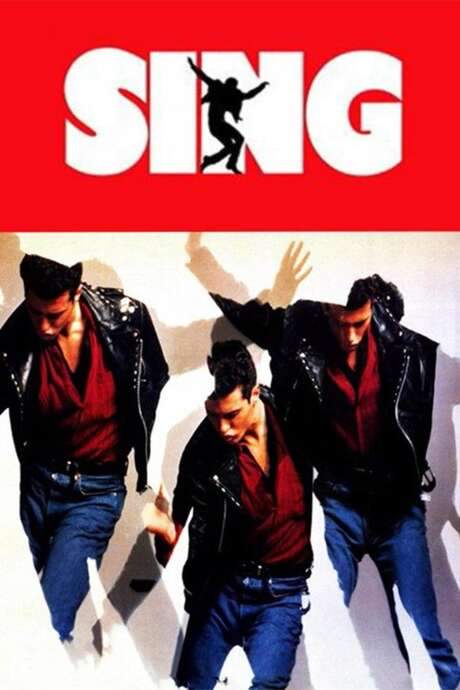
Hannah Gottschalk, Jessica Steen is finishing her senior year in a Brooklyn neighborhood that’s fraying at the edges, and a long-running tradition called SING! remains one of the few bright threads holding the community together. The recently returned Miss Lombardo, Lorraine Bracco, steps in as the SING! leader, determined to keep the show alive while guiding the kids through a season of changing times. The cold pull of winter mirrors the mood on the streets, where hopes ride on a yearly musical showcase that still feels like a heartbeat for everyone who calls the block home.
On the first day back at school, the mood is tense and the students push boundaries, including Dominic, Peter Dobson, a troublemaker who’s not shy about bending rules. He’s caught up in trouble with stolen watches and a defiant posture that earns him the stern attention of teachers. Miss Lombardo studies him with a practitioner’s eye, and a quick, telling detail—his bandaged hand—gives her a clue about who he is and what he could become if steered in the right direction.
As it happens, the competition for SING! leadership becomes a tense two-person race, and Miss Lombardo uses a sharp, strategic hand to forge an alliance between Dominic and Hannah, who’s been the rightful elected leader. The arrangement is delicate: the students are already divided between tradition and the newer, street-smart energy Dominic represents. The two begin to clash and cooperate in equal measure, learning that their differences might fuel something larger than a school project. To bridge the gap, Miss Lombardo has them spend time together outside the classroom, insisting it isn’t a date but a chance to understand one another’s worlds.
The rehearsals unfold with a fervor that blends the old-school discipline of Hannah’s approach with the raw vitality Dominic wants to bring to the stage. The town rallies around the idea of putting on a show that could lift spirits and prove the neighborhood’s value, even as the looming closure of the school threatens to erase the tradition entirely. The energy is contagious, and the kids pour themselves into every number, every cue, and every moment when the curtain might rise on something that feels bigger than themselves.
Then trouble interrupts the rhythm. Dominic is pulled back into a dark corner of his life when he reluctantly accompanies his brother on a robbery at Hannah’s mother’s diner, the family’s last steady source of income. A classmate’s sighting outside the diner triggers a confrontation, and Hannah confronts Dominic with pain and fear in her eyes. He swears to fix what’s been broken and somehow returns the money, a gesture that slowly rekindles her trust in him. This setback shakes his focus on SING!, and he begins to miss rehearsals as the pressure mounts.
Yet when the lead performer is injured and unable to perform, Dominic rises to the challenge. He sheds his rough exterior and delivers a performance that surpasses expectations, stepping into the breach with a confidence that electrifies the cast. The underclassmen and seniors come together to deliver a sold-out show, a testament to the neighborhood’s stubborn resilience and its stubborn belief in each other. In a final, stirring moment, Hannah delivers a speech that honors the community’s hard work, reminding everyone that they have earned their triumph through cooperation, sacrifice, and the refusal to give up on each other.
The show’s triumph isn’t just about applause; it’s a reaffirmation of community spirit in the face of financial strain and institutional doubt. Through songs, dances, and a shared sense of purpose, the students rewrite a narrative about who belongs to the neighborhood and what they can accomplish when they pull together. And as the lights fade on the final performance, the memory lingers: a neighborhood that refused to surrender, a school that nearly closed, and a SING! that proved the power of unity can outshine despair.