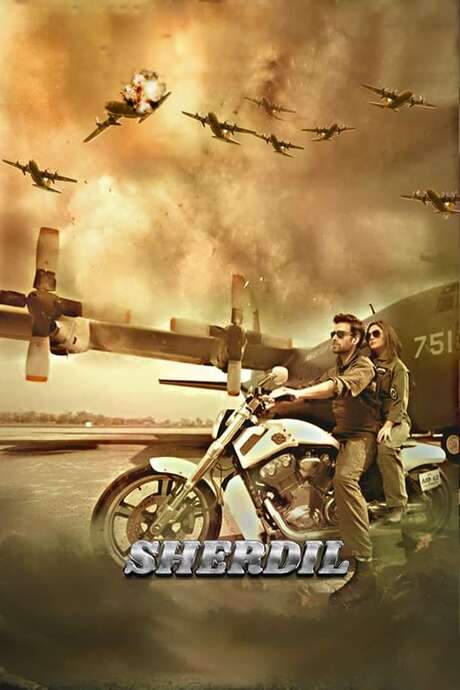
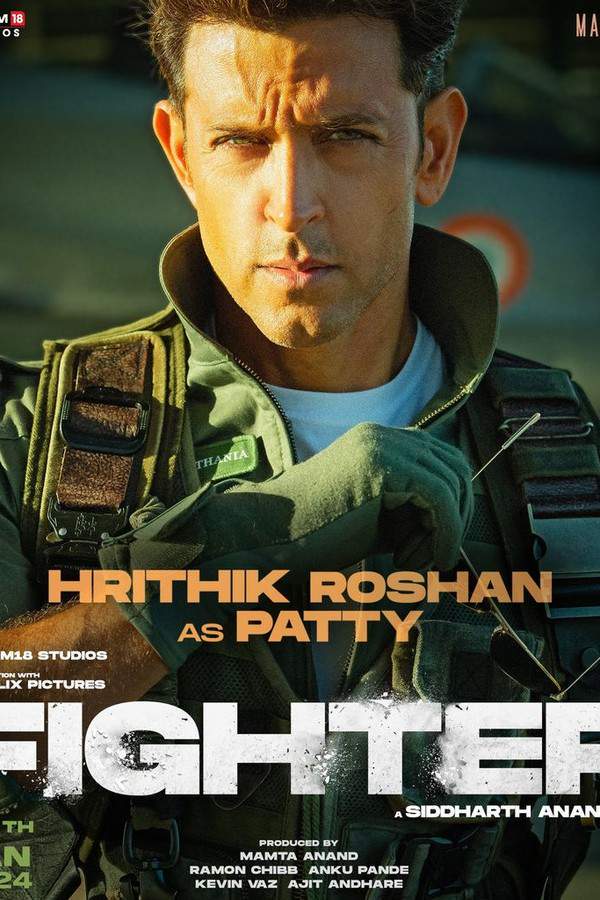
In a two-era thriller that threads past courage with present-day devotion, the film opens in the dramatic year of 1965. The Pakistan Air Force sends two F-86 Sabre fighters on a Combat Air Patrol, racing to intercept three Indian Folland Gnats that intruded into Pakistani airspace. The young pilots push their limits as the enemy closes in, and Squadron Leader Sikandar and his wingman engage fiercely. In the ensuing dogfight, Sikandar shoots down two Gnats, but a stubborn jam cripples his weapon systems just as the battle reaches its peak. In a moment of selfless heroism, Sikandar sacrifices his own life, ramming his plane into the last enemy jet to shield his wingman and save the squadron from catastrophe. The screen lingers on the hushed aftermath: a silent tribute to a legacy that will echo through generations.
Fast forward to the present, where Haris Mustafa stands at the center of a destiny he has barely begun to understand. He is the grandson of Sikandar Mustafa, and his best friend is Fawad, both nurturing a shared dream of becoming fighter pilots. Yet family loyalties pull in opposite directions: Haris’s parents oppose the idea, while his grandmother—Samina Ahmad—the widow of Sikandar, offers steadfast support. When Haris earns a place at the PAF academy, his father disowns him, testing the resilience of a young man determined to honor the family legacy. In the academy halls, Haris and Fawad form a bond with Harijeet, a Pakistani Sikh trainee who adds depth to their circle. But the heart of Haris’s journey beats strongest in his growing love for Sabrina, the relationship that brings warmth amid the storms of training and duty. Sabrina is introduced with tenderness, and the connection he forges with her becomes a counterpoint to the rigors of military life.
Haris’s path soon collides with the squadron of his late grandfather, the No. 16 Squadron “Black Panthers.” The atmosphere is charged with history as two Indian Mirage 2000s push into Pakistani airspace. Haris and his fellow pilot Irfan are scrambled to intercept, the tension of history fueling every decision. Irfan manages to shoot down one Mirage, but the explosion of the debris damages his aircraft, forcing him to return to base, damaged but alive. Haris presses the fight in the second Mirage, a brutal test of nerves and skill, and narrowly escapes. The base’s mood shifts from triumph to tragedy when Haris learns that his grandmother has died—another thread in a family story written in the air and on the ground.
Despite surviving the encounter, Haris faces stern criticism from his superiors. They worry about the margins of error in a life spent flying at the edge, and they ultimately send him to the International Flight School to broaden his horizons and temper his instincts. There, Haris meets a fellow pilot who will become a significant figure in his life: Arun Veerani, the Mirage 2000 fighter pilot Haris had earlier tangled with in the skies. The two men start as enemies, locked in a fierce, instinct-driven rivalry, but the intensity gradually softens into a wary friendship. The hard-edged lessons of flight and war begin to blend with a new understanding of how personal loyalties and professional duties can coexist.
Back home, Haris seeks Sabrina’s hand in marriage. She agrees to marry him, but with a pragmatic condition: he must stay with the PAF and continue to serve his country. The couple’s plans for a shared future are soon shadowed by renewed political tensions. Tensions mount as India threatens surgical strikes along the Pakistan-controlled Kashmir region, and Sabrina supports Haris as he confronts the reality that his dream might demand more than personal happiness—it may require risking everything.
The couple’s resolve is tested once more when Haris and Irfan embark on a CAP that pits them against several Mirage-2000s. The combat becomes a brutal test of courage, precision, and divided loyalties. One Mirage is shot down, another is damaged, and Irfan is suddenly targeted. Haris moves to protect his wingman, racing toward the danger with a fierce sense of duty. In a heartbreaking turn, Arun Veerani—now a rival-turned-adversary—targets Haris, and the two engage in a desperate interchange of skill and speed. Haris hesitates to shoot Arun, honoring a fragile line between friendship and duty, but the moment is interrupted by Irfan’s distress call. With Irfan under fire, Haris is forced into a devastating choice. He chooses to save his comrade, closing in on Irfan’s pursuer, but Arun’s plane closes in as well. In a haunting shot of resolve, Haris follows through on a grim decision and fires, taking down Arun’s Mirage while signaling the end of a personal chapter.
After the dust settles, Arun Veerani is shown surviving the encounter by ejecting, his fate left open as he lands in Pakistani territory. The battlefield’s echoes fade into a quiet, hard-earned relief: Irfan survives, Haris returns to base, and his father, long estranged, stands proudly to receive him. The film closes by circling back to the price of peace—the cost paid by those who fly, those who wait, and those who love, all bound together by a legacy of courage that began with Sikandar’s brave sacrifice decades earlier.
In the end, the story paints a sweeping portrait of duty, sacrifice, and humanity under the pressure of geopolitics. It is a saga of generations—the pilots who push the limits of flight, the families who wait with bated breath, and the friends who must choose between loyalty and the higher call of country. The skies, forever a theater for courage, bear witness to a lineage of heroes who carry forward a vow to protect the lives of others, no matter the personal cost.