Year: 1953
Runtime: 97 mins
Language: Bengali, Bangla
Director: Nirmal Dey
The owner of Annapurna boarding house facing an upcoming trouble for let in a girl in the boys hostel.
Warning: spoilers below!
Haven’t seen Sharey Chuattar yet? This summary contains major spoilers. Bookmark the page, watch the movie, and come back for the full breakdown. If you're ready, scroll on and relive the story!
Read the complete plot breakdown of Sharey Chuattar (1953), including all key story events, major twists, and the ending explained in detail. Discover what really happened—and what it all means.
The Annapurna Boarding House, owned by Rajanibabu, is portrayed as a peaceful, welcoming haven where neighbors look out for one another. The atmosphere is warm and easygoing, with most residents getting along harmoniously, even when a stern, highly learned elder called Shib Babu occasionally acts as a killjoy and rattles a few nerves. Into this close-knit space arrives Romola, a relative of Rajanibabu, who comes to stay after her own family is forced out of their rented home. The residents gather for a meeting, and in a display of communal spirit, they unanimously vote in favor of letting Romola stay, with the notable exception of Shib Babu, whose reservations foreshadow the subtle tensions to come.
The boarding house also shelters Rampriti, the son of a wealthy family. While he is away at home, his return becomes the catalyst for a sequence of encounters that will forever intertwine his fate with Romola’s. On the night of his homecoming, Rampriti calls the boarding and asks the cook to prepare a meal for him. When Romola answers the phone—mistakenly believing there might be a stranger in the house—Rampriti confronts her with skepticism, and a sharp exchange of words ensues. The moment reveals a spark between them, and though their first clash is tense, it quickly gives way to a charged, undeniable attraction.
What begins as a wary exchange blossoms into a secret romance. Rampriti and Romola begin exchanging love letters, their sentiments growing more intimate with each note. The other residents pick up on the budding affair and begin to tease the pair, turning their private happiness into a shared joke within the community. Rajanibabu, acting as a discreet go-between, receives one of the letters to deliver, but a rush to catch a train disrupts the plan, and the letter remains tucked away in his pocket. Back home, his wife—portrayed by Molina Devi—misreads the situation. She suspects her husband of infidelity, fueling a domestic storm that threatens to tear the boarding house apart.
As Romola and Rampriti’s romance deepens, the truth behind the letter’s delay becomes a focal point of contention. Rajanibabu’s wife—the same voice of concern and propriety in the house—begins to confront the possibility of an extramarital affair, and the rumor mill within the boarding house churns with speculation. Yet the underlying reality remains simple and earnest: Romola and Rampriti are preparing to marry, and their commitment ends up drawing the entire community into a web of misunderstanding, humor, and heart.
Seeing the sincerity of the young couple, Rajanibabu takes steps to formalize their union. He arranges for the families of Rampriti and Romola to meet and approve the marriage, hoping to restore harmony within the house. Meanwhile, the household’s elder circle—residents like Kedar, among others—watch with bemusement as the situation spirals from lighthearted gossip to something more consequential. In a bid to mend the rift and coax her husband back from the strain of the situation, Rajanibabu’s wife organizes a puja, a ceremonial ritual meant to rebind the family and bring him back into the fold. The moment is charged with tradition, emotion, and a touch of drama as the family confronts the truth head-on.
The pivotal revelation occurs in a private moment, when the truth about the love letters and the intended marriage finally comes to light. The film folds back the misperceptions and restores the reality: Romola and Rampriti are the couple who will wed, and the entire boarding house—once divided by rumors and jokes—turns toward a shared, hopeful future. The tension that once threatened to fracture the community dissolves as the lovers stand united, and the entire story culminates with the couple seated at the marriage altar, ready to begin their life together.
In the end, the personable ensemble of residents—each with their own quirks and loyalties—anchors a tale about trust, social etiquette, and the way romance can both disrupt and enrich a close-knit community. The journey from miscommunication to mutual understanding is rendered with a gentle humor and a restrained, hopeful tone, leaving Romola and Rampriti to look toward a future that starts precisely where their hearts converged: at the threshold of a new life together, beside each other in front of a softly applauding Annapurna Boarding House. The film’s warmth lies in its everyday details—the small acts of care, the teasing that never truly meant harm, and the quiet resilience of two young lovers who choose to believe in each other.
Last Updated: October 09, 2025 at 12:31
Discover curated groups of movies connected by mood, themes, and story style. Browse collections built around emotion, atmosphere, and narrative focus to easily find films that match what you feel like watching right now.
Romantic comedies where a community's bonds are tested and strengthened by love.If you enjoyed the warm, communal feel of Sharey Chuattar, you'll love these movies. This list features similar romantic comedies set in close-knit groups or boarding houses, where a secret romance leads to humorous misadventures and a heartwarming, happy resolution for all.
Stories typically begin by establishing a harmonious community, which is disrupted by a secret romance or a comedic misunderstanding. The plot unfolds through a series of light, humorous conflicts that test social bonds, culminating in a public resolution—often a confession or wedding—that restores and even deepens the sense of community.
Movies are grouped here for their shared focus on a warm, communal atmosphere, a light and humorous tone, and a central romantic plot that serves to strengthen, rather than break, social ties. The experience is consistently uplifting and gentle.
Stories where a simple mix-up spirals into comedy but ends with joyful harmony.Fans of Sharey Chuattar's charming plot about love letters causing comedic trouble will enjoy these films. We've selected movies that share a straightforward narrative built around a central, humorous misunderstanding, leading to predictable but satisfying happy endings that resolve all confusion.
The narrative pattern is linear and simple: a misunderstanding is established early on, creating a cascade of comedic situations. Characters react based on incorrect assumptions, but the conflict remains light and never turns truly dramatic. The story moves steadily towards a climax where the truth is revealed, resolving all issues harmoniously.
These movies are united by their use of a single, easily-resolved misunderstanding as the primary plot engine. They share a straightforward complexity, low intensity, and a guaranteed happy ending, offering a reliably comforting and humorous viewing experience.
Don't stop at just watching — explore Sharey Chuattar in full detail. From the complete plot summary and scene-by-scene timeline to character breakdowns, thematic analysis, and a deep dive into the ending — every page helps you truly understand what Sharey Chuattar is all about. Plus, discover what's next after the movie.
Track the full timeline of Sharey Chuattar with every major event arranged chronologically. Perfect for decoding non-linear storytelling, flashbacks, or parallel narratives with a clear scene-by-scene breakdown.
Discover the characters, locations, and core themes that shape Sharey Chuattar. Get insights into symbolic elements, setting significance, and deeper narrative meaning — ideal for thematic analysis and movie breakdowns.
Get a quick, spoiler-free overview of Sharey Chuattar that covers the main plot points and key details without revealing any major twists or spoilers. Perfect for those who want to know what to expect before diving in.
Visit What's After the Movie to explore more about Sharey Chuattar: box office results, cast and crew info, production details, post-credit scenes, and external links — all in one place for movie fans and researchers.
Discover movies like Sharey Chuattar that share similar genres, themes, and storytelling elements. Whether you’re drawn to the atmosphere, character arcs, or plot structure, these curated recommendations will help you explore more films you’ll love.
Sharey Chuattar (1953) Scene-by-Scene Movie Timeline
Sharey Chuattar (1953) Movie Characters, Themes & Settings
Sharey Chuattar (1953) Spoiler-Free Summary & Key Flow
Movies Like Sharey Chuattar – Similar Titles You’ll Enjoy
A Mero Hajur 2 (2017) Film Overview & Timeline
Chupan Chupai (2018) Film Overview & Timeline
Shareek (2015) Complete Plot Breakdown
Chuskit (2018) Complete Plot Breakdown
Khushi (2001) Movie Recap & Themes
Shared Apartment (1980) Full Movie Breakdown
Youkai Sharehouse (1000) Film Overview & Timeline
Good Luck Sakhi (2022) Complete Plot Breakdown
Love Hostel (2022) Story Summary & Characters
Shree 420 (1955) Complete Plot Breakdown
Chaowa Pawa (1959) Full Movie Breakdown
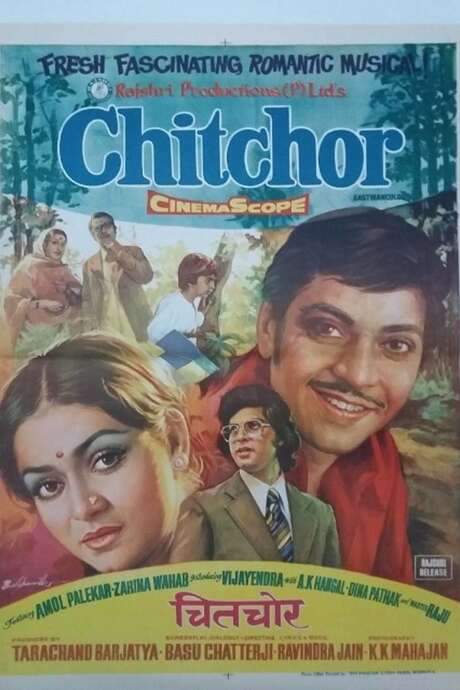
Chitchor (1976) Complete Plot Breakdown
Girl Shy (1924) Film Overview & Timeline
Girl’s Dormitory (1958) Film Overview & Timeline
Hostel Hudugaru Bekagiddare (2023) Full Summary & Key Details