Year: 1999
Runtime: 90 mins
Language: Chinese
Director: Zhang Yuan
Yu Xiaoqin steals her father's money and frames her sister Tao Lan, who unintentionally kills their sister while trying to prove her innocence. After serving 17 years, Tao Lan is escorted by a guard to discover her childhood home demolished. They travel to her aging parents' new address, where the guard witnesses the family's painful reunion.
Warning: spoilers below!
Haven’t seen Seventeen Years yet? This summary contains major spoilers. Bookmark the page, watch the movie, and come back for the full breakdown. If you're ready, scroll on and relive the story!
Trace every key event in Seventeen Years (1999) with our detailed, chronological timeline. Perfect for unpacking nonlinear stories, spotting hidden connections, and understanding how each scene builds toward the film’s climax. Whether you're revisiting or decoding for the first time, this timeline gives you the full picture.
Last updated: February 17, 2026 at 19:57
Find frequently asked questions about the Seventeen Years (1999) timeline, including chronological order, nonlinear jumps, cause-and-effect links, and scene sequence clarifications. This timeline FAQ helps explain when key events happen, how moments connect, and why the story unfolds in that specific order.
The 5 yuan dispute was not really about the money itself, but represented deeper tensions within the blended family. Xiaolan was fiercely independent and resented the family situation, while Xiaoqin was more intellectual and aspires to attend university. The small amount triggered an explosion of accumulated resentment between the sisters, leading Xiaolan to strike Xiaoqin in a moment of anger. The injury proved fatal, and Xiaolan was arrested for the murder.
Earlier scenes establish the sisters' divergent dreams and the tension in their blended family home, hinting at underlying conflicts that would escalate.
Xiaolan was tried and convicted for the murder of Xiaoqin. She served 17 years in prison for the fatal assault. The tragedy devastated both families and marked the beginning of a long period of incarceration for Xiaolan, who spent her youth behind bars.
The film establishes early on that the 5 yuan dispute escalates to a fatal injury, setting the trajectory for Xiaolan's imprisonment.
Chen Jie is a young prison guard who encounters Xiaolan on the day of her New Year holiday. After noticing that Xiaolan has no family coming to pick her up while other inmates are collected, Chen Jie feels compassion for her situation. In an act of kindness, she offers to help Xiaolan return home for the holiday, initiating the journey that forms the film's central narrative.
Chen Jie's phone call to her mother about holiday plans establishes her caring nature before she notices Xiaolan's isolation.
When Xiaolan and Chen Jie arrive at her old apartment, they discover the building has long been demolished. Tianjin has undergone urban development, and the neighborhood where Xiaolan grew up no longer exists. Her parents have moved to a different location in the city, making the reunion far more complicated than Xiaolan had hoped.
The timeline establishes that 17 years have passed, during which the city has been redeveloped.
Xiaolan's parents have moved away from their old apartment and the family has scattered. It appears they did not come to the prison to pick her up, likely due to the complex emotional dynamics after Xiaoqin's death. The family remains estranged, and the parents' whereabouts are initially unknown to Xiaolan, preventing a simple reunion.
The tragic death of Xiaoqin at Xiaolan's hands created a deep rift in the family that persists 17 years later.
In Chinese prisons, certain inmates are granted temporary release during major holidays like the Chinese New Year. This is called a holiday permit or furlough, allowing prisoners to spend time with family. Xiaolan is selected for this rare opportunity, which provides the crucial window for the story's central journey outside prison walls.
The film cuts to seventeen years later, showing Xiaolan on the verge of this New Year holiday release.
The film ends with Xiaolan and Chen Jie continuing their search to locate her parents in Tianjin. The narrative remains open about whether they succeed in finding them or whether the family will reconcile. The focus is on the effort to reach across time and distance rather than guaranteeing a reunion.
The meta notes describe the ending as ambiguous, suggesting the reunion is uncertain.
Even during the New Year holiday, prisoners on permit must be accompanied by a guard. Chen Jie volunteers to escort Xiaolan, which is why she is present during the journey to find Xiaolan's family. This creates the dynamic between the two women as they navigate the city together.
Chen Jie's decision to help Xiaolan includes offering to accompany her during the holiday.
Xiaolan and Xiaoqin became stepsisters when their parents remarried. Their father Liang Song married Le Yeping, bringing Xiaolan and Xiaoqin together into a new blended family in Tianjin. The step-sibling relationship adds complexity to their already strained family dynamic.
The timeline establishes that two divorced singles formed a new family, creating the blended household.
The demolished apartment building symbolizes how time and urban development have erased Xiaolan's past. The physical destruction of her childhood home mirrors her estranged relationship with her family. The constant rebuilding of Tianjin reflects the possibility of reinvention, even as Xiaolan grapples with what has been lost.
The film explicitly connects urban development to the upheaval in Xiaolan's personal life.
Discover curated groups of movies connected by mood, themes, and story style. Browse collections built around emotion, atmosphere, and narrative focus to easily find films that match what you feel like watching right now.
A long-absent family member returns, forcing a confrontation with a painful shared history.If you were moved by the painful reunion in Seventeen Years, explore more movies where characters confront a shared, tragic past. These somber dramas explore themes of guilt, loss, and the fragile hope for forgiveness after years of separation.
These stories typically follow a character returning to their family after a prolonged absence caused by a traumatic event. The narrative structure revolves around a slow unveiling of past truths, leading to emotionally charged confrontations and an ambiguous or bittersweet resolution that rarely offers easy answers.
Movies are grouped here because they share a somber mood, a focus on complex family dynamics, and a central theme of confronting a painful past. They deliver a similarly reflective and melancholic viewing experience driven by character interaction rather than plot.

Characters burdened by a past mistake embark on a quiet, uncertain path toward atonement.For viewers captivated by the theme of guilt and the search for redemption in Seventeen Years, this collection features similar character-driven dramas. These films share a melancholic tone and explore the long, difficult journey of characters trying to make amends.
The narrative follows a protagonist released from a physical or metaphorical prison, grappling with the consequences of a past action. Their journey is introspective and slow-paced, involving encounters that test their desire for forgiveness, often culminating in an ending that is more about acceptance than closure.
These films are connected by their dominant themes of crime, punishment, and the struggle for personal redemption. They create a consistent mood of somber reflection through a slow pace, medium emotional intensity, and a focus on the protagonist's internal moral reckoning.
Don't stop at just watching - explore Seventeen Years in full detail. From the complete plot summary and scene-by-scene timeline to character breakdowns, thematic analysis, and a deep dive into the ending - every page helps you truly understand what Seventeen Years is all about. Plus, discover what's next after the movie.
Read a complete plot summary of Seventeen Years, including all key story points, character arcs, and turning points. This in-depth recap is ideal for understanding the narrative structure or reviewing what happened in the movie.
Discover the characters, locations, and core themes that shape Seventeen Years. Get insights into symbolic elements, setting significance, and deeper narrative meaning - ideal for thematic analysis and movie breakdowns.
Discover movies like Seventeen Years that share similar genres, themes, and storytelling elements. Whether you’re drawn to the atmosphere, character arcs, or plot structure, these curated recommendations will help you explore more films you’ll love.
Seventeen Years (1999) Plot Summary & Movie Recap
Seventeen Years (1999) Scene-by-Scene Movie Timeline
Seventeen Years (1999) Spoiler-Free Summary & Key Flow
Movies Like Seventeen Years – Similar Titles You’ll Enjoy
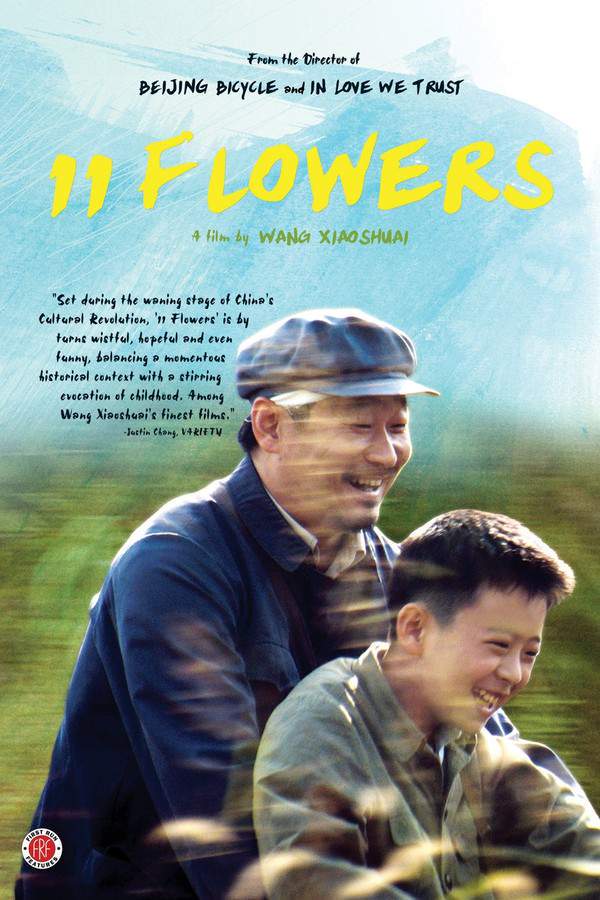
11 Flowers (2013) Story Summary & Characters
17 Girls (2012) Ending Explained & Film Insights
Still 17 (1000) Film Overview & Timeline
Suddenly Seventeen (2016) Full Summary & Key Details
Dam Street (2005) Ending Explained & Film Insights
Legend of Tianyun Mountain (1980) Ending Explained & Film Insights
The Project 17 : Side by Side (1000) Plot Summary & Ending Explained
49 Days (2006) Full Summary & Key Details
Stolen Life (2005) Film Overview & Timeline
Ju Dou (1990) Film Overview & Timeline
Back to Seventeen (1000) Full Summary & Key Details
Stand Up, Sisters! (1951) Complete Plot Breakdown
The Young Stranger (1957) Plot Summary & Ending Explained
Two Stage Sisters (1964) Detailed Story Recap
Eighteen Springs (1997) Story Summary & Characters