Plot Explained Spoilers guaranteed!
Plot Explained

Browse by genre

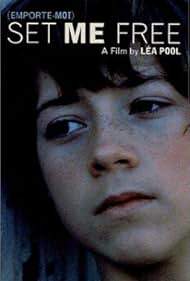
Set Me Free (1999) movie poster

Timeline

Set Me Free (1999) Timeline Explained – Every Event in Order

Release, runtime and language
1999 · 95 mins · French
Loading streaming availability…
Directed by
Léa Pool
Starring
Anna Karina, Pascale Bussières, Karine Vanasse, Neil Kroetsch, Miki Manojlović, Benoît Rousseau

In 1963, Hannah, a teenage girl coping with a troubled family, becomes entranced by Jean‑Luc Godard’s newly released film “Vivre sa vie.” She starts to imitate the movie’s heroine, and through that process she gradually navigates the confusing terrain of her emerging sexuality, confronting the constraints of her environment.

On this page (6)
  1. 1 Where to watch
  2. 2 Events in order (14)
  3. 3 Timeline questions answered
  4. 4 Movie threads
  5. 5 Movies like Set Me Free
  6. 6 Every angle
Loading streaming availability…

14 events in order · contains spoilers

Set Me Free Timeline: Events in Chronological Order

Every key event of Set Me Free (1999) in order, scene by scene, with when and where it takes place. Use it to untangle flashbacks, time jumps and parallel storylines, to refresh your memory before the sequel or to find the exact scene you are thinking of.

  1. Puberty sparks a decision

    In 1963, Hanna begins to navigate puberty while living on a rural Quebec farm with her grandparents and uncle. She experiences her first period and interrupts a family dinner when her father calls, unsettling her grandmother. The moment heightens her discomfort with her growing body and prompts a longing to change her life by returning to Montreal.

    When
    1963
    Where
    Rural Quebec farm
  2. Return to Montreal and precarious home

    Hanna chooses to leave the countryside and move to Montreal to live with her parents in a small, financially strained apartment. The rent is often overdue and sometimes paid with money pawed from household items. This move marks a sharper departure from the stability she formerly knew.

    When
    shortly after decision to return
    Where
    Montreal, family apartment
  3. A father who inspires and intimidates

    Her father is an aspiring poet and Holocaust survivor who exerts a strong, sometimes abusive grip on the family. He can be harsh, yet he also shows tenderness when connecting with Hanna by sharing memories and his poetry. His presence shapes Hanna's sense of identity and eroding trust.

    When
    early period
    Where
    Montreal apartment
  4. A mother under strain

    Hanna's mother is depressive and works long hours at a sewing factory while trying to keep up with her husband's demands. She spends time at home typing his poems, creating a tense, emotionally distant atmosphere. The couple's fragility underscores Hanna's isolation.

    When
    early period
    Where
    Montreal apartment
  5. Cinema awakening: Vivre Sa Vie

    Hanna sneaks into a theater to watch Jean-Luc Godard's Vivre Sa Vie and becomes entranced by Nana's independent stance. She begins to imitate Karina's poses and attitudes, drawing inspiration from the film's philosophy of personal responsibility. This experience amplifies her fascination with image and self-definition.

    When
    early period
    Where
    Montreal cinema
  6. School unveils identity

    On her first day at a new school, Hanna declares that her parents are not married and that she does not identify as Jewish or Catholic. A classmate taunts her with anti-Semitic slurs, but a teacher comes to her defense and offers support. The encounter pushes Hanna toward embracing her own view of life.

    When
    beginning of school year
    Where
    School
  7. A mentor without a guide

    The teacher who resembles Karina admires Hanna's independence but cautions her to develop her own philosophy rather than rely on a film star as a role model. Hanna absorbs this counsel while continuing to shape her personal identity. The dynamic highlights a push toward autonomy.

    When
    early period
    Where
    School
  8. Identity through style and desire

    Hanna continues to adopt Karina-inspired poses and clothing from Godard's film as she navigates her evolving sexuality. The boundary between admiration and imitation blurs as she experiments with how she presents herself to the world.

    When
    throughout adolescence
    Where
    Montreal
  9. Dance, Laura, and first kiss

    Hanna attends a dance with Laura, and the two share a kiss, marking a step into intimate experimentation. Later, she introduces Laura to her brother Paul, and the three of them spend time together while they try to understand their feelings.

    When
    mid-period
    Where
    Montreal
  10. Mother's crisis

    A quarrel with her husband triggers a suicide attempt by Hanna's mother. Hanna visits the hospital and is distressed to find her sedated mother unresponsive to her pleas for connection. The moment deepens Hanna's sense of parental fragility.

    When
    following quarrel
    Where
    Hospital
  11. The bakery betrayal

    While her father sends Hanna for bread, the baker takes her to the back kitchen and gropes her, then gives bread and money. The incident exposes a predatory threat and compounds Hanna's sense of vulnerability.

    When
    during bread errand
    Where
    Bakery back kitchen
  12. Leaving and wandering the city

    After another dispute with her father, Hanna and Paul leave the apartment and wander through the city. She drifts into the red-light district, befriends a stray dog, and begins to imitate a prostitute's persona she admires on screen. A man eventually takes her to a cheap hotel room.

    When
    mid-late period
    Where
    City, red-light district
  13. Escape and dawn rescue

    When the man tries to force himself on her, Hanna flees and collapses on her teacher's doorstep. The next morning, she and the dog are found on the teacher's steps, signifying a moment of vulnerability and rescue.

    When
    dawn after night
    Where
    Teacher's doorstep
  14. Return, reconciliation, and new lens

    Hanna returns to the family apartment and is greeted by her father with a prepared dinner, signaling a fragile reconciliation. She goes back to school and is loaned a small movie camera by her teacher, hinting at a future creative outlet. The ending shows shots from the camera of Hanna's mother as they head to the grandparents' house for the summer.

    When
    season's end
    Where
    Montreal apartment

Last updated: December 04, 2025 at 15:33

Was this helpful?

Timeline questions answered

Set Me Free Timeline Explained: Your Questions Answered

When does it happen, and why in that order? The questions people ask about the chronology of Set Me Free (1999): time jumps, flashbacks, cause and effect between scenes and the correct order of events, each answered with spoilers.

Q1

Why does Hanna decide to leave her grandparents' farm and return to Montreal?

Hanna's decision to return to Montreal is triggered by two simultaneous events: getting her first period during a family dinner, and receiving a phone call from her father. The first period represents the confusing onset of puberty, making her feel alienated in her body and environment. The phone call from her father appears to nudge her toward returning to her parents, though she doesn't fully understand the decision herself. Together, these events intensify her discomfort with her changing body and her longing for a different life, prompting her to leave the stability of the rural farm for the uncertain city.

Foreshadowing: Earlier scenes establish Hanna's discomfort with herbody and the restrictive environment of the farm, making her readiness to leave more understandable.

  • first period
  • puberty
  • Montreal
  • decision
  • parents
  • farm
Q2

Why does Hanna become so obsessed with Godard's film Vivre Sa Vie?

Hanna is drawn to Vivre Sa Vie because the film's protagonist Nana embodies the independence and personal responsibility that Hanna desperately seeks but lacks in her own life. Growing up in a tense household with an overpowering father and a depressed mother, Hanna feels trapped and powerless. When she watches Nana make bold, self-determined choices, she sees a way to define herself. The film's philosophy of taking responsibility for one's own life becomes a template for Hanna's emerging identity. She begins to imitate Nana's poses and attitudes, using cinema as a lens to understand and navigate her own confusing reality.

Foreshadowing: The film establishes Hanna's restricted home life early on, showing why she would seek escape and guidance in cinema.

  • Vivre Sa Vie
  • Godard
  • Nana
  • Karina
  • identity
  • independence
  • cinema
Q3

What happens to Hanna at the bakery in Set Me Free?

While running an errand to buy bread, Hanna is taken to the back kitchen by the baker, Gary Boudreault, who gropes her in a predatory assault. He then gives her bread and money in exchange, an exchange that weaponizes both power and material need. This disturbing scene exposes Hanna's vulnerability in the adult world and the dangers she faces as a young girl navigating the city alone. The incident compounds her sense of violation and contributed to her later drift into the red-light district.

Foreshadowing: Earlier scenes show Hanna's father sending her on errands alone, and her growing isolation from family protection.

  • baker
  • assault
  • bread
  • vulnerability
  • predatory
Q4

Why does Hanna's mother attempt suicide in the film?

Hanna's mother attempts suicide following a quarrel with her husband, Hanna's father. The mother is already severely depressed, working exhausting hours at a sewing factory while also typing her husband's poems and managing his emotional demands. The constant strain, financial desperation, and emotional neglect create an unbearable situation. When she argues with her husband, the pressure reaches a breaking point, leading her to try to end her life. Hanna visits the hospital and finds her sedated and unresponsive, a moment that deepens Hanna's awareness of her family's fragility.

Foreshadowing: The film establishes the mother's depressive state and the tense family dynamic from early scenes.

  • mother
  • suicide
  • depression
  • hospital
  • family fight
Q5

Why does Hanna go to the red-light district after leaving home?

After a violent argument with her father, Hanna and her brother Paul leave the apartment and wander the city. Drawn to the imagery she's seen in Vivre Sa Vie and feeling increasingly adrift, Hanna begins to imitate a prostitute she observes. She befriends a stray dog and adopts the persona of a prostitute, walking the red-light district. A man eventually takes her to a cheap hotel, where she faces danger until she manages to flee. Her foray into the red-light district represents her dangerous emulation of Nana's independence, mistaking provocative self-presentation for true autonomy.

Foreshadowing: Hanna's imitation of Vivre Sa Vie's characters and her isolation from family protection set up this dangerous exploration.

  • red-light district
  • prostitution
  • wandering
  • danger
  • Nana
  • imitation
Q6

What is the significance of the camera Hanna receives at the end of Set Me Free?

Hanna's teacher gives her a small movie camera as a gift, marking a turning point in the film. The camera represents a shift from passive imitation of cinema to active self-expression. Throughout the film, Hanna absorbs images from Vivre Sa Vie without having her own voice or medium. The camera offers her a tool to capture her own reality, her family, her mother, her world, on her own terms. The ending shows footage she films, suggesting she is learning to tell her own story rather than simply mimicking someone else's. It represents hope and a possible path toward healing through artistic creation.

Foreshadowing: The teacher earlier cautions Hanna to develop her own philosophy rather than rely on a film star, and the camera becomes the realization of that advice.

  • camera
  • teacher
  • self-expression
  • filmmaking
  • hope
  • ending
Q7

Why does Hanna kiss Laura at the dance?

Hanna kisses Laura during a school dance, marking a significant moment in Hanna's exploration of her sexuality. The kiss signals Hanna's growing awareness of her attraction to girls and her willingness to experiment with intimate relationships. This moment represents a departure from the confusion and isolation Hanna feels at home, allowing her to form a genuine connection with someone her own age. Later, she introduces Laura to her brother Paul, and the three spend time together navigating their evolving feelings and sense of belonging.

Foreshadowing: Earlier scenes show Hanna questioning identity categories at school, including rejecting fixed religious identities.

  • Laura
  • kiss
  • dance
  • sexuality
  • exploration
  • first love
Q8

Why does Hanna end up on her teacher's doorstep after the night in the city?

After fleeing the man who brought her to a hotel in the red-light district, Hanna runs until she collapses on her teacher's doorstep with the stray dog. The teacher, who has previously supported Hanna's independence while encouraging her to develop her own voice, becomes her rescuer. This moment represents the contrast between the predatory adult world Hanna encountered and the protective guidance the teacher offers. The teacher provides a temporary refuge, and the next morning Hanna returns home to a reconciliatory dinner with her father.

Foreshadowing: The teacher has defended Hanna at school and encouraged her to find her own path rather than simply imitate cinema figures.

  • teacher
  • rescue
  • doorstep
  • danger
  • shelter
  • support
Q9

How does Hanna's father being a Holocaust survivor affect the family?

Hanna's father is a Polish Jewish Holocaust survivor who lost his first wife to the Nazis. This trauma shapes his personality, he is simultaneously overbearing and tender, pushing Hanna toward books and memory while also demanding perfection. He forces Hanna to read The Diary of Anne Frank, connecting his past loss to her present life. His survival guilt and lingering grief create an emotionally intense household, making it difficult for Hanna to form her own identity beneath the weight of his expectations and family history.

Foreshadowing: The film establishes the father's trauma early, showing how his past directly impacts present family dynamics.

  • father
  • Holocaust survivor
  • trauma
  • Jewish
  • memory
  • family history
Q10

Why does Hanna announce that her parents are not married?

On her first day at a new school, Hanna publicly declares that her parents are not married and that she does not identify as Jewish or Catholic. This bold assertion shocks her classmates and represents her rejection of fixed identity categories imposed by society. Coming from a family where her father is Jewish, her mother is not, and they never married, Hanna exists outside conventional religious classifications. Her declaration is both a rejection of societal labels and an attempt to assert control over her own identity in a world where she feels she belongs nowhere.

Foreshadowing: The film establishes Hanna's complex family background early, showing why she rejects conventional religious categorizations.

  • unmarried parents
  • identity
  • religion
  • Jewish
  • Catholic
  • school declaration

Movie threads

More Movies Like Set Me Free, by Mood & Story

Curated lists built around what makes Set Me Free tick: the same mood, the same kind of story or the same emotional payoff. Each list explains why these movies belong together.

Movies about artistic inspiration like Set Me Free

Characters whose lives are transformed by their deep connection to a work of art. Explore movies like Set Me Free, where a character's life is profoundly shaped by a piece of art. These films capture the power of cinema, literature, or music to ignite personal transformation, offering similar stories of artistic awakening and finding a voice through creative influence.

  • artistic
  • introspective
  • yearning
  • searching
  • transformative
  • imitative
  • Tone: searching, melancholic, introspective
  • Pacing: slow, contemplative
Why these movies?

The story pattern: Narratives in this thread typically follow a protagonist, often young or adrift, who discovers a resonant work of art. They begin to imitate or engage with the art, blurring the lines between fiction and reality as they use it to process their own complex emotions, relationships, and search for self.

Why they belong together: Movies are grouped here by their central theme of art as a catalyst for personal change. They share a focus on introspection, the power of media, and characters who use artistic models to construct their identities, resulting in a specific, intellectually curious, and emotionally resonant vibe.


Somber coming-of-age dramas like Set Me Free

Bittersweet stories of teens grappling with dysfunction and self-discovery in muted settings. Find more somber coming-of-age stories like Set Me Free. These films feature teenagers navigating dysfunctional families and sexual awakening with a slow, melancholic pace and a heavy emotional weight, capturing the quiet desperation and bittersweet moments of adolescence.

  • melancholic
  • dysfunctional family
  • sexual awakening
  • isolated
  • introspective
  • adrift
  • Tone: melancholic, bittersweet, heavy
  • Pacing: slow, deliberate
Why these movies?

The story pattern: The narrative pattern follows a young protagonist enduring a strained home life, often marked by economic hardship or parental instability. Their journey is internal and gradual, involving dangerous explorations of sexuality and identity as they search for an escape, culminating in an ambiguous or bittersweet resolution that offers a sliver of hope without solving the underlying problems.

Why they belong together: These movies are united by their specific mood: a slow, heavy, and melancholic portrayal of teenage life. They share a similar emotional palette, pacing, and thematic focus on family dysfunction, sexual awakening, and the painful, quiet process of finding oneself.

If you liked this

Movies Like Set Me Free

Similar movies to Set Me Free: the same genre, themes or kind of story. Each one comes with its own plot summary, timeline and ending explained.

Browse all movie summaries

Every angle

Set Me Free (1999) Explained: Plot, Timeline & Characters

Everything about Set Me Free in one place: what happens in the plot summary, the timeline in chronological order, the characters and meaning and a spoiler-free summary. What's After the Movie adds the cast, box office and post-credit scenes.

Coming soon on iOS and Android

The Plot Explained Movie Summary App

Plot summaries, endings explained and timelines on your phone. Catch up on any movie in minutes, save your favorites and never miss a twist again.

Be the first to know when we launch. Your email stays private, always.

Learn more about the app