Set Me Free

Set Me Free

Year: 1999

Runtime: 95 mins

Language: French

Director: Léa Pool

RomanceDrama

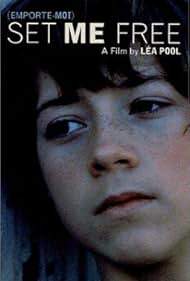
In 1963, Hannah, a teenage girl coping with a troubled family, becomes entranced by Jean‑Luc Godard’s newly released film “Vivre sa vie.” She starts to imitate the movie’s heroine, and through that process she gradually navigates the confusing terrain of her emerging sexuality, confronting the constraints of her environment.

Warning: spoilers below!

Haven’t seen Set Me Free yet? This summary contains major spoilers. Bookmark the page, watch the movie, and come back for the full breakdown. If you're ready, scroll on and relive the story!

Set Me Free (1999) – Full Plot Summary & Ending Explained

Read the complete plot breakdown of Set Me Free (1999), including all key story events, major twists, and the ending explained in detail. Discover what really happened—and what it all means.

In 1963, Hanna Karine Vanasse is a 13-year-old girl living on a farm in rural Quebec, surrounded by her grandparents and an uncle who may have a developmental disability. The moment she gets her first period arrives in the middle of a family dinner, and a phone call from her father disrupts the meal, nudging her toward a decision she doesn’t fully understand: to return to her parents in Montreal. The change unsettles the household, and the atmosphere at home is a mix of affection and pressure, as her grandfather and grandmother struggle to explain growing up while their son’s presence looms large with its own ghosts.

Back in the city, Hanna is welcomed back by her brother Paul Jérôme Leclerc-Couture to a tense, cramped apartment where rent is often overdue and paid in part with pawns of household items. Her father, an aspiring poet and a Polish Jew who survived the Holocaust in France, is at once overbearing and capable of tenderness. He pushes Hanna toward books and memory, urging her to read The Diary of Anne Frank and speaking of his late wife—killed by the Nazis—with a fierce, imperfect love. Her mother, a depressive woman who works long hours in a sewing factory and spends nights typing her husband’s poems, speaks of needing him even as she wrestles with her own sadness. Hanna senses the fragility of this fragile balance, a family that clings to art and to each other while teetering on the edge of despair. Her mother Pascale Bussières carries her own weight in the tale, a quiet, persistent force behind the scenes.

As Hanna tries to navigate the upheaval of puberty, she sneaks into a cinema to watch Jean-Luc Godard’s Vivre Sa Vie, where she becomes entranced by the character Nana—a woman who embodies personal responsibility and independence. The actress who plays Nana, Anna Karina, becomes a lens through which Hanna begins to see herself and her own choices. The scene plants a seed: Hanna starts to fashion her own stance on life, not by mimicry, but by absorbing a fearless, self-determined stance. At her new school, she publicly declares that her parents are not married and that she does not fit neatly into Jewish or Catholic identities, a blunt assertion that shocks classmates and earns her a defense from a perceptive teacher. The teacher, who bears a striking resemblance to Karina in appearance, honors Hanna’s independence while encouraging her to forge her own path rather than rely on a borrowed example.

Hanna’s exploration deepens as she imitates the poses and aesthetics she’s seen in Godard’s film, and she soon finds a kind of kinship with a classmate named Laura. The two attend a dance together, and their kiss signals a widening of Hanna’s understanding of her own sexuality. Laura is introduced to Hanna’s brother Paul, and the three spend time together as they try to parse their feelings and their sense of belonging. Yet beneath these arcs of growing autonomy, Hanna remains increasingly isolated, caught between the pull of cinema and the pull of home.

A rift with her father leads to a darker turn in the family’s story. Hanna’s mother attempts to cope in a moment of crisis; she survives a suicide attempt, and Hanna’s visit to the hospital is a moment of shared fear and longing for connection. In a harsh sequence that exposes Hanna to the world’s uglier edges, her father sends her to a baker, hoping for bread and perhaps a simple errand, but the baker—Gary Boudreault in the role of the Boulanger—takes her to his back kitchen, gropes her, and supplies her with bread and money in a sickening exchange of power.

A few steps beyond the home, the city’s red-light district becomes a maze Hanna wanders through, her sense of self further unsettled as she befriends a lost dog and, listening to the world’s louder voices, adopts the posture of a prostitute. A man steers her toward a cheap hotel, and for a moment she is drawn into a choice she hasn’t yet learned to articulate—yet his pressure makes her flee. The experience skirts the line between danger and escape, and when she collapses on her teacher’s doorstep with the dog in the morning light, the film shifts from danger to fragile hope. The next morning, Hanna returns to the family apartment, where her father offers a quiet, steady welcome with a dinner set before them, signaling a slow possible reconciliation.

Back at school, Hanna is given a small camera by her teacher, a gift that promises a new way to see and to tell her own story. The teacher’s faith that she will learn to use it marks a turning point: a toolshed for self-expression that she can carry to the grandparents’ house for the summer. The film ends with a series of gliding shots from the camera—moments of everyday life, of family, of memory—capturing Hanna’s mother in candid, patient frames as they head toward a summer with the grandparents, a family’s attempt at healing through time, art, and the quiet courage to keep looking forward.

  • Grandparents and other family members provide the emotional horizon, with pivotal roles played by Monique Mercure as Grand-Mère and Jacques Galipeau as Grand-Père, grounding Hanna’s world in a sense of history and continuity.

  • The story threads together themes of puberty, family strain, the lure and danger of cinema, and a young girl’s attempt to forge an independent path in a world that tests her at every turn.

Last Updated: December 04, 2025 at 15:33

Mobile App Preview

Coming soon on iOS and Android

The Plot Explained Mobile App

From blockbusters to hidden gems — dive into movie stories anytime, anywhere. Save your favorites, discover plots faster, and never miss a twist again.

Sign up to be the first to know when we launch. Your email stays private — always.

Explore Movie Threads

Discover curated groups of movies connected by mood, themes, and story style. Browse collections built around emotion, atmosphere, and narrative focus to easily find films that match what you feel like watching right now.

Movies about artistic inspiration like Set Me Free

Characters whose lives are transformed by their deep connection to a work of art.Explore movies like Set Me Free, where a character's life is profoundly shaped by a piece of art. These films capture the power of cinema, literature, or music to ignite personal transformation, offering similar stories of artistic awakening and finding a voice through creative influence.

artisticintrospectiveyearningsearchingtransformativeimitative

Narrative Summary

Narratives in this thread typically follow a protagonist, often young or adrift, who discovers a resonant work of art. They begin to imitate or engage with the art, blurring the lines between fiction and reality as they use it to process their own complex emotions, relationships, and search for self.

Why These Movies?

Movies are grouped here by their central theme of art as a catalyst for personal change. They share a focus on introspection, the power of media, and characters who use artistic models to construct their identities, resulting in a specific, intellectually curious, and emotionally resonant vibe.

Somber coming-of-age dramas like Set Me Free

Bittersweet stories of teens grappling with dysfunction and self-discovery in muted settings.Find more somber coming-of-age stories like Set Me Free. These films feature teenagers navigating dysfunctional families and sexual awakening with a slow, melancholic pace and a heavy emotional weight, capturing the quiet desperation and bittersweet moments of adolescence.

melancholicdysfunctional familysexual awakeningisolatedintrospectiveadriftyearning

Narrative Summary

The narrative pattern follows a young protagonist enduring a strained home life, often marked by economic hardship or parental instability. Their journey is internal and gradual, involving dangerous explorations of sexuality and identity as they search for an escape, culminating in an ambiguous or bittersweet resolution that offers a sliver of hope without solving the underlying problems.

Why These Movies?

These movies are united by their specific mood: a slow, heavy, and melancholic portrayal of teenage life. They share a similar emotional palette, pacing, and thematic focus on family dysfunction, sexual awakening, and the painful, quiet process of finding oneself.

Unlock the Full Story of Set Me Free

Don't stop at just watching — explore Set Me Free in full detail. From the complete plot summary and scene-by-scene timeline to character breakdowns, thematic analysis, and a deep dive into the ending — every page helps you truly understand what Set Me Free is all about. Plus, discover what's next after the movie.

Set Me Free Timeline

Track the full timeline of Set Me Free with every major event arranged chronologically. Perfect for decoding non-linear storytelling, flashbacks, or parallel narratives with a clear scene-by-scene breakdown.

Set Me Free Timeline

Characters, Settings & Themes in Set Me Free

Discover the characters, locations, and core themes that shape Set Me Free. Get insights into symbolic elements, setting significance, and deeper narrative meaning — ideal for thematic analysis and movie breakdowns.

Characters, Settings & Themes in Set Me Free

Set Me Free Spoiler-Free Summary

Get a quick, spoiler-free overview of Set Me Free that covers the main plot points and key details without revealing any major twists or spoilers. Perfect for those who want to know what to expect before diving in.

Set Me Free Spoiler-Free Summary

More About Set Me Free

Visit What's After the Movie to explore more about Set Me Free: box office results, cast and crew info, production details, post-credit scenes, and external links — all in one place for movie fans and researchers.

More About Set Me Free

Similar Movies to Set Me Free

Discover movies like Set Me Free that share similar genres, themes, and storytelling elements. Whether you’re drawn to the atmosphere, character arcs, or plot structure, these curated recommendations will help you explore more films you’ll love.