Plot Explained Spoilers guaranteed!
Plot Explained

Browse by genre

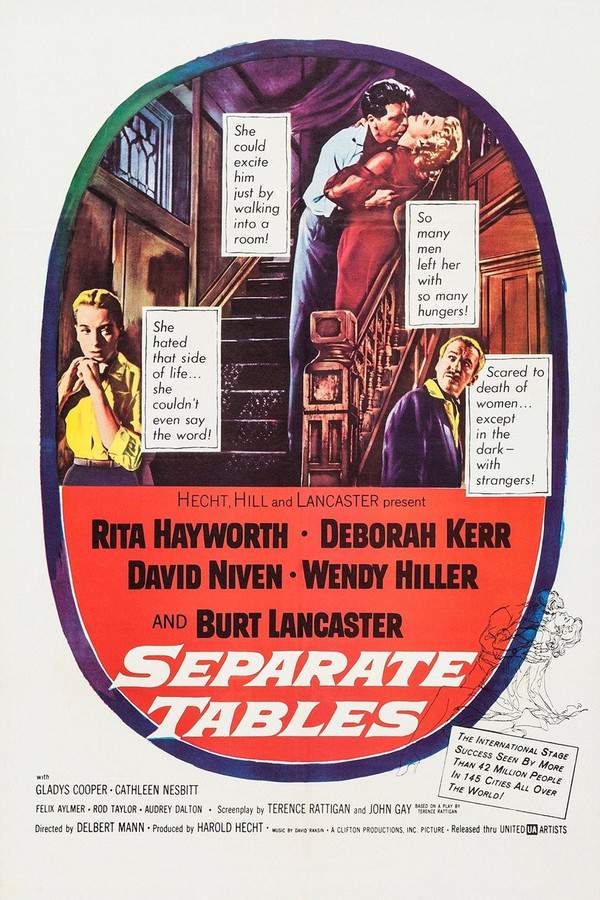
Separate Tables (1958) movie poster

Plot Summary

Separate Tables (1958) Plot Summary Explained

Release, runtime and language
1958 · 100 min · English
Loading streaming availability…
Directed by
Delbert Mann
Starring
Rod Taylor, Burt Lancaster, Deborah Kerr, Felix Aylmer, Audrey Dalton, Cathleen Nesbitt

During the quiet off-season at the Beauregard Hotel, the lives of its guests become intertwined. Ann Shankland, a woman seeking a fresh start, attempts a reconciliation with her former husband John, though his impending marriage to Pat Cooper creates a complex situation. The mysterious Major Pollack and the reserved Mrs. Railton-Bell, along with her daughter Sibyl, harbor their own secrets and anxieties as relationships are tested and hidden truths surface.

On this page (7)
  1. 1 Where to watch
  2. 2 What happens: full plot
  3. 3 Plot questions answered
  4. 4 The book behind the movie
  5. 5 Movie threads
  6. 6 Movies like Separate Tables
  7. 7 Every angle
Loading streaming availability…

Full plot summary · contains spoilers

What Happens in Separate Tables: Full Plot Summary

The whole story of Separate Tables (1958) explained, from the opening scene to the final frame: every key event, every twist and what it all adds up to. Read it as a quick recap before the sequel, to check a scene you missed, or to finally understand what really happened.

The story unfolds at the Hotel Beauregard located in the picturesque Bournemouth on the southern coast of England. The plot centers around Major David Angus Pollock (David Niven), who attempts to keep a damning article about himself, published in the West Hampshire Weekly News, from being seen by the guests. Ironically, his efforts to hide it draw even more attention, especially from the stern and demanding Mrs. Railton-Bell (Gladys Cooper) and the more understanding Lady Matheson (Cathleen Nesbitt). The article reveals that Major Pollock has admitted to sexually harassing multiple young women in a theater, prompting Mrs. Railton-Bell to push for his expulsion from the hotel. She organizes a meeting with the long-term residents to discuss this grave matter before bringing it to Miss Pat Cooper (Wendy Hiller), the hotel manager. Despite the varied opinions among the guests, Mrs. Railton-Bell insists that the Major should leave.

Meanwhile, the film also explores the complicated relationship between Anne (Rita Hayworth) and John (Burt Lancaster), who share a history as former spouses. Their paths cross again, and Anne playfully informs John of her engagement while he, in turn, deceives her about his own. John accuses Anne of manipulating him into marrying her, suggesting that she deliberately chose a man like him from a less privileged background to assert control over him. Regardless of past grievances, the remnants of their attraction linger, leading Anne to invite John to her room for a more private talk.

Upon entering the hotel, Miss Cooper interrupts, indicating that Anne has a phone call. In a private conversation with John, she subtly hints at Anne’s true intentions for being in the hotel. Initially, John defends Anne, attributing his bad luck solely to his own decisions, but he grows suspicious when he learns she is discussing matters with his publisher— the only one who knows about his engagement to Miss Cooper. In a moment of confrontation, John visits Anne in her room where, in a cruel twist, he remarks on her aging and diminished beauty, claiming it prohibits her ability to manipulate others as before. Hurt and desperate, she pleads for him to stay, but he leaves after striking her. Devastated, Anne confesses to Miss Cooper her struggles with emotional turmoil and her dependence on sleeping pills.

The next day, Mrs. Railton-Bell's beleaguered daughter, Sibyl (Deborah Kerr), confronts Major Pollock about his actions, to which he reveals his lifelong fear of intimacy, noting that he relates well to her fearfulness. As he prepares to leave the hotel, Sibyl expresses concern over his future prospects.

When John returns the following morning, Miss Cooper informs him of Anne's fragile emotional state and encourages him to see her before she departs. After John's visit, Miss Cooper tries to persuade Major Pollock to reconsider his decision to leave, but he remains steadfast in his choice.

The atmosphere becomes tense when Major Pollock joins the other diners and is met with a mixed reception. In a moment of defiance, Sibyl disobeys her mother’s wishes and chooses to stay and finish her breakfast with Major Pollock instead. This marks a pivotal moment for her, as she asserts her independence. As the film draws to a close, the residents enjoy their breakfasts in solitude, while John and Anne find themselves in a tentative reconciliation, uncertain of their ability to find happiness, either together or apart.

Last updated: November 16, 2024 at 18:06

Was this helpful?

Plot questions answered

Separate Tables Plot Explained: Your Questions Answered

The questions people ask most about Separate Tables (1958): what happens in the confusing scenes, why the characters do what they do, the twists, hidden details and what the ending means. Each answer contains spoilers.

Q1

Why does Mrs. Railton-Bell want Major Pollock expelled from the hotel?

Mrs. Railton-Bell learns from the West Hampshire Weekly News that Major Pollock admitted to sexually harassing multiple young women in a theater. As a stern and morally demanding woman, she considers this behavior unacceptable and pushes for his removal from the hotel, organizing a meeting with long-term residents to discuss the matter before bringing it to Miss Cooper.

  • mrs railton-bell
  • major pollock
  • expulsion
  • hotel
  • scandal
Q2

Why does Major Pollock reveal his fear of intimacy to Sibyl?

When Sibyl confronts Pollock about his behavior, he opens up about his lifelong fear of intimacy, explaining why he has consistently struggled with relationships. This confession creates an unexpected connection between them, as Sibyl recognizes her own fearfulness in him, leading her to express concern about his future when he prepares to leave.

  • major pollock
  • sibyl
  • fear
  • intimacy
  • confession
Q3

Why is Anne really at the Hotel Beauregard?

Miss Cooper hints to John that Anne's true intention in coming to the hotel is to reconcile with him, not simply to announce her engagement. Anne uses her supposed engagement as a pretense to see John again, revealing that her visit is driven by lingering feelings and a desire to rekindle their relationship.

  • anne
  • hotel
  • reconciliation
  • intentions
  • miss cooper
Q4

Why does John become suspicious of Anne's motives?

John grows suspicious when he learns that Anne has been discussing matters with his publisher, the same publisher who is the only person aware of John's secret engagement to Miss Cooper. This raises John's doubts about Anne's true intentions, making him question whether her visit is genuinely about announcing her engagement or something more calculated.

  • john
  • anne
  • publisher
  • suspicion
  • engagement
Q5

Why does John criticize Anne's appearance and call her manipulative?

John accuses Anne of deliberately choosing a man from a less privileged background to exert control over him. During their confrontation in her room, he cruelly remarks on her aging and diminished beauty, claiming it prevents her from manipulating others as she once did. His harshness stems from old grievances and feeling manipulated in their previous marriage.

  • john
  • anne
  • aging
  • manipulation
  • cruelty
Q6

Why does Anne confess to Miss Cooper about her emotional struggles?

After John strikes her emotionally with his cruel remarks about her aging and leaves, Anne is devastated. She breaks down and confesses to Miss Cooper about her emotional turmoil and dependence on sleeping pills, revealing the depth of her vulnerability and psychological distress.

  • anne
  • miss cooper
  • sleeping pills
  • emotional
  • confession
Q7

Why does Sibyl defy her mother to have breakfast with Major Pollock?

When Major Pollock joins the breakfast table and faces mixed reactions from other guests, Sibyl chooses to disobey her mother's wishes and stays to finish breakfast with him. This act of defiance marks a pivotal moment for Sibyl, as she asserts her independence from her mother's strict control and follows her own moral judgment rather than familial obligation.

  • sibyl
  • mother
  • defiance
  • breakfast
  • independence
Q8

Does Major Pollock leave the hotel?

Yes, despite Miss Cooper's attempts to persuade him to reconsider his decision, Major Pollock remains steadfast in his choice to leave the hotel. Sibyl expresses concern about his future prospects as he prepares to depart, highlighting the uncertain outcome for him.

  • major pollock
  • leaves
  • hotel
  • miss cooper
  • sibyl
Q9

Do John and Anne get back together at the end?

The film ends with John and Anne finding themselves in a tentative reconciliation, uncertain whether they can find happiness together or apart. Their relationship remains ambiguous, reflecting the bittersweet tone of the film, lingering attraction persists, but past wounds and current circumstances make their future together doubtful.
  • john
  • anne
  • reconciliation
  • ending
  • uncertain
Q10

What does the final breakfast scene represent?

The film concludes with the hotel residents enjoying their breakfasts in solitude, a metaphor for their individual emotional isolation and personal struggles. This ending encapsulates the film's themes of loneliness and regret while also suggesting that small acts of defiance, like Sibyl's, offer glimmers of hope amid the melancholy atmosphere.

  • breakfast
  • ending
  • solitude
  • isolation
  • symbolism
Q11

What does the newspaper article reveal about Major Pollock?

The West Hampshire Weekly News publishes a damning article revealing that Major Pollock admitted to sexually harassing multiple young women in a theater. Ironically, Pollock's attempts to hide the article from the other guests only draw more attention to it, ultimately leading to his social exposure and the hotel's reaction.

  • newspaper
  • article
  • pollock
  • harassment
  • exposure

Movie threads

More Movies Like Separate Tables, by Mood & Story

Curated lists built around what makes Separate Tables tick: the same mood, the same kind of story or the same emotional payoff. Each list explains why these movies belong together.

Claustrophobic character dramas like Separate Tables

Where confined settings intensify personal secrets and social tensions. Discover movies like Separate Tables that use a single, confined location to intensify character drama. These films focus on the psychological tension that erupts when secrets surface in close quarters, creating a mood of anxious observation and social pressure.

  • claustrophobic
  • tense
  • anxious
  • melancholic
  • repressed
  • introspective
  • Tone: melancholic, tense
  • Pacing: slow, deliberate
Why these movies?

The story pattern: Stories in this thread often follow an ensemble of characters whose lives intersect within a confined space. The narrative tension builds from the slow revelation of hidden truths and the shifting dynamics of social judgment, leading to moments of quiet confrontation and personal crisis.

Why they belong together: Movies in this thread are grouped by their shared use of a limited setting to create a palpable sense of tension and observation. They focus on the intimate drama of secrets being exposed under the pressure of a small, judgmental community, resulting in a similar melancholic and anxious mood.

Movies about lonely hearts seeking connection like Separate Tables

Emotionally repressed characters tentatively seek connection against the odds. If you liked the bittersweet emotional journey in Separate Tables, explore these stories of lonely, repressed characters tentatively reaching for human connection. These films balance melancholy with small moments of hope, often ending on a nuanced, emotionally resonant note.

  • lonely
  • melancholic
  • introspective
  • bittersweet
  • repressed
  • anxious
  • Tone: melancholic, bittersweet
  • Pacing: slow, character-driven
Why these movies?

The story pattern: The narrative pattern follows characters burdened by loneliness and emotional baggage as they navigate the precarious possibility of new relationships or reconciliation. The journey involves confronting personal demons and social stigma, leading to an ending that offers a glimmer of hope or connection without fully resolving the underlying sadness.

Why they belong together: These movies share a core focus on the theme of loneliness and the difficult, often incomplete process of finding connection. They are united by a melancholic tone, a medium emotional weight, and a bittersweet conclusion that feels true to the complexities of human relationships.

If you liked this

Movies Like Separate Tables

Similar movies to Separate Tables: the same genre, themes or kind of story. Each one comes with its own plot summary, timeline and ending explained.

Browse all movie summaries

Every angle

Separate Tables (1958) Explained: Plot, Timeline & Characters

Everything about Separate Tables in one place: what happens in the plot summary, the timeline in chronological order, the characters and meaning and a spoiler-free summary. What's After the Movie adds the cast, box office and post-credit scenes.

Coming soon on iOS and Android

The Plot Explained Movie Summary App

Plot summaries, endings explained and timelines on your phone. Catch up on any movie in minutes, save your favorites and never miss a twist again.

Be the first to know when we launch. Your email stays private, always.

Learn more about the app