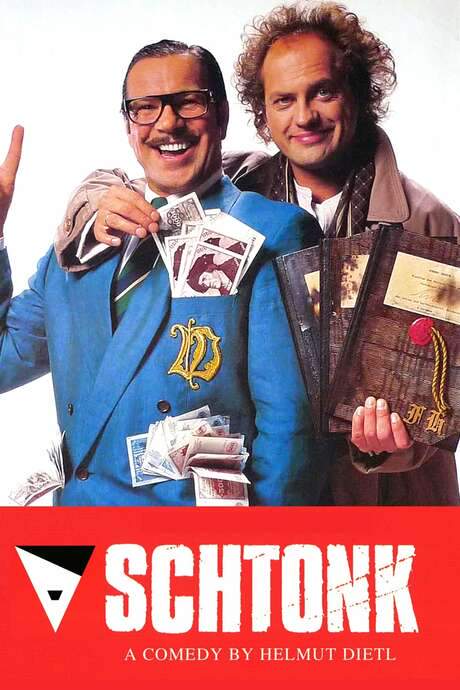
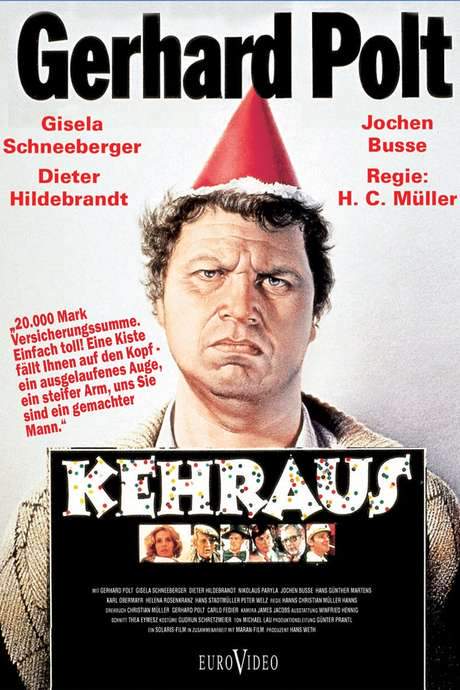
Fritz Knobel, a fictionalized version of the real-life forger Konrad Kujau, makes a living by faking and selling Nazi memorabilia. He hawks a portrait of Eva Braun and one volume of what he claims to be Hitler's diaries—though he actually wrote it himself—and hands them to factory owner Karl Lentz to showcase at a public gathering described as a “birthday party for the Führer.” The guest list includes the sleazy journalist Hermann Willié, whose interest in the latest sensational item fuels the escalating intrigue.
Knobel, ever in need of fresh material, begins to mine his own life for inspiration; after he meets Martha, she becomes his lover, while he remains married to Biggi. With Martha’s involvement, the diary becomes the imagined version of Eva Braun, and rumors about the diaries spark a high-society Nazi craze that makes it perversely fashionable to flaunt old ranks among former officials. Hermann Willié grows more obsessed, even buying Hermann Göring's old yacht Carin II and starting an affair with his fictional grandniece, Freya von Hepp, who is based on Göring’s daughter Edda Göring. The juxtaposition of romance, wealth, and propaganda fuels the public’s appetite for the forged history.
As the forgeries go further, the diaries seem convincing enough to mislead eager journalists, who overlook several oddities—such as a false monogram “FH” instead of “AH” on one volume—choosing instead to interpret the material through their own sensational narratives. Some readers pretend the diaries contain genuine context, even inventing explanations like substituting “Führerhauptquartier” for Adolf Hitler’s name to smooth over discrepancies. Knobel even manipulates a forensic graphoanalysis to his advantage, all while living with the ever-present fear that the truth could surface at any moment.
The pressure mounts and the line between truth and fabrication grows increasingly tangled, echoing the chaos of the era as the story moves toward its conclusion. Knobel’s mounting anxiety and the temptation to identify too closely with the figure he crafts push him toward a breaking point, much as the era itself collapses under the weight of its own myths. In the final turn, Biggi and Martha step in to force him out of the forgery business just in time, while the feverish Nazi-enthusiasts fall—some more dramatically than others—according to how deeply they believed the false history he created.