Plot Explained Spoilers guaranteed!
Plot Explained

Browse by genre

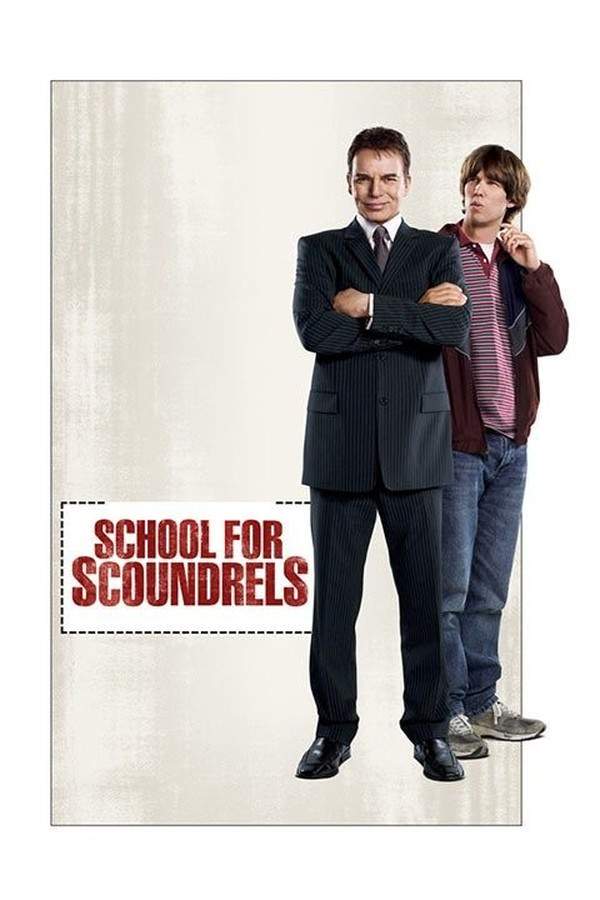
School for Scoundrels (1960) movie poster

Timeline

School for Scoundrels (1960) Timeline Explained – Every Event in Order

Release, runtime and language
1960 · 94 mins · English
Directed by
Robert Hamer
Starring
Irene Handl, John Le Mesurier, Edward Chapman, Ian Carmichael, Dennis Price, Alastair Sim

Henry Palfrey, a downtrodden office worker, is belittled by his self‑important boss, ignored by restaurant waiters, conned by a shady used‑car salesman, and constantly outmaneuvered by the unscrupulous Raymond Delauney, who is pursuing April, the woman Henry loves. Desperate, Henry enrolls in the eccentric College of Lifemanship, a school that teaches bold, unconventional confidence tricks, hoping to outwit his rivals and win April’s heart.

On this page (5)
  1. 1 Events in order (14)
  2. 2 Timeline questions answered
  3. 3 Movie threads
  4. 4 Movies like School for Scoundrels
  5. 5 Every angle

14 events in order · contains spoilers

School for Scoundrels Timeline: Events in Chronological Order

Every key event of School for Scoundrels (1960) in order, scene by scene, with when and where it takes place. Use it to untangle flashbacks, time jumps and parallel storylines, to refresh your memory before the sequel or to find the exact scene you are thinking of.

  1. Palfrey travels to Yeovil to enroll

    Henry Palfrey travels to Yeovil to enroll in the College of Lifemanship. He arrives with a mix of nerves and ambition, hoping to learn how to gain the upper hand in life. The journey marks the start of a program that will challenge his view of power and influence.

    Where
    Yeovil
  2. Potter interrogates Palfrey's motive

    At the College, Principal Mr. S. Potter questions Palfrey about his motives for joining. He suspects Palfrey's interest may be tied to a woman and asks for his backstory before enrollment. Potter lays out the college's philosophy of 'being one up on your opponents' and pressures Palfrey to be honest.

    Where
    College of Lifemanship, Yeovil
  3. Palfrey reveals his sense of failure

    Palfrey confesses that he feels like a loser who cannot control his own firm. He explains how his senior clerk Gloatbridge commands respect and makes all decisions. He notes that meeting April Smith has sparked a longing to change his life.

    Where
    College of Lifemanship, Yeovil
  4. April Smith enters Palfrey's life

    Palfrey meets April Smith, a striking woman, and quickly falls in love. The romance gives him a sense of purpose and a desire to impress. This new love becomes a catalyst for his ambition and the later lessons from the college.

    Where
    London
  5. Delauney enters the scene and seduces April

    On their dinner date, a casual acquaintance Raymond Delauney appears and seduces April. He steals Palfrey's moment and makes a play for her affections. Palfrey witnesses his rival's easy charm and feels both humiliation and resolve.

    Where
    Restaurant (London)
  6. Palfrey is conned into buying a rusty car

    The following day Palfrey tries to buy a car to impress April but is conned by two second-hand dealers. They sell him a dilapidated 1924 car that undermines his self-esteem. The incident crystallizes his sense of being taken advantage of and outclassed.

    Where
    London
  7. Delauney defeats Palfrey at tennis

    To add insult, Delauney challenges Palfrey to a tennis match at their local club and wins easily. Palfrey leaves the court humiliated, more determined to reinvent himself. The defeat underscores his need to master new methods of advantage.

    Where
    Local club
  8. Potter assigns a course of lifemanship ploys

    Potter assigns Palfrey to take a sequence of courses designed to teach ploys for gaining the upper hand. Palfrey proves a capable pupil, absorbing strategies to manipulate situations in his favor. He prepares for a demanding final exam that will test all he has learned.

    Where
    College of Lifemanship, Yeovil
  9. Field test begins; Palfrey cons the car dealers

    Back in London, Palfrey's field test is observed by Potter. He uses the new techniques to induce the car dealers to part with an Austin-Healey and 100 guineas, insisting the car is vintage. The deception serves as a practical demonstration of his growing control over others.

    Where
    London
  10. Palfrey manipulates Gloatbridge at the family firm

    With his new confidence, Palfrey puts Gloatbridge in his place by staging a pretend merger with a larger firm and convincing him that his bookkeeping is sloppy. The ruse provokes fear and yields greater respect from the other employees. He begins to feel the rewards of his new authority.

    Where
    London, family firm
  11. Tennis rematch disrupts Delauney's plans

    Palfrey challenges Delauney to a rematch and employs more ploys to frustrate him, hoping to undermine his hold on April. Delauney loses the match and his influence over April wanes as Palfrey's tactics seem to work. The triumph cements Palfrey's belief in his methods, at least for the moment.

    Where
    Local club
  12. Confrontation at Palfrey's apartment and confession

    After drinks at Palfrey's home, Delauney barges in with Potter and forces Palfrey to reveal the truth behind his manipulations. Potter suggests he might use another ploy, but Palfrey confesses all and explains his genuine love for April. April embraces Palfrey, understanding that his feelings are sincere and not merely a tactic.

    Where
    Palfrey's apartment
  13. Potter breaks the fourth wall

    Potter breaks the fourth wall, addressing the audience directly to apologise for Palfrey's actions. He expresses disapproval of the manipulation and moral compromise shown. The moment functions as a meta-commentary on ethics and performance.

    Where
    Film set
  14. Delauney heads to Yeovil to enroll

    As the end credits roll, Delauney travels to Yeovil intent on enrolling in the College of Lifemanship. The closing shot hints that the cycle will continue with new students pursuing their own versions of being one up on others. The film ends on a note of ongoing competition and ambition.

    Where
    Yeovil

Last updated: October 05, 2025 at 11:34

Was this helpful?

Timeline questions answered

School for Scoundrels Timeline Explained: Your Questions Answered

When does it happen, and why in that order? The questions people ask about the chronology of School for Scoundrels (1960): time jumps, flashbacks, cause and effect between scenes and the correct order of events, each answered with spoilers.

Q1

Why does Henry Palfrey enroll in the College of Lifemanship?

Henry enrolls in the College of Lifemanship after feeling like a complete failure in his personal and professional life. His senior clerk Gloatbridge runs the family firm and commands more respect than Henry, he was humiliated by Raymond Delauney who stole April away during their dinner date, and he was swindled into buying a rusty 1924 car. Desperate to gain confidence and win April's heart, Henry seeks out the eccentric school in Yeovil that promises to teach practical techniques for gaining social advantage.

Foreshadowing: Earlier, Henry admits to Potter that meeting April Smith has sparked a longing to change his life.

  • college of lifemanship
  • henry palfrey
  • yeovil
  • motivation
  • confidence
Q2

What tricks does Henry learn at the College of Lifemanship?

Henry learns a repertoire of confidence tricks and ploys designed to gain the upper hand in various life situations. Potter assigns him a sequence of courses covering different scenarios, from business negotiations to social encounters. These techniques involve psychological manipulation, deceptive storytelling, and strategic maneuvering. The curriculum teaches students to always be 'one up' on their opponents through practiced technique rather than genuine skill.

Foreshadowing: Potter explains the college's core philosophy early on: always being one up on your opponents.

  • tricks
  • college of lifemanship
  • potter
  • techniques
  • manipulation
Q3

How does Henry trick the second-hand car dealers?

For his field test back in London, Henry uses his newly learned techniques to con the same two dealers who sold him the rusty 1924 car. He returns claiming the vehicle is actually a rare vintage Austin-Healey worth far more than he paid. Through confident deception, he manages to make them not only return the car but also pay him 100 guineas. This marks his first successful application of lifemanship and restores his self-confidence.

Foreshadowing: This is the field test that Potter assigned to evaluate Henry's progress.

  • car dealers
  • 1924 car
  • vintage
  • henry palfrey
  • field test
  • con
Q4

Why does Henry manipulate Gloatbridge at his family firm?

Henry uses his new confidence tricks to finally assert authority over Gloatbridge, the senior clerk who has been running the day-to-day business and earning more respect than Henry. He stages a fake merger with a larger firm and convinces Gloatbridge that his bookkeeping is sloppy, making him fear for his job. This ruse immediately earns Henry greater respect from his employees and proves his new-found authority within the firm.

Foreshadowing: Earlier, Henry explains how Gloatbridge commands respect and makes all decisions while he feels powerless.

  • gloatbridge
  • family firm
  • fake merger
  • manipulation
  • authority
Q5

What happens in the tennis rematch between Henry and Delauney?

Henry challenges Delauney to a rematch at the local club, using the various ploys he learned at the college to frustrate and outmaneuver his rival. Unlike their first match where Henry was easily defeated, this time he gains the upper hand and Delauney loses control of his game. The victory undermines Delauney's influence over April and gives Henry confidence that his methods actually work.

Foreshadowing: Their first tennis match ended in humiliation for Henry when Delauney defeated him easily.

  • tennis match
  • rematch
  • delauney
  • april
  • victory
  • competition
Q6

Why does Mr. Potter break the fourth wall at the end of the film?

After Henry confesses his deceptions to April and she embraces him anyway, Potter unexpectedly breaks the fourth wall to address the audience directly. He apologizes for Palfrey's actions and expresses disillusionment with the manipulation and moral compromise he has witnessed. This meta-commentary serves as the film's ethical takeaway, suggesting that gaming real life through tricks ultimately rings hollow and that genuine feeling matters more than strategic conquest.

Foreshadowing: Potter's earlier philosophy emphasized always being one up, but the ending shows the limits of this worldview.

  • potter
  • fourth wall
  • audience
  • moral
  • manipulation
  • confession
Q7

What does the ending scene mean when Delauney goes to Yeovil?

The final scene shows Raymond Delauney traveling to Yeovil to enroll in the College of Lifemanship himself. This closing image suggests that the pursuit of social mastery and the desire to gain advantage over others is a cycle that continues indefinitely. Just as Henry learned from Potter, Delauney now seeks his own version of that knowledge, implying that the college's teachings are contagious and that human ambition for social superiority never truly ends.

Foreshadowing: The entire film has shown how easily people are drawn to these manipulative techniques.

  • delauney
  • yeovil
  • ending
  • enrollment
  • cycle
  • ambition
Q8

Does Henry actually win April in the end?

Henry does win April's affection, but not through his manipulations. When Delauney forces Henry to reveal the truth about his deceptions, Henry honestly confesses everything and explains that his genuine love for April was real, not merely another tactic. April accepts him despite knowing he used tricks on her, indicating that honesty triumphed over manipulation. The victory is bittersweet because it required Henry to abandon the very techniques the college taught him.

Foreshadowing: Henry's wooing efforts had faltered under the weight of his earlier deceptions before the confession.

  • april
  • love
  • confession
  • honesty
  • victory
  • acceptance
Q9

What is the film's message about manipulation and lifemanship?

The film delivers a cautionary message about the limits of manipulation. While Henry learns to successfully trick car dealers, manipulate his colleagues, and outmaneuver his rival, these victories prove hollow. The fourth-wall-breaking ending where Potter apologizes and criticizes the deception makes clear that trying to game real life through confidence tricks ultimately undermines genuine human connection. The bittersweet ending suggests that authentic feeling, not strategic conquest, leads to meaningful relationships.

Foreshadowing: Potter's philosophy of 'always being one up' is undermined by his own disillusionment at the end.

  • manipulation
  • lifemanship
  • ethics
  • message
  • caution
  • hollow victory

Movie threads

More Movies Like School for Scoundrels, by Mood & Story

Curated lists built around what makes School for Scoundrels tick: the same mood, the same kind of story or the same emotional payoff. Each list explains why these movies belong together.

Movies with underdog schemes like School for Scoundrels

Witty tales where the downtrodden use clever tricks to triumph over their rivals. If you enjoyed watching Henry Palfrey's clever comeback in School for Scoundrels, you'll love these movies about charming underdogs who use wit, trickery, and newfound confidence to outmaneuver their rivals. Discover similar stories of playful one-upmanship and triumphant reversals of fortune.

  • triumphant
  • witty
  • playful
  • satirical
  • frustrating
  • amusing
  • Tone: whimsical, triumphant
  • Pacing: steady, predictable
Why these movies?

The story pattern: Stories in this thread typically follow a linear path: an unassuming protagonist faces consistent humiliation or defeat, seeks out unorthodox training or mentorship, and then applies a series of clever ploys or confidence tricks in a climactic showdown, leading to a victory that is both triumphant and morally nuanced.

Why they belong together: These movies are grouped together by their shared focus on the underdog's playful and witty journey. They blend light emotional weight with a steady, predictable pacing, creating a satisfying viewing experience centered on cleverness over brute force, and a tone that is more whimsical than cynical.


Bittersweet satirical comedies like School for Scoundrels

Amusing critiques of social climbing where victory comes with a moral price. Fans of the witty social satire and morally ambiguous ending in School for Scoundrels will appreciate these films. Explore similar movies that blend amusing critiques of social one-upmanship and class dynamics with a bittersweet or questioning conclusion about the cost of winning.

  • satirical
  • bittersweet
  • witty
  • playful
  • thought-provoking
  • amusing
  • Tone: whimsical, satirical, bittersweet
  • Pacing: steady, character-driven
Why these movies?

The story pattern: The narrative pattern involves a protagonist attempting to climb the social ladder or beat a rival through manipulation or deception, often presented in an exaggerated, comedic fashion. The journey is amusing, but the resolution introduces a note of disillusionment, suggesting that the skills learned or the victory achieved might be hollow or ethically questionable.

Why they belong together: These films share a specific mix of tone and conclusion: a whimsical or witty satirical approach to its subject matter, combined with a bittersweet ending that adds emotional depth. The pacing is often steady, allowing the social commentary to land effectively before the reflective finale.

If you liked this

Movies Like School for Scoundrels

Similar movies to School for Scoundrels: the same genre, themes or kind of story. Each one comes with its own plot summary, timeline and ending explained.

Browse all movie summaries

Every angle

School for Scoundrels (1960) Explained: Plot, Timeline & Characters

Everything about School for Scoundrels in one place: what happens in the plot summary, the timeline in chronological order, the characters and meaning and a spoiler-free summary. What's After the Movie adds the cast, box office and post-credit scenes.

Coming soon on iOS and Android

The Plot Explained Movie Summary App

Plot summaries, endings explained and timelines on your phone. Catch up on any movie in minutes, save your favorites and never miss a twist again.

Be the first to know when we launch. Your email stays private, always.

Learn more about the app