Year: 1984
Runtime: 127 mins
Language: Russian
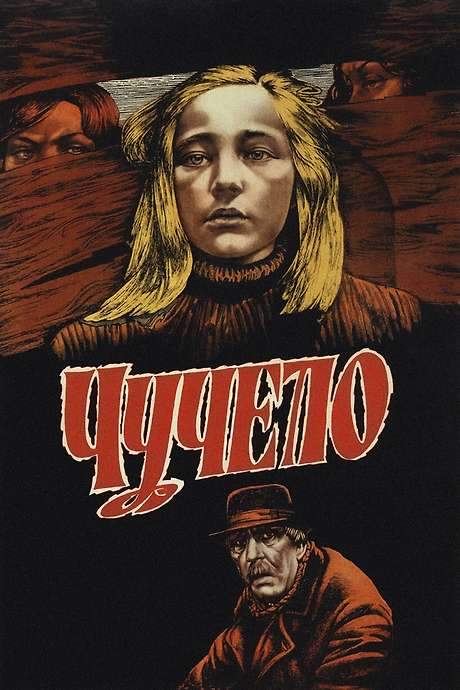
Lena, a twelve‑year‑old who has moved to live with her grandfather in a small Russian town, becomes the target of her classmates’ bullying. She assumes the blame for a class betrayal after falling in love with the boy who skipped a literature lesson to go to the cinema, causing the whole class to lose a trip to Moscow for the fall holidays. Ostracized and silent, Lena hopes the boy will finally admit his guilt.
Warning: spoilers below!
Haven’t seen Scarecrow yet? This summary contains major spoilers. Bookmark the page, watch the movie, and come back for the full breakdown. If you're ready, scroll on and relive the story!
Read the complete plot breakdown of Scarecrow (1984), including all key story events, major twists, and the ending explained in detail. Discover what really happened—and what it all means.
Lena Bessoltseva, Kristina Orbakayte, is a quiet pupil who becomes the target of relentless bullying at a rural school. The torment pushes her to run toward the river, where her grandfather, Nikolay Bessoltsev, [Yuriy Nikulin], steps in to rescue her and bring her home. Through a series of flashbacks, Lena slowly reveals the motive behind the cruelty, painting a portrait of a village where friendships are fickle and the social order is fragile.
On entering a new classroom, Lena earns the nickname “scarecrow” after a clumsy fall. She dares to like the class’s most popular boy, upsetting the established pecking order. The class hero Dima Somov, [Mitya Yegorov], sparks admiration but also tension, while Shmakova, [Anna Tolmachyova], who was once favored by the hero, must move to another desk. The shifting balance is watched by Mironova [Kseniya Filippova] and Marina - Motya [Marina Martanova], among others, as the social fabric of the class begins to fray.
As spring break approaches, the students plan a trip to Moscow, but the group decides to skip a literature lesson and go to a movie instead. Somov grows uneasy and confesses to the teacher that the class ran off. As punishment, the trip to Moscow is canceled. A tougher girl nicknamed “Iron Tack” suspects a betrayal and investigates. To save Somov, Lena takes the blame and claims she betrayed the class, triggering a tense chase through the village as Lena endures pressure while Somov promises to tell the truth but cannot.
After recounting the full story to her grandfather, Lena cuts her hair at the village beauty shop and then shows up at Somov’s birthday party with a shaved head. She delivers a pointed critique of many classmates and dramatically reveals her new look, announcing that she will leave the village behind.
Back at school, Lena returns to find Somov has finally confessed and is standing at the edge of a window, threatening to jump. She talks him down, and several students commend Lena for her grit and for staying strong rather than fleeing.
The film builds to a ceremonial turn: Lena’s grandfather donates his home and a priceless collection of paintings by a famous artist who once lived in the village, and the home will become a museum. The grandfather arrives with a wrapped painting for the class. When the cloth is removed, it reveals a young woman who bears a striking resemblance to Lena in her short-haired look. The revelation leaves the children humbled, and one student writes on the chalkboard: “Scarecrow, forgive us.”
Last Updated: October 09, 2025 at 14:41
Discover curated groups of movies connected by mood, themes, and story style. Browse collections built around emotion, atmosphere, and narrative focus to easily find films that match what you feel like watching right now.
Stories where characters endure hardship by standing up for what is right, ending with a mix of pain and hope.If you liked the quiet strength and difficult choices in Scarecrow, explore more movies like it. These films focus on personal integrity under pressure, often set in restrictive communities, and deliver emotionally resonant, bittersweet conclusions that honor the character's journey.
Narratives in this thread typically follow a protagonist, often young or vulnerable, who makes a morally correct but socially costly decision. They endure a period of isolation or punishment before reaching a conclusion that offers validation and a measure of redemption, though the emotional scars of the experience remain.
Movies are grouped here because they share a core focus on the theme of integrity versus peer pressure, a steady, character-driven pacing that allows the emotional weight to build, and a definitive bittersweet tone that balances the pain of consequence with the dignity of resilience.
Films that delve into the lonely, tense world of a child facing bullying or social exclusion.For viewers who appreciated Scarecrow's authentic depiction of school bullying and isolation, this section finds similar movies. These coming-of-age stories capture the intense, personal perspective of a young protagonist navigating a hostile social environment, often with limited adult intervention.
The narrative pattern centers on a young protagonist who becomes the target of systemic bullying or social exclusion within a small, closed community like a school or town. The story is told largely from their perspective, emphasizing the psychological torment and loneliness, while often introducing a key supportive figure or a moment of quiet defiance that defines their emotional arc.
These films are grouped by their shared, immersive mood of childhood melancholy and tension, their straightforward narrative focus on a single child's plight, and their handling of difficult themes like bullying with a medium intensity that is impactful without being gratuitously violent.
Don't stop at just watching — explore Scarecrow in full detail. From the complete plot summary and scene-by-scene timeline to character breakdowns, thematic analysis, and a deep dive into the ending — every page helps you truly understand what Scarecrow is all about. Plus, discover what's next after the movie.
Track the full timeline of Scarecrow with every major event arranged chronologically. Perfect for decoding non-linear storytelling, flashbacks, or parallel narratives with a clear scene-by-scene breakdown.
Discover the characters, locations, and core themes that shape Scarecrow. Get insights into symbolic elements, setting significance, and deeper narrative meaning — ideal for thematic analysis and movie breakdowns.
Get a quick, spoiler-free overview of Scarecrow that covers the main plot points and key details without revealing any major twists or spoilers. Perfect for those who want to know what to expect before diving in.
Visit What's After the Movie to explore more about Scarecrow: box office results, cast and crew info, production details, post-credit scenes, and external links — all in one place for movie fans and researchers.
Discover movies like Scarecrow that share similar genres, themes, and storytelling elements. Whether you’re drawn to the atmosphere, character arcs, or plot structure, these curated recommendations will help you explore more films you’ll love.
Scarecrow (1984) Scene-by-Scene Movie Timeline
Scarecrow (1984) Movie Characters, Themes & Settings
Scarecrow (1984) Spoiler-Free Summary & Key Flow
Movies Like Scarecrow – Similar Titles You’ll Enjoy
Playground (2022) Full Movie Breakdown
Scrapper (2023) Full Movie Breakdown
Scary Stories to Tell in the Dark (2019) Story Summary & Characters
Lena (2019) Story Summary & Characters
Scarecrow’s Revenge (2019) Complete Plot Breakdown
Scarecrow Slayer (2003) Full Movie Breakdown
Scarecrow (2002) Movie Recap & Themes
The Scarecrow (1982) Detailed Story Recap
Dark Night of the Scarecrow (1981) Plot Summary & Ending Explained
American Scarecrow (2020) Full Movie Breakdown
Scarborough (2021) Movie Recap & Themes
Who’s Afraid of the Wolf (2008) Story Summary & Characters
Crows (1994) Film Overview & Timeline
Scarecrow in a Garden of Cucumbers (1972) Ending Explained & Film Insights
Cowards (2008) Ending Explained & Film Insights