Plot Explained Spoilers guaranteed!
Plot Explained

Browse by genre

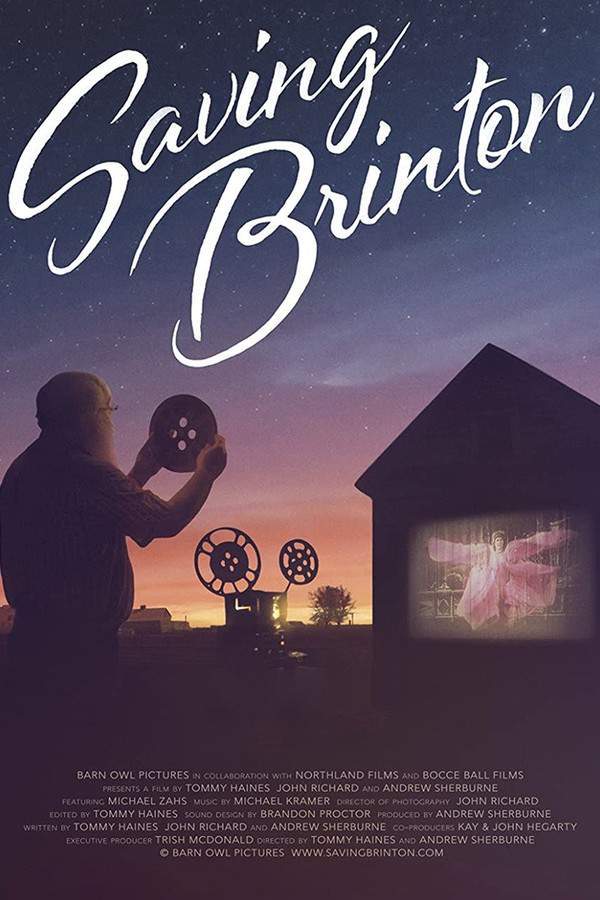
Saving Brinton (2018) movie poster

Plot Summary

Saving Brinton (2018) Plot Summary Explained

Release, runtime and language
2018 · 90 min · English
Echo score 75
Loading streaming availability…
Directed by
Andrew Sherburne, Tommy Haines
Starring
Carey Bostian, George R. Willeman, Greg Prickman, Harvey Solberger, Jan Boland, John Dowdall

In a quiet Iowa town, Michael Zahs discovers a remarkable collection of forgotten films. Driven by passion, he dedicates himself to restoring and preserving this cinematic treasure, which includes rare newsreels, cherished home movies, and lost classics. His efforts bring these pieces of history back to life, allowing a new audience to experience the stories of the past.

On this page (6)
  1. 1 Where to watch
  2. 2 What happens: full plot
  3. 3 Plot questions answered
  4. 4 Movie threads
  5. 5 Movies like Saving Brinton
  6. 6 Every angle
Loading streaming availability…

Full plot summary · contains spoilers

What Happens in Saving Brinton: Full Plot Summary

The whole story of Saving Brinton (2018) explained, from the opening scene to the final frame: every key event, every twist and what it all adds up to. Read it as a quick recap before the sequel, to check a scene you missed, or to finally understand what really happened.

Set within the quiet confines of a farmhouse basement in the Iowa countryside, the story follows the eccentric collector Michael Zahs as he stumbles upon a truly remarkable cinematic discovery. He finds a vast collection of showreels created by the man responsible for bringing the magic of moving pictures to the heart of America.

Among these recovered treasures are several historically significant pieces of film, including:

Rare, early footage of President Teddy Roosevelt*.

The very first moving images captured in Burma*.

A long-lost relic from the legendary godfather of magical special effects, Georges Méliès*.

These films represent the very dawn of cinema, serving as the tools that introduced the world to the medium of motion pictures. However, the nitrate reels are only a small part of the larger hoard of artifacts that once belonged to William Franklin Brinton. By meticulously combing through thousands of items—ranging from handwritten journals and receipts to vintage posters and catalogs—a vivid portrait emerges of an inventive farmboy who evolved into a daring, barnstorming movieman.

As Michael Zahs works to uncover this hidden legacy, he embarks on a dedicated mission to restore the Brinton name to its rightful place in history. This quest for restoration takes him on a journey that spans from the archives of The Library of Congress all the way to Paris.

The journey eventually culminates in a grand big-screen extravaganza held at the very location where it all began: the same small-town movie theater where Brinton first activated a projector over a century ago. This venue, known as the State Theatre in Washington, Iowa, USA, is a landmark of cinema history, having opened its doors on May 14, 1897, making it the world's oldest continuously operating cinema theatre.

Last updated: October 11, 2026 at 16:42

Was this helpful?

Plot questions answered

Saving Brinton Plot Explained: Your Questions Answered

The questions people ask most about Saving Brinton (2018): what happens in the confusing scenes, why the characters do what they do, the twists, hidden details and what the ending means. Each answer contains spoilers.

Q1

Who was William Franklin Brinton and why does his story matter in Saving Brinton?

William Franklin Brinton was an inventive Iowa farmboy who reinvented himself as a barnstorming movieman in the early days of cinema. He traveled the American Heartland projecting films for audiences who had never seen moving pictures before, effectively becoming one of the first people to bring cinema to rural America. His story matters because the collection he left behind contains some of the earliest and most historically significant moving images ever made, linking small-town Iowa to the birth of the medium itself.

  • william franklin brinton
  • barnstorming movieman
  • early cinema
  • iowa farmboy
  • heartland film history
Q2

What did Michael Zahs discover in the Iowa farmhouse basement?

Michael Zahs discovered a vast hoard of nitrate showreels and thousands of supporting artifacts left behind by William Franklin Brinton. The collection included rare early footage of President Teddy Roosevelt, the first moving images ever captured in Burma, and a lost relic from French film pioneer Georges Méliès. Alongside the reels were handwritten journals, receipts, posters, and catalogs that documented Brinton's life as a traveling showman.

  • mike zahs
  • farmhouse basement
  • nitrate reels
  • brinton collection
  • iowa discovery
Q3

Why did Michael Zahs dedicate himself to restoring Brinton's legacy?

After realizing he was sitting on a forgotten piece of cinematic history, Mike felt a personal duty to bring Brinton's contributions out of obscurity. Piecing together the journals, posters, and reels revealed a vivid portrait of a pioneer who had been almost entirely written out of early film history. Mike's mission became proving to scholars and institutions that this Iowa farmboy-turned-movieman deserved recognition alongside the giants of early cinema.

Foreshadowing: The moment Mike recognized the historical weight of the reels in his basement.

  • mike zahs motivation
  • brinton legacy
  • archival restoration
  • forgotten film history
  • cultural stewardship
Q4

How did rare footage of Teddy Roosevelt end up in an Iowa farmhouse collection?

Brinton acquired the Roosevelt footage as part of his career as a barnstorming exhibitor who sourced sensational content for rural audiences. Showing a sitting U.S. president in motion was a major draw for small-town crowds who otherwise had little access to national events. The reel traveled with Brinton's traveling shows for years before being stored, forgotten, in the same farmhouse basement where Mike eventually found it.

  • teddy roosevelt footage
  • early newsreels
  • brinton collection
  • heartland audiences
  • presidential film
Q5

Why did Mike Zahs travel to Paris while researching the Brinton collection?

Mike went to Paris to trace the origins of a lost relic from Georges Méliès that had somehow ended up among Brinton's artifacts. Following the Méliès thread meant exploring the European roots of early cinema and confirming how a French film pioneer connected to an Iowa showman. The pilgrimage gave the documentary a striking visual link between small-town America and the birthplace of cinematic illusion.

Foreshadowing: The discovery of the Méliès reel among the Brinton artifacts first raised the question of how it reached Iowa.

  • mike zahs paris
  • georges melies
  • french cinema
  • brinton artifacts
  • archival research
Q6

What is the connection between Brinton and Georges Méliès?

Brinton owned a lost relic created by Georges Méliès, the French filmmaker credited as the godfather of magical special effects and fantasy cinema. The artifact ties an Iowa farmboy directly to one of the most important pioneers of the medium. Mike's later trip to Paris was specifically aimed at confirming this link and understanding how a piece of Méliès' work ended up in rural Iowa.

  • georges melies
  • brinton melies relic
  • french film pioneer
  • early cinema connection
  • magical effects
Q7

How did historically significant films end up forgotten in a basement for decades?

After Brinton's barnstorming years ended, his reels and papers were simply stored at the family farmhouse rather than donated to any institution. Because early nitrate film was fragile, dangerous, and had limited commercial value, successive generations of the Brinton family left the collection untouched. It took Mike Zahs, an outsider with the right archival instincts, to recognize what the hoard actually was.

  • forgotten film reels
  • nitrate film decay
  • brinton family collection
  • lost cinema
  • archival discovery
Q8

Why did Mike Zahs visit the Library of Congress during his research?

Mike traveled to the Library of Congress to seek official recognition for the Brinton films and to validate their historical importance. The visit allowed him to compare the Brinton reels against the national film archive's records and confirm their authenticity. It was a pivotal step in transforming a personal basement discovery into a documented piece of American film heritage.

  • library of congress
  • brinton film recognition
  • national film archive
  • archival authentication
  • mike zahs research
Q9

What makes the State Theatre in Washington, Iowa historically important?

The State Theatre opened on May 14, 1897, making it the world's oldest continuously operating cinema theatre. It is the very venue where William Franklin Brinton first activated a projector and introduced moving pictures to his hometown. More than a century later, the same theater hosted the documentary's culminating screening, closing the loop between Brinton's pioneering work and the film that celebrates it.

Foreshadowing: The film's opening establishes the State Theatre's 1897 opening before revealing its importance to Brinton's story.

  • state theatre washington iowa
  • oldest cinema theatre
  • brinton first screening
  • 1897 theater
  • historic movie venue
Q10

Why is the first moving image from Burma important to the Brinton collection?

The Burma footage is considered the very first motion picture ever captured in the country, making it an invaluable historical record on its own. For rural Iowa audiences at the turn of the century, these foreign scenes offered a rare window into a distant world they would never otherwise see. The reel's presence in Brinton's collection underscores how early exhibitors shaped global awareness long before television or the internet existed.

  • first burma footage
  • early documentary film
  • exotic foreign scenes
  • brinton travelogues
  • global cinema history
Q11

What happens at the big-screen extravaganza that closes the documentary?

Mike's restoration journey culminates in a grand public screening held at the State Theatre in Washington, Iowa, the very same small-town cinema where Brinton first turned on a projector over a century earlier. Brinton's recovered films, including the Roosevelt footage, Burma scenes, and Méliès relic, were shown to a new audience in the space Brinton himself once filled. The event functions as a redemptive celebration, restoring both the films and their original context to public memory.

Foreshadowing: The film's framing of the State Theatre as the world's oldest continuously operating cinema foreshadows it as the natural site for the closing screening.

  • big screen extravaganza
  • state theatre screening
  • brinton film premiere
  • closing event
  • redemptive ending
Q12

What did the journals, posters, and catalogs reveal about Brinton's life?

Beyond the films themselves, the thousands of journals, receipts, posters, and catalogs documented Brinton's day-to-day life as a traveling exhibitor. They showed how he sourced films, negotiated with distributors, marketed his shows, and recorded reactions from rural audiences. Together, these artifacts built a vivid biographical portrait of a 19th-century farmboy who carved out a career at the very edge of a brand-new industry.

  • brinton journals
  • vintage posters
  • showman catalogs
  • biographical artifacts
  • heartland exhibitor

Movie threads

More Movies Like Saving Brinton, by Mood & Story

Curated lists built around what makes Saving Brinton tick: the same mood, the same kind of story or the same emotional payoff. Each list explains why these movies belong together.

Movies about passionate cultural preservation like in Saving Brinton

Stories of passionate individuals rescuing forgotten art, history, and culture from oblivion. Movies like Saving Brinton that follow passionate individuals dedicated to saving forgotten cultural treasures. These inspiring stories trace an archivist, restorer, or collector as they painstakingly rescue lost films, music, art, or history from oblivion. Perfect for viewers who love quiet, hopeful documentaries about cultural stewardship and the rediscovery of overlooked heritage.

  • passionate
  • purpose-driven
  • cultural
  • preservation
  • rediscovery
  • devoted
  • Tone: hopeful, reverent, warm
  • Pacing: slow, methodical, patient
Why these movies?

The story pattern: The narrative usually centers on a single, quietly driven protagonist who stumbles upon something remarkable that the world has neglected. They commit themselves body and soul to its rescue, facing logistical, financial, and personal obstacles that test their resolve. The arc is rarely about conflict with an antagonist and almost always about the slow grind of careful, loving work. Stories typically culminate in a public unveiling or restoration event that reframes the forgotten object as a shared cultural inheritance, giving the journey a cathartic and redemptive close.

Why they belong together: Films in this thread are united by their reverence for hidden cultural gems and by protagonists who treat preservation as a personal calling rather than a job. They tend to share a slow, methodical pacing that mirrors the painstaking nature of the work itself, and they avoid thriller-style tension in favor of accumulating wonder and gratitude. The emotional payoff is consistently uplifting, with endings that feel like communal celebrations rather than quiet denouements.

Meditative, low-key documentaries like Saving Brinton with quiet wonder

Meditative, low-intensity films that find warmth and meaning in overlooked corners of life. If you liked Saving Brinton, explore more meditative documentaries with the same quiet, low-intensity charm. These slow-paced films celebrate overlooked corners of American life, small-town heritage, and gentle rediscovery. With minimal conflict and a warm nostalgic tone, they reward patient viewers with heartwarming portraits of ordinary people doing extraordinary things.

  • nostalgic
  • contemplative
  • warm
  • gentle
  • meditative
  • heartwarming
  • Tone: warm, nostalgic, gentle
  • Pacing: slow, contemplative, meditative
Why these movies?

The story pattern: Stories in this thread typically open in an unassuming setting, often rural or small-town, and follow a process of attentive looking rather than escalating stakes. There is no clear antagonist, only curiosity, care, and a slow accretion of meaning as the protagonist uncovers layers of a place, a person, or a tradition. The narrative arc is more like a tide than a chase, cresting in a quiet communal moment, a restored object, or a shared screening that gives the journey a warm, grateful finish.

Why they belong together: These movies cohere through tone and texture more than plot: low intensity, slow pacing, hopeful or warm registers, and an almost total absence of violence or dread. They tend to share a visual language of stillness, archival imagery, rural landscapes, and intimate portraits. Together they form a kind of comfort cinema that still earns its emotional moments, leaving viewers reflective rather than drained.

If you liked this

Movies Like Saving Brinton

Similar movies to Saving Brinton: the same genre, themes or kind of story. Each one comes with its own plot summary, timeline and ending explained.

Browse all movie summaries

Every angle

Saving Brinton (2018) Explained: Plot, Timeline & Characters

Everything about Saving Brinton in one place: what happens in the plot summary, the timeline in chronological order, the characters and meaning and a spoiler-free summary. What's After the Movie adds the cast, box office and post-credit scenes.

Coming soon on iOS and Android

The Plot Explained Movie Summary App

Plot summaries, endings explained and timelines on your phone. Catch up on any movie in minutes, save your favorites and never miss a twist again.

Be the first to know when we launch. Your email stays private, always.

Learn more about the app