Plot Explained Spoilers guaranteed!
Plot Explained

Browse by genre

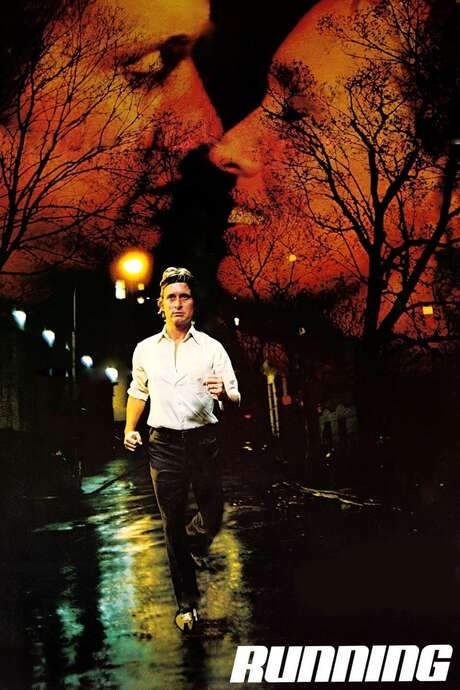
Running (1979) movie poster

Timeline

Running (1979) Timeline Explained – Every Event in Order

Release, runtime and language
1979 · 102 mins · English
Directed by
Steven Hilliard Stern
Starring
Michael Douglas, Susan Anspach, Giancarlo Esposito, Eugene Levy, Lawrence Dane, Gordon Clapp

An Olympic‑hopeful marathon runner believes that winning will heal his troubled marriage and resolve personal issues. As he trains for the big race, he must find the courage to stay true to himself, confronting the pressures of competition and the strain on his relationships, learning that true success lies in authenticity.

On this page (5)
  1. 1 Events in order (13)
  2. 2 Timeline questions answered
  3. 3 Movie threads
  4. 4 Movies like Running
  5. 5 Every angle

13 events in order · contains spoilers

Running Timeline: Events in Chronological Order

Every key event of Running (1979) in order, scene by scene, with when and where it takes place. Use it to untangle flashbacks, time jumps and parallel storylines, to refresh your memory before the sequel or to find the exact scene you are thinking of.

  1. Olympic dream collides with personal turmoil

    Michael Andropolis pursues the 1976 Montreal Olympics marathon, but his life is in turmoil. His marriage is failing and unemployment looms, casting a shadow over his hopeful future. He must balance the dream with the strain of his home life and the pressure of a coach who may doubt him.

    Where
    United States
  2. Unemployment office meltdown

    Frustration boils over at the unemployment office, where bureaucracy hinders his attempt to find steady work. The scene captures his growing anger and sense of being trapped. This moment foreshadows the internal obstacles he faces in pursuit of the Olympics.

    Where
    Unemployment office
  3. Coach doubts and the training relationship

    His coach is reluctant to fully back his Olympic bid, doubting his consistency and stamina. The relationship between athlete and mentor is strained as training continues under pressure. The coach's skepticism becomes a looming obstacle in his journey.

    Where
    Training facility
  4. Qualifying race earns a ticket to Montreal

    Andropolis finishes fourth in the qualifiers, but a top-three finish is bypassed due to injuries to others, granting him a surprise Olympic berth. The result showcases his persistence and endurance. The achievement comes despite limited support from his coach and turmoil at home.

    When
    Before Montreal Olympics
    Where
    Qualifying race
  5. Montreal prep and pacing decision

    In the lead-up to the Games, he chooses a controlled pacing strategy rather than an early burst. The approach aims to conserve energy for a strong finish, balancing his desire to excel with the risk of burning out early. This mindset marks a shift from his usual aggressive starts.

    Where
    Montreal training camp / pre-race
  6. Race day begins with careful pacing

    The marathon starts and he remains with the main pack, avoiding the fast early sprint. The plan is to hold steady until halfway, keeping his stamina intact for the late stages. The crowd's energy surrounds him as he threads through competitors.

    When
    Halfway through
    Where
    Montreal marathon course
  7. Halfway decision: he starts to pull ahead

    As the field wears on, he begins to assert himself and pulls ahead around the midpoint. The moment signals his confidence in the pacing plan, but it also increases the risk of burning out before the finish. The tension between strategy and exertion grows.

    When
    Mid-race
    Where
    Montreal marathon course
  8. Slip on wet leaves and injuries

    While rounding a turn on wet leaves, he slips and suffers shoulder and leg injuries as other runners surge past him. The fall jeopardizes his chances at winning, yet he stubbornly refuses to quit. The moment heightens the drama of the race.

    When
    Late stage
    Where
    Montreal marathon course turn
  9. Paramedics and resolve to finish

    As darkness falls, paramedics tend to his injuries at the roadside. He is compelled to finish the race, piecing together the will to continue despite the pain and fatigue. The grit of his character is put on full display.

    When
    Evening
    Where
    On-course roadside near finish
  10. Against the odds, he reaches the finish line

    With the final competitor long finished, he climbs back onto the course and limps toward the finish on roads that have been reopened. The crowd and officials mark the unusual finish as the race's last moments pass. Exhaustion dominates, but his resolve pushes him forward.

    When
    End of race
    Where
    Montreal streets toward Olympic Stadium
  11. Olympic Stadium finish: the crowd roars

    Exhausted, he crosses the finish line to cheering crowds at the Olympic Stadium. His wife has traveled to Montreal to watch, adding a personal victory to the athletic one. The coach shares a proud smile as his daughters watch the moment unfold on television.

    When
    End of race
    Where
    Olympic Stadium
  12. Family reunion at the finish

    His wife reaches him after the finish, reaffirming their commitment to going home together. The moment underscores the human cost of sport and the emotional payoff of perseverance.

    When
    Immediately after race
    Where
    Finish area
  13. Coach's pride and the endurance lesson

    The coach witnesses the finish with a proud smile, recognizing his athlete's grit more than his medal prospects. Daughters cheer from home as the event closes, their view captured on television.

    When
    Post-race
    Where
    Finishing area

Last updated: October 05, 2025 at 11:16

Was this helpful?

Timeline questions answered

Running Timeline Explained: Your Questions Answered

When does it happen, and why in that order? The questions people ask about the chronology of Running (1979): time jumps, flashbacks, cause and effect between scenes and the correct order of events, each answered with spoilers.

Q1

Why does Michael Andropolis qualify for the Olympics despite finishing fourth?

Andropolis qualifies for the Montreal Olympics by finishing fourth in the trials, but he gets the spot because three runners who finished ahead of him suffer injuries that prevent them from competing. This grants him a surprise Olympic berth that many consider unlikely, especially given his personal struggles and his coach's doubts about his consistency.

Foreshadowing: Earlier scenes establish his coach's skepticism about his stamina, making this qualification feel like an unexpected opportunity.

  • Olympic qualification
  • trials
  • fourth place
  • injuries
  • marathon
Q2

Why does Michael change his racing strategy from his usual approach?

Michael abandons his typical aggressive start because his tendency to push with ferocious speed at the beginning consistently drains the stamina he needs for the final minutes of the race. For Montreal, he decides to start more cautiously, pace himself, and conserve energy for a strong finish, a calculated gamble that represents a shift from his impulsive nature.

Foreshadowing: The summary explicitly mentions his tendency to lead early but fade, setting up this strategic change.

  • pacing strategy
  • marathon race
  • energy conservation
  • racing strategy
Q3

Why does Michael continue running after his fall on wet leaves?

Michael refuses to quit because he clings to the belief that the race is not over until the finish line is crossed. Despite suffering shoulder and leg injuries when he slips on wet leaves while others surge past him, his determination to complete the race overrides the pain. He gets up, limps back onto the course, and pushes forward even when all other competitors have finished.

Foreshadowing: The earlier description of him as a fighter by nature establishes his stubborn resolve.

  • wet leaves fall
  • injuries
  • marathon finish
  • perseverance
  • refusal to quit
Q4

Why does Susan travel to Montreal to watch the race?

Susan travels to Montreal to witness Michael's finish because she wants to support him during this pivotal moment and to reaffirm their commitment to each other. After the race, she promises to bring him home no matter what happens, signifying their reconciliation and her belief in his personal triumph regardless of the athletic outcome.

Foreshadowing: Their marriage strain runs throughout the film, building to this moment of mutual understanding.

  • wife
  • support
  • Montreal
  • reconciliation
  • marriage
Q5

Why does Coach Walker doubt Michael's Olympic potential?

Coach Walker is reluctant to fully endorse Michael for the Olympics because he questions his consistency and stamina. The coach has witnessed Michael's pattern of starting fast but fading in previous races, and he worries that Michael's temperament and lack of steady employment might undermine his performance on the biggest stage.

Foreshadowing: The timeline notes the coach's skepticism as a looming obstacle throughout Michael's preparation.

  • coach
  • doubt
  • endorsement
  • training
  • Olympic bid
Q6

What causes Michael to fall during the marathon?

Michael falls while rounding a turn on the Montreal course when he slips on wet leaves. The slip injures his shoulder and leg, causing significant pain and nearly eliminating his chances of winning. This moment represents pure bad luck rather than any strategic or physical failing on his part.

Foreshadowing: No explicit foreshadowing exists, this is presented as a random accident that tests his resolve.

  • wet leaves
  • fall
  • injury
  • marathon accident
Q7

Why does Michael finish the race so late compared to other runners?

Michael finishes long after the other competitors because the fall on wet leaves causes serious injuries that require him to stop and receive medical attention from paramedics. He must recuperate before he can limp back onto the course, and he completes the race on roads that have already reopened. By the time he reaches the Olympic Stadium, the final competitor has long since crossed the finish line.

Foreshadowing: The earlier mention of darkness falling and paramedics attending to him foreshadows the extended delay.

  • last place
  • finish time
  • injuries
  • delayed finish
Q8

Does Michael win the marathon in the end?

Michael does not win the race in athletic terms, he finishes last after his injury and delay. However, he achieves a profound personal victory by completing the marathon against all odds, demonstrating perseverance and authenticity. The crowd cheers, his wife supports him, and his coach smiles with pride, indicating that his triumph is emotional rather than medal-based.

Foreshadowing: The narrative builds toward this bittersweet ending where personal growth outweighs athletic achievement.

  • win
  • finish
  • personal victory
  • emotional triumph
  • marathon result
Q9

What is the significance of the unemployment office scene?

The unemployment office meltdown demonstrates the bureaucratic obstacles Michael faces in his daily life, showing how external systems weigh him down just as much as his competitors. This scene establishes his frustration and sense of being trapped, foreshadowing the internal and external obstacles he must overcome to reach the Olympics.

Foreshadowing: The meta notes explicitly identify this as foreshadowing his internal obstacles.

  • unemployment office
  • frustration
  • bureaucracy
  • obstacles
Q10

What is Michael's main weakness as a runner?

Michael's primary weakness is his temperament, he tends to push with ferocious speed at the start of races, which drains the stamina he would need in the final minutes. This pattern leaves him leading early but unable to seal a victory, causing him to dwell in the shadow of early leads rather than finishing strong.

Foreshadowing: This weakness is directly stated in the opening summary as his key character flaw.

  • temperament
  • stamina
  • early lead
  • racing weakness

Movie threads

More Movies Like Running, by Mood & Story

Curated lists built around what makes Running tick: the same mood, the same kind of story or the same emotional payoff. Each list explains why these movies belong together.

Bittersweet Sports Triumphs like in Running

Stories where the real victory isn't the win, but the personal growth. Explore more movies like Running, where athletes face intense personal struggles alongside their professional ambitions. If you liked the story of a marathon runner finding himself through adversity, you'll appreciate these similar dramas about perseverance, resilience, and the bittersweet nature of victory in sports.

  • determined
  • gritty
  • triumphant
  • resilient
  • hopeful
  • strained
  • Tone: hopeful, bittersweet
  • Pacing: steady, linear
Why these movies?

The story pattern: The narrative typically follows a linear training-to-competition arc, where external pressure and internal doubt are the primary antagonists. The climax is often a physical test that serves as a metaphor for the character's emotional journey, culminating in an outcome that values personal achievement over conventional victory.

Why they belong together: These movies are grouped by their shared focus on the athlete's internal journey. They blend the grit of sports competition with heartfelt human drama, resulting in a hopeful yet grounded tone that finds beauty in the struggle itself.
Character-Driven Redemption Stories like Running

Hopeful dramas about ordinary people rebuilding their lives step by step. Find movies similar to Running that focus on a protagonist's steady journey of personal redemption. If you enjoyed watching a character confront their flaws and rebuild their life with resilience, these dramas offer the same compelling mix of hopeful tone, steady pacing, and emotionally satisfying character arcs.

  • hopeful
  • resilient
  • strained
  • introspective
  • determined
  • tense
  • Tone: hopeful, resilient
  • Pacing: steady, character-driven
Why these movies?

The story pattern: These narratives are straightforward and character-centric, often built around a single protagonist overcoming a defining crisis. The conflict is both internal and external, with the story unfolding at a consistent pace that mirrors the character's gradual process of learning, adapting, and ultimately finding a more authentic version of themselves.

Why they belong together: They share a coherent mix of medium intensity, steady pacing, and a hopeful tone, creating a reliably engaging and emotionally substantive viewing experience. The focus is on the relatable process of personal transformation, making the journey feel genuine and earned.

If you liked this

Movies Like Running

Similar movies to Running: the same genre, themes or kind of story. Each one comes with its own plot summary, timeline and ending explained.

Browse all movie summaries

Every angle

Running (1979) Explained: Plot, Timeline & Characters

Everything about Running in one place: what happens in the plot summary, the timeline in chronological order, the characters and meaning and a spoiler-free summary. What's After the Movie adds the cast, box office and post-credit scenes.

Coming soon on iOS and Android

The Plot Explained Movie Summary App

Plot summaries, endings explained and timelines on your phone. Catch up on any movie in minutes, save your favorites and never miss a twist again.

Be the first to know when we launch. Your email stays private, always.

Learn more about the app