Plot Explained Spoilers guaranteed!
Plot Explained

Browse by genre

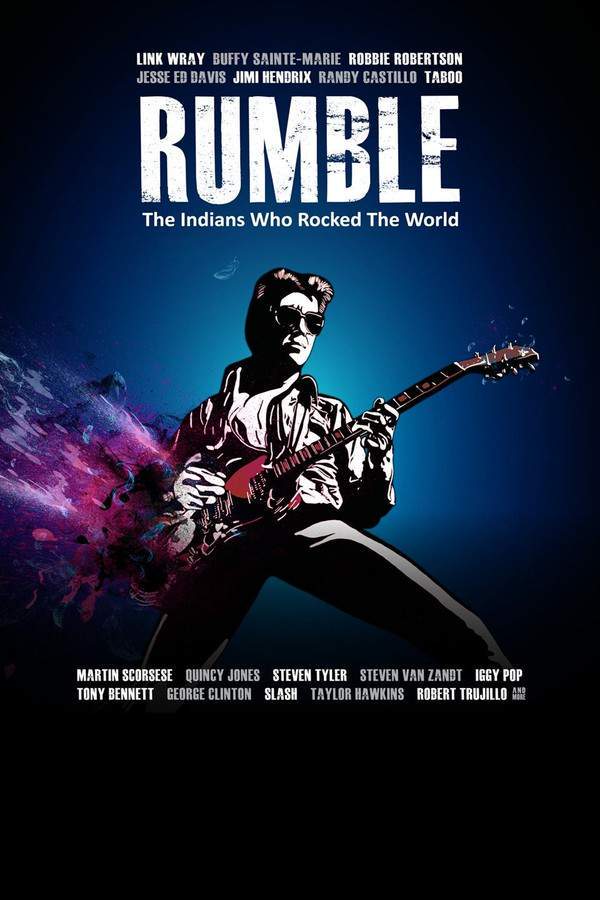
Rumble: The Indians Who Rocked The World (2017) movie poster

Characters & Themes

Rumble: The Indians Who Rocked The World (2017) Characters, Setting & Themes Explained

Release, runtime and language
2017 · 103 min · English
Echo score 77
Loading streaming availability…
Directed by
Alfonso Maiorana, Catherine Bainbridge
Starring
Jimi Hendrix, Quincy Jones, Taylor Hawkins, Buffy Sainte-Marie, Charley Patton, David Fricke

This documentary explores the significant, yet often unrecognized, contributions of Indigenous musicians to North American popular music. It highlights the groundbreaking work of artists like Link Wray and Jimi Hendrix, and others who defied convention and helped shape the sound of generations. Through compelling stories and archival footage, Rumble: The Indians Who Rocked The World celebrates the innovative styles and enduring legacy of Native American artists who profoundly impacted the music landscape.

On this page (8)
  1. 1 Where to watch
  2. 2 Characters explained (6)
  3. 3 Where & when it takes place
  4. 4 Themes & meaning (2)
  5. 5 Character & meaning questions
  6. 6 Movie threads
  7. 7 Movies like Rumble: The Indians Who Rocked The World
  8. 8 Every angle
Loading streaming availability…

6 main characters · contains spoilers

Rumble: The Indians Who Rocked The World Characters Explained: Who Is Who

The main characters of Rumble: The Indians Who Rocked The World (2017), heroes and villains: what drives them, how they change over the course of the story and what each of them reveals about the film's bigger ideas.

  • Jimi Hendrix

    A legendary guitarist and songwriter, Jimi Hendrix is renowned for his innovative guitar techniques and explosive performances. Often considered one of the greatest guitarists in rock history, his music incorporated elements of blues, rock, and psychedelia, while also being influenced by his Native American heritage. His influence is a testament to the powerful role of Indigenous artists in shaping rock music.

    • 🎸 Guitarist
    • 🎤 Icon
    • 🕊️ Inspirational
  • Buffy Sainte-Marie

    Buffy Sainte-Marie is a celebrated singer-songwriter and activist known for her poignant songs that advocate for Indigenous rights and social justice. Her work often draws from her Native American heritage, infusing traditional elements into contemporary music. Sainte-Marie's contributions have been crucial in raising awareness of Indigenous issues through her art.

    • 🎶 Songwriter
    • ✊ Activist
    • 🌿 Heritage
  • Charley Patton

    Charley Patton is considered one of the founding figures of the Delta blues sound. With his powerful voice and dynamic guitar playing, he left a lasting impact on American music. His heritage influenced his storytelling and musical style, reflecting the experiences of Native Americans in the early 20th century.

    • 🎵 Blues Artist
    • 🎤 Pioneer
    • 🔥 Influencer
  • Mildred Bailey

    Mildred Bailey was a prominent jazz singer known for her smooth vocals and emotional delivery. Often referred to as the 'Queen of Swing,' she blended her Native American roots with jazz, creating a unique musical heritage. Bailey's legacy paved the way for future generations of musicians, highlighting the significant role of Indigenous artists in the jazz genre.

    • 🎶 Jazz Singer
    • 👑 Influencer
    • 🎤 Icon
  • Quincy Jones

    Quincy Jones is a legendary music producer and arranger who has worked with countless iconic artists across multiple genres. His insights into the impact of Native American musicians enrich the narrative of the documentary, showcasing how their influence shaped the music industry. Jones embodies the spirit of collaboration and cultural exchange in music.

    • 🎼 Producer
    • 🌟 Legend
    • 🎹 Collaborator
  • Steven Tyler

    Steven Tyler, the charismatic frontman of Aerosmith, is known for his powerful vocals and dynamic stage presence. His reflections in the documentary reveal the deep connections between mainstream rock and the influences of Indigenous musicians. Tyler's appreciation for diverse musical roots showcases the importance of recognizing all contributors to rock history.

    • 🎤 Rock Legend
    • 🎸 Icon
    • 🌟 Performer

Last updated: October 22, 2024 at 19:42

Was this helpful?

Setting

Where and When Does Rumble: The Indians Who Rocked The World Take Place?

The setting of Rumble: The Indians Who Rocked The World (2017): the year and time period, the places and locations, and how they shape the characters, the mood and the tension of the story.

Time period

1950s - 1970s

The 1950s to 1970s was a transformative era for music, characterized by the rise of rock and roll, folk rock, and the integration of diverse musical influences. During this time, Native American musicians began to gain recognition, contributing to genres that were traditionally dominated by other demographics. This period also saw cultural movements focused on civil rights and cultural recognition, highlighting the importance of Indigenous contributions to the arts.

Location

United States

The United States is known for its diverse musical landscape, significantly shaped by various cultural influences, including Native American music. It is a melting pot where genres like rock, blues, and folk evolved, often intertwining with the rich heritage of Indigenous peoples. The documentary emphasizes the pivotal role Native Americans played in shaping the nation’s musical history.

  • 🇺🇸 America
  • 🎶 Music
  • 🎤 Culture

Last updated: October 22, 2024 at 19:42

Was this helpful?

2 major themes

Rumble: The Indians Who Rocked The World Meaning: Themes & Message Explained

What is Rumble: The Indians Who Rocked The World (2017) really about? The emotional, social and philosophical themes the film keeps returning to, its symbolism and the message beneath the surface.

  • Cultural Resilience

    The film addresses the theme of cultural resilience, showcasing how Native American musicians overcame efforts to suppress their heritage. It illustrates the enduring influence of Indigenous culture within mainstream music despite historical challenges. The documentary highlights a reclamation of identity and recognition through the celebration of these artists' contributions.

  • Musical Influence

    The theme of musical influence is central to the documentary, emphasizing how Native American musicians helped shape various music genres. Their contributions are often overlooked, but this film brings their stories to light, showcasing how their unique sounds and traditions have enriched American popular music. It celebrates the intertwining of different cultural legacies within the musical tapestry of the nation.

Last updated: October 22, 2024 at 19:42

Was this helpful?

Character & theme questions

Rumble: The Indians Who Rocked The World Characters & Meaning: Your Questions Answered

The questions people ask about Rumble: The Indians Who Rocked The World (2017): who the characters really are, their relationships, what the symbols mean, where it takes place and what the movie is really about. Each answer contains spoilers.

Q1

Where is this documentary set?

The documentary is set across the United States, exploring how Native American musicians contributed to the nation's diverse musical landscape. It highlights various regions where Indigenous artists made their mark, from the Delta blues country to the rock and roll scene of the 1950s-1970s.

  • setting
  • united states
  • locations
  • music history
Q2

When does the documentary take place?

The documentary primarily focuses on the 1950s to 1970s, a transformative era for rock and roll, folk rock, and the integration of diverse musical influences. This period marked when Native American musicians began gaining recognition in genres traditionally dominated by other demographics.

  • time period
  • 1950s
  • 1960s
  • 1970s
  • era
  • decades
Q3

What does the documentary say about cultural resilience?

The film showcases how Native American musicians overcame efforts to suppress their heritage and maintained their cultural identity through music. It illustrates the reclamation of identity and recognition, highlighting the enduring influence of Indigenous culture within mainstream music despite historical challenges.

  • cultural resilience
  • heritage
  • identity
  • suppression
  • native american
Q4

How did Native American musicians influence popular music?

Native American musicians helped shape various genres including rock, blues, and folk by incorporating their unique sounds and traditions. Their contributions, often overlooked, enriched American popular music and created a tapestry where different cultural legacies intertwined to create new sounds.

  • musical influence
  • genres
  • rock
  • blues
  • indigenous sound
Q5

What is Jimi Hendrix's connection to Native American heritage?

Jimi Hendrix, one of the greatest guitarists in rock history, incorporated elements of blues, rock, and psychedelia into his music, all influenced by his Native American heritage. His innovative guitar techniques and explosive performances helped demonstrate the powerful role of Indigenous artists in shaping rock music.

  • jimi hendrix
  • native american heritage
  • guitar
  • rock music
Q6

Who is Buffy Sainte-Marie and what role does she play in the film?

Buffy Sainte-Marie is a celebrated singer-songwriter and activist known for her songs advocating Indigenous rights and social justice. Her work draws from her Native American heritage, blending traditional elements into contemporary music. Her contributions have been crucial in raising awareness of Indigenous issues through art.

  • buffy sancte-marie
  • indigenous rights
  • activism
  • singer-songwriter
Q7

What is Charley Patton's significance in the documentary?

Charley Patton is portrayed as a founding figure of the Delta blues sound, known for his powerful voice and dynamic guitar playing. His Native American heritage influenced his storytelling and musical style, reflecting the experiences of Indigenous people in early 20th century America.

  • charley patton
  • delta blues
  • blues pioneer
  • guitar
Q8

How is Mildred Bailey featured in the documentary?

Mildred Bailey, known as the 'Queen of Swing,' is highlighted for blending her Native American roots with jazz, creating a unique musical heritage. Her smooth vocals and emotional delivery made her a prominent jazz singer whose legacy paved the way for future generations of Indigenous musicians in the genre.

  • mildred bailey
  • jazz
  • swing
  • queen of swing
  • vocals
Q9

What does Quincy Jones contribute to the documentary?

Quincy Jones, the legendary music producer and arranger, provides insights into the impact of Native American musicians on the music industry. His perspectives showcase how Indigenous influence shaped various genres and highlight the spirit of collaboration and cultural exchange in American music.

  • quincy jones
  • producer
  • music industry
  • cultural exchange
Q10

What is the overall tone of the documentary?

The documentary has a hopeful and celebratory tone, focusing on revealing and honoring previously erased contributions of Indigenous musicians. While it acknowledges the serious historical context of cultural suppression, the emphasis on resilience and vibrant legacy creates an inspirational mood rather than a heavy one.

  • tone
  • mood
  • celebratory
  • hopeful
  • inspirational
Q11

Why are Native American contributions to rock music important?

Native American contributions to rock music are important because they represent a often overlooked part of American musical history. Artists like Jimi Hendrix helped shape the sound of generations through innovative techniques and styles rooted in Indigenous traditions, enriching the cultural tapestry of rock and roll.

  • native american
  • rock music
  • contributions
  • history
  • legacy

Movie threads

More Movies Like Rumble: The Indians Who Rocked The World, by Mood & Story

Curated lists built around what makes Rumble: The Indians Who Rocked The World tick: the same mood, the same kind of story or the same emotional payoff. Each list explains why these movies belong together.

Revelatory History Documentaries like Rumble: The Indians Who Rocked The World

Documentaries that uncover hidden histories and challenge dominant narratives. If you enjoyed the eye-opening storytelling of Rumble: The Indians Who Rocked The World, explore more movies like it. This section features documentaries that uncover hidden contributions and challenge established histories, offering similar experiences of discovery and cultural celebration.

  • revelatory
  • educational
  • inspirational
  • celebratory
  • thought-provoking
  • corrective
  • Tone: hopeful, revelatory, celebratory
  • Pacing: steady, investigative
Why these movies?

The story pattern: The narrative follows a pattern of investigation and revelation. It starts by establishing a gap or misrepresentation in the historical record, then systematically uncovers evidence and personal stories to build a compelling case for a new perspective. The journey is one of gradual enlightenment, culminating in a powerful sense of recognition and vindication for the subjects.

Why they belong together: Movies in this thread are grouped by their shared mission to correct the historical record. They share a hopeful, resilient tone and a steady, investigative pacing that builds to an uplifting conclusion. The experience is defined by its revelatory power and its ability to inspire through education.

Movies Celebrating Artistic Legacy like Rumble: The Indians Who Rocked The World

Stories that honor the enduring impact and hidden struggles of influential artists. Looking for more films like Rumble: The Indians Who Rocked The World? Discover movies that celebrate the lives and enduring impact of artists. These stories honor creative legacies, often exploring resilience and the power of art to overcome cultural suppression and inspire generations.

  • inspirational
  • celebratory
  • nostalgic
  • resilient
  • artistic
  • tribute
  • Tone: inspirational, celebratory, nostalgic
  • Pacing: steady, reflective
Why these movies?

The story pattern: These narratives trace the arc of an artist's journey, emphasizing their innovations, the obstacles they faced (be it personal, societal, or industry-related), and their ultimate, often posthumous, recognition. The structure serves to connect their personal story to their broader cultural impact, creating a legacy narrative that feels both personal and historically significant.

Why they belong together: This thread unites films through their reverent and celebratory focus on artistic contribution. They share a core emotional journey from struggle to recognition, a medium emotional weight that acknowledges difficulty without being overwhelming, and a consistently inspirational and uplifting mood that leaves the viewer with a deep appreciation for the artist's work.

If you liked this

Movies Like Rumble: The Indians Who Rocked The World

Similar movies to Rumble: The Indians Who Rocked The World: the same genre, themes or kind of story. Each one comes with its own plot summary, timeline and ending explained.

Browse all movie summaries

Every angle

Rumble: The Indians Who Rocked The World (2017) Explained: Plot, Timeline & Characters

Everything about Rumble: The Indians Who Rocked The World in one place: what happens in the plot summary, the timeline in chronological order, the characters and meaning and a spoiler-free summary. What's After the Movie adds the cast, box office and post-credit scenes.

Coming soon on iOS and Android

The Plot Explained Movie Summary App

Plot summaries, endings explained and timelines on your phone. Catch up on any movie in minutes, save your favorites and never miss a twist again.

Be the first to know when we launch. Your email stays private, always.

Learn more about the app