Plot Explained Spoilers guaranteed!
Plot Explained

Browse by genre

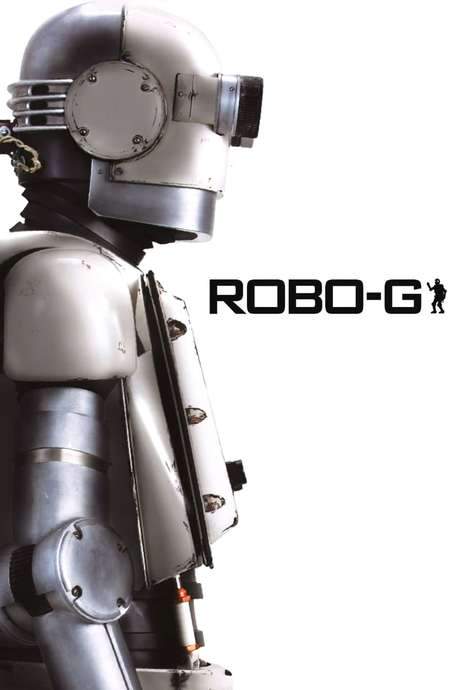
Robo-G (2012) movie poster

Plot Summary

Robo-G (2012) Plot Summary Explained

Release, runtime and language
2012 · 112 mins · Japanese
Loading streaming availability…
Directed by
Shinobu Yaguchi
Starring
Gaku Hamada, Naoto Takenaka, Tomoko Tabata, Naomi Nishida, Mickey Curtis, Yoshiyuki Morishita

When a robot goes haywire, three engineers racing to have it work for an upcoming science show enlist a man to pilot the machine’s shell and protect their jobs. Their quick‑fix performance draws intense media coverage and catches the eye of a curious science student, who begins to scrutinize the demonstration.

On this page (5)
  1. 1 Where to watch
  2. 2 What happens: full plot
  3. 3 Plot questions answered
  4. 4 Movie threads
  5. 5 Every angle
Loading streaming availability…

Full plot summary · contains spoilers

What Happens in Robo-G: Full Plot Summary

The whole story of Robo-G (2012) explained, from the opening scene to the final frame: every key event, every twist and what it all adds up to. Read it as a quick recap before the sequel, to check a scene you missed, or to finally understand what really happened.

Kobayashi Hiroki, Gaku Hamada, Nagai Shinya, Jyunya Kawashima, and Ota Koji, Chan Kawai, are three engineers in Kimura Electric Company’s Robot Development Division tasked with a high-stakes mission: build a cutting-edge, bipedal robot named New Shiokaze within three months to boost the company’s profile. The clock is ticking, and every milestone feels like a test of their skill, teamwork, and nerve. But just one week before the grand Robot Expo, disaster strikes. A catastrophic malfunction cripples both the computer systems and the hardware, reducing the entire project to rubble and leaving the trio staring at the possibility of job loss and a company that might never trust them with another project again.

In a desperate bid to salvage the situation, they hatch a risky, almost fantastical plan. Instead of presenting a fully functional machine, they decide to hide a human inside the exterior of New Shiokaze and present a convincing display at the expo. They stage a faux audition to recruit actors to perform inside the costume, risking exposure, but the stakes are too high to abandon ship. After a series of twists, misdirections, and near misses, they settle on Shigemitsu Suzuki, Mickey Curtis, an elderly retiree who lives a quiet life and seems an unlikely hero. Suzuki agrees, perhaps seeking a distraction in his waning years, and steps into the role of New Shiokaze, ready to perform at the expo as if the robot truly were a marvel of modern engineering.

At the expo, Suzuki’s New Shiokaze is nothing short of dramatic. The robot—acting through Suzuki—sails past expectations and saves Sasaki Yoko, Yuriko Yoshitaka, a passionate female robotics-geek college student whose enthusiasm mirrors the kind of curiosity that built modern machines. Yoko’s rescue captures the imagination of the nation, and suddenly New Shiokaze becomes a nationwide phenomenon, a symbol of innovation and possibility. Demands to perform pour in from across the country, and the trio finds themselves caught in a web of celebrity, pressure, and fear: if they confess the truth, the whole project could collapse; if they don’t, they become complicit in a deception that could ruin them all. They decide to tell Suzuki the truth and ask him to continue playing the role, hoping to ride the crest of this unexpected fame without tearing apart the fragile trust they’ve built.

Suzuki’s reaction is a fierce counterpunch. He shuts the door on their pleas for continued deception and demands extraordinary treatment in exchange for his continued participation—luxurious hotel stays, gourmet meals, and a lifestyle far beyond what their budget can support. The power imbalance is palpable, and the three young engineers find themselves bound by the very person who should be their ally. To cope with the strain and his back problems, a pragmatic—not to say reckless—measure is taken: powerful neodymium magnets are attached to Suzuki’s lower back to help with his lumbago, a makeshift fix that speaks volumes about how far the team is willing to go to keep the illusion alive.

As the public romance with New Shiokaze grows, Sasaki Yoko continues to chase the dream that started with the expo’s success. Her admiration for the project motivates her to request a guest lecture at her university’s robotics research club, hoping to learn from the creators and perhaps contribute to the real, behind-the-scenes work. The three engineers accept the invitation, initially driven by the money the appearance provides, but they are soon confronted with a different reality. The students’ depth, discipline, and genuine curiosity begin to rekindle their own passion for science and invention. What began as a cover story begins to feel like a calling, and the trio finds themselves reassessing the value of authentic innovation over easy fame.

Meanwhile, the dynamic shifts on the personal front. Yoko’s relentless interest in New Shiokaze—now a symbol of possibility for her—drives her to seek a place at Kimura Electric. When she visits with hopes of joining the team, Ota Koji, [Chan Kawai], fiercely protective of the secret behind New Shiokaze, bluntly tells her that she isn’t suited for robotics and hints that bringing someone new into the inner circle could reveal the truth. It’s a painful moment for Yoko, but it also ignites a resolve within her to prove that her passion and intellect belong in the realm of robotics.

Yet the stakes rise even higher as news arrives from abroad: a researcher claims that New Shiokaze is fake. The president of Kimura Electric organizes a high-profile press conference to address the accusation and restore confidence in the company’s vision. Itami Yayoi, [Tomoko Tabata], a local cable TV reporter, becomes a pivotal figure in illustrating the potential tension between truth and spectacle, and she approaches Suzuki with the assertion that the public deserves to know what lies at the core of New Shiokaze’s mystery. Itami’s presence adds a layer of scrutiny that the engineers had not anticipated, and the pressure to protect the facade mounts.

The climactic moment arrives at the press conference. Yoko receives a blueprint—carefully entrusted by Kobayashi and the others—that seems to prove the sincerity of the team’s effort. She rushes to the venue to defend the project and confront the mounting questions. In the hullabaloo, Itami attempts to pry open New Shiokaze’s head to photograph a behind-the-scenes image, while the robot persona—Suzuki in disguise—looks to slip away from the fray. The scene is chaotic, with reporters capturing every second as the “hero” teeters on the edge of collapse. Then tragedy strikes: New Shiokaze plunges from the window, and the crowd gasps. In a twist that could belong to a different kind of story, the fallen “robot” is revealed to be a meticulously crafted dummy; Suzuki himself has disappeared into the crowd—hidden inside the costume all along—leaving behind only a single photograph of New Shiokaze with his grandchildren and four magnets at his waist, a stark memento of what was real and what was performed.

A year and a half passes. Yoko has joined the team, expanding the Robot Development Department to four members, and they push forward with New Shiokaze 2. The plan is ambitious, and the team is determined, but fate tests them once more when a test run ends in a dramatic failure—the next iteration of their dream falls from a window and is badly damaged. Facing yet another setback, they turn to Suzuki, who has remained in retirement, calm and inscrutable as ever. He greets their plea with a quiet smile, sensing that the spark of something new is still alive, just waiting to be fanned back into flame. In that moment, it becomes clear that the journey—from deception to genuine invention, from fear to collaboration—has only just begun, and Suzuki’s quiet endorsement hints at a future where the line between illusion and reality might finally blur into something innovative, honest, and transformative.

- The core arc tracks a team of engineers under pressure, a public-relations storm surrounding their secret project, a dramatic turn where a “robot” is revealed to be a costume, and a late-inning pivot toward real collaboration and genuine invention. Through it all, the story remains grounded in character: the bold, youthfully ambitious Kobayashi, Nagai, and Ota; the pragmatic, sometimes harsh Suzuki who proves to be the hinge on which the entire enterprise turns; the tenacious Sasaki Yoko who refuses to let the dream die; and the determined Itami and Yoko’s evolving relationship with the world of robotics. What begins as a desperate ruse to save a job evolves into a deeper inquiry about what it means to build something that lasts—whether a machine, a story, or a future—and whether the people behind the machine can redefine what it means to be a creator in a modern world.

Last updated: October 03, 2025 at 06:47

Was this helpful?

Plot questions answered

Robo-G Plot Explained: Your Questions Answered

The questions people ask most about Robo-G (2012): what happens in the confusing scenes, why the characters do what they do, the twists, hidden details and what the ending means. Each answer contains spoilers.

Q1

Why did the robot malfunction one week before the Expo?

The robot, New Shiokaze, suffered a catastrophic malfunction that destroyed both its computer systems and hardware. This disaster occurred just one week before the Robot Expo, leaving the three engineers facing potential job loss and the collapse of their entire project. The precise technical cause isn't detailed, but it was severe enough to render the robot completely unusable.

Foreshadowing: The intense pressure to complete the project within three months likely contributed to corners being cut that led to the failure.

  • robot malfunction
  • New Shiokaze
  • Kimura Electric
  • Expo disaster
Q2

Why did the engineers put a human inside the robot costume?

After the robot was destroyed, the engineers faced a critical deadline and had no time to rebuild. Desperate to save their jobs and the company's reputation, they devised a risky plan to hide a person inside the robot's exterior and present it as a functioning machine at the Expo. This deception was their only remaining option to avoid the consequences of failure.

Foreshadowing: The initial pressure of building a cutting-edge robot in just three months set the stage for desperate measures.

  • deception
  • robot costume
  • New Shiokaze
  • engineers
  • Expo
Q3

Why was Suzuki chosen to be inside the robot costume?

The engineers held auditions to find someone willing to perform inside the costume, and ultimately chose Shigemitsu Suzuki, an elderly retiree living a quiet life. Suzuki agreed to the role, possibly seeking purpose or distraction in his retirement years. His willingness to participate was crucial because the job required someone who could endure the physical strain of performing inside the heavy robot costume.

  • Suzuki
  • robot pilot
  • New Shiokaze
  • retiree
  • costume
Q4

How did the robot save Yoko at the Expo?

During the Robot Expo, New Shiokaze performed a dramatic display that captivated the audience. At some point during the spectacle, the robot rescued Sasaki Yoko, a passionate robotics-geek college student. This rescue captured the public's imagination and transformed New Shiokaze into a nationwide sensation and symbol of innovation.

Foreshadowing: Yoko's enthusiasm for robotics had been established as a key character trait from the beginning.

  • Yoko rescue
  • Expo
  • New Shiokaze
  • hero
  • public fame
Q5

Why did Suzuki demand luxury treatment from the engineers?

After the engineers confessed the truth about the robot being a human in costume and asked Suzuki to continue performing, Suzuki refused their initial plea. Instead, he demanded extraordinary perks, luxurious hotel stays, gourmet meals, and a lifestyle beyond what the engineers could afford. This shift gave Suzuki significant power over the team, creating a tense dynamic where the people who should be in control became subservient to their own creation.

  • Suzuki demands
  • luxury
  • control
  • deception
  • power dynamic
Q6

Why were magnets attached to Suzuki's back?

To cope with the physical strain of wearing the robot costume and his existing back problems (lumbago), the engineering team attached powerful neodymium magnets to Suzuki's lower back. This makeshift solution was meant to help stabilize his condition and allow him to continue performing. The magnets became a hidden symbol of how far the team was willing to go to maintain their deception.

  • magnets
  • lumbago
  • back problems
  • Suzuki
  • New Shiokaze costume
Q7

Why was Yoko rejected from Kimura Electric?

Sasaki Yoko, inspired by the Expo success, visited Kimura Electric hoping to join the robotics team. Ota Koji bluntly told her she wasn't suited for robotics and hinted that bringing new people into the inner circle could expose their secret. This rejection hurt Yoko but also strengthened her resolve to prove she belonged in the world of robotics.

  • Yoko rejection
  • Kimura Electric
  • robotics job
  • Ota Koji
  • secret
Q8

What happened at the press conference?

When a foreign researcher claimed New Shiokaze was fake, Kimura Electric organized a press conference to defend the project. During the chaos, reporter Itami Yayoi attempted to pry open the robot's head to photograph behind the scenes. In the confusion, the robot plunged from a window, but it was revealed to be a meticulously crafted dummy. Suzuki himself had slipped away and disappeared into the crowd, leaving only a photograph of New Shiokaze with his grandchildren and the four magnets at his waist.

Foreshadowing: The magnets attached to Suzuki's back earlier became the key evidence left behind.

  • press conference
  • reveal
  • Itami
  • Suzuki escape
  • dummy
Q9

How did Suzuki escape from the press conference?

During the press conference chaos, while everyone was focused on the robot and Itami's attempt to expose it, Suzuki, who was inside the costume, slipped away unnoticed. The crowd believed they saw the robot fall from the window, but it was actually a carefully crafted dummy. Suzuki simply merged into the crowd, leaving behind only the dummy and a few magnets as mementos of the deception.

  • Suzuki escape
  • disguise
  • crowd
  • press conference
  • trick
Q10

Why did Yoko join the team after being rejected?

Despite being rejected by Ota Koji, Yoko's determination and passion for robotics eventually led her to become a full member of the Robot Development Department. After the events at the press conference and the passage of time, the team expanded to include her as the fourth member, and she worked with them on New Shiokaze 2. Her persistence ultimately overcame the initial rejection.

  • Yoko joins team
  • New Shiokaze 2
  • Kimura Electric
  • persistence
Q11

Why did New Shiokaze 2 fail during testing?

About a year and a half after the original events, the team attempted to build New Shiokaze 2, a genuine follow-up to their earlier deception. However, during a test run, the new robot suffered a dramatic failure, falling from a window and becoming badly damaged. This failure prompted the team to seek help from the retired Suzuki once again, hinting at a potential return to their unconventional methods.

  • New Shiokaze 2
  • test failure
  • robot damage
  • Suzuki return
Q12

Why did Suzuki agree to help again at the end?

When the team approached Suzuki after New Shiokaze 2's failure, he remained retired but listened to their plea. He greeted their request with a quiet smile, indicating his willingness to help them restart the project. His agreement suggests that despite the earlier tensions and demands, he had developed a genuine connection to their mission and saw potential for real innovation beyond the original deception.

  • Suzuki return
  • help
  • New Shiokaze 2
  • collaboration
  • redemption

Movie threads

More Movies Like Robo-G, by Mood & Story

Curated lists built around what makes Robo-G tick: the same mood, the same kind of story or the same emotional payoff. Each list explains why these movies belong together.

Movies about heartwarming deceptions like Robo-G

Cozy, anxious stories where a high-stakes lie leads to unexpected redemption. Explore movies like Robo-G where a high-stakes professional deception spirals into a heartwarming story of connection and redemption. If you enjoyed the quirky, tense, yet ultimately hopeful vibe of engineers faking a robot, you'll find similar stories of charming scams and found families here.

  • tense
  • hopeful
  • quirky
  • heartwarming
  • anxious
  • redemptive
  • Tone: whimsical, tense, hopeful
  • Pacing: steady, character-driven
Why these movies?

The story pattern: The narrative pattern starts with a desperate act of deception to solve a professional or personal crisis. As the lie grows more complicated, it brings a new group of people together, creating unexpected bonds. The central conflict is the threat of exposure, but the resolution comes from the characters choosing authenticity, often leading to a happy or hopeful ending where the lie was a catalyst for genuine good.

Why they belong together: These movies are grouped by their unique blend of tense, high-stakes deception with a whimsical, heartwarming core. They share a steady pacing that builds both anxiety and hope, a medium emotional weight that balances serious stakes with levity, and a narrative arc where a cynical act transforms into a journey of personal growth and connection.

Movies about quirky innovation under pressure like Robo-G

Stories where the pressure to create something amazing leads to desperate, funny solutions. Find movies similar to Robo-G that capture the anxious yet humorous vibe of innovation under pressure. If you liked the story of engineers racing to fake a robot for a science expo, you'll enjoy these tales of desperate inventiveness, engineering challenges, and the quirky solutions born from high-stakes deadlines.

  • anxious
  • quirky
  • hopeful
  • tense
  • innovative
  • underdog
  • Tone: whimsical, anxious
  • Pacing: steady, building to a climax
Why these movies?

The story pattern: The journey unfolds as a group, often underdogs, is tasked with an impossible-sounding innovation under a tight deadline. A crisis forces them to improvise a clever but ethically dubious workaround. They must then navigate the consequences of their 'invention' gaining unexpected public attention, leading to a climax where they confront the truth and often find a better, more authentic path forward.

Why they belong together: These films share a specific vibe of ambitious engineering and innovation paired with the comedic tension of cutting corners. They feature a mix of whimsical and anxious moods, a steady pace that methodically builds towards a public unveiling, and themes of ambition, public pressure, and the real meaning of creation beyond mere appearance.

Every angle

Robo-G (2012) Explained: Plot, Timeline & Characters

Everything about Robo-G in one place: what happens in the plot summary, the timeline in chronological order, the characters and meaning and a spoiler-free summary. What's After the Movie adds the cast, box office and post-credit scenes.

Coming soon on iOS and Android

The Plot Explained Movie Summary App

Plot summaries, endings explained and timelines on your phone. Catch up on any movie in minutes, save your favorites and never miss a twist again.

Be the first to know when we launch. Your email stays private, always.

Learn more about the app