Plot Explained Spoilers guaranteed!
Plot Explained

Browse by genre

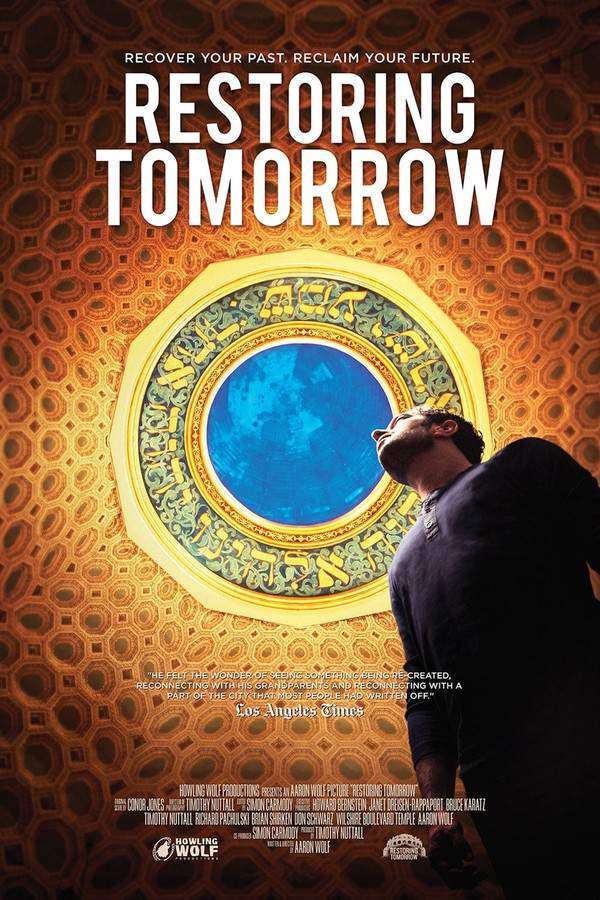
Restoring Tomorrow (2018) movie poster

Timeline

Restoring Tomorrow (2018) Timeline Explained – Every Event in Order

Release, runtime and language
2018 · 82 min · English
Echo score 88
Loading streaming availability…
Starring
Aaron Wolf

As America's religious institutions face decline, a filmmaker's personal journey intertwines with the efforts to restore Wilshire Boulevard Temple in Los Angeles. Director Aaron Wolf's quest for redemption becomes intertwined with the temple's struggle to reclaim its former glory, inspiring a community to overcome challenges and breathe new life into the historic landmark. The film explores themes of faith, perseverance, and the power of collective effort in revitalizing a treasured institution.

On this page (6)
  1. 1 Where to watch
  2. 2 Events in order (15)
  3. 3 Timeline questions answered
  4. 4 Movie threads
  5. 5 Movies like Restoring Tomorrow
  6. 6 Every angle
Loading streaming availability…

15 events in order · contains spoilers

Restoring Tomorrow Timeline: Events in Chronological Order

Every key event of Restoring Tomorrow (2018) in order, scene by scene, with when and where it takes place. Use it to untangle flashbacks, time jumps and parallel storylines, to refresh your memory before the sequel or to find the exact scene you are thinking of.

  1. The First Jewish Congregation in Los Angeles

    Wilshire Boulevard Temple is established as the first Jewish congregation in Los Angeles, California. The temple grows into a central institution for the city's Jewish community. Its long history becomes the chronological backbone of the story told in the film.

    Where
    Los Angeles, California
  2. Edgar Magnin Leads the Congregation

    Rabbi Edgar Magnin serves as one of the notable spiritual leaders of Wilshire Boulevard Temple during its early decades. His leadership helps shape the identity of the congregation in Los Angeles. He is remembered in the film as one of the influential rabbis in the temple's chronology.

    Where
    Wilshire Boulevard Temple, Los Angeles
  3. Alfred Wolf Flees Nazi Germany

    As the Nazis rise to power, Alfred Wolf, Aaron Wolf's grandfather, leaves his hometown of Eberbach, Germany. This departure marks a pivotal turning point in the Wolf family's history. His journey eventually leads him across the ocean to Los Angeles.

    When
    1930s
    Where
    Eberbach, Germany
  4. Alfred Wolf Becomes Rabbi of Wilshire Boulevard Temple

    Alfred Wolf begins his tenure as rabbi at Wilshire Boulevard Temple in 1949. He becomes a central figure in the congregation and the broader Los Angeles Jewish community. His legacy at the temple becomes deeply consequential for both the film and his grandson Aaron.

    When
    1949
    Where
    Wilshire Boulevard Temple, Los Angeles
  5. Three Decades of Alfred Wolf's Leadership

    Rabbi Alfred Wolf serves the congregation from 1949 until 1985, spanning more than three decades. During this long tenure he builds a lasting influence on the temple and its community. This enduring impact is what later draws Aaron Wolf closer to the story of the temple and his own faith.

    When
    1949-1985
    Where
    Wilshire Boulevard Temple, Los Angeles
  6. Harvey J. Fields Guides the Congregation

    Following the long line of leaders, Rabbi Harvey J. Fields takes charge of the congregation in the temple's later years. He represents the continuing chain of rabbis who shaped the institution. The film recounts his leadership as part of the temple's chronological history.

    Where
    Wilshire Boulevard Temple, Los Angeles
  7. The Temple Falls into Disrepair

    Over the years, Wilshire Boulevard Temple physically deteriorates until it is in total disrepair and falling apart. The once-grand building is in urgent need of restoration. This decay sets the stage for the ambitious renovation project at the heart of the documentary.

    Where
    Wilshire Boulevard Temple, Los Angeles
  8. A 'Fallen-Away Jew' at NYU

    While studying at New York University, Aaron Wolf has little connection to his faith. He considers himself a 'fallen-away Jew,' having drifted from the temple and his Jewish heritage. Like much of the nation's younger generation, he feels disconnected from organized religion.

    Where
    New York University, New York
  9. Wolf and His Fiancé Split

    Weeks before their wedding, Aaron Wolf and his fiancé end their relationship. The painful breakup leaves Wolf searching for guidance and stability in his life. This personal crisis becomes the catalyst that sends him back to his childhood temple.

    When
    Weeks before the wedding
  10. Wolf Seeks Counsel from Rabbi Steve Leder

    In the wake of his breakup, Aaron returns to his childhood temple to seek counsel from Rabbi Steve Leder. The visit reconnects him with a place and community he had long drifted away from. This meeting proves to be a turning point in both his personal life and his career.

    Where
    Wilshire Boulevard Temple, Los Angeles
  11. Rabbi Leder Shares His Renovation Vision

    During their meeting, Rabbi Steve Leder shares his vision to renovate the crumbling temple. He describes his ambitious plans to restore the building that is falling apart. The conversation introduces Wolf to the massive restoration project that will soon become the focus of his work.

    Where
    Wilshire Boulevard Temple, Los Angeles
  12. Leder Asks Wolf to Document the Restoration

    Rabbi Leder asks Aaron Wolf to document the temple's restoration on film. The request transforms Wolf from a passive visitor into an active participant in the temple's rebirth. It also plants the seed for what will become a deeply personal documentary project.

    Where
    Wilshire Boulevard Temple, Los Angeles
  13. Howling Wolf Productions Comes On Board

    Aaron Wolf agrees to the project and brings in his production company, Howling Wolf Productions, to film the restoration process. The company begins capturing the temple's reconstruction as it happens. This marks the official start of the documentary's production.

    Where
    Wilshire Boulevard Temple, Los Angeles
  14. Filming the Restoration and Retelling the History

    As the restoration unfolds, Wolf documents both the physical reconstruction and the temple's rich history. The film intertwines the renovation with the chronological story of the congregation and its rabbis, including Edgar Magnin, Harvey J. Fields, and Alfred Wolf. The project gradually becomes a journey of rediscovery for Wolf himself.

    Where
    Wilshire Boulevard Temple, Los Angeles
  15. Wolf Rediscovers His Faith

    Through his grandfather Alfred Wolf's enduring influence on the temple and its community, Aaron Wolf finds himself drawn closer to the subject of his film. Documenting the restoration gradually reconnects him with his Jewish heritage. The fallen-away Jew who began the journey ultimately finds his way back to his faith.

    Where
    Wilshire Boulevard Temple, Los Angeles

Last updated: October 20, 2026 at 01:17

Was this helpful?

Timeline questions answered

Restoring Tomorrow Timeline Explained: Your Questions Answered

When does it happen, and why in that order? The questions people ask about the chronology of Restoring Tomorrow (2018): time jumps, flashbacks, cause and effect between scenes and the correct order of events, each answered with spoilers.

Q1

Why did Aaron Wolf go back to Wilshire Boulevard Temple?

Aaron Wolf returned to Wilshire Boulevard Temple in the immediate aftermath of a painful breakup that happened weeks before his wedding. The split left him searching for guidance and stability, so he went to the one familiar spiritual home he still had. That visit quickly became the turning point that put him on the path to both making Restoring Tomorrow and rediscovering his Jewish faith.

Foreshadowing: Even while studying at NYU and calling himself a "fallen-away Jew," Wolf still went to a rabbi for counsel after his breakup, hinting that his connection to the temple had never fully disappeared.

  • breakup
  • faith crisis
  • return to temple
  • personal catalyst
  • rabbi counsel
Q2

How did the breakup lead to the making of Restoring Tomorrow?

Weeks before his wedding, Aaron Wolf and his fiancé split apart, which sent him back to his childhood temple at Wilshire Boulevard to talk with Rabbi Steve Leder. During that meeting, Leder shared his renovation plans for the crumbling building and asked Wolf to film the process. That single conversation transformed a personal crisis into the documentary that became Restoring Tomorrow.

  • breakup
  • documentary origin
  • personal catalyst
  • rabb i leder
  • filming request
Q3

Who is Alfred Wolf and how is he connected to the documentary?

Alfred Wolf is Aaron Wolf's grandfather, a German-born rabbi who fled Eberbach, Germany as the Nazis rose to power and went on to serve Wilshire Boulevard Temple from 1949 to 1985. Although Aaron grew up in his grandfather's shadow, he had drifted away from Judaism and never fully understood the legacy he inherited. Documenting the temple's restoration brought that legacy back into focus and became the emotional spine of Restoring Tomorrow.

Foreshadowing: The film's recurring references to the Wolf family name in the temple's history quietly set up the moment when Aaron realizes he is literally filming his grandfather's congregation.

  • alfred wolf
  • grandfather
  • family legacy
  • german jewish
  • emigration
Q4

What role does Wilshire Boulevard Temple play in Restoring Tomorrow?

Wilshire Boulevard Temple serves as both the physical setting and the central subject of Restoring Tomorrow, recognized as the first Jewish congregation in Los Angeles. The documentary follows the temple's structural restoration while telling its chronological story through the rabbis who led it, including Edgar Magnin, Harvey J. Fields, and Aaron's grandfather Alfred Wolf. The building becomes the vessel through which Aaron Wolf rediscovers his own faith.

  • wilshire boulevard temple
  • congregation
  • los angeles
  • restoration
  • jewish institution
Q5

Who is Rabbi Steve Leder and what does he do in the film?

Rabbi Steve Leder is the senior rabbi of Wilshire Boulevard Temple who meets with Aaron Wolf right after Wolf's breakup and opens the door to the entire documentary. Leder shares his plan to renovate the crumbling building and asks Wolf to film the restoration, which is the request that sets Restoring Tomorrow in motion. His invitation converts Wolf from a visitor returning to his faith into the film's director.

  • rabbi steve leder
  • renovation vision
  • senior rabbi
  • filming request
Q6

Why did Aaron Wolf agree to document the temple's restoration?

Aaron Wolf agreed to document the renovation after Rabbi Steve Leder personally asked him to do so during their meeting at Wilshire Boulevard Temple. At that moment Wolf was emotionally raw from his breakup and looking for purpose, so the project offered him meaningful creative work tied to a place he already cared about. Accepting the request also pulled him deeper into his own family history at the temple, which became the heart of Restoring Tomorrow.

  • filming
  • restoration project
  • personal meaning
  • project start
  • creative direction
Q7

What does it mean when Aaron Wolf calls himself a "fallen-away Jew"?

When Aaron Wolf calls himself a "fallen-away Jew" in Restoring Tomorrow, he is describing a generation of young American Jews who have largely drifted from organized religion and their own heritage. By the time he was studying at NYU he felt little connection to the faith or the temple where he had grown up. That sense of distance is what gives his later rediscovery its emotional weight in the film.

  • jewish identity
  • nyu
  • drifting from faith
  • generational decline
  • disconnection
Q8

Why did Alfred Wolf leave Germany?

Alfred Wolf left his hometown of Eberbach, Germany in the 1930s as the Nazi party rose to power, joining the wave of Jewish families forced to flee for their safety. He eventually crossed the Atlantic and settled in Los Angeles, where he became rabbi of Wilshire Boulevard Temple starting in 1949. That emigration is what later placed his grandson Aaron at the center of this documentary's personal story.

  • nazi germany
  • emigration
  • eberbach
  • jewish refugees
  • 1930s
Q9

How does Restoring Tomorrow tell the history of the temple?

Restoring Tomorrow weaves the history of Wilshire Boulevard Temple chronologically through the rabbis who led it, beginning with its founding as the first Jewish congregation in Los Angeles and moving through Edgar Magnin, Harvey J. Fields, and Alfred Wolf. Aaron Wolf's camera documents the physical renovation while the film traces that institutional lineage in parallel. The structure allows the building's decay and rebirth to mirror Wolf's own journey back to Judaism.

  • temple history
  • rabbinical lineage
  • chronology
  • founding rabbis
  • restoration timeline
Q10

What was wrong with Wilshire Boulevard Temple when Aaron returned?

When Aaron Wolf returned to Wilshire Boulevard Temple seeking counsel after his breakup, the building was in total disrepair and physically falling apart after years of neglect. That visible decay is exactly what prompted Rabbi Steve Leder to develop his renovation vision in the first place. The temple's broken-down condition gives Restoring Tomorrow both its central challenge and the visual through-line of restoration that runs through the film.

  • disrepair
  • physical decay
  • urgent renovation
  • building condition
  • falling apart
Q11

How long did Alfred Wolf serve as rabbi at Wilshire Boulevard Temple?

Alfred Wolf led Wilshire Boulevard Temple as its rabbi from 1949 to 1985, a continuous tenure of more than three decades. That long stretch allowed him to shape the identity of the congregation and influence several generations of its members. The lasting impact of those 36 years is precisely what eventually draws his grandson Aaron back into the temple's orbit in Restoring Tomorrow.

  • alfred wolf tenure
  • 1949 to 1985
  • leadership decades
  • senior rabbi
Q12

What role does Howling Wolf Productions play in the documentary?

Howling Wolf Productions is Aaron Wolf's own production company, which he formally brought on board to shoot the restoration of Wilshire Boulevard Temple. Once Rabbi Leder asked Wolf to document the project, Wolf assigned his own company to the job, and that is where Restoring Tomorrow's actual filming began. The "Wolf" in the company name also doubles as a quiet echo of the filmmaker's family name and grandfather's legacy at the temple.

Foreshadowing: The repeated presence of the Wolf surname, both in the production company and in the temple's rabbinical history, foreshadows the moment Aaron realizes he has been documenting his own family all along.

  • howling wolf productions
  • production company
  • documentary crew
  • filming team
Q13

What does Restoring Tomorrow say about faith and community?

Restoring Tomorrow argues that faith and community are renewed through deliberate effort, which it shows through both the rebuilding of Wilshire Boulevard Temple and Aaron Wolf's gradual return to Judaism. The film suggests that historic institutions can come back to life when people choose to invest in them, and that personal faith can be rediscovered in the same way. Pairing the physical restoration with a spiritual one gives the documentary its hopeful core.

  • faith renewal
  • community revival
  • restoration themes
  • perseverance
Q14

What is the central challenge at the heart of Restoring Tomorrow?

The central challenge of Restoring Tomorrow is twofold: reviving a historic Los Angeles temple that has fallen into disrepair while also addressing Aaron Wolf's personal drift from his Jewish faith. Wolf has to document a difficult renovation project at the same time as he is processing a breakup and a sense of distance from his heritage. The documentary tracks both restorations in parallel until they converge into one story of renewal.

  • central challenge
  • dual restoration
  • personal journey
  • institutional recovery

Movie threads

More Movies Like Restoring Tomorrow, by Mood & Story

Curated lists built around what makes Restoring Tomorrow tick: the same mood, the same kind of story or the same emotional payoff. Each list explains why these movies belong together.

Heritage restoration documentaries like Restoring Tomorrow

Stories of cherished places being rescued, restored, and reborn through collective devotion. If you loved the restoration journey in Restoring Tomorrow, these films capture similar stories of historic landmarks, sacred spaces, and treasured institutions being carefully revived. Discover movies that blend architectural preservation with personal and communal transformation, perfect for viewers who enjoy hopeful, contemplative stories about legacy and renewal.

  • contemplative
  • nostalgic
  • reverent
  • inspiring
  • patient
  • community
  • Tone: hopeful, reverent, warm
  • Pacing: slow, methodical
Why these movies?

The story pattern: These films document efforts to physically restore or revive a meaningful place — churches, temples, theaters, neighborhoods — while the restoration process becomes a lens for exploring memory, identity, and community. Narratives typically unfold chronologically, mixing the practical work of preservation with reflections on what the place has meant across generations. The climax often arrives when the restored space is reopened, symbolically and literally bringing something back to life.

Why they belong together: These documentaries share a slow, contemplative pacing that honors the labor of restoration. They blend historical context with present-day stakes, weave in personal stories of those connected to the place, and resolve on hopeful, uplifting notes. Viewers can expect reverence, nostalgia, and quiet inspiration rather than high drama or overt conflict.
Faith rediscovery documentaries like Restoring Tomorrow

Personal voyages of rediscovering belief, heritage, and the traditions that shape us. If the personal faith journey in Restoring Tomorrow moved you, explore these contemplative films about returning to spiritual roots and rediscovering meaning. These documentaries weave intimate family stories with broader questions about belief, tradition, and community, offering hopeful, reflective experiences for viewers seeking gentle spiritual cinema.

  • reflective
  • intimate
  • hopeful
  • spiritual
  • nostalgic
  • personal
  • Tone: hopeful, warm, reflective
  • Pacing: slow, intimate
Why these movies?

The story pattern: Stories in this thread follow someone who has drifted from a faith tradition and gradually finds their way back, often through reconnecting with family, ancestral places, or a community in need. The narrative arc moves from disconnection to questioning, then to rediscovery and renewed commitment. Memory, ritual, and intergenerational dialogue drive the emotional core, and the resolution affirms continuity rather than rupture.

Why they belong together: These films share an intimate, often first-person perspective and a slow pacing that lets reflection breathe. They treat faith with nuance and warmth rather than judgment, balance melancholy with uplift, and use personal narrative to illuminate larger cultural or religious themes. The dominant feeling is a quiet homecoming rather than crisis or conversion drama.

If you liked this

Movies Like Restoring Tomorrow

Similar movies to Restoring Tomorrow: the same genre, themes or kind of story. Each one comes with its own plot summary, timeline and ending explained.

Browse all movie summaries

Every angle

Restoring Tomorrow (2018) Explained: Plot, Timeline & Characters

Everything about Restoring Tomorrow in one place: what happens in the plot summary, the timeline in chronological order, the characters and meaning and a spoiler-free summary. What's After the Movie adds the cast, box office and post-credit scenes.

Coming soon on iOS and Android

The Plot Explained Movie Summary App

Plot summaries, endings explained and timelines on your phone. Catch up on any movie in minutes, save your favorites and never miss a twist again.

Be the first to know when we launch. Your email stays private, always.

Learn more about the app