







Plot Explained Spoilers guaranteed!
Plot Explained

Browse by genre

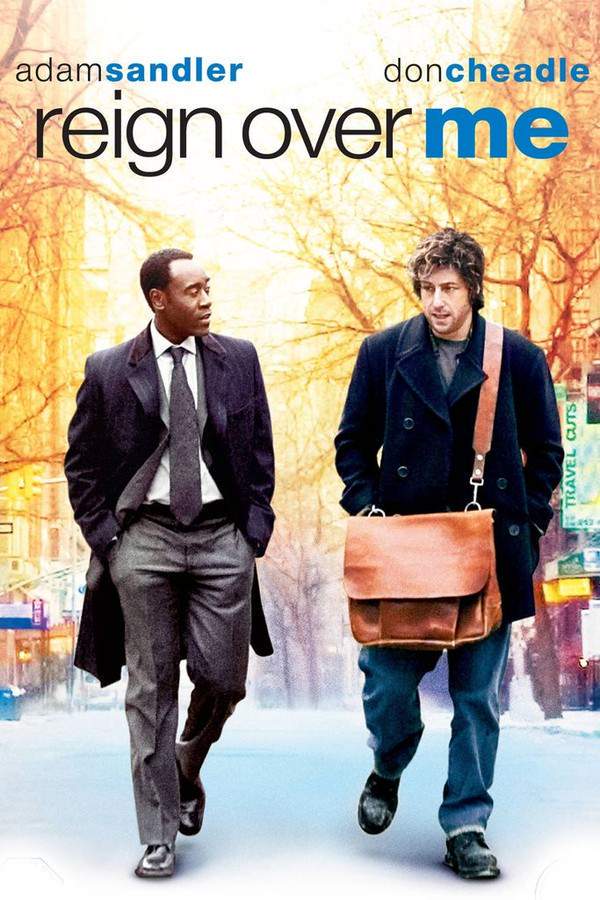
Reign Over Me (2007) movie poster

Timeline

Reign Over Me (2007) Timeline Explained – Every Event in Order

Release, runtime and language
2007 · 124 min · English
Starring
Don Cheadle, Jada Pinkett Smith, Adam Sandler
Budget
$20M

Five years after the tragic events of 9/11, Charlie Fineman unexpectedly runs into former college roommate Alan Johnson in New York City. Charlie is still grappling with the devastating loss of his family and struggles to find purpose, while Alan feels trapped by his commitments. Their reunion sparks a renewed friendship as they seek solace and understanding in each other's company, forging a strong and supportive bond as they confront life’s challenges.

On this page (5)
  1. 1 Where to watch
  2. 2 Events in order (14)
  3. 3 Timeline questions answered
  4. 4 Movie threads
  5. 5 Every angle

Where to watch

Where to Watch Reign Over Me (2007)

Where can you watch Reign Over Me? Stream, rent or buy it in the US, including on Tubi TV, Amazon Video and Apple TV Store: current JustWatch availability with up-to-date prices.

Streaming availability powered by JustWatch

14 events in order · contains spoilers

Reign Over Me Timeline: Events in Chronological Order

Every key event of Reign Over Me (2007) in order, scene by scene, with when and where it takes place. Use it to untangle flashbacks, time jumps and parallel storylines, to refresh your memory before the sequel or to find the exact scene you are thinking of.

  1. Charlie Fineman's Loss

    Five years after the 9/11 attacks, Charlie Fineman grapples with the profound loss of his wife and daughters. This tragedy has left him emotionally shattered and he has descended into a state of isolation and despair, far removed from his former vibrant self.

    When
    2006
  2. Concern from In-Laws

    Charlie's in-laws are deeply worried about his mental state, fearing he is suppressing his grief and avoiding the reality of his situation. Their concern highlights the impact of his trauma not just on himself, but on those who care about him.

  3. Reunion with Alan Johnson

    Charlie unexpectedly encounters his old friend Alan Johnson on a street corner in Manhattan. This meeting starkly illustrates the contrast between Charlie's despair and Alan’s seemingly successful life as a dentist, revealing the hidden struggles both men face.

    Where
    Manhattan
  4. Friendship Rekindled

    As they reconnect, both men yearn for companionship that might aid in their healing processes. Their friendship offers a critical support system as they navigate their respective crises, pushing each other to confront their realities.

  5. Therapy Attempts

    In an effort to help Charlie, Alan encourages him to seek professional therapy. Though Charlie reluctantly agrees, he struggles with the sessions and abruptly leaves, unable to confront the weight of his grief.

  6. Sharing His Story

    Despite his initial hesitation, Charlie eventually opens up about his loss to Alan, who becomes the first person to hear his heartbreaking story. This moment is pivotal, allowing Charlie to begin confronting his pain instead of evading it.

  7. Suicide by Cop Attempt

    Overwhelmed by his grief, Charlie makes a desperate attempt at suicide by cop when he feels he can no longer bear the anguish. This act leads to his hospitalization in a psychiatric facility, marking a significant turning point in his journey.

  8. Legal Intervention

    Judge David Raines is tasked with deciding Charlie's fate regarding psychiatric commitment after his breakdown. This decision puts the weight of responsibility on his in-laws, who must reflect on what their daughter would have wanted for him.

  9. A Pivotal Realization

    Charlie experiences a pivotal realization about his avoidance of memories related to his family. He recognizes that he cannot escape the echoes of his past as he sees his loved ones in the faces of strangers around him.

  10. A Fresh Start

    His in-laws choose not to commit Charlie to a psychiatric facility, instead allowing him to move into a new apartment. This decision signifies a new beginning, providing Charlie the opportunity to separate from the painful memories of his past life.

  11. Alan's Concern

    When Alan visits Charlie's new residence, he senses an atmosphere filled with unexpressed emotions and anticipation. He is unaware that Charlie's late wife is subtly guiding him back towards healing with gentle reminders of love.

  12. The Doorman's Warning

    While at Charlie's old apartment, the doorman emphasizes the importance of keeping belongings secure, presenting Alan with a moment of reflection on the memories embodied in Charlie's scooter. This incident highlights the lingering connection to the past.

  13. Embracing the Past

    Faced with the doorman's indifference about Charlie's scooter, Alan finds himself momentarily lost. However, the sight of the scooter sparks an idea, prompting him to take it as a symbol of Charlie's past and a step towards reclaiming memories.

  14. Charlie’s Journey Ahead

    With the memories of his troubled past reverberating around him, Alan decides to ride the scooter home. This action symbolizes not only a journey back to Charlie's roots but also an embrace of both past and future, with the hope of healing.

Last updated: November 21, 2024 at 13:41

Was this helpful?

Timeline questions answered

Reign Over Me Timeline Explained: Your Questions Answered

When does it happen, and why in that order? The questions people ask about the chronology of Reign Over Me (2007): time jumps, flashbacks, cause and effect between scenes and the correct order of events, each answered with spoilers.

Q1

Why does Charlie wear headphones throughout the movie?

Charlie wears headphones to block out memories of his wife and daughters who died in the 9/11 attacks. The headphones serve as a physical barrier against hearing anything that might trigger recollections of his lost family. He uses them to maintain the isolation he has created around himself, avoiding any emotional connection that might force him to confront his grief.

Foreshadowing: From the opening scenes, Charlie is shown with disheveled hair and headphones, immediately establishing his defensive mechanism against painful memories.

  • charlie fineman
  • headphones
  • grief
  • 9/11
  • memory
  • isolation
Q2

Why did Charlie attempt suicide by cop?

Charlie attempted suicide by cop because his grief became unbearable. After finally opening up to Alan about his family's death, he felt the weight of that回忆 became too much to carry. The suicide by cop attempt was a desperate act stemming from feeling he could no longer endure the constant pain of his loss. This leads to his hospitalization in a psychiatric facility.

Foreshadowing: Charlie's gradual withdrawal and refusal to engage with therapy foreshadow his eventual breakdown.

  • suicide by cop
  • charlie fineman
  • breakdown
  • grief
  • psychiatric facility
Q3

Why did Charlie's in-laws decide not to commit him?

Charlie's in-laws chose not to commit him to a psychiatric facility after Judge David Raines asked them to decide. They reflected on what their daughter would have wanted for Charlie and realized he had experienced a pivotal realization, that he sees his family in the faces of strangers on the street. This insight showed he was beginning to process his grief rather than simply suppressing it, giving them hope for his recovery.

Foreshadowing: The in-laws' concern throughout the film builds to this decision point, where they must choose between control or trust.

  • in-laws
  • commitment
  • judge david raines
  • family
  • hope
  • recovery
Q4

What was Charlie's realization about seeing his family?

Charlie realized that he avoids keepsakes and conversations about his family because he sees their faces in every passerby on the street. Every stranger reminds him of his lost wife and daughters, which is why he wears headphones and isolates himself. This realization, shared during his legal hearing, was a breakthrough moment that helped his in-laws understand his behavior and choose to give him another chance.

Foreshadowing: The repeated motif of Charlie observing strangers throughout the movie hints at this psychological connection.

  • realization
  • strangers
  • family
  • faces
  • memory
  • healing
Q5

Why does Alan help Charlie so much?

Alan helps Charlie because he recognizes a kindred spirit, both men are struggling with unfulfilled lives beneath their outward appearances. While Charlie lost his family, Alan feels trapped by his successful but meaningless career as a dentist and his predictable suburban life. Their reunion sparks a friendship that helps both men: Alan finds purpose in helping Charlie, while Charlie gains the emotional support he desperately needs.

Foreshadowing: The contrast between Charlie's despair and Alan's 'successful' life is established in their first reunion, hinting at Alan's ownhidden struggles.

  • alan johnson
  • friendship
  • support
  • purpose
  • healing
  • connection
Q6

What happened to Charlie's family?

Charlie's wife and daughters died in the 9/11 terrorist attacks, five years before the movie takes place. This tragedy completely destroyed Charlie's identity, turning him from a vibrant, successful man into a hollow shell consumed by grief. The loss is so devastating that he cannot bear to discuss it or keep any reminders of them.

Foreshadowing: The movie's opening immediately establishes the 9/11 context and Charlie's shattered state.

  • 9/11
  • wife
  • daughters
  • death
  • tragedy
  • loss
Q7

Why did Charlie leave therapy after just a few minutes?

Charlie left therapy sessions abruptly because he was not ready to confront his grief. His therapist urged him to eventually share his family's story with someone, and Charlie resisted because doing so would force him to acknowledge the reality of his losses. He was using avoidance as his primary coping mechanism, which is why therapy initially failed to help him.

Foreshadowing: Charlie's reluctance to engage with any emotional triggers, including therapy, establishes his defensive pattern.

  • therapy
  • counseling
  • grief
  • avoidance
  • treatment
Q8

What does the scooter symbolize at the end of the movie?

The scooter symbolizes Charlie's past and his connection to his former life before the tragedy. When Alan takes the scooter from Charlie's old apartment, it represents Alan embracing Charlie's history, both the painful memories and the good times. The scooter becomes a symbol of moving forward while honoring what was lost, as Alan rides it home, taking ownership of Charlie's story and supporting his friend's new beginning.

Foreshadowing: The doorman's warning about keeping belongings secure, and the mention of the scooter throughout, builds to this symbolic conclusion.

  • scooter
  • symbol
  • ending
  • past
  • memory
  • acceptance
Q9

Why does Charlie avoid talking about his family?

Charlie avoids talking about his family because doing so forces him to confront the reality of their deaths. His in-laws believed he buried his trauma to evade facing his losses. He kept headphones on to block conversations that might trigger memories, and he moved to a new apartment specifically to escape the haunting associations with his previous life where he lived with his family.

Foreshadowing: Charlie's consistent avoidance patterns are visible from his first appearance in the film.

  • avoidance
  • family
  • conversation
  • memory
  • grief
  • isolation
Q10

What does "Reign Over Me" mean in context of the movie?

The title "Reign Over Me" refers to Charlie's inability to control the overwhelming grief that dominates his life. After losing his family in 9/11, Charlie feels consumed by sorrow that "reigns" over him, controlling his every action. The movie explores whether he can ever regain agency over his own life or if the trauma will continue to rule him.

Foreshadowing: The title reflects the movie's central theme of being overwhelmed by grief and the struggle to reclaim one's life.

  • title
  • meaning
  • grief
  • trauma
  • control
  • healing

Movie threads

More Movies Like Reign Over Me, by Mood & Story

Curated lists built around what makes Reign Over Me tick: the same mood, the same kind of story or the same emotional payoff. Each list explains why these movies belong together.

Movies About Healing Friendships Like Reign Over Me

Stories where deep bonds form through the mutual support of trauma. If you appreciated the supportive bond between Charlie and Alan in Reign Over Me, explore more movies like it. This collection features powerful dramas where friendship becomes a crucial source of healing and strength for characters grappling with heavy emotional burdens, trauma, or loss.

  • supportive
  • cathartic
  • melancholic
  • heavy
  • introspective
  • healing
  • Tone: melancholic, supportive, cathartic
  • Pacing: slow, character-driven
Why these movies?

The story pattern: The narrative follows characters who are individually broken or isolated, often by grief, addiction, or mental health struggles. Their paths cross, leading to a slow-building friendship where listening, patience, and unconditional support become the primary catalysts for gradual healing, rather than a quick fix or dramatic plot.

Why they belong together: These films are grouped because they share a central, emotionally resonant theme: the redemptive power of platonic friendship in the face of profound personal struggle. They prioritize character connection over plot, creating a deeply human and often cathartic viewing experience.


Slow Burn Grief Dramas Similar to Reign Over Me

Character studies that meticulously explore the long, painful process of mourning. For viewers seeking stories that delve deeply into the psychology of loss, similar to Reign Over Me. These movies offer a somber, slow-paced exploration of grief, focusing on the internal turmoil and heavy emotional aftermath faced by characters after a life-shattering event.

  • grieving
  • somber
  • heavy
  • melancholic
  • introspective
  • cathartic
  • Tone: melancholic, somber, heavy
  • Pacing: slow, deliberate, introspective
Why these movies?

The story pattern: The story centers on a protagonist immobilized by a traumatic loss, often refusing to acknowledge their new reality. The narrative unfolds at a deliberate pace, mirroring the character's stalled life, as they confront memories, grapple with PTSD, and slowly, painfully begin to engage with the world again, with no easy resolutions.

Why they belong together: These films are united by their uncompromising focus on the emotional and psychological weight of grief. They share a melancholic tone, slow pacing, and high intensity, creating a visceral and often difficult but cathartic experience for the viewer who seeks to understand the depths of human sorrow.

Every angle

Reign Over Me (2007) Explained: Plot, Timeline & Characters

Everything about Reign Over Me in one place: what happens in the plot summary, the timeline in chronological order, the characters and meaning and a spoiler-free summary. What's After the Movie adds the cast, box office and post-credit scenes.

Coming soon on iOS and Android

The Plot Explained Movie Summary App

Plot summaries, endings explained and timelines on your phone. Catch up on any movie in minutes, save your favorites and never miss a twist again.

Be the first to know when we launch. Your email stays private, always.

Learn more about the app