





Plot Explained Spoilers guaranteed!
Plot Explained

Browse by genre

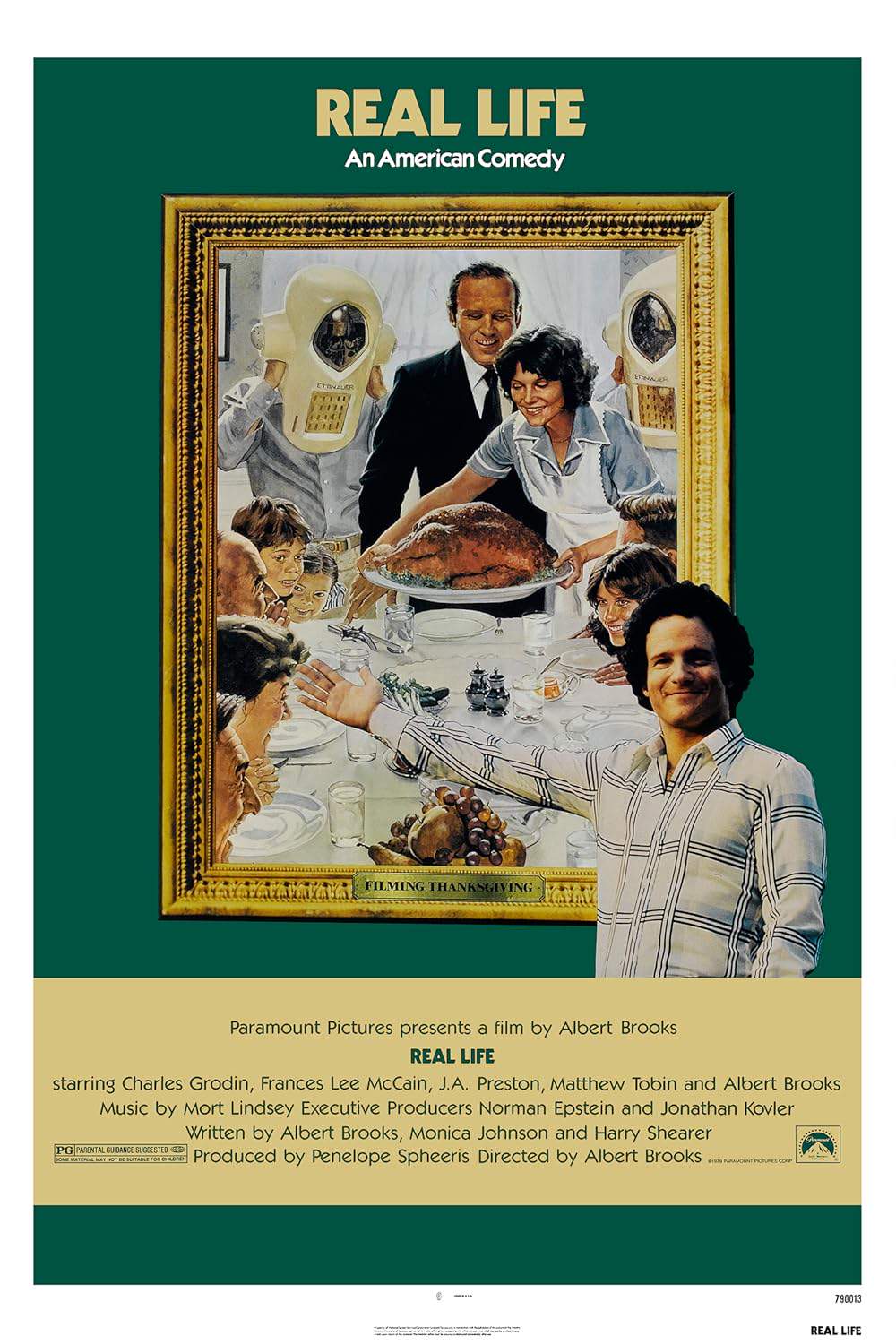
Real Life (1979) movie poster

Timeline

Real Life (1979) Timeline Explained – Every Event in Order

Release, runtime and language
1979 · 99 min · English

A filmmaker embeds himself within the everyday life of a family in Phoenix, Arizona, intending to document their experiences. Initially, he views them as subjects for his creative project, but his involvement becomes increasingly intrusive. As he pushes the family to reveal more, his manipulative approach raises ethical questions and jeopardizes the genuine portrayal he initially sought. The lines between observer and participant blur, threatening to unravel the family's stability and the filmmaker’s artistic integrity.

On this page (6)
  1. 1 Where to watch
  2. 2 Events in order (12)
  3. 3 Timeline questions answered
  4. 4 Movie threads
  5. 5 Movies like Real Life
  6. 6 Every angle

Where to watch

Where to Watch Real Life (1979)

Where can you watch Real Life? Stream, rent or buy it in the US, including on Amazon Video, Apple TV Store and Fandango At Home: current JustWatch availability with up-to-date prices.

Streaming availability powered by JustWatch

12 events in order · contains spoilers

Real Life Timeline: Events in Chronological Order

Every key event of Real Life (1979) in order, scene by scene, with when and where it takes place. Use it to untangle flashbacks, time jumps and parallel storylines, to refresh your memory before the sequel or to find the exact scene you are thinking of.

  1. Filming begins at the airport

    Albert Brooks begins filming the Yeagers as they return from vacation, with cameras mounted around their house and on helmets worn by the crew. The project aims to capture a full year of ordinary life, joys and sorrows alike. The family is visibly nervous under the constant gaze of the cameras.

    When
    Day 1
    Where
    Airport / Yeager home
  2. Dinner rules and a tense meal

    Back at home, Brooks takes an hour off to browse antiques while the family sits down for pizza and argues about strict filming rules. Tensions surface at the dinner table as the camera's presence replaces normal privacy. Warren's harsh remarks cause him to eat alone, highlighting the strain the project places on familial bonds.

    When
    Evening of Day 1
    Where
    Yeager home, dinner table
  3. Observers arrive and raise concerns

    Doctors Howard Hill and Ted Cleary arrive to monitor the project’s integrity and progress. Cleary voices worry that constant filming could erode the family’s sense of reality and autonomy. Their involvement introduces a professional counterpoint to Brooks’ improvisational approach.

    When
    Early phase
    Where
    Institute / filming site
  4. Jeannette seeks relief and crosses a line

    Jeanette leaves the house without cameras to decompress, seeking relief from the invasive setup. She later invites Brooks to a gynecologist appointment, initially flattering him but turning awkward when she kisses him. Brooks, unsettled, warns that his charisma isn't deep and that he is not the answer to their problems.

    When
    Later Day 1
    Where
    Yeager home; Brooks' office
  5. The camera-friendly doctor refuses

    The gynecologist balks at appearing on camera, citing a damning past news story. Brooks tries to buy his cooperation with $500, only to recognize him as the infamous baby broker from the report, and the man refuses.

    When
    Midday
    Where
    Gynecologist’s office
  6. A veterinary tragedy on camera

    Warren brings the crew to witness a day at his veterinary practice. The stress of cameras makes him jittery, and during a routine horse surgery he accidentally orders an anesthetic twice, killing the animal. Warren pleads with Brooks not to show the footage, but Brooks refuses, citing the need to reveal reality as it occurs.

    When
    Daytime
    Where
    Veterinary clinic
  7. Clown visit reveals Warren's fear

    Brooks, still in clown costume, visits the Yeager home to cheer the kids. In a private moment with Warren and Jeannette, Warren confesses he fears he's on the edge of a nervous breakdown. Brooks dismisses the gravity but tries to offer comfort and practical perspective.

    When
    Later Day 1
    Where
    Yeager home
  8. Cleary departs and ethics emerge

    After a meeting with doctors, scientists from the institute, and a film producer, Dr. Cleary leaves the project, criticizing how the family has been treated. The departure signals growing ethical concerns about the limits of the documentary experiment. Brooks must navigate a shifting moral landscape as the project evolves.

    When
    Post-clown incident
    Where
    Institute / meeting room
  9. Public spotlight and the project’s shadow

    Cleary’s book about the project is published, sensationalizing it as mind-control and psychological rape. Newscasters descend on the Yeagers, bringing intense scrutiny and discomfort to the family. Brooks and the institute worry about the lasting impact of the public attention.

    When
    After book publication
    Where
    Yeager home and media outlets
  10. Calls for termination and a difficult choice

    Hill, the institute, and the film producer press for early termination of the project. Brooks brings the Yeagers to a final meeting where they express a clear desire to end their participation. They refuse to stay, and the producer pays them in full to apologize for the stress endured.

    When
    Endgame phase
    Where
    Institute meeting
  11. A dramatic ending in search of closure

    Desperate to find a definitive ending, Brooks copies endings from classic cinema and adopts a Gone with the Wind-inspired finale. He burns down the Yeagers’ house in a symbolic climax, though no one is harmed by the blaze. The act forces everyone to confront the consequences of a year-long intimate experiment.

    When
    Climactic finale
    Where
    Yeager home
  12. Epilogue and aftermath

    An epilogue text reveals the house has been rebuilt and a tennis court added for appreciation. It notes that Cleary’s book sold poorly and that he is now ill. The film closes by inviting real-life historians to call a number for documentation of the project.

    When
    After events
    Where
    Text epilogue

Last updated: October 09, 2025 at 15:38

Was this helpful?

Timeline questions answered

Real Life Timeline Explained: Your Questions Answered

When does it happen, and why in that order? The questions people ask about the chronology of Real Life (1979): time jumps, flashbacks, cause and effect between scenes and the correct order of events, each answered with spoilers.

Q1

Why does Jeanette kiss Albert Brooks during the gynecologist appointment?

Jeanette's kiss stems from the emotional confusion created by the constant cameras and invasive filming. After spending weeks under relentless surveillance, she seeks connection outside her stressed marriage and mistakes temporary attention for genuine attraction. Brooks quickly rejects her, pointing out that his charisma 'doesn't run deep' and he's not the solution to her problems.

Foreshadowing: Earlier scenes show Jeanette leaving the house without cameras to escape the pressure, hinting at her growing psychological strain.

  • jeanette kiss
  • emotional affair
  • camera stress
  • psychological manipulation
Q2

Why does Brooks burn down the Yeagers' house at the end of the film?

Brooks burns the house because he cannot find a satisfying cinematic ending for his documentary project. Desperate for a dramatic finale like those in classic films, he literally copies the 'Gone with the Wind' ending, burning Atlanta, as a symbolic act. The fire represents his destructive relationship with the family: his documentary experiment ultimately consumes and destroys the very private life he claimed to document. No one is harmed, but the act underscores how far he's crossed ethical boundaries.

Foreshadowing: Brooks' earlier concern about finding the 'right ending' and his模仿 behavior throughout the film set up this destructive conclusion.

  • house fire
  • gone with the wind ending
  • symbolic act
  • documentary ethics
Q3

Why does Warren accidentally kill the horse during surgery?

Warren kills the horse because the cameras stress him out during an already delicate procedure. As a veterinarian performing surgery, he needs steady hands and focus, but the constant filming makes him nervous and jittery. He accidentally administers anesthetic twice, causing the animal's death. When he begs Brooks not to include the footage, Brooks refuses, highlighting the core ethical conflict between documentary 'truth' and the family's wellbeing.

Foreshadowing: Earlier dinner scenes show Warren already unraveling under the camera's gaze, eating alone after harsh remarks.

  • horse death
  • veterinary surgery
  • camera stress
  • documentary intrusion
Q4

Why does Dr. Ted Cleary leave the documentary project?

Dr. Cleary leaves because he believes the constant filming is psychologically damaging the Yeager family and crossing ethical lines. As a doctor assigned to monitor the project's impact, he witnesses increasingly invasive behavior, from the cameras in private moments to Brooks' manipulative interactions with Jeanette. He objects to how the family is being treated and eventually publishes a book condemning the project as 'mind-control' and 'psychological rape.'

Foreshadowing: Cleary expresses concern early about the cameras eroding the family's sense of reality.

  • dr cleary exit
  • ethical concerns
  • psychological damage
  • project controversy
Q5

Why does the gynecologist refuse to appear on camera?

The gynecologist refuses because he recognizes Brooks from a damning news story about a 'baby broker' scandal. When Brooks offers him $500 to participate, the doctor sees through the attempt to whitewash his reputation and firmly declines. The scene reinforces the film's theme that some private boundaries should never be crossed, and not everyone wants to be part of a spectacle.

Foreshadowing: Earlier scenes establish Brooks' willingness to pay for cooperation, showing his manipulative approach.

  • gynecologist refusal
  • baby broker
  • privacy boundary
  • documentary ethics
Q6

Why do the Yeagers decide to end their participation in the documentary?

The Yeagers want to quit because the project has severely disrupted their family life and mental wellbeing. Warren's stress causes his veterinary mistake, Jeanette's emotional state leads to the inappropriate kiss with Brooks, and the constant surveillance creates an unsustainable environment. When given the choice to continue or leave, they choose privacy, demonstrating they've been pushed past their limits despite Brooks' attempts to keep them in the project.

Foreshadowing: Warren's confession about fearing a nervous breakdown foreshadows the family's breaking point.

  • family departure
  • privacy
  • psychological strain
  • project termination
Q7

Why does Albert Brooks dress as a clown to visit the Yeager family?

Brooks dresses as a clown to cheer up the children after Jeanette's grandmother dies and the family is grieving. However, the children are at school when he arrives, so instead he sits with Warren and Jeanette, who are also grieving, and witnesses Warren's vulnerable confession about fearing a nervous breakdown. The clown costume becomes an awkward backdrop for this serious moment, illustrating how Brooks' well-intentioned gestures often miss the mark.

  • clown costume
  • grief visit
  • failed cheer
  • awkward intervention
Q8

What does Dr. Cleary's book reveal about the documentary project?

Cleary's book sensationalizes the project as 'mind-control' and 'psychological rape,' framing Brooks' methods as abusive and manipulative. The book generates negative headlines and brings media scrutiny to the Yeagers, making their lives even more difficult. Brooks is irritated by the portrayal, while the Yeagers face unwanted attention. The book ultimately sells poorly, and Cleary himself becomes ill, suggesting the controversy takes a toll on everyone involved.

Foreshadowing: Cleary's early ethical objections and his departure foreshadow his eventual public condemnation.

  • cleary book
  • mind control
  • media backlash
  • project controversy
Q9

Why does Warren eat alone after the first day of filming?

Warren eats alone because the cameras have already begun straining family relationships. His harsh, unsympathetic remarks during the pizza dinner, where rules are being negotiated, create tension with the family. The dinner table, normally a place of connection, becomes awkward under the cameras' gaze, and Warren's isolation signals how the documentary intrudes on even basic family rituals.

  • warren isolation
  • dinner tension
  • camera intrusion
  • family strain
Q10

Why does Brooks refuse to remove the horse death footage from the documentary?

Brooks refuses because he believes a documentary should capture reality as it happens, without editorial intervention. He argues that showing the accidental death is essential to revealing 'how it really was' during his project. This decision exposes his prioritization of artistic authenticity over the family's wellbeing, a central ethical conflict that defines his character throughout the film.

Foreshadowing: Brooks' earlier insistence on capturing 'real' moments establishes his commitment to unfiltered documentation.

  • horse death footage
  • documentary integrity
  • reality capture
  • ethical compromise
Q11

What happens to the Yeagers' house after Brooks sets it on fire?

According to the epilogue, the Yeagers' house is rebuilt after the fire, and they receive a tennis court as a gesture of appreciation from the production. This detail suggests the family ultimately recovers financially from the destructive experience, though the psychological impact remains ambiguous. The rebuild also symbolizes how the family must reconstruct their lives after the documentary's damage.

  • house rebuild
  • tennis court
  • aftermath
  • family recovery
Q12

Why is Brooks uncomfortable with Jeanette's kiss despite his otherwise manipulative behavior?

Brooks is uncomfortable because the kiss represents an unexpected emotional complication in what he views as a professional documentary project. His blunt rejection, claiming his appeal 'doesn't run deep', reveals he recognizes the kiss as a symptom of the family's psychological deterioration rather than genuine attraction. He understands that any romantic involvement would further corrupt the already-fraught dynamics and potentially destroy the project's already-tenuous legitimacy.

Foreshadowing: Brooks' early observation that he is 'not the answer' to the family's problems shows his awareness of his problematic position.

  • brooks rejection
  • emotional complication
  • professional boundary
  • self-awareness

Movie threads

More Movies Like Real Life, by Mood & Story

Curated lists built around what makes Real Life tick: the same mood, the same kind of story or the same emotional payoff. Each list explains why these movies belong together.

Movies about intrusive documentarians like Real Life

Stories about creators who cross the line from observer to manipulator. If you liked the ethical dilemmas in Real Life, you'll appreciate these movies about filmmakers and journalists who become too involved. Explore similar stories of media manipulation and the psychological cost of artistic ambition.

  • uncomfortable
  • satirical
  • thought-provoking
  • anxious
  • observational
  • cynical
  • Tone: dark, satirical, uncomfortable
  • Pacing: steady, methodical
Why these movies?

The story pattern: These narratives follow a similar arc: an artist with a project enters a world not their own, initially as an observer. As they seek a deeper or more dramatic story, their methods become intrusive and manipulative, forcing them to confront the ethical fallout of their actions and the damage they've caused.

Why they belong together: Movies in this thread share a central conflict between artistic ambition and ethical responsibility. They create a feeling of unease and complicity as the line between documenting reality and creating drama dissolves, often leading to a bittersweet or bleak resolution.

Movies about families under pressure like Real Life

Tensions rise within a household as outside forces threaten its stability. Fans of Real Life will enjoy these stories of domestic tension and claustrophobia. Discover more movies where an outside force disrupts a family's life, creating anxiety and revealing hidden strains in a seemingly normal household.

  • claustrophobic
  • anxious
  • uncomfortable
  • psychological strain
  • family drama
  • tense
  • Tone: anxious, uncomfortable, dark
  • Pacing: steady, creeping dread
Why these movies?

The story pattern: The narrative pattern revolves around a family unit whose normalcy is disrupted by an intrusive element. The tension builds steadily within the confined space of the home, focusing on the psychological strain on each member as private lives become public spectacle or a battleground.

Why they belong together: These films are grouped by their shared mood of domestic anxiety and claustrophobia. They explore the theme of privacy invasion and how families crack under the strain of being observed, manipulated, or forced to confront uncomfortable truths in their own home.

If you liked this

Movies Like Real Life

Similar movies to Real Life: the same genre, themes or kind of story. Each one comes with its own plot summary, timeline and ending explained.

Browse all movie summaries

Every angle

Real Life (1979) Explained: Plot, Timeline & Characters

Everything about Real Life in one place: what happens in the plot summary, the timeline in chronological order, the characters and meaning and a spoiler-free summary. What's After the Movie adds the cast, box office and post-credit scenes.

Coming soon on iOS and Android

The Plot Explained Movie Summary App

Plot summaries, endings explained and timelines on your phone. Catch up on any movie in minutes, save your favorites and never miss a twist again.

Be the first to know when we launch. Your email stays private, always.

Learn more about the app