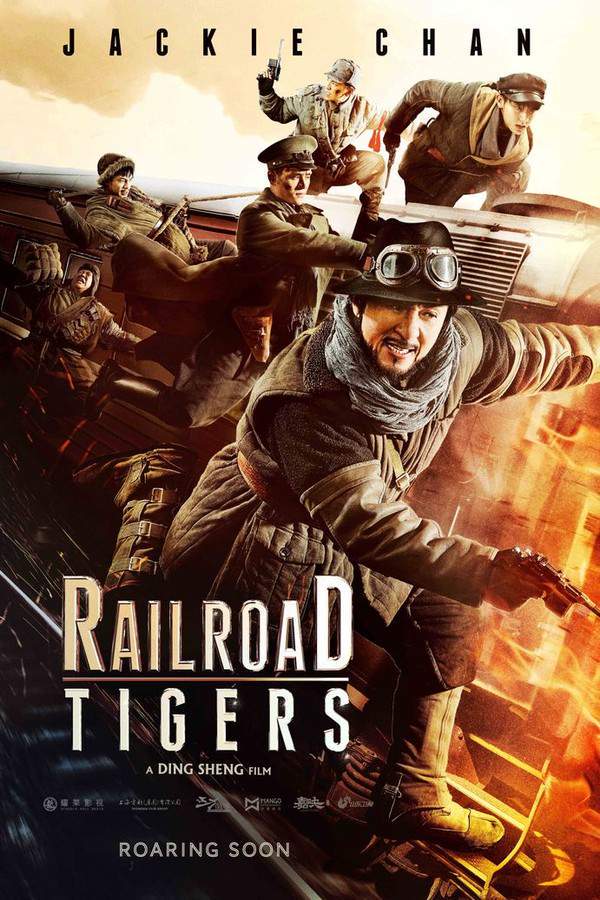
Railroad Tigers

During a war, a resourceful railroad worker and a group of ordinary citizens band together to commandeer a train carrying vital supplies. Facing a formidable military force, they must use their wits and teamwork to overcome seemingly impossible odds. Their daring mission aims to deliver hope and essential resources to those struggling for freedom in the conflict-ridden region.
Where to Watch Railroad Tigers?
Find where to stream, rent, or buy Railroad Tigers (2017) in the US with current JustWatch availability, up-to-date pricing, and platform listings for subscription, rental, and digital purchase options.














Streaming availability powered by 
Warning: spoilers below!
Haven’t seen Railroad Tigers yet? This summary contains major spoilers. Bookmark the page, watch the movie, and come back for the full breakdown. If you're ready, scroll on and relive the story!
Timeline – Railroad Tigers (2017)
Trace every key event in Railroad Tigers (2017) with our detailed, chronological timeline. Perfect for unpacking nonlinear stories, spotting hidden connections, and understanding how each scene builds toward the film’s climax. Whether you're revisiting or decoding for the first time, this timeline gives you the full picture.
Last updated: November 21, 2024 at 13:33
Railroad Tigers (2017) Timeline Questions Answered – Chronology FAQ
Find frequently asked questions about the Railroad Tigers (2017) timeline, including chronological order, nonlinear jumps, cause-and-effect links, and scene sequence clarifications. This timeline FAQ helps explain when key events happen, how moments connect, and why the story unfolds in that specific order.
Why does Ma Yuan become the leader of the Railroad Tigers?
Ma Yuan's leadership emerges naturally from his unique skills and position as a railroad worker. His exceptional understanding of the train network gives him the tactical knowledge needed to plan effective sabotage operations against Japanese forces. His position within the railway system also provides cover and intelligence about troop movements, making him the ideal person to organize and lead resistance efforts.
How does Ma Yuan's railroad knowledge help the resistance?
Ma Yuan uses his intimate understanding of the railway system to execute precise sabotage operations. He knows the schedules, routes, and vulnerabilities of the train network, allowing the Railroad Tigers to time their ambushes perfectly, reroute supplies effectively, and identify high-value targets like the secured railroad bridge. This expertise makes their attacks devastating despite being outnumbered and poorly equipped.
His knowledge is established early when he first appears as a railroad worker navigating the Tianjin-Nanjing corridor.
Why is destroying the railroad bridge so important to the resistance?
The railroad bridge represents a critical supply artery for Japanese military operations in the region. Destroying it would severely disrupt their ability to transport troops, equipment, and supplies across the Tianjin-Nanjing corridor. This act would not only hamper enemy war efforts but also deliver a powerful symbolic victory, demonstrating that even heavily secured infrastructure remains vulnerable to resistance attacks.
The bridge is described as heavily secured, indicating its strategic importance to Japanese logistics.
Why does Japan send reinforcements to Shandong?
Japan dispatches reinforcements to Shandong because the Railroad Tigers' escalating guerrilla campaign threatens to disrupt their entire war strategy in the region. The resistance group's successful ambushes and supply seizures undermine Japanese military operations and embolden local populations. Tokyo recognizes the growing rebellion as a serious threat that conventional patrols cannot contain, requiring additional forces to crush the resistance.
The Japanese response intensifies after each successful Railroad Tigers attack, building to this critical decision.
How do the Railroad Tigers manage to carry out attacks without being caught?
The Railroad Tigers leverage their intimate knowledge of the terrain and railway system to remain undetected. As railroad workers and local citizens, they understand patrol patterns, know hidden routes, and can blend into the local population. Their grassroots connection provides intelligence about Japanese movements while their tactical ingenuity allows them to strike quickly and vanish before enemy forces can respond effectively.
The group is described as a ragtag collection of ordinary citizens, which actually serves as their tactical advantage.
What do the Railroad Tigers do with supplies seized from the Japanese?
Rather than keeping the seized supplies for themselves, the Railroad Tigers reroute them to starving Chinese communities suffering under Japanese occupation. This humanitarian aspect of their resistance earns them local support and strengthens their network of sympathizers. The combination of military sabotage and relief operations makes them both effective fighters and beloved protectors of the people.
The summary specifically notes they reroute supplies to aid starving communities, establishing this pattern early.
Why do the Japanese forces increase security around the railroad bridge?
The Japanese increase security after becoming aware of the Railroad Tigers' plans to destroy the bridge. This heightened alert represents their recognition that the resistance poses an imminent threat to their military strategy. The bridge's destruction would cripple their supply lines, so they respond with increased patrols, better defenses, and tighter control over critical infrastructure.
The timeline shows the Japanese become alerted before the mission is executed, making the final attack more dangerous.
What makes Ma Yuan's final mission different from previous Railroad Tigers attacks?
Unlike earlier guerrilla ambushes targeting trains and supply depots, Ma Yuan's final mission aims to destroy a heavily secured railroad bridge, a strategic infrastructure target requiring meticulous planning. This represents a significant escalation in both ambition and risk. Previous attacks were hit-and-run operations, but destroying the bridge demands a sustained, coordinated assault against well-fortified defenses.
The timeline distinguishes this as Ma Yuan's most dangerous mission, indicating its unprecedented nature.
Why do the Railroad Tigers reroute trains instead of just destroying them?
Rerouting trains serves multiple purposes: it denies the Japanese their transportation capacity while simultaneously helping Chinese civilians. By redirecting trains carrying supplies or using railway knowledge to create diversions, the Railroad Tigers maximize chaos for enemy operations while minimizing waste of resources the local population desperately needs. This approach demonstrates both tactical cleverness and compassion.
Why does the story begin in December 1941?
December 1941 marks a significant escalation in Japan's occupation of Southeast Asia, coinciding with the Pacific War's expansion following Pearl Harbor. This timing establishes the intensified oppression that motivates the resistance. The railroad corridor becomes even more strategically important as Japan strengthens its military presence, directly leading to the conditions that drive ordinary citizens like Ma Yuan to fight back.
How do the Railroad Tigers succeed against a better-equipped Japanese military?
The Railroad Tigers succeed through superior knowledge of the terrain, grassroots community support, and tactical ingenuity rather than brute force. Their intimate understanding of the railway network allows precise, unpredictable attacks. Local civilians provide intelligence and concealment. Their willingness to take risks, combined with desperation to resist occupation, compensates for their lack of heavy weapons. The final bridge explosion symbolizes how wits and courage can overcome military superiority.

Explore Movie Threads
Discover curated groups of movies connected by mood, themes, and story style. Browse collections built around emotion, atmosphere, and narrative focus to easily find films that match what you feel like watching right now.
Movies about wartime underdog missions like Railroad Tigers
Ordinary people band together to execute an impossible plan against a powerful enemy.If you enjoyed the daring train heist in Railroad Tigers, you'll love these movies about ordinary people pulling off incredible missions against oppressive forces. This thread gathers similar stories of spirited teamwork and clever sabotage in war-torn settings, where underdog victories deliver hope.
Railroad Tigers
2017

The Fighting 69th
1940

God Is My Co-Pilot
1945
High Road to China
1983

Bennett's War
2019

Rescue Heroes: The Movie
2003

Guns of the Magnificent Seven
1969
Red Tails
2012

Space Cowboy
2023

The Quest
1996

Only the Strong
1993

Rim of the World
2019

Robinhood
2025

No Retreat, No Surrender
1986

Dungeons & Dragons: Honor Among Thieves
2023
Narrative Summary
Stories in this thread follow a clear, escalating structure: a ragtag team forms, plans a daring operation against a superior foe, and faces a series of tense challenges that test their resourcefulness and unity, culminating in a triumphant victory that proves the power of the collective spirit.
Why These Movies?
These movies are grouped together because they share a specific blend of high-stakes wartime action, a focus on civilian ingenuity, and a defiantly optimistic tone. They prioritize thrilling, fast-paced missions driven by camaraderie over bleak war drama, resulting in a uniquely uplifting and adventurous experience.
Funny ragtag team action movies similar to Railroad Tigers
Fast-paced adventures where a mismatched team's humor balances out high-stakes danger.Fans of the humorous and high-energy crew in Railroad Tigers will find more to love here. This list features action-comedies with a similar vibe, where a group of underdogs uses teamwork and wit to overcome challenges, blending tense sequences with comedic character moments for a balanced, entertaining ride.
Railroad Tigers
2017

The Dream Team
1989

Carbide and Sorrel
1963

Chasers
1994

The Wackiest Ship in the Army
1960

The Young Offenders
2016
Robinhood
2025

Alappuzha Gymkhana
2025

The Brooklyn Brothers Beat the Best
2012

Hello Brother
1994

A Piece of the Action
1977

Kisi Ka Bhai Kisi Ki Jaan
2023
Rescue Heroes: The Movie
2003

Role Models
2017

Rude Awakening
1989
Narrative Summary
The narrative pattern involves assembling a group of distinct personalities who initially clash but eventually bond through a series of chaotic, action-packed scenarios. The humor often arises from their interactions and improvisational solutions to problems, ensuring the story never becomes too grim despite the high stakes.
Why These Movies?
These films are united by their successful fusion of action and comedy, driven by a charismatic ensemble cast. They share a specific energy: fast-paced, moderately complex plots that are easy to follow, a medium emotional weight that avoids becoming too heavy, and a tone that remains hopeful and fun even in dangerous situations.
Unlock the Full Story of Railroad Tigers
Don't stop at just watching - explore Railroad Tigers in full detail. From the complete plot summary and scene-by-scene timeline to character breakdowns, thematic analysis, and a deep dive into the ending - every page helps you truly understand what Railroad Tigers is all about. Plus, discover what's next after the movie.
Railroad Tigers Summary
Read a complete plot summary of Railroad Tigers, including all key story points, character arcs, and turning points. This in-depth recap is ideal for understanding the narrative structure or reviewing what happened in the movie.

Characters, Settings & Themes in Railroad Tigers
Discover the characters, locations, and core themes that shape Railroad Tigers. Get insights into symbolic elements, setting significance, and deeper narrative meaning - ideal for thematic analysis and movie breakdowns.


