Plot Explained Spoilers guaranteed!
Plot Explained

Browse by genre

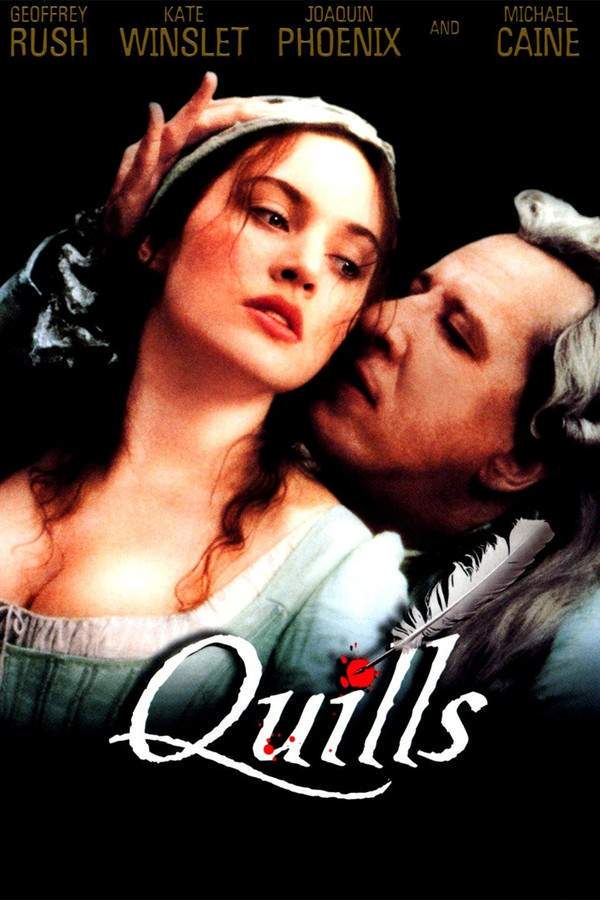
Quills (2000) movie poster

Plot Summary

Quills (2000) Plot Summary Explained

Release, runtime and language
2000 · 124 min · English
Loading streaming availability…
Directed by
Philip Kaufman
Starring
Michael Caine, Joaquin Phoenix, Kate Winslet, Geoffrey Rush

In 18th-century France, the imprisoned and notorious writer Marquis de Sade finds refuge in writing and forbidden relationships within the walls of an asylum. He develops complex connections with the facility’s director and a laundress, finding unexpected companionship amidst the harsh conditions. Despite the oppressive constraints of the era and the institution's attempts to control him, the Marquis continues to challenge societal norms and express his controversial ideas through his writing.

On this page (6)
  1. 1 Where to watch
  2. 2 What happens: full plot
  3. 3 Plot questions answered
  4. 4 Movie threads
  5. 5 Movies like Quills
  6. 6 Every angle
Loading streaming availability…

Full plot summary · contains spoilers

What Happens in Quills: Full Plot Summary

The whole story of Quills (2000) explained, from the opening scene to the final frame: every key event, every twist and what it all adds up to. Read it as a quick recap before the sequel, to check a scene you missed, or to finally understand what really happened.

Quills opens amidst the chaos of the Reign of Terror, where the imprisoned Marquis de Sade (played by Geoffrey Rush) is deeply engrossed in crafting a provocative narrative about the debauched Mademoiselle Renare. This aristocrat finds herself entangled with her sadistic executioner. Fast forward several years, the Marquis finds himself confined within the walls of the Charenton asylum, under the watchful eye of the enlightened Abbé du Coulmier (portrayed by Joaquin Phoenix). Here, the Marquis cleverly disseminates his writings through the laundress, Madeleine "Maddy" LeClerc (played by Kate Winslet), who covertly transmits his manuscripts, using a mysterious horseman as her courier to reach the publisher.

The Marquis's latest literary endeavor, Justine, gains notoriety on the black market. Infuriated by the burgeoning success, Napoleon (Ron Cook) demands the destruction of the book and calls for the Marquis's execution. However, his advisor, Delbené (Patrick Malahide), introduces an alternative plan: send the traditionalist Doctor Royer-Collard (portrayed by Michael Caine) to silence the Marquis once and for all.

Upon his arrival, Dr. Royer-Collard informs the Abbé that the Marquis’s so-called "therapeutic writings" have reached the public, leaving the Abbé horrified. Rejecting Royer-Collard’s archaic methods of treatment, the Abbé seeks out the Marquis, who playfully swears obedience while sneaking a flirty glance at Maddy through a peephole. Dr. Royer-Collard soon departs to secure his promised bride, the underage Simone (Amelia Warner), yet the commotion within the asylum prompts the Marquis to write a farcical play, The Crimes of Love. The chaotic atmosphere escalates when an inmate, Bouchon (Stephen Marcus), attempts to assault Maddy during the performance, leading to a violent confrontation.

Dr. Royer-Collard, incensed by this incident, orders the closure of the public theater and insists on a firmer control over the Marquis. As tensions rise, the Abbé retaliates by seizing the Marquis's quills and ink, igniting a series of rebellious acts from the Marquis—he starts composing stories on bedsheets with wine and on clothing with his own blood. The cruel punishments ultimately leave him isolated and stripped of dignity.

Meanwhile, Simone becomes embroiled in tumultuous adult experiences with her husband. Defiantly, she buys a copy of Justine, begins an affair with the architect Prouix (Stephen Moyer), and the pair abscond together, leaving a letter and her copy of Justine behind. This betrayal leads Dr. Royer-Collard to view the Marquis as the root of his woes and fuels his desire for vengeance.

At the Charenton asylum, as Madeleine sits at the precipice of losing everything for aiding the Marquis, she begs him for one final story, which the inmates relay in a collective effort. When the last inmate, Bouchon, is moved by the tale, he breaks free and tragically kills Madeleine. The ensuing chaos sees a fire erupt in the asylum, instigated by the pyromaniac Dauphin (George Yiasoumi), allowing inmates to escape their confines.

Madeleine's lifeless body is later discovered by her blind mother in a laundry vat, while Bouchon faces his fate, imprisoned within a grotesque iron dummy. The Abbé, blaming the Marquis for the devastation, ignites a furious confrontation where the Marquis defiantly claims a deep connection with Madeleine, only to be told of her demise as a virgin. In a fit of rage, the Abbé punishes the Marquis by cutting out his tongue. In a surreal dream sequence, the Abbé descends into necrophilia with Madeleine's corpse. Though physically diminished, the Marquis remains undeterred in his artistic pursuits, even decorating his cell with a narrative penned in excrement.

In a tragic climax, during the Abbé's final rites, the Marquis swallows a crucifix while attempting to kiss it, ultimately choking and committing suicide.

A year later, the reign of the new Abbé du Maupas (Alex Avery) begins at Charenton, now transformed into a hub of literary production, employing the inmates as the staff. The works of the notorious Marquis de Sade are printed, infusing the institution with irony as his provocative narratives continue to resonate. At the end of this new journey, the new Abbé meets his predecessor, who, still confined to the Marquis's old cell, expresses a yearning to write, yearning for paper and a quill—only to find hope when Madeleine’s mother delivers them through the newly opened peephole, prompting the next chapter to unfold as he feverishly begins to write, with the spirit of the Marquis echoing within his words.
Last updated: November 03, 2024 at 13:55

Was this helpful?

Plot questions answered

Quills Plot Explained: Your Questions Answered

The questions people ask most about Quills (2000): what happens in the confusing scenes, why the characters do what they do, the twists, hidden details and what the ending means. Each answer contains spoilers.

Q1

Why does Napoleon want the Marquis de Sade executed?

Napoleon demands the Marquis's execution because his book *Justine* has gained notoriety on the black market. As France's ruler during the post-Reign of Terror period, Napoleon views the controversial work as dangerous and demands both the destruction of the book and the silencing of its author.

Foreshadowing: Earlier in the story, the Marquis's writings during the Reign of Terror already attracted scandal and controversy.

  • napoleon
  • execution
  • justine book
  • censorship
  • black market
Q2

Why does Abbé du Coulmier turn against the Marquis?

The Abbé initially treats the Marquis with progressive tolerance, but his attitude shifts dramatically after a series of events: the theatrical performance ends in chaos when Bouchon assaults Maddy, the asylum suffers a fire during the inmates' escape, and most importantly, Madeleine is killed. When the Abbé confronts the Marquis and learns of Madeleine's death, he flies into a rage, blaming the Marquis for all the devastation caused by his writings.

Foreshadowing: The Abbé shows early signs of conflict when he discovers the Marquis's writings have reached the public, expressing horror at this breach of control.

  • abbé du coulmier
  • madeleine death
  • blame
  • rage
  • confrontation
Q3

How does Madeleine die in Quills?

Madeleine is killed by Bouchon, one of the asylum inmates. After she begs the Marquis for one final story, the inmates collectively relay the tale. When Bouchon becomes deeply moved by the narrative, he breaks free from his restraints and kills Madeleine in a fit of emotional turmoil. Her body is later discovered by her blind mother in a laundry vat.

Foreshadowing: The theatrical performance earlier in the film shows Bouchon attempting to assault Madeleine, establishing his volatile and dangerous nature.

  • madeleine death
  • bouchon
  • killing
  • laundry vat
  • charlton asylum
Q4

Why does Abbé du Coulmier cut out the Marquis's tongue?

In a brutal act of vengeance, the Abbé punishes the Marquis by cutting out his tongue after learning of Madeleine's death. The Abbé holds the Marquis responsible for all the chaos that has transpired, the publication of controversial works, Simone's elopement, the fire, and ultimately Madeleine's murder. This act represents the ultimate attempt to silence the Marquis's voice and artistic expression.

Foreshadowing: Earlier, the Abbé had already seized the Marquis's quills and ink in an attempt to suppress his writing, escalating the conflict.

  • tongue cutting
  • silence
  • punishment
  • revenge
  • madeleine death
Q5

Why does Simone run away with Prouix?

Simone, the young bride promised to Dr. Royer-Collard, defies her husband by purchasing a copy of *Justine* on the black market. After reading the controversial book, she becomes disillusioned with her forced marriage to the much older doctor and begins an affair with the architect Prouix. The pair eventually elope together, leaving behind a letter and her copy of *Justine*, which Dr. Royer-Collard views as the ultimate betrayal and further evidence of the Marquis's corrupting influence.

Foreshadowing: Dr. Royer-Collard's arranged marriage to the underage Simone establishes the oppressive and unnatural dynamic that fuels her rebellion.

  • simone
  • prouix
  • elopement
  • justine book
  • affair
  • royer-collard
Q6

How does the Marquis continue writing after his materials are taken?

When Dr. Royer-Collard orders the seizure of the Marquis's quills and ink, the Marquis rebels by using unconventional materials. He writes stories on bedsheets using wine as ink and inscribes messages on his own clothing using his own blood. This desperate ingenuity demonstrates his unwavering commitment to artistic expression despite increasingly harsh confinement and isolation.

Foreshadowing: The Marquis's reputation for prolific writing is established early, as he was already crafting controversial works during the Reign of Terror.

  • rebellion
  • writing
  • blood
  • wine
  • bedsheets
  • defiance
Q7

Why is Dr. Royer-Collard sent to Charenton?

Dr. Royer-Collard is sent to Charenton by Delbené, an advisor to Napoleon, as an alternative to executing the Marquis. Unlike the Abbé's progressive methods, Royer-Collard represents traditionalist, archaic approaches to treating the mentally ill. His mission is to silence the Marquis's writings through stricter control and conventional means, but his harsh methods ultimately fail and escalate the conflict.

Foreshadowing: Napoleon's demand for the Marquis's execution sets the stage for Royer-Collard's arrival as a supposed solution.

  • royer-collard
  • napoleon
  • delbené
  • censorship
  • traditionalist treatment
Q8

What does the ending of Quills mean?

The ending carries bittersweet irony: the Marquis dies having swallowed a crucifix during the Abbé's final rites, but his legacy triumphs. A year later, the new Abbé du Maupas transforms Charenton into a literary publishing house, employing the inmates as staff. Most significantly, the former Abbé du Coulmier, now confined in the Marquis's old cell, receives paper and a quill from Madeleine's mother through the peephole, inheriting the Marquis's obsessive drive to write. The cycle of censorship and artistic expression continues.

Foreshadowing: The recurring motif of writing and the peephole throughout the film foreshadows this ironic continuation of the Marquis's spirit.

  • ending
  • legacy
  • publishing house
  • abbé du maupas
  • writing
  • irony
Q9

Why does the Marquis swallow the crucifix?

During the Abbé's final rites, a surreal dream sequence where the Abbé descends into necrophilia with Madeleine's corpse, the Marquis seizes a crucifix and, in a final act of defiance and despair, attempts to kiss it but instead swallows it. He chokes and dies, committing suicide in a manner that simultaneously mocks religious ritual and represents his ultimate escape from confinement.

Foreshadowing: The motif of the Marquis using his body and bodily fluids for writing foreshadows this extreme act of using his final breath for defiance.

  • suicide
  • crucifix
  • choking
  • defiance
  • religious mockery
Q10

What causes the fire at Charenton asylum?

The fire at Charenton is started by Dauphin, a pyromaniac inmate, during the chaos that follows Madeleine's murder. This catastrophic event allows numerous inmates to escape their confines, creating widespread disorder and adding to the tragedy that the Abbé blames on the Marquis's influence.

Foreshadowing: Dauphin's pyromaniac tendencies are established early as one of the many disorders affecting the asylum's inmates.

  • fire
  • dauphin
  • pyromaniac
  • escape
  • inmates
  • chaos
Q11

Why does Maddy help the Marquis smuggle his writings?

Maddy, the laundress Madeleine LeClerc, becomes the Marquis's secret conduit to the outside world. She covertly transmits his manuscripts using a mysterious horseman as her courier to reach the publisher. Her motivation stems from a combination of sympathy for the Marquis, personal connection, and perhaps her own desire for meaning amid the harsh asylum conditions. She continues this dangerous work until she ultimately risks everything for one final story.

Foreshadowing: The opening scenes establish the clandestine manuscript distribution network that keeps the Marquis's works flowing to the black market.

  • madeleine
  • laundress
  • manuscripts
  • smuggling
  • courier
  • secret distribution

Movie threads

More Movies Like Quills, by Mood & Story

Curated lists built around what makes Quills tick: the same mood, the same kind of story or the same emotional payoff. Each list explains why these movies belong together.

Movies about artistic rebellion like Quills

Stories of creators whose dangerous expression defies their powerful jailers. If you were captivated by the struggle for free expression in Quills, this thread gathers similar movies where artists, writers, and rebels fight against censorship. These films explore the power of dangerous ideas within oppressive systems, often set in prisons, asylums, or tyrannical societies, delivering stories of defiance with heavy emotional weight.

  • oppressive
  • defiant
  • claustrophobic
  • subversive
  • tragic
  • rebellious
  • Tone: dark, transgressive, defiant
  • Pacing: steady, methodical
Why these movies?

The story pattern: The narrative centers on a creative individual imprisoned by an authority that views their work as a threat. The conflict escalates through a series of confrontations as the institution attempts to break the artist's spirit, often through psychological manipulation or physical punishment. The story asks whether the art can survive its creator, culminating in an ending that measures victory not by personal survival, but by the enduring impact of the ideas.

Why they belong together: These films are grouped by their core conflict: the individual's provocative art versus the system's rigid control. They share a dark, transgressive tone, a steady pacing that builds psychological pressure, and a thematic focus on censorship, hypocrisy, and the sometimes tragic cost of artistic freedom.

Claustrophobic psychological dramas like Quills

Films where the walls close in, both physically and mentally. For viewers who appreciated the oppressive, confined atmosphere of Quills, this collection features movies set in asylums, prisons, or isolated locations where characters face psychological torment. These films share a dark tone, high intensity, and explore themes of madness, corruption, and the blurring line between sanity and desire, perfect for fans of heavy, unsettling dramas.

  • claustrophobic
  • oppressive
  • unsettling
  • somber
  • psychologically intense
  • transgressive
  • Tone: dark, somber, unsettling
  • Pacing: steady, building pressure
Why these movies?

The story pattern: The narrative unfolds almost entirely within a single, restrictive location that amplifies the characters' internal conflicts. The plot methodically explores the corrosive effects of isolation and power, often leading to acts of rebellion, forbidden relationships, and a descent into psychological chaos. The structure is less about external events and more about the escalating tension and moral decay within the microcosm of the setting.

Why they belong together: These films are united by their oppressive, confined settings that directly influence the characters' psychological states. They share a dark tone, a steady but intense pacing that builds dread, and a deep exploration of disturbing themes like institutional corruption, sexual liberation, and the fragility of the mind.

If you liked this

Movies Like Quills

Similar movies to Quills: the same genre, themes or kind of story. Each one comes with its own plot summary, timeline and ending explained.

Browse all movie summaries

Every angle

Quills (2000) Explained: Plot, Timeline & Characters

Everything about Quills in one place: what happens in the plot summary, the timeline in chronological order, the characters and meaning and a spoiler-free summary. What's After the Movie adds the cast, box office and post-credit scenes.

Coming soon on iOS and Android

The Plot Explained Movie Summary App

Plot summaries, endings explained and timelines on your phone. Catch up on any movie in minutes, save your favorites and never miss a twist again.

Be the first to know when we launch. Your email stays private, always.

Learn more about the app